

 Previzualizare
 Trimite prin felicitare
 Distribuie
 Detalii despre lucrare
 Ghid
Ghid

 Descarcă imaginea
 Produse similare
 Radiografie
 Galerie foto
 Întrebări și răspunsuri
 Statistici
Windmills

- 69.0 x 112.0 cm


 Vezi mai mult
Giclée / Imprimare artistică
Printuri giclée sau pe canvas de calitate muzeală, cu proces de producție rapid și opțiuni flexibile de finisare. ( Comandă pictură realizată manual Comută pe Imagine Digitală)




P118B lei10

P118H lei10

P118W lei10

P438Z lei10

P508JH lei12

P508YH lei12

P805H lei10

P805Z lei10

P919BZ lei10

P919G lei10

P919XJ lei10

P959ZH lei10

P968JZ lei12

W106C lei8

W218G lei10

W218JH lei8

W218Y lei10

W307PJ lei10

W316G lei10

W316PJ lei8

W316Y lei10

W398PJ lei8

W4111J lei10

W500HY lei15

W500JH lei15

W692G lei12

W849H lei8

W940BG lei15

W953PJ lei8




Alegeți dintre dimensiunile noastre prestabilite, care respectă proporțiile originale ale operei de artă.

Introduceți lățimea și înălțimea necesare pentru a se potrivi ramei sau peretelui dumneavoastră. O printare poate fi doar tăiată, niciodată extinsă dincolo de dimensiunea imaginii originale, astfel încât o dimensiune cu o formă diferită va pierde o parte din imagine. Vă trimitem o simulare digitală pentru aprobare înainte de a imprima orice. Imaginea afișată pe această pagină nu prezintă tăierea reală — doar simularea arată acest lucru.
Livrare în întreaga lume () în 2 săptămâni, în loc de cele 4/5 săptămâni standard. (11 Noiembrie)

Livrare expres gratuită la nivel mondial

Pânză de in de înaltă calitate

Asigurare completă pentru transport

Garanție de rambursare a taxelor vamale

Garanția fidelității culorilor

Politica de retur în 100 de zile (doar pentru defecte de fabricație)

Garanție de rambursare 100%

Ofertă pentru comenzi multiple
 Opțiunea cu sticlă este disponibilă doar pentru dimensiuni de sub 110 cm

Windmills
Giclée / Imprimare artistică
Dimensiune reproducere
-


Preț total calculat
lei 301
A Pastoral Scene: William Grant Murray’s ‘Windmills’ (1911)
- Subject and Composition: ‘Windmills’ transports the viewer to a tranquil rural landscape, dominated by a stately windmill set against a backdrop of billowing clouds. The composition is carefully balanced; the windmill acts as a central focal point, yet doesn't overwhelm the scene. A modest building – perhaps a shed or small barn – nestles nearby, suggesting human presence and agricultural life. Two figures animate the field, one positioned to the left and another to the right, subtly guiding the eye through the painting. The inclusion of a grazing horse further enhances the sense of peaceful activity within this idyllic setting.
- Style and Technique: Painted in 1911, ‘Windmills’ reflects influences of Post-Impressionism and early Modernism, though Murray maintains a distinctly representational approach. His brushwork is visible yet controlled, creating texture and depth without sacrificing clarity. The color palette is muted and harmonious, dominated by earthy tones and soft greys that evoke the atmosphere of a cloudy day. Murray’s technique emphasizes light and shadow to define form and create a sense of spaciousness within the landscape.
Historical Context & Artistic Lineage
- A Scottish Artist in Transition: William Grant Murray (1877-1950) was a versatile British artist, renowned for his murals, portraits and mosaics. Educated at prestigious art schools including the Royal College of Art in London and the Académie Julian in Paris, he possessed a strong academic foundation. ‘Windmills’ dates from a period where Murray was establishing himself as a landscape painter, moving away from purely decorative work towards more expressive representations of the natural world.
- The Allure of Rural Life: The early 20th century witnessed a growing fascination with rural life and a desire to escape the rapid industrialization of urban centers. Paintings like ‘Windmills’ tapped into this sentiment, offering viewers a nostalgic vision of simpler times and harmonious coexistence between humanity and nature.
Symbolism & Emotional Resonance
- The Windmill as Metaphor: The windmill itself carries symbolic weight. Traditionally, windmills represent progress, ingenuity, and harnessing the power of nature for human benefit. However, they can also evoke a sense of timelessness and the cyclical rhythms of agricultural life. In this painting, the windmill stands as a silent sentinel, witnessing the passage of time and the enduring beauty of the countryside.
- A Mood of Serenity: ‘Windmills’ evokes a profound sense of peace and tranquility. The soft colors, gentle brushwork, and harmonious composition combine to create a calming atmosphere. It's a scene that invites contemplation and offers respite from the stresses of modern life. The painting’s emotional impact lies in its ability to capture a fleeting moment of beauty and stillness.
For Collectors & Interior Design
- A Versatile Addition: With dimensions of 69 x 112 cm, ‘Windmills’ is a substantial yet manageable artwork suitable for a variety of interior spaces. Its muted color palette and pastoral subject matter make it particularly well-suited to traditional or country-style interiors.
- Harmonious Placement: Consider pairing this painting with natural materials such as wood, linen, and stone to enhance its rustic charm. It would be a striking focal point in a living room, dining room, or study, adding warmth and character to any space. A high-quality reproduction of ‘Windmills’ offers an accessible way to bring the serenity of Murray's vision into your home.
Întrebări și răspunsuri
Unde pot achiziționa o imagine digitală a "Windmills" de William Grant Murray?
Pentru a obține o versiune digitală a lucrării "Windmills" de William Grant Murray, comandați descărcare imagine digitală de înaltă rezoluție pe pagina sa de Imagine digitală de înaltă rezoluție.
Care este nuanța dominantă în "Windmills" de William Grant Murray?
"Windmills" tinde spre o nuanță de Ochre to Sepia.
Care sunt dimensiunile originalului "Windmills" de William Grant Murray?
Lucrarea originală "Windmills" de William Grant Murray are dimensiunile de 69 x 112 cm.
Opere similare


Biografie artist
The Visionary of the Welsh Landscape: The Life of William Grant Murray
William Grant Murray was far more than a mere painter; he was a transformative force whose influence rippled through the British and Welsh artistic landscapes during the early twentieth century. Born in the coastal serenity of Portsoy, Scotland, in 1877, his early life was steeped in the rugged beauty of the north, a setting that would undoubtedly inform his lifelong fascination with light and atmosphere. His journey toward mastery began with rigorous academic discipline, moving from the Blairgowrie School of Art to the prestigious Edinburgh School of Art, before eventually finding himself at the heart of the London art scene within the Royal College of Art. It was during these formative years that Murray’s dedication to excellence became evident, earning him accolades that marked him as a rising star of his generation. The true metamorphosis of his style, however, occurred under the sun-drenched skies of France. In 1905, Murray immersed himself in the vibrant currents of European Impressionism while studying at the Académie Julian in Paris. This encounter with the French masters instilled in him a profound appreciation for the ephemeral—the way a sudden shadow falls across a meadow or how the morning mist clings to a harbor. He learned to see color not as static pigment, but as a living, breathing element that shifts with the passage of time. This Impressionist sensibility would become the heartbeat of his work, allowing him to capture the fleeting moments of light and movement that define the natural world.A Legacy of Leadership and Artistic Vitality
Beyond the canvas, Murray’s life was defined by a fierce commitment to the elevation of artistic education and the preservation of culture. His career took a pivotal turn when he moved into roles of significant responsibility, serving as the Art Headmaster at West Bromwich Municipal School of Art. Yet, it was his appointment as Principal of the Swansea Municipal School of Art that would cement his historical significance. Upon arriving, Murray famously critiqued the institution's state, viewing its lack of facilities as a sign of decay. Driven by an unwavering belief in artistic vitality, he spearheaded a period of unprecedented growth, transforming the school into a premier institution that, by 1914, stood among the top twenty-five in England and Wales. His influence extended deeply into the civic life of Wales through his role as the first curator of the Glynn Vivian Art Gallery. In this capacity, he acted as a guardian of beauty, shaping the collection and fostering a community where art could flourish alongside industry. His work was not limited to the small scale of easel painting; he possessed a grand vision that embraced murals and large-scale compositions, much like his brother George, who was also renowned for his monumental works. Through his dual roles as an educator and a curator, Murray ensured that the artistic pulse of Swansea remained strong through the turbulent years of the interwar period.The Essence of His Artistry
To look upon a work by Grant Murray is to experience a dialogue between structure and spontaneity. His technique often blended the disciplined foundations of his academic training with the fluid, emotive brushwork characteristic of the Impressionist movement. Whether he was depicting the rocky shores of his Scottish homeland or the shifting light of the Welsh coast, his paintings possess an inherent warmth and a sense of place that transcends mere representation. Key aspects of his artistic contribution include:- The integration of French Impressionist techniques into the British landscape tradition.
- A profound ability to capture atmospheric light and the transient qualities of nature.
- The institutional transformation of the Swansea Art School into a center of excellence.
- His pivotal role in the curatorial development of the Glynn Vivian Art Gallery.

William Grant Murray
1877 - 1950 , United Kingdom
Detalii rapide
- Artistic Movement Or Style: Impressionism
- Artists Who Influenced This Artist:
- Claude Monet
- Pierre Auguste Renoir
- Date Of Birth: 1877
- Date Of Death: 1950
- Full Name: William Grant Murray
- Nationality: British
- Notable Artworks:
- On the Seine
- Carreg Cennen Castle
- Barges on the Seine
- Place Of Birth: Portsoy, United Kingdom
Articole similare

Top 10 Capodopere Impresioniste: Peisaje care au Definit Arta Modernă | ArtsDot.ro
Descoperă top 10 capodopere impresioniste care au revoluționat arta! Monet, Manet, Renoir și alți maeștri ai peisajului. Reproduceri de tablouri de calitate muzeală pentru un decor inspirat. Explorează colecția completă pe ArtsDot.com!

John Constable: Cele Mai Frumoase 25 de Capodopere – Artă Clasică pentru Decorul Casei Tale
Descoperă cele mai frumoase 25 de picturi ale lui John Constable, maestru al peisajului englezesc! Explorează stilul romantic, Dedham Vale și capodopere precum The Hay Wain. Reproduceri artă clasică pentru decorul casei tale – ArtsDot.com.

Beyond the Horizon: A Curated Guide to Integrating Post-Impressionist Landscapes into Modern Interiors
Transform your home with the emotive power of Post-Impressionist landscapes. Discover expert tips on selecting hand-painted oil reproductions to create a soulful, vibrant interior that reflects your unique style and connection to nature.
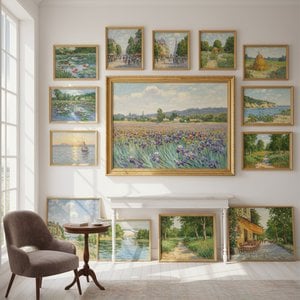
Top 10 Capodopere Impresioniste: Peisaje care au Schimbat Arta | ArtsDot.ro
Descoperă top 10 capodopere impresioniste care au revoluționat arta! Monet, Manet, Renoir și alți maeștri ai peisajului. Reproduceri de tablouri canvas de calitate muzeală pentru un decor inspirat. Explorează colecția completă pe ArtsDot.com!

Cultivating Visions: A Historical Journey Through Rural Landscapes in Art
Explore the rich history of rural landscape painting with ArtsDot. Discover Impressionist masterpieces, key artists & movements. Find your perfect serene artwork and bring nature's beauty home.