

 Previzualizare
 Trimite
 Distribuie
 Detalii despre lucrare

 Descarcă
 Produse similare
 Radiografie
 Diapozitive automate
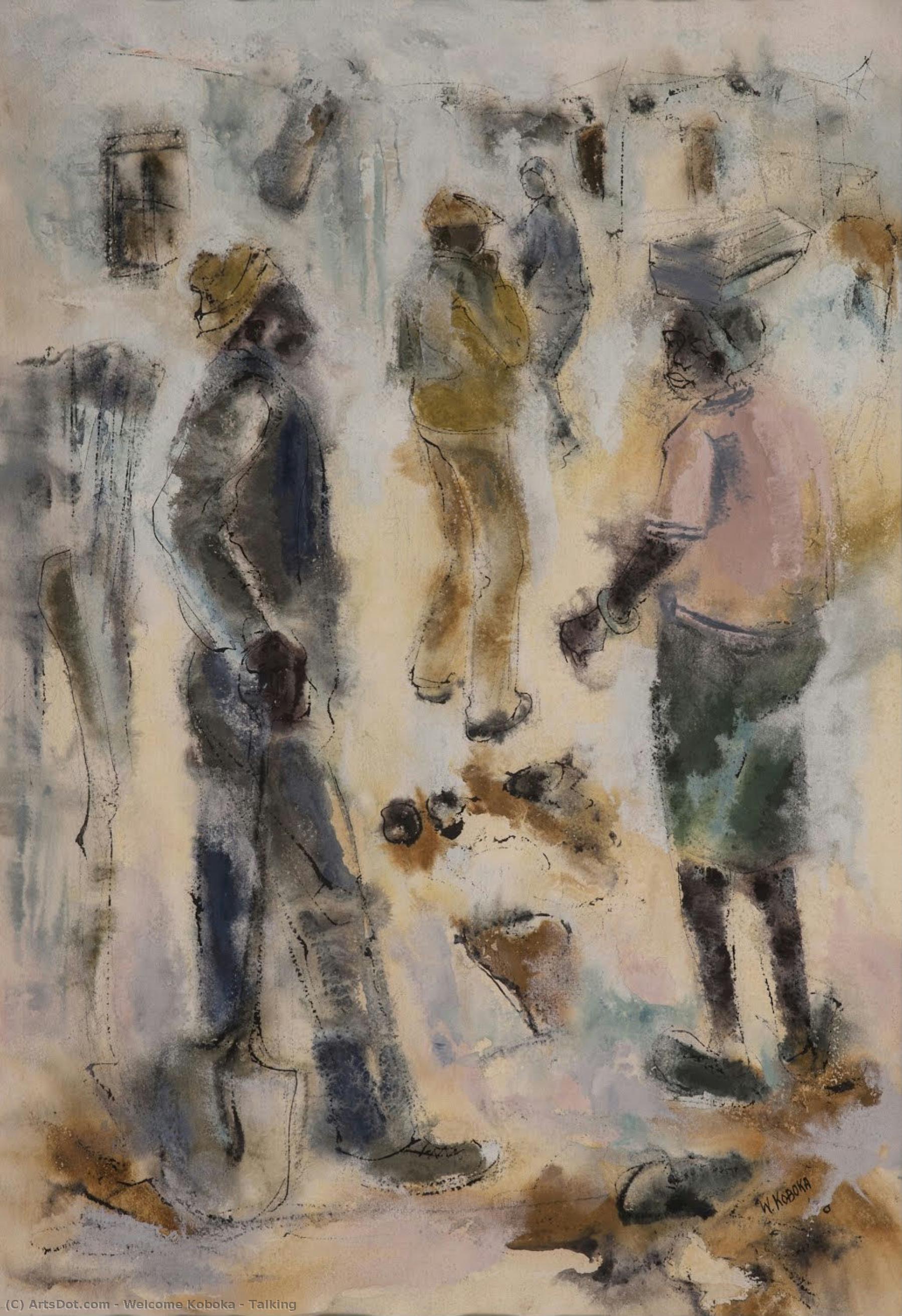
Talking
 1981
1981 78.0 x 59.0 cm
 University of Pretoria Museums
 Vezi mai mult
Achiziționați o imagine digitală de înaltă rezoluție, îmbunătățită, mult superioară previzualizării online.
Fiecare fișier este pregătit cu meticulozitate de specialiștii noștri interni, utilizând instrumente avansate și retușare manuală expertă. Ne asigurăm că fiecare imagine beneficiază de o claritate excepțională, o acuratețe precisă a culorilor și detalii fine.
Fișierul final este livrat prin e-mail în termen de 72 de ore, optimizat pentru utilizare imediată în medii profesionale, editoriale și de imprimare. Aceasta este aceeași calitate în care au încredere studiouri de design, edituri și galerii de top.
Imagine Digitală
Descărcați un fișier la rezoluție înaltă pentru afișare personală, imprimare și proiecte creative. ( Comandă versiunea tipărită Comandă pictură realizată manual)
Inclus în fiecare comandă de imagini digitale
Livrare digitală de expertiză, garantată
Când alegeți ArtsDot.com, nu primiți doar o simplă imagine – primiți o operă de artă digitală îmbunătățită profesional, creată cu precizie și susținută de o garanție de satisfacție. Iată tot ceea ce primești odată cu comanda ta, în mod automat:

Livrare rapidă prin e-mail
Fișierul imaginii digitale la rezoluție înaltă vă va fi trimis prin e-mail în termen de 72 de ore de la finalizarea comenzii – gata pentru utilizare imediată.

Fișier digital optimizat prin IA
Opera ta de artă este optimizată profesional prin intermediul unor instrumente AI avansate și al editării manuale, asigurând un nivel maxim de detalii, claritate și acuratețe a culorilor.

Retransmitere gratuită pe viață
Ai șters sau ai pierdut din greșeală fișierul? Nu îți face griji – ți-l vom retrimite oricând, gratuit.

Fără taxe de import – Întotdeauna
Bucură-te instant de noua ta operă de artă, fără taxe vamale, taxe de import sau costuri de livrare – descărcările digitale sunt întotdeauna fără taxe.

Garanția acurateții culorilor
Asigurăm o reflectare cât mai fidelă a culorilor originale în imaginea ta digitală, prin utilizarea unor instrumente profesionale și a proceselor de gestionare a culorii.

Garanție de satisfacție de 60 de zile
Dacă nu sunteți mulțumit de imaginea digitală achiziționată, o vom revizui sau vă vom returna 100% în termen de 60 de zile – fără nicio explicație necesară.

Garanție de returnare 100% a banilor
Nu ești mulțumit? Obține o rambursare completă în termen de 60 de zile de la primirea fișierului tău digital – fără întrebări.

Reduceri pentru comenzi în volum
Cumpără 3 imagini, economisește 10% - Cumpără 5, economisește 15% - Cumpără 10+, economisește 20%. Ideal pentru proiecte creative, galerii și agenții.
Descriere obiect de colecție
Biografie artist
Paul Klee: A Life Painted in Fragments – Navigating Darkness and Light
The year 1940 marked a pivotal, yet tragically brief, chapter in the life of Paul Klee (1879-1940), a Swiss-born German artist whose work resonated with both profound introspection and an almost childlike delight. Born in Bern, Switzerland, into a family steeped in musical tradition – his father was a music teacher – Klee’s early artistic explorations were initially driven by a desire to emulate the precision of drawing, a discipline instilled through rigorous training. However, it wasn't long before he began to dismantle these established conventions, forging a uniquely personal style that would become synonymous with the spirit of the 20th century. The decade of 1940 witnessed Klee at a critical juncture: grappling with the looming shadow of World War II, navigating the complexities of exile, and simultaneously pushing the boundaries of artistic expression through experimentation with color, form, and symbolism.
Klee’s early influences were remarkably diverse. He studied art in Munich and Berlin, encountering the vibrant currents of Expressionism – particularly the works of Edvard Munch and Wassily Kandinsky – which ignited a passion for exploring inner emotions and subjective experience. His time at the Academy of Arts in Düsseldorf exposed him to the principles of Neue Sachlichkeit (New Objectivity), a style characterized by stark realism and social commentary, though Klee quickly diverged from its rigid adherence to photographic accuracy. It was Kandinsky, his close friend and mentor, who profoundly shaped Klee’s approach to color theory, encouraging him to view pigments not merely as descriptive tools but as independent entities capable of evoking specific moods and sensations. This emphasis on color would become a defining characteristic of his mature work, informing his exploration of musicality in art – the idea that each element within a composition could contribute to a larger, harmonious whole.
The events of 1940 cast a long shadow over Klee’s life and artistic output. Following the Nazi seizure of power in Germany, he was forced to flee to Switzerland in 1933, eventually finding refuge in Zurich. As the war intensified, he relocated to France, seeking further protection within the Bauhaus school in Dessau, then later to Montreux, Switzerland. The atmosphere of uncertainty and impending conflict permeated his work during this period, manifesting as a heightened sense of anxiety and fragmentation. His paintings became increasingly characterized by broken lines, distorted forms, and a pervasive feeling of unease – works like “Ships in the Dark” (1940) powerfully convey this emotional landscape, utilizing overlapping shapes and ambiguous figures to suggest both vulnerability and resilience.
The Bauhaus Years and Artistic Evolution
Klee’s association with the Bauhaus school was transformative. Under the guidance of Walter Gropius and Johannes Itten, he embraced a holistic approach to art education, emphasizing the interconnectedness of form, color, and material. The Bauhaus curriculum encouraged experimentation with diverse media – painting, sculpture, typography, architecture, and design – fostering a spirit of innovation and collaboration. Klee’s teaching at the Bauhaus instilled in him a deep appreciation for functional design and the potential of art to serve practical purposes. However, his unconventional methods and outspoken critiques of rigid academic traditions often clashed with the school's increasingly conservative direction under the influence of Hannes Meurer. Despite these tensions, he continued to develop his own unique artistic language, incorporating elements of Cubism, Surrealism, and folk art into his evolving style.
During this period, Klee began to explore the concept of “Kleeographs,” spontaneous drawings created with a combination of pen and ink. These works, characterized by their loose, gestural lines and fragmented forms, represent a departure from his earlier, more controlled approach. They reflect a shift towards greater freedom and improvisation, mirroring the artist’s own internal state as he navigated the complexities of exile and war. The Kleeographs served as a crucial tool for self-discovery, allowing him to process his emotions and experiment with new visual languages without the constraints of traditional artistic conventions.
Color Theory and Musicality – A Synthesis of Form and Feeling
Klee’s fascination with color theory reached its zenith in the 1940s, culminating in his seminal writings *Writings on Form and Design Theory*. He viewed color not as a mere imitation of reality but as an independent force capable of evoking specific emotions and creating distinct visual experiences. Drawing inspiration from Goethe's theories of color, Klee developed a complex system for understanding the relationships between hues, intensities, and values. He believed that each color possessed its own unique “voice” – a particular quality or character – and that artists could harness this inherent musicality to create works that resonated with profound emotional depth.
This concept of "color music" profoundly influenced his painting technique. Klee often employed layered washes of color, creating shimmering surfaces that seemed to vibrate with energy. He experimented with contrasting hues and complementary colors to generate dynamic visual effects, while also utilizing subtle gradations and delicate transitions to evoke a sense of harmony and balance. His use of color was not simply decorative; it served as a powerful means of communicating his inner thoughts and feelings, transforming the canvas into a space for emotional exploration.
Legacy and Historical Significance
Paul Klee’s tragically short life – he died in Zug, Switzerland, in 1940 – left behind a remarkably rich and diverse body of work. Despite his untimely death, his influence on subsequent generations of artists is undeniable. His pioneering exploration of color theory, his embrace of spontaneity and improvisation, and his willingness to challenge traditional artistic conventions paved the way for the development of Abstract Expressionism and other post-war movements. His works continue to be celebrated for their emotional intensity, their playful experimentation, and their profound sense of humanity.
Klee’s art also holds significant historical importance as a reflection of the tumultuous era in which it was created. His paintings capture the anxieties, uncertainties, and hopes of a world grappling with war, displacement, and social upheaval. His work serves as a poignant reminder of the enduring power of art to illuminate the human condition and transcend the limitations of time and circumstance. The Tate’s collection, for example, houses a significant number of his works, offering visitors a unique opportunity to engage with this extraordinary artist's vision.

welcome koboka
1940 - 1996 , South Africa
Detalii rapide
- Artistic Movement Or Style: Expressionism, Cubism, Surrealism
- Artists Or Movements Influenced By This Artist:
- Bauhaus
- Kandinsky
- Artists Who Influenced This Artist:
- August Macke
- Henri Matisse
- Date Of Birth: 1879-12-18
- Date Of Death: 1940-06-29
- Full Name: Paul Klee
- Nationality: Swiss/German
- Notable Artworks:
- Ships in the Dark
- Twittering Machine
- Place Of Birth: Bern, Switzerland

