

 Previzualizare
 Trimite prin felicitare
 Distribuie
 Detalii despre lucrare
 Ghid
Ghid

 Descarcă imaginea
 Produse similare
 Radiografie
 Galerie foto
 Întrebări și răspunsuri
 Statistici
Improvisation 26


 Vezi mai mult
Giclée / Imprimare artistică
Printuri giclée sau pe canvas de calitate muzeală, cu proces de producție rapid și opțiuni flexibile de finisare. ( Comandă pictură realizată manual Comută pe Imagine Digitală)




P118B lei10

P118H lei10

P118W lei10

P438Z lei10

P508JH lei12

P508YH lei12

P805H lei10

P805Z lei10

P919BZ lei10

P919G lei10

P919XJ lei10

P959ZH lei10

P968JZ lei12

W106C lei8

W218G lei10

W218JH lei8

W218Y lei10

W307PJ lei10

W316G lei10

W316PJ lei8

W316Y lei10

W398PJ lei8

W4111J lei10

W500HY lei15

W500JH lei15

W692G lei12

W849H lei8

W940BG lei15

W953PJ lei8




Alegeți dintre dimensiunile noastre prestabilite, care respectă proporțiile originale ale operei de artă.

Introduceți lățimea și înălțimea necesare pentru a se potrivi ramei sau peretelui dumneavoastră. O printare poate fi doar tăiată, niciodată extinsă dincolo de dimensiunea imaginii originale, astfel încât o dimensiune cu o formă diferită va pierde o parte din imagine. Vă trimitem o simulare digitală pentru aprobare înainte de a imprima orice. Imaginea afișată pe această pagină nu prezintă tăierea reală — doar simularea arată acest lucru.
Livrare în întreaga lume () în 2 săptămâni, în loc de cele 4/5 săptămâni standard. (9 Noiembrie)

Livrare expres gratuită la nivel mondial

Pânză de in de înaltă calitate

Asigurare completă pentru transport

Garanție de rambursare a taxelor vamale

Garanția fidelității culorilor

Politica de retur în 100 de zile (doar pentru defecte de fabricație)

Garanție de rambursare 100%

Ofertă pentru comenzi multiple
 Opțiunea cu sticlă este disponibilă doar pentru dimensiuni de sub 110 cm

Improvisation 26
Giclée / Imprimare artistică
Dimensiune reproducere
-


Preț total calculat
lei 300
Improvisation 26
Wassily Kandinsky’s “Improvisation 26” stands as an emblem of his groundbreaking approach to abstraction—a pivotal moment in the history of art that irrevocably shifted its trajectory toward a realm unbound by representational constraints. Painted in 1912 during his time in Munich, alongside fellow artist Gabriele Münter and within the influential circle of Der Blaue Reiter, this oil painting embodies the spirit of Expressionism while simultaneously pioneering the very concept of pure abstraction. It’s more than just pigment on canvas; it's a deliberate attempt to translate emotion into visual form—a quest for artistic truth that transcends mere imitation of nature.Composition and Style: Geometric Harmony
The artwork immediately captivates with its bold chromatic palette dominated by vibrant yellows and deep blues, interwoven with intricate geometric shapes. At the core lies a prominent yellow circle, radiating outwards like a beacon of energy and luminosity—a deliberate choice reflecting Kandinsky’s fascination with circular forms as symbols of unity and cosmic harmony. Surrounding this central element are numerous smaller circles, squares, and triangles, arranged in dynamic patterns that create an illusion of movement and visual tension. These shapes aren't merely decorative; they represent fundamental building blocks of Kandinsky’s artistic vision—elements he believed could convey psychological states and spiritual ideas. The artist meticulously considered the interplay between color and form, recognizing their inextricable connection in achieving expressive effect.Historical Context: Expressionism and Beyond
“Improvisation 26” emerged during a period of intense artistic experimentation and intellectual ferment—the height of Expressionist fervor. Artists like Kandinsky were grappling with profound questions about the role of art in conveying human experience, rejecting traditional academic conventions in favor of subjective interpretation. Der Blaue Reiter, established by Kandinsky and Münter, championed this radical aesthetic stance, advocating for a fusion of art and spirituality. The painting’s influence extends beyond Expressionism, foreshadowing developments in Surrealism and other avant-garde movements that would further explore the subconscious mind and challenge conventional perceptions of reality. It represents a decisive break from representational art, prioritizing emotional resonance over literal depiction—a legacy that continues to inspire artists today.Similar Artists and Styles: Exploring Parallel Visions
To appreciate “Improvisation 26” fully, it’s worthwhile examining the work of contemporaries who shared Kandinsky's commitment to abstraction. Karol Hiller’s “Heliographic composition (XXIX)” demonstrates a similar preoccupation with geometric forms and color harmonies—a stylistic kinship rooted in a common desire to liberate art from representational limitations. Furthermore, Volodymyr Loboda’s Ukrainian paintings exemplify the spirit of Soviet Nonconformist Art, reflecting a broader artistic movement that resisted official dogma and pursued independent creative expression. These artists engaged in dialogues about how to express emotion and explore spiritual ideas through visual media—a conversation that continues to resonate with modern art practitioners.Resources for Further Exploration
For those eager to delve deeper into Kandinsky’s oeuvre or similar artistic explorations, The Museum Rugby Art Gallery and Museum offers a curated collection showcasing diverse styles and periods. You can find more prominent pieces of abstract at WikiArt.org – best visual art database. And don't miss the opportunity to acquire a high-quality reproduction from /art/list/?Filter=8EWL4J-Wassily-Kandinsky-In-the-Blue and /art/list/?Filter=8XZ6PY-Wassily-Kandinsky-Compensation-rose – offering exceptional artistic quality at competitive prices!Întrebări și răspunsuri
Cum pot obține o copie digitală a lucrării "Improvisation 26" de Wassily Wassilyevich Kandinsky?
Pentru a obține o versiune digitală a lucrării "Improvisation 26" de Wassily Wassilyevich Kandinsky, comandați descărcare imagine digitală de înaltă rezoluție pe pagina sa de Imagine digitală de înaltă rezoluție.
Ce emoție transmite "Improvisation 26" de Wassily Wassilyevich Kandinsky?
"Improvisation 26" este asociată cu un sentiment Reflective. Tonul emoțional descrie impresia pe care o transmite lucrarea.
Pentru ce utilizare este recomandată reproducerea "Improvisation 26" de Wassily Wassilyevich Kandinsky?
Utilizarea recomandată pentru o printă a lucrării "Improvisation 26" este Accent.
Opere similare


Biografie artist
A Life Immersed in Color and Spirit
Wassily Wassilyevich Kandinsky, born in Moscow in 1866, was a revolutionary figure who irrevocably altered the course of modern art. His journey wasn’t one of immediate artistic calling; initially destined for a career in law and economics at the University of Moscow, it was a profound encounter with Impressionist painting – specifically Claude Monet's “Haystacks” – and a deeply moving experience witnessing Wagner’s opera "Lohengrin" that ignited within him an irrepressible desire to pursue art. This pivotal moment, occurring around age thirty, marked not merely a career change but a complete transformation of perspective, setting him on a path toward pioneering abstraction. He soon relocated to Munich, enrolling at the prestigious Academy of Fine Arts and studying under Franz von Stuck, though even within formal training, Kandinsky’s spirit yearned for exploration beyond conventional boundaries. Early influences included Russian folk art, gleaned from an ethnographic expedition to the Vologda region in 1889, which instilled a fascination with vibrant color palettes and symbolic imagery. This foundation would prove crucial as he began to develop his unique artistic language. These early explorations weren’t simply about aesthetic preference; they were rooted in a deep cultural connection and a burgeoning understanding of how art could communicate beyond the literal. He was particularly drawn to the rich symbolism embedded within Russian icons, which informed his initial approach to color and composition.The Dawn of Abstraction: From Expressionism to Inner Necessity
Kandinsky’s early works reveal a strong expressionistic bent, characterized by bold colors and emotional intensity – pieces like “Papeln (Poplars)” from 1902 exemplify this period. These canvases are imbued with a sense of dynamism and raw feeling, reflecting the artist's personal experiences and emotions. However, he wasn’t content with merely representing the external world; he sought to express inner realities, spiritual truths that transcended mere visual depiction. This quest led him gradually away from representational art and toward a revolutionary exploration of color, form, and their emotional resonance. He believed that art should not simply mirror reality but rather act as a conduit for accessing deeper levels of consciousness. He began to believe that colors possessed inherent psychological effects, capable of evoking specific feelings and sensations in the viewer. This conviction was deeply intertwined with his burgeoning interest in Theosophy, a spiritual movement emphasizing esoteric knowledge and universal brotherhood. As he delved deeper into these ideas, Kandinsky’s paintings became increasingly non-objective, shedding recognizable forms in favor of abstract compositions driven by an “inner necessity.” This wasn't simply about abandoning representation; it was about discovering a new visual language capable of expressing the intangible realms of emotion and spirituality. He sought to create a visual equivalent of music, where color and form harmonized to evoke profound emotional responses.Geometric Harmony and Spiritual Resonance
The period following his involvement with the influential artist group Der Blaue Reiter (The Blue Rider), which he co-founded in Munich in 1911, saw a further evolution in Kandinsky’s style. While earlier works often featured fluid, organic shapes, he began to explore geometric abstraction, focusing on the interplay of circles, triangles, and squares. “Several Circles” (140 x 140 cm) stands as a prime example of this phase – a dynamic composition where color and form interact in a harmonious yet energetic dance. These works represent a shift towards a more intellectual and conceptual approach to art-making, reflecting Kandinsky’s growing interest in mathematics and the underlying order of the universe. He believed that geometric forms possessed inherent symbolic meaning, and their arrangement within the canvas could evoke specific emotional responses. His theoretical writings, most notably “Concerning the Spiritual in Art” (1911), articulated these beliefs, laying the groundwork for a new understanding of abstract art as a vehicle for expressing profound spiritual truths. He argued that art should not aim to imitate nature but rather to reveal the artist’s inner world and connect with the viewer on a deeper, more intuitive level. The use of primary colors – red, blue, and yellow – was central to his philosophy, representing fundamental forces of nature and human emotion.Bauhaus Influence and Lasting Legacy
The outbreak of World War I forced Kandinsky’s return to Russia in 1914, but following the Russian Revolution, he found himself increasingly at odds with the prevailing artistic climate. In 1920, he accepted a teaching position at the Bauhaus school in Germany, where he profoundly influenced generations of artists with his theories on color, form, and abstraction. The Bauhaus provided an ideal environment for Kandinsky to further develop his ideas and explore new creative avenues. He emphasized the importance of intuitive feeling alongside rational design principles, advocating for a holistic approach to art education. He continued to experiment with geometric forms and vibrant colors, often incorporating layered impasto techniques to create textured surfaces that added depth and complexity to his compositions – as seen in later works like “An Intimate Party” (1942). After the closure of the Bauhaus by the Nazi regime in 1933, Kandinsky moved to France, where he remained for the rest of his life. His impact on modern art is immeasurable; he is widely recognized as a pioneer of abstract expressionism and a key figure in the development of non-representational painting. His works are held in major museums worldwide, including the Tretyakov Gallery in Moscow, which houses his monumental “Composition VII,” a testament to his artistic vision and enduring legacy. Kandinsky’s exploration of color, form, and spirituality continues to inspire artists today, solidifying his place as one of the most important figures in 20th-century art history. He didn't just paint pictures; he painted emotions, ideas, and the very essence of the human spirit.
Wassily Wassilyevich Kandinsky
1866 - 1944 , Русия
Detalii rapide
- Artistic Movement Or Style: Abstract, Expresionism
- Artists Or Movements Influenced By This Artist:
- Bauhaus
- Der Blaue Reiter
- Artists Who Influenced This Artist:
- Monet
- Wagner
- Date Of Birth: 1866
- Date Of Death: 1944
- Full Name: Wassily Wassilyevich Kandinsky
- Nationality: Rus, France
- Notable Artworks:
- Comp. VII
- Papeln
- Succesiune
- Place Of Birth: Moscu, Rusia
Articole similare

Cele mai importante 10 capodopere ale abstracției geometrice | Artă & Decor de lux pe ArtsDot.com
Descoperă cele mai importante 10 capodopere ale abstracției geometrice! Explorează istoria, artiștii (Mondrian, Kandinsky) și culorile vibrante care au definit arta modernă. Reproduceri de tablouri de lux pe ArtsDot.com pentru un decor interior rafinat. Explorează colecția online!

Wassily Kandinsky: Cele Mai Iconice 25 De Opere – Artă Abstractă pentru Decor Rafinat
Descoperă cele mai emblematice 25 de opere ale lui Wassily Kandinsky, pionierul artei abstracte! Explorează culorile vibrante, compozițiile unice și istoria fascinantă din spatele fiecărei picturi. Reproduceri de calitate muzeală pe ArtsDot.com – inspiră-ți decorul cu artă modernă!
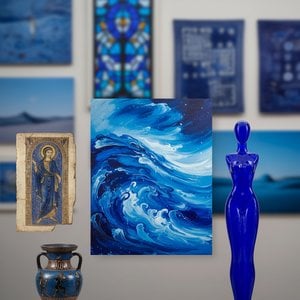
The Allure of Azure: Exploring the Symbolic & Aesthetic Depths of Blue in Art History
Explore the rich history of blue in art! Discover its symbolism, from ancient pigments to modern masterpieces by Kandinsky & Seurat. Uncover the psychological impact and cultural meanings behind this captivating hue.

Top 10 Capodopere Albastre: Picturi Celebre și Inspirație pentru Decor
Descoperă top 10 picturi celebre dominate de nuanțe subtile de albastru! Explorează poveștile din spatele capodoperelor Monet, Renoir și Van Gogh. Inspirație decor interior & reproducere tablouri pe ArtsDot.com

Top 10 Capodopere ale Expresionismului Abstract: Artă, Artiști și Decorațiuni de Lux | ArtsDot.ro
Descoperă Top 10 capodopere ale Expresionismului Abstract! Explorează poveștile lui Pollock, Rothko și De Kooning. Reproduceri de artă de lux & inspirație decor pe ArtsDot.ro. Găsește pictura perfectă pentru spațiul tău!


