


 Vezi în context
 Trimite
 Distribuie
 Detalii
 Ghidul

 Descarcă
 Produse similare
 Radiografie
 Diaporama
 Statistici
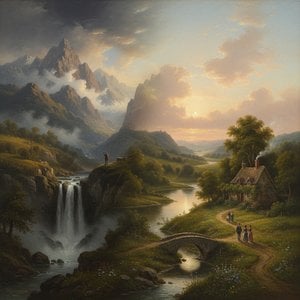
Landscape


 Citește mai mult
Giclée / Imprimare artistică
Printuri giclée sau pe canvas de calitate muzeală, cu proces de producție rapid și opțiuni flexibile de finisare. ( Comandă pictură realizată manual Treci la imagine digitală)




































Alegeți dintre dimensiunile noastre prestabilite, care respectă proporțiile originale ale operei de artă.

Introduceți lățimea și înălțimea de care aveți nevoie, pentru a se potrivi ramei sau peretelui dumneavoastră. O printare poate fi doar tăiată, niciodată extinsă dincolo de dimensiunea imaginii originale, astfel încât o dimensiune cu o formă diferită va pierde o parte din imagine. Vă trimitem o simulare digitală pentru aprobare înainte de a imprima orice. Imaginea afișată pe această pagină nu prezintă tăierea reală — doar simularea arată acest lucru.
Livrare în întreaga lume () în 2 săptămâni, în loc de cele 4/5 săptămâni standard. (22 Octombrie)

Livrare expres gratuită la nivel mondial

Pânză de in premium

Asigurare completă pentru transport

Garanție de rambursare a taxelor vamale

Garanția fidelității culorilor

Politica de retur în 100 de zile (doar pentru defecte)

Garanție de rambursare 100%

Reducere pentru comenzi multiple
 Opțiunea cu sticlă este disponibilă doar pentru dimensiuni de sub 110 cm

Landscape
Giclée / Imprimare artistică
Dimensiune reproducere
-


Preț total
lei 285
Opere similare


Biografie artist
A Romantic Vision of the Welsh Landscape
Thomas Danby (1818–1886) stands as a luminous figure in the pantheon of Victorian landscape painting, a master who sought to bridge the gap between the physical reality of nature and the profound depths of human emotion. Born in Bristol into an artistic lineage that commanded respect, Danby was the son of the celebrated painter Francis Danby. This early immersion in a world of dramatic, emotionally charged canvases provided him with a foundational understanding of the power of atmosphere. However, where his father often leaned toward the theatrical and the imaginative, Thomas carved a distinct path, focusing his gaze upon the rugged, serene beauty of the natural world, particularly the evocative terrains of Wales.
His artistic journey was significantly shaped by his formative years in Paris during the 1820s and 30s. It was within the hallowed halls of the Louvre that Danby honed his technical prowess, earning a living by meticulously copying the masters. This period of intense study brought him into a deep, lifelong dialogue with the work of Claude Lorrain. From the French master, Danby adopted a devotion to atmospheric perspective and the use of light to create a sense of sublime grandeur. He did not merely seek to replicate the scenery he encountered; rather, he sought to capture what his contemporaries described as the "inner heart's feeling" of a view, prioritizing the spiritual resonance of a landscape over the mere recording of local facts.
The Spirit of Romanticism and Technical Mastery
As Danby’s career progressed, his work became a testament to the enduring spirit of Romanticism. His compositions often featured the sweeping vistas of the Welsh mountains, such as the majestic Moel Siabod or the tranquil reaches of Llyn Cynwch. In these works, one finds a masterful command of light and tone, whether rendered in the rich, textured layers of oil on canvas or the delicate, translucent washes of his later watercolor mastery. His ability to manipulate light—creating the soft glow of dusk or the diffused, misty atmosphere of a mountain morning—allowed him to imbue even the most pastoral scenes with a sense of quiet contemplation and awe.
The evolution of his technique is particularly evident in his transition toward watercolor painting in his later years. Having achieved significant recognition through exhibitions at the Royal Academy and the British Institution, Danby became an esteemed member of the Society of Painters in Watercolours. This shift allowed him to explore even more subtle gradations of color and light, further refining his ability to evoke the ephemeral qualities of nature. His friendship with Paul Falconer Poole also played a vital role in this development, as the two shared a deep-seated passion for the natural world that informed their respective approaches to landscape.
Legacy and Artistic Significance
The significance of Thomas Danby lies in his ability to transform the landscape into a vessel for emotional truth. He moved away from the purely idealized compositions of the past, instead finding the sublime within the actual, tangible beauty of the British Isles. His legacy is defined by several key contributions to 19th-century art:
- The Synthesis of Influence: Successfully blending the classical atmospheric techniques of Claude Lorrain with a uniquely British Romantic sensibility.
- Emotional Depth: Moving beyond mere topographical representation to capture the psychological and spiritual essence of the landscape.
- Mastery of Medium: Demonstrating exceptional versatility and skill in both the grand scale of oil painting and the intimate precision of watercolor.
- Cultural Connection: Elevating the Welsh landscape to a subject of profound artistic importance within the Victorian era.
Though he never attained the specific Academy honors he sought, Danby’s impact on the British landscape tradition remains undeniable. His works continue to resonate with viewers, offering a window into a period when art was deeply concerned with the intersection of the natural world and the human soul. Through his eyes, the mountains of Wales are not just geological formations, but enduring monuments to the beauty and mystery of existence.

Thomas Danby
1818 - 1886
Informații rapide
- Full Name: Thomas Danby
- Nationality: English
- Date Of Birth: 1818
- Date Of Death: 1886
- Place Of Birth: Bristol, England
- Notable Artworks: ['Llyn Cynwch']
- Artistic Movement Or Style: Romantic Landscape Painting
- Artists Who Influenced This Artist: ['Claude Lorrain']
- Artists Or Movements Influenced By This Artist: ['Romanticism']
Articole conexe

Evocations of Place: A Historical Journey Through Landscape Art
Explore the rich history of landscape art with ArtsDot. Discover renowned artists, movements like Impressionism & Romanticism, and expert guidance for collecting timeless pieces. Find your perfect serene escape today!

Peisaje Romantice Iconice: 10 Capodopere Artistice pentru Decorul de Lux
Descoperă 10 capodopere romantice iconice de Caspar David Friedrich, Turner și alți maeștri. Explorează istoria artei, emoțiile din peisaje și găsește tablouri canvas perfecte pentru decorul tău pe ArtsDot.com!

The Sublime and the Picturesque: Exploring Emotion & Nature in Romantic Landscape Painting
Explore the emotional power of Romantic landscape painting! Discover the sublime & picturesque traditions, key artists like Friedrich & Cole, and find your perfect artwork at ArtsDot.

Evoking Emotion & Transcendence: Romantic Landscape Painting (18th-19th Century)
Explore the emotional depth of Romantic landscape painting (18th-19th century). Discover key artists like Friedrich & Cole, and the concepts of the sublime. Expert insights for art lovers & collectors.
The Sublime and the Picturesque: Exploring Emotion & Nature in Romantic Landscape Painting
Explore the emotional power of Romantic landscape painting! Discover the sublime & picturesque aesthetics, key artists like Friedrich & Cole, and lasting influence on art history. Find your perfect piece at ArtsDot.