

 Previzualizare
 Trimite prin felicitare
 Distribuie
 Detalii despre lucrare
 Ghid
Ghid

 Descarcă imaginea
 Produse similare
 Radiografie
 Galerie foto
 Întrebări și răspunsuri
 Statistici
Jungle


 Vezi mai mult
Lucrarea de artă afișată pe această pagină este protejată de legile privind drepturile de autor, ceea ce înseamnă că nu putem crea sau vinde în mod legal o reproducere identică. Această protecție este garantată prin acorduri internaționale, precum Convenția de la Berna și de legile naționale, inclusiv cele prevăzute de Legea dreptului de autor din S.U.A. – Titlul 17. Toate drepturile rezervate. Orice reproducere neautorizată este interzisă.
Această metodă respectă pe deplin reglementările privind drepturile de autor, deoarece nu implică copierea sau duplicarea operei protejate. În schimb, este o reinterpretare creativă – o pictură nouă, influențată de original, dar care nu este identică cu acesta.
Giclée / Imprimare artistică
Printuri giclée sau pe canvas de calitate muzeală, cu proces de producție rapid și opțiuni flexibile de finisare. ( Comandă pictură realizată manual Comută pe Imagine Digitală)




P118B lei10

P118H lei10

P118W lei10

P438Z lei10

P508JH lei12

P508YH lei12

P805H lei10

P805Z lei10

P919BZ lei10

P919G lei10

P919XJ lei10

P959ZH lei10

P968JZ lei12

W106C lei8

W218G lei10

W218JH lei8

W218Y lei10

W307PJ lei10

W316G lei10

W316PJ lei8

W316Y lei10

W398PJ lei8

W4111J lei10

W500HY lei15

W500JH lei15

W692G lei12

W849H lei8

W940BG lei15

W953PJ lei8




Alegeți dintre dimensiunile noastre prestabilite, care respectă proporțiile originale ale operei de artă.

Introduceți lățimea și înălțimea necesare pentru a se potrivi ramei sau peretelui dumneavoastră. O printare poate fi doar tăiată, niciodată extinsă dincolo de dimensiunea imaginii originale, astfel încât o dimensiune cu o formă diferită va pierde o parte din imagine. Vă trimitem o simulare digitală pentru aprobare înainte de a imprima orice. Imaginea afișată pe această pagină nu prezintă tăierea reală — doar simularea arată acest lucru.
Livrare în întreaga lume () în 2 săptămâni, în loc de cele 4/5 săptămâni standard. (7 Noiembrie)

Livrare expres gratuită la nivel mondial

Pânză de in de înaltă calitate

Asigurare completă pentru transport

Garanție de rambursare a taxelor vamale

Garanția fidelității culorilor

Politica de retur în 100 de zile (doar pentru defecte de fabricație)

Garanție de rambursare 100%

Ofertă pentru comenzi multiple
 Opțiunea cu sticlă este disponibilă doar pentru dimensiuni de sub 110 cm

Jungle
Giclée / Imprimare artistică
Dimensiune reproducere
-


Preț total calculat
lei 300
Opere similare


Biografie artist
The Mystical Vision of Teofil Ociepka
In the quiet corners of Polish art history, few figures possess the enigmatic allure of Teofil Ociepka. Born on April 22, 1891, in Janów Śląski, Poland, Ociepka was far more than a mere painter; he was a seeker, an occultist, and a dedicated theosophist whose brush served as a conduit for the unseen realms. As a self-taught primitivist, his work emerged not from formal academic training, but from a profound, internal necessity to translate spiritual truths onto canvas. His life, which spanned until 1978 in Bydgoszcz, was a continuous journey through the layers of the subconscious and the esoteric, leaving behind a body of work that vibrates with a dreamlike, otherworldly energy.
Ociepka’s artistic development was deeply intertwined with his spiritual pursuits. His fascination with the occult and theosophy provided him with a unique visual vocabulary, one where the boundaries between the physical landscape and the metaphysical plane are perpetually blurred. Unlike many of his contemporaries who sought to capture the external reality of the Polish countryside, Ociepka looked inward. His early life in Poland, marked by a deep immersion in folk traditions and mystical philosophies, allowed him to cultivate a style that felt both ancient and deeply personal. This fusion of folk art simplicity and complex esoteric symbolism created a tension in his work that continues to captivate modern viewers.
A Language of Symbols and Color
The aesthetic power of Ociepka’s paintings lies in their striking, unadorned clarity. His technique was characterized by the use of bold, saturated colors and remarkably flat, simplified forms—a hallmark of the Primitivist movement. However, beneath this deceptive simplicity lies a dense web of meaning. Every stroke and every shape often carries a weight of symbolic significance, reflecting his preoccupation with the hidden forces of the universe. His landscapes and still-life compositions are rarely just depictions of nature; they are sacred spaces populated by motifs that whisper of cosmic order and spiritual mystery.
When observing his most celebrated works, such as "The Garden" or "The Mountain," one is struck by the following elements:
- Bold Color Palettes: The use of vibrant, often non-naturalistic hues to evoke emotional and spiritual states.
- Symbolic Motifs: The integration of esoteric symbols that bridge the gap between the earthly and the divine.
- Flatness of Form: A rejection of traditional perspective in favor of a more direct, iconographic presentation.
- Dreamlike Atmosphere: A sense of stillness and transcendence that invites the viewer into a meditative state.
Legacy and Historical Significance
Teofil Ociepka stands alongside legendary figures like Nikifor and Henri Rousseau as a master of the Primitivist tradition. While his work shares the raw, intuitive quality found in Rousseau’s jungles, Ociepka’s focus on theosophy gives his oeuvre a distinctively spiritual gravity. He did not merely paint what he saw; he painted what he felt to be true in the higher vibrations of existence. His ability to weave the humble aesthetics of Polish folk art into a grander narrative of universal mysticism has secured his place as one of Poland's most fascinating and enduring artistic voices.
Today, the legacy of Ociepka is preserved through collections in prestigious institutions, including the National Museum in Wrocław and the Museum of Folk Architecture in Sanok. His work remains a vital touchstone for anyone interested in the intersection of art, spirituality, and the human psyche. To encounter an Ociepka painting is to step into a realm where the veil between worlds is thin, offering a glimpse into the profound mysteries that the artist spent his entire life attempting to illuminate.

Teofil Ociepka
1891 - 1978 , Poland
Detalii rapide
- Artistic Movement Or Style: Primitivism
- Full Name: Teofil Ociepka
- Nationality: Polish
- Notable Artworks:
- Living Fire
- Mammoth. Saturn
- Self-Portrait
- Basilisk
- Place Of Birth: Janów Śląski, Poland
- Date Of Birth: 1891
- Date Of Death: 1978
Articole similare
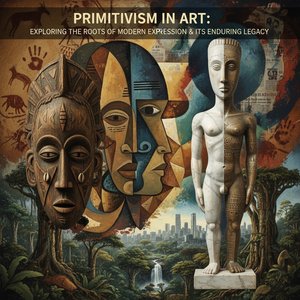
Primitivism in Art: Exploring the Roots of Modern Expression & its Enduring Legacy
Explore the fascinating history of Primitivism in art – its origins, key artists like Gauguin & Picasso, and lasting impact on modern expression. Uncover the complexities of this influential movement with ArtsDot.

Animalia: Prezența Durabilă a Animalelor în Artă și Design Interior
Explorați prezența fascinantă a animalelor în artă și design interior de-a lungul istoriei. Descoperiți simbolismul, influențele culturale și inspirația oferită de lumea animală.

Jan Matejko: Historical Narrative & National Identity in 19th-Century Polish Painting
Explore the powerful historical paintings of Jan Matejko, Poland's national artist. Discover his iconic works & learn how he shaped Polish identity in the 19th century. High-quality reproductions available.

Stanisław Wyspiański: Symbolism, National Identity & the Polish Secession
Explore the life & work of Stanisław Wyspiański, a pivotal figure in Polish Symbolism and the Young Poland movement. Discover his iconic paintings, dramas, and stained glass designs reflecting national identity & artistic innovation.

Beastly Brushstrokes: A Historical Journey Through Animal Painting & Aesthetic Movements
Explore the rich history of animal painting across cultures & movements. Discover iconic artists, symbolism, collecting trends & expert art consultation at ArtsDot.com.