

 Previzualizare
 Trimite prin felicitare
 Distribuie
 Detalii despre lucrare
 Ghid
Ghid

 Descarcă imaginea
 Produse similare
 Radiografie
 Galerie foto
 Întrebări și răspunsuri
 Statistici
A Thames Wharf

- 160.0 x 137.0 cm


 Vezi mai mult
Giclée / Imprimare artistică
Printuri giclée sau pe canvas de calitate muzeală, cu proces de producție rapid și opțiuni flexibile de finisare. ( Comandă pictură realizată manual Comută pe Imagine Digitală)




P118B lei10

P118H lei10

P118W lei10

P438Z lei10

P508JH lei12

P508YH lei12

P805H lei10

P805Z lei10

P919BZ lei10

P919G lei10

P919XJ lei10

P959ZH lei10

P968JZ lei12

W106C lei8

W218G lei10

W218JH lei8

W218Y lei10

W307PJ lei10

W316G lei10

W316PJ lei8

W316Y lei10

W398PJ lei8

W4111J lei10

W500HY lei15

W500JH lei15

W692G lei12

W849H lei8

W940BG lei15

W953PJ lei8




Alegeți dintre dimensiunile noastre prestabilite, care respectă proporțiile originale ale operei de artă.

Introduceți lățimea și înălțimea necesare pentru a se potrivi ramei sau peretelui dumneavoastră. O printare poate fi doar tăiată, niciodată extinsă dincolo de dimensiunea imaginii originale, astfel încât o dimensiune cu o formă diferită va pierde o parte din imagine. Vă trimitem o simulare digitală pentru aprobare înainte de a imprima orice. Imaginea afișată pe această pagină nu prezintă tăierea reală — doar simularea arată acest lucru.
Livrare în întreaga lume () în 2 săptămâni, în loc de cele 4/5 săptămâni standard. (4 Noiembrie)

Livrare expres gratuită la nivel mondial

Pânză de in de înaltă calitate

Asigurare completă pentru transport

Garanție de rambursare a taxelor vamale

Garanția fidelității culorilor

Politica de retur în 100 de zile (doar pentru defecte de fabricație)

Garanție de rambursare 100%

Ofertă pentru comenzi multiple
 Opțiunea cu sticlă este disponibilă doar pentru dimensiuni de sub 110 cm

A Thames Wharf
Giclée / Imprimare artistică
Dimensiune reproducere
-


Preț total calculat
lei 300
A Thames Wharf by Samuel Scott – A Window into 18th Century London
Samuel Scott’s “A Thames Wharf,” painted circa 1757, isn't merely a depiction of a bustling riverside scene; it’s a meticulously crafted snapshot of daily life in burgeoning London. The painting transports us to the heart of maritime commerce and the rhythms of a city on the cusp of transformation, offering a rare glimpse into the world of the East India Company and the vital role the Thames played as its artery. Scott, often considered the “father of English watercolour,” masterfully captures this atmosphere with an almost palpable sense of energy and immediacy – a testament to his innovative approach to capturing light and texture.The Scene Unfolds: Commerce and Community
The composition immediately draws the eye into a vibrant tableau of activity centered around a wharf on the River Thames. The foreground is populated with figures engaged in various tasks: men loading goods onto boats, overseeing operations, and even a dog adding a touch of domesticity to the scene. Notice the careful attention to detail – the varied clothing styles, suggesting a diverse workforce; the sturdy treadwheel crane dominating the middle ground, a crucial piece of machinery for unloading cargo; and the smaller vessel moored in the background, hinting at the constant flow of trade. The buildings lining the wharf are rendered with a realistic yet subtly stylized approach, reflecting the architectural trends of the mid-18th century – brick construction and pitched roofs creating a sense of solidity and permanence. The sky, filled with billowing clouds, adds depth and drama to the scene, suggesting both the potential for inclement weather and the dynamic nature of the river itself.Technique and Style: The Dawn of Watercolour
Scott’s mastery lies in his innovative use of watercolour – a medium he championed during a period when oil painting was still considered the dominant technique. He skillfully employed layering, glazing, and scumbling to achieve remarkable luminosity and atmospheric perspective. Observe how light dances across the surfaces of the buildings and boats, creating an illusion of depth and movement. The artist’s loose brushstrokes and vibrant palette contribute to the overall sense of immediacy and spontaneity – a characteristic that distinguished his work from more formal, academic styles. The painting's realism is tempered by a certain romanticism; Scott wasn’t simply documenting a scene, but rather imbuing it with emotion and character.Historical Context: The East India Company and London’s Rise
“A Thames Wharf” provides invaluable insight into the economic and social landscape of 18th-century London. The painting directly references the East India Company, a powerful entity that controlled vast trade networks across Asia. The presence of the treadwheel crane – a relatively new invention at the time – highlights the increasing mechanization of port operations and the growing importance of London as a global trading center. Furthermore, the bustling activity depicted reflects the city’s rapid growth and transformation during this period, fueled by commerce, immigration, and innovation. The painting serves as a visual record of a pivotal moment in London's history – a time when it was becoming one of the world’s leading financial and commercial hubs.Symbolism and Emotional Resonance
Beyond its historical significance, “A Thames Wharf” resonates with a powerful sense of human connection and industriousness. The figures depicted are not merely anonymous laborers; they represent a community engaged in a vital economic activity. The painting evokes a feeling of energy, movement, and the relentless pursuit of prosperity. It’s a celebration of London's dynamism and its role as a gateway to the world. The slightly hazy atmosphere and the subtle play of light contribute to an overall mood of optimism and possibility – reflecting the belief in progress that characterized this era. This painting is more than just a depiction of a wharf; it’s a portrait of a city on the rise, capturing the spirit of innovation and ambition that defined 18th-century London.Întrebări și răspunsuri
Care este motivul statutului drepturilor de autor pentru "A Thames Wharf"?
„A Thames Wharf” de Samuel Scott este în domeniul public – drepturile de autor au expirat. Termenul de protecție a drepturilor de autor se calculează de la data decesului artistului, iar Samuel Scott a decedat în 1772.
În ce etapă a carierei lui Samuel Scott se încadrează „A Thames Wharf” (1757)?
"A Thames Wharf", creat în 1757, aparține perioadei Mature Period din cariera lui Samuel Scott."
Care este culoarea dominantă în "A Thames Wharf" de Samuel Scott?
Culoarea dominantă a operei "A Thames Wharf" de Samuel Scott este Espresso (#605448).
Opere similare


Biografie artist
The Father of English Watercolour: The Legacy of Samuel Scott
Samuel Scott, born in London around 1702, remains a figure shrouded in artistic mystery—a testament to the challenges faced by documenting artists of his era. Despite scarce biographical details regarding his formative years and training, Scott emerged as one of Britain’s most prominent landscape painters during the mid-18th century, establishing himself as a pioneer in watercolour technique and profoundly influencing subsequent generations of British artists. His distinctive style—characterized by serene riverside scenes and dramatic seascapes imbued with atmospheric perspective—captured the spirit of his time and cemented his legacy as “the father of English watercolour.”
Scott’s artistic journey commenced in approximately 1720, initially focusing on maritime art. Like many artists of his generation, he was deeply impacted by the works of Willem van de Velde the Younger, owning numerous copies and absorbing a masterful handling of light and texture. This influence is palpable in his early works depicting warships engaged in naval battles, demonstrating a meticulous attention to detail and an understanding of compositional principles rooted in Dutch marine painting traditions. His ability to translate the raw power of the sea into delicate, evocative imagery allowed him to bridge the gap between rigid maritime documentation and fine art.
A Vision of London and the Thames
As his career matured, Scott turned his gaze toward the heart of the British Empire, finding profound inspiration in the bustling waterways of the River Thames. His works serve as a vivid window into 18th-century London, capturing the rhythmic pulse of maritime trade and the daily life of the riverside. In masterpieces such as A Thames Wharf (1757), he presents a bustling depiction of commerce, where the movement of boats and the structure of the wharves tell a story of a city in constant motion. His talent lay in his ability to blend topographical accuracy with a romanticized atmosphere, making the industrial and commercial aspects of London appear both grand and intimate.
Beyond the busy docks, Scott possessed a remarkable gift for capturing the architectural majesty of London’s landmarks. His depictions of the city often utilized an oil on canvas medium to achieve a sense of permanence and grandeur, as seen in The Thames at Westminster Bridge with Barges (1746). In this work, he showcases London’s architectural detail through a Romantic lens, using light and shadow to create a captivating historical atmosphere. Similarly, his View of Somerset House Looking Downstream from the York Water-Tower demonstrates his skill in topographical painting, offering a serene look at the cityscape and the nearby Tower of London, rendered with a precision that honors the structural elegance of the era.
Artistic Collaborations and Historical Significance
The development of Scott's style was also shaped by significant professional partnerships. His collaborative project with George Lambert on six paintings portraying East India Company settlements showcased his versatility and ability to synthesize disparate artistic elements—architecture alongside landscape—reflecting the intellectual currents of the period. This partnership resulted in images that conveyed both grandeur and intimacy, capturing the essence of colonial enterprise while simultaneously celebrating the beauty of natural surroundings. Such works were not merely aesthetic pursuits but served as important historical records of Britain's expanding global reach.
The enduring significance of Samuel Scott lies in his role as a transitional figure who helped elevate watercolour from a medium of mere sketching to a respected form of fine art. His contributions can be summarized through several key artistic pillars:
- Pioneering Technique: He introduced a level of atmospheric depth and light manipulation that would define the English watercolour tradition for decades.
- Maritime Mastery: By blending Dutch marine influences with British subject matter, he created a unique genre of naval and riverine art.
- Topographical Documentation: His detailed renderings of London landmarks provided an invaluable visual archive of 18th-century urban life and architecture.
- Cultural Synthesis: Through his collaborations, he successfully merged the documentation of colonial expansion with the aesthetic beauty of landscape painting.
Through his dedicated observation of the Thames and the sea, Samuel Scott did more than just paint landscapes; he captured the very soul of a maritime nation during a period of immense growth and transformation.

Samuel Scott
1702 - 1772 , United Kingdom
Detalii rapide
- Full Name: Samuel Scott
- Nationality: British
- Date Of Birth: 1702
- Date Of Death: 1772
- Place Of Birth: London, United Kingdom
- Notable Artworks:
- View of Somerset House Looking Downstream from the York Water-Tower
- The Thames at Westminster Bridge with Barges
- The Thames at London Bridge
- Artistic Movement Or Style: Landscape painting; Marine art
- Artists Who Influenced This Artist: ['Willem van de Velde']
- Artists Or Movements Influenced By This Artist: ['Canaletto']
Articole similare

Capodopere la National Gallery Londra: 25 de picturi iconice pentru iubitorii de artă și decor rafinat
Descoperă cele mai iconice 25 de picturi din National Gallery Londra! Explorează poveștile lui Van Gogh, Monet, Da Vinci și Rembrandt. Găsește inspirație pentru decorul casei tale cu reproduceri de artă de calitate muzeală pe ArtsDot.com.

Henry Scott Tuke: Sunlit Masculinity & the Pastoral Ideal in Victorian Painting
Explore the captivating world of Henry Scott Tuke's paintings – a master of British Impressionism renowned for his intimate depictions of youth and sunlit maritime scenes. Discover his legacy & aesthetic influence.
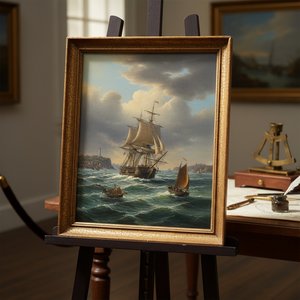
Samuel Walters: Capturing Victorian Maritime Life with Precision & Artistry
Explore the exquisite maritime paintings of Samuel Walters (1811-1882). Discover his mastery of detail, historical scenes & influence on Victorian art. Learn about collecting his works and find high-quality reproductions at ArtsDot.

Thomas H. Shepherd: Capturing Victorian London's Essence Through Topographical Precision
Explore the exquisite topographical paintings of Thomas H. Shepherd, renowned for his detailed depictions of Victorian London and beyond. Discover his legacy & artistic techniques.

Abraham Hulk Senior: Pioneering Maritime Topography of the Dutch Golden Age
Explore the captivating seascapes of Abraham Hulk Senior, a leading Anglo-Dutch marine painter of the 19th century. Discover his signature style, family legacy & collectable artworks at ArtsDot.