


 Previzualizare
 Trimite
 Distribuie
 Detalii despre lucrare

 Descarcă
 Produse similare
 Radiografie
 Diapozitive automate
Copila cu turtă


 Vezi mai mult
Reproducere pictată manual în ulei
Pictură în ulei pe pânză, realizată manual de artiștii noștri la dimensiunea și ramele dorite de dumneavoastră, pe comandă. ( Comandă printul Cumpără imaginea)




P118B $10

P118H $10

P118W $10

P438Z $10

P508JH $12

P508YH $12

P805H $10

P805Z $10

P919BZ $10

P919G $10

P919XJ $10

P959ZH $10

P968JZ $12

W106C $8

W218G $10

W218JH $8

W218Y $10

W307PJ $10

W316G $10

W316PJ $8

W316Y $10

W398PJ $8

W4111J $10

W500HY $15

W500JH $15

W692G $12

W849H $8

W940BG $15

W953PJ $8




Alegeți dintre dimensiunile noastre prestabilite, care respectă proporțiile originale ale operei de artă.

Puteți introduce propriile dimensiuni pentru a se potrivi unui anumit cadru sau spațiu. Dacă dimensiunea selectată nu corespunde proporțiilor imaginii originale, vom decupa opera de artă sau vom extinde pictura cu elemente suplimentare pictate manual. O simulare digitală vă va fi trimisă pentru aprobare înainte de începerea producției.
Vă rugăm să rețineți că previzualizarea de pe ecran nu reflectă decuparea sau extinderea reală. Doar macheta va arăta cu exactitate compoziția finală.
Deși sunt disponibile dimensiuni personalizate, vă recomandăm să selectați o dimensiune din lista predefinită pentru a păstra proporțiile originale.
După plasarea comenzii, echipa ArtsDot.com va contacta clientul prin e-mail pentru instrucțiuni și îi va furniza o previzualizare a machetei
Livrare în întreaga lume () în 3-4 săptămâni, în loc de cele 5 săptămâni standard. (27 August). Fără compromisuri în ceea ce privește calitatea.

Livrare expres gratuită la nivel mondial

Pânză de in de înaltă calitate

Asigurare completă pentru transport

Garanție de rambursare a taxelor vamale

Garanția fidelității culorilor

Politica de retur în 60 de zile (doar pentru defecte)

Garanție de rambursare 100%

Ofertă pentru comenzi multiple
 Opțiunea cu sticlă este disponibilă doar pentru dimensiuni de sub 110 cm

Copila cu turtă
Tehnică de reproducere
Dimensiune reproducere
-


Preț total calculat
$ 263
Ridolfo Schadow’s “Girl with Doves”: A Symphony of Innocence and Neo-Classical Elegance
The painting "Girl with Doves" by Ridolfo Schadow, completed in 1820, stands as a testament to the burgeoning Romantic movement's embrace of classical ideals while simultaneously capturing a poignant moment of youthful serenity. Executed in marble – a medium favored by Schadow for its ability to convey stillness and dignity – this sculpture transcends mere representation; it embodies an aesthetic philosophy rooted in observation and refined emotion. Its enduring appeal lies not only in its formal beauty but also in the profound symbolism woven into its composition, inviting contemplation on themes of purity, peace, and the delicate balance between innocence and experience.- Subject Matter: Schadow’s depiction centers around a young woman seated gracefully upon a pedestal, her gaze directed upwards towards a dove held delicately in her right hand. This simple yet evocative subject matter speaks to the Romantic fascination with idealized femininity and pastoral landscapes – motifs prevalent throughout the era.
- Style & Technique: The sculpture exemplifies Neo-Classical style, characterized by meticulous attention to detail and adherence to sculptural conventions established during antiquity. Schadow skillfully employs modeling techniques—particularly subtle shading—to sculpt the figure’s flesh tones with remarkable realism, capturing the nuances of human anatomy. The drapery is rendered with flowing folds that convey movement without disrupting the overall sense of composure.
- Historical Context: Created in the wake of Napoleon's defeat and amidst a period of significant artistic revival across Europe, “Girl with Doves” reflects the broader cultural currents of its time. Schadow’s work aligns with the Romantic impulse to revisit classical forms as a means of expressing emotion and conveying moral values—a reaction against the perceived excesses of Enlightenment rationalism.
- Symbolism: The dove itself is laden with symbolic significance, representing peace, innocence, and divine grace – concepts central to Christian iconography. Its upward gaze symbolizes aspiration towards spiritual enlightenment, mirroring the Romantic yearning for transcendence. Similarly, the woman’s posture conveys serenity and contemplation, embodying the ideal of feminine virtue.
- Emotional Impact: Viewing “Girl with Doves” evokes a feeling of tranquility and contemplative beauty. Schadow's masterful craftsmanship ensures that every curve and contour contributes to an impression of grace and dignity—a visual embodiment of harmonious balance and refined emotion. The sculpture’s enduring presence in the Staatliche Museen, Berlin, underscores its significance as a cornerstone of Neo-Classical art history.
Opere similare


Biografie artist
Early Life and Training in the Shadow of a Master
Ridolfo Schadow, born Rudolf Schadow on July 9, 1786, in Rome, entered a world already steeped in artistic tradition. His father, Johann Gottfried Schadow, was a prominent German sculptor whose Neoclassical style profoundly shaped the art scene in Berlin. From an early age, Ridolfo benefited from his father’s tutelage, receiving foundational training within the family studio. This initial period saw him exhibiting statues and reliefs at the prestigious Berlin Akademie between 1802 and 1810, demonstrating a burgeoning talent for both mythological and religious subjects. However, it was his subsequent journey to Rome in 1810 that would truly define his artistic trajectory. The allure of Italy—the heartland of classical sculpture—proved irresistible, offering an environment ripe with inspiration and opportunity.Roman Influences and the Pursuit of Individual Style
Upon arriving in Rome, Ridolfo quickly immersed himself in the city’s vibrant art community. He received invaluable guidance from masters like Antonio Canova and Bertel Thorvaldsen, giants whose work epitomized Neoclassical ideals. While initially absorbing their influence, Schadow soon began to forge his own path, seeking a balance between classical precision and a more realistic, genre-based approach. His early Roman sculpture, *Paris*, though ultimately destroyed, signaled this emerging individuality. It was the companion piece—a captivating depiction of a *Woman Spinning*—that truly captured the attention of the art world. This work, portraying a young woman absorbed in her task, resonated with viewers for its serene beauty and naturalism. Multiple versions were commissioned by prominent collectors, including the King of Prussia and the Duke of Devonshire, testament to its widespread appeal. The sculpture’s success stemmed not merely from technical skill but from Schadow's ability to imbue classical forms with a sense of intimate humanity.Themes of Innocence and Religious Conversion
Schadow’s artistic focus often centered on themes of innocence, domesticity, and quiet contemplation. *Girl with Doves (Innocence)*, completed in 1820, exemplifies this sensibility. The sculpture depicts a young girl tenderly holding doves, symbolizing peace and purity. This work, now housed in the Alte Nationalgalerie in Berlin, showcases Schadow’s refined technique and his ability to evoke emotional resonance through subtle gestures and expressions. A pivotal moment in Schadow's life occurred in 1814 with his conversion to Catholicism, influenced by his brother Wilhelm and Friedrich Overbeck. This spiritual shift profoundly impacted his later work, leading him to create statues of religious figures such as *John the Baptist* and the *Virgin and Child*. These sculptures reflect a newfound depth of emotion and devotion, further solidifying his reputation as a sensitive and skilled artist.Legacy and Historical Significance
Despite a tragically short life—Ridolfo Schadow died in Rome on January 31, 1822, at the age of thirty-five—he left an indelible mark on the landscape of 19th-century sculpture. His untimely death interrupted his work on *Achilles with the Body of Penthesilea*, a colossal group intended for the King of Prussia. Though unfinished in marble, the plaster model was widely admired for its antique character and ambitious scale. Schadow’s contribution lies not only in his individual works but also in his ability to bridge the gap between Neoclassical formality and Romantic expressiveness. He infused classical ideals with a sense of realism and emotional depth that resonated with audiences seeking art that spoke to their own experiences and sensibilities. His sculptures, characterized by grace, serenity, and subtle symbolism, continue to captivate viewers today, offering a glimpse into the artistic world of early 19th-century Rome and the enduring power of human emotion.
ridolfo schadow
1786 - 1822 , Italy
Detalii rapide
- Artistic Movement Or Style: Neoclassical sculpture
- Artists Who Influenced This Artist:
- Johann Gottfried Schadow
- Antonio Canova
- Bertel Thorvaldsen
- Date Of Birth: July 9, 1786
- Date Of Death: January 31, 1822
- Full Name: Ridolfo Schadow
- Nationality: German
- Notable Artworks:
- Woman Tying Her Sandal
- Paris
- Girl with Doves (Innocence)
- Place Of Birth: Rome, Italy
Articole similare

Top 10 Capodopere Albastre: Picturi Celebre și Inspirație pentru Decor
Descoperă top 10 picturi celebre dominate de nuanțe subtile de albastru! Explorează poveștile din spatele capodoperelor Monet, Renoir și Van Gogh. Inspirație decor interior & reproducere tablouri pe ArtsDot.com

Cubismul Revoluționar: Top 10 Capodopere Esențiale pentru Decorul Tău
Descoperă top 10 capodopere cubiste de la Picasso, Braque și alții! Explorează istoria artei moderne, tehnicile inovatoare și culorile vibrante ale stilului cubist. Reproduceri tablouri de calitate muzeală pe ArtsDot.com.

Serene Blue Backgrounds: Discover Soulful Art to Transform Your Space with Timeless Elegance
Transform your home with soulful blue art. From serene Monet impressions to modern textured sculptures, discover curated masterpieces designed to inspire calm. Explore expert art consultations and bespoke hand-painted reproductions to create your personal sanctuary.

Portrete Cubiste Iconice: Top 10 Opere de Artă care au Definit Mișcarea
Descoperă top 10 portrete cubiste iconice de la Picasso, Braque și alți maeștri! Explorează istoria mișcării cubiste, tehnicile inovatoare și culorile vibrante. Găsește reproducerea perfectă pentru decorul tău pe ArtsDot.com
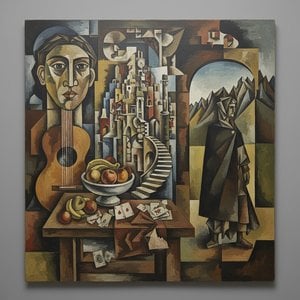
Cubismul Expresionist: 10 Capodopere Definitorii pentru Decoruri de Artă Rafinate
Descoperă cele mai importante 10 capodopere ale cubismului expresionist! Explorează istoria artei moderne, stilul unic al lui Picasso, Braque și Legér. Reproduceri de tablouri de calitate muzeală pentru un decor interior sofisticat. Descoperă toate operele pe ArtsDot.com


