


 Previzualizare
 Trimite
 Distribuie
 Detalii despre lucrare

 Descarcă
 Produse similare
 Radiografie
 Diapozitive automate
Extreme Unction
 Etching
- Rococo
 1755
1755- Early Modern
 57.0 x 44.0 cm
 Muzeul Artele din Los Angeles
 Vezi mai mult
Reproducere pictată manual în ulei
Pictură în ulei pe pânză, realizată manual de artiștii noștri la dimensiunea și ramele dorite de dumneavoastră, pe comandă. ( Comandă versiunea tipărită Comută la imagine)




P118B $10

P118H $10

P118W $10

P438Z $10

P508JH $12

P508YH $12

P805H $10

P805Z $10

P919BZ $10

P919G $10

P919XJ $10

P959ZH $10

P968JZ $12

W106C $8

W218G $10

W218JH $8

W218Y $10

W307PJ $10

W316G $10

W316PJ $8

W316Y $10

W398PJ $8

W4111J $10

W500HY $15

W500JH $15

W692G $12

W849H $8

W940BG $15

W953PJ $8




Alegeți dintre dimensiunile noastre prestabilite, care respectă proporțiile originale ale operei de artă.

Puteți introduce propriile dimensiuni pentru a se potrivi unui anumit cadru sau spațiu. Dacă dimensiunea selectată nu corespunde proporțiilor imaginii originale, vom decupa opera de artă sau vom extinde pictura cu elemente suplimentare pictate manual. O simulare digitală vă va fi trimisă pentru aprobare înainte de începerea producției.
Vă rugăm să rețineți că previzualizarea de pe ecran nu reflectă decuparea sau extinderea reală. Doar macheta va arăta cu exactitate compoziția finală.
Deși sunt disponibile dimensiuni personalizate, vă recomandăm să selectați o dimensiune din lista predefinită pentru a păstra proporțiile originale.
După plasarea comenzii, echipa ArtsDot.com va contacta clientul prin e-mail pentru instrucțiuni și îi va furniza o previzualizare a machetei
Livrare în întreaga lume () în 3-4 săptămâni, în loc de cele 5 săptămâni standard. (10 August). Fără compromisuri în ceea ce privește calitatea.

Livrare expres gratuită la nivel mondial

Pânză de in de înaltă calitate

Asigurare completă pentru transport

Garanție de rambursare a taxelor vamale

Garanția fidelității culorilor

Politica de retur în 60 de zile (doar pentru defecte)

Garanție de rambursare 100%

Ofertă pentru comenzi multiple
 Opțiunea cu sticlă este disponibilă doar pentru dimensiuni de sub 110 cm

Extreme Unction
Tehnică de reproducere
Dimensiune reproducere
-


Preț total calculat
$ 263
Descriere operă de artă
A Somber Glimpse into Venetian Devotion
In the quiet, shadowed corners of eighteenth-century Venice, life was often defined by its most profound transitions. Pietro Longhi’s 1755 etching, Extreme Unction, serves as a hauntingly beautiful window into these private moments of mortality and faith. Unlike the grand, sweeping canvases of his contemporaries that celebrated the triumphs of gods and heroes, Longhi turned his gaze toward the intimate, often heavy atmosphere of the Venetian domestic sphere. This particular work captures the solemnity of the Last Rites, a sacred ritual where a priest administers the final sacraments to the departing soul. Through the delicate medium of etching, Longhi masterfully orchestrates a scene that is as much about the presence of the divine as it is about the palpable weight of human grief.
The composition draws the viewer into a room thick with tension and reverence. At the heart of the narrative lies the bed, where the patient rests in a state of vulnerability, surrounded by the witnesses of their final journey. The priest, an elder figure draped in heavy, traditional robes, stands as the bridge between the earthly and the eternal. Longhi’s ability to render texture through fine, etched lines allows us to feel the weight of the liturgical garments and the stillness of the air. Scattered throughout the room are the humble artifacts of daily life—cups, bowls, and vases—which, in this context, take on a symbolic significance. These objects, mundane in any other setting, become silent participants in the ritual, grounding the spiritual event in the tangible reality of a Venetian household.
Mastery of Line and Emotional Resonance
Technically, this etching showcases Longhi’s profound command over light and shadow, a skill honed during his early training under Antonio Balestra. The monochromatic palette of the etching does not strip the scene of its depth; rather, it enhances the dramatic chiaroscuro effect, pulling focus to the central figures while allowing the periphery to recede into a mysterious, atmospheric gloom. The interplay of light hitting the surfaces of the ceramic bowls and the metallic glint of a cup creates a sense of three-dimensional space that invites the collector to step directly into the room. For the discerning eye, the precision of the linework reveals a master who understood that the smallest detail—the fold of a sleeve or the tilt of a head—could communicate the deepest complexities of human emotion.
For art lovers and interior designers alike, Extreme Unction offers more than just historical interest; it provides a profound emotional anchor for a curated space. The piece possesses a timeless, melancholic elegance that complements sophisticated, classical interiors. It is a work that demands contemplation, making it an ideal centerpiece for a study, a library, or a gallery wall dedicated to the mastery of printmaking. Owning a high-quality reproduction of this etching allows one to preserve the somber beauty of Longhi’s vision, bringing a sense of historical gravity and quiet, reflective grace into the modern home.
Opere similare


Biografie artist
A Venetian Chronicler of Daily Life
Pietro Longhi, born Pietro Falca in Venice on November 5th, 1701, wasn’t painting grand historical narratives or mythological scenes; he was capturing the quiet dramas unfolding within the city's elegant homes and bustling streets. He became renowned for his witty genre paintings – intimate glimpses into the lives of 18th-century Venetians, a departure from the prevailing artistic trends of his time. The son of Alessandro Falca, a silversmith, Longhi’s early training began under the Veronese painter Antonio Balestra, who recognized and nurtured the young artist's talent. This foundation in traditional technique would later serve as a subtle counterpoint to the innovative spirit he brought to his chosen subject matter. He adopted the surname “Longhi” upon beginning his artistic career, a symbolic shedding of his father’s trade for the pursuit of painting.Early Influences and Artistic Training
Pietro Falca's formative years were marked by exposure to Venetian artistic traditions. His initial mentor was Antonio Balestra, a respected Veronese painter who instilled in him a deep understanding of Venetian painting style—characterized by broken brushwork and luminous color glazes reminiscent of Andrea del Verrocchio’s approach. Recognizing Longhi’s considerable potential, Balestra recommended him to Giuseppe Maria Crespi, another influential Bolognese artist known for his innovative use of light and color. This dual influence shaped Longhi's artistic sensibilities from the outset, grounding him in established conventions while simultaneously encouraging experimentation. He diligently studied Crespi’s techniques, absorbing lessons on composition and perspective—skills that would prove invaluable as he developed his own distinctive style.Religious Beginnings and Artistic Evolution
Longhi’s early career focused primarily on religious commissions, producing altarpieces and devotional paintings that adhered to the stylistic norms of the era. His 1732 depiction of Saint Pellegrino for the church of San Pellegrino exemplifies this period, showcasing a masterful command of Venetian painting technique—a testament to Balestra's guidance. However, Longhi’s artistic trajectory took an unexpected turn in the late 1730s when he decisively shifted towards genre scenes—a pivotal decision that would solidify his reputation as one of Venice’s most astute observers of human behavior. This transition wasn’t merely a stylistic preference; it represented a profound engagement with the intellectual currents shaping Europe at the time—particularly the burgeoning fascination with bourgeois society and domestic life.The Venetian Hogarth: Capturing Everyday Life
Longhi quickly earned the moniker “the Venetian Hogarth,” a comparison that speaks volumes about his artistic vision. Like William Hogarth, Longhi eschewed grand historical narratives in favor of portraying scenes from daily life—often infused with subtle satire and psychological insight. Unlike Hogarth’s overtly moralizing tone, Longhi's commentary was more nuanced, employing irony and observation to expose social contradictions without resorting to didactic pronouncements. His paintings are populated by figures engaged in seemingly trivial activities—gambling parlors buzzing with conversation, masked balls glittering with extravagance—yet these scenes reveal deeper truths about human nature and societal dynamics. He possessed an uncanny ability to capture the nuances of emotion and gesture, conveying a sense of immediacy and realism that distinguished him from many of his contemporaries.Style, Technique, and Legacy
Longhi’s artistic style was characterized by meticulous attention to detail—particularly in depicting textures—and a masterful use of light and color. He favored small canvases, meticulously rendered with delicate brushwork and infused with atmospheric luminescence. His interiors are bathed in soft light, creating an illusionistic depth that draws the viewer into the depicted space. Longhi’s technique was informed by both Balestra's grounding in Venetian tradition and Crespi’s pioneering explorations of chiaroscuro—the dramatic interplay between light and shadow—resulting in a style that blended realism with expressive artistry. His work resonated deeply with audiences of his time, who appreciated its charm and intellectual sophistication. He served as Director of the Academy of Drawing and Carving from 1763, furthering his influence within Venetian artistic circles. Pietro Longhi died peacefully in Venice on May 8th, 1785, leaving behind a legacy that continues to inspire artists and scholars today—a testament to his enduring contribution to Venetian art history.
Pietro Longhi
1701 - 1785 , Italia
Detalii rapide
- Artistic Movement Or Style: Venetian painting, Rococo
- Artists Or Movements Influenced By This Artist: ['William Hogarth']
- Artists Who Influenced This Artist:
- Antonio Balestra
- Giuseppe Maria Crespi
- Date Of Birth: November 5, 1701
- Date Of Death: May 8, 1785
- Full Name: Pietro Longhi
- Nationality: Italian
- Notable Artworks:
- The Tailor
- The Baptism
- Painter in his studio
- Place Of Birth: Venice, Italy
Articole similare

Pietro Longhi's Venetian Scenes: A Study of Rococo Society & Domestic Life
Explore the captivating world of Pietro Longhi's Venetian scenes! Discover insightful analysis of his Rococo masterpieces & social commentary on 18th-century life. Learn about this 'Venetian Hogarth' and his lasting artistic legacy.

Top 10 Gravuri Legendare: Capodopere Artistice Care Au Schimbat Istoria Artei
Descoperă top 10 gravuri legendare care au revoluționat arta! Explorează poveștile lui Rembrandt, Goya și alți maeștri. Reproduceri de artă de calitate muzeală pentru un decor inspirat. Vezi colecția completă pe ArtsDot.com

Etching: A Historical Survey of Technique, Aesthetic Qualities & Enduring Artistic Significance
Explore the rich history of etching, from its origins to Rembrandt's masterful innovations. Discover the technique, aesthetic qualities & enduring legacy of this captivating art form. Expert insights for collectors and enthusiasts.

The Intricate World of Etching: A Historical Survey of Technique, Aesthetic Evolution, and Enduring Artistic Impact
Explore the rich history of etching, from its origins to modern practice. Discover techniques, key artists like Rembrandt, and insights for collectors. A comprehensive guide by ArtsDot.
Sacred Narratives Embodied: A Comprehensive Exploration of Religious Iconography in Art History
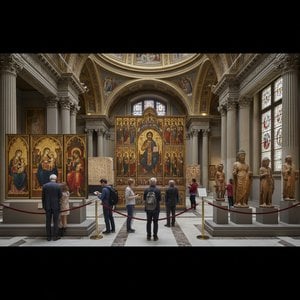
Explore the rich history of religious iconography in art! Discover symbolism, movements & masterpieces from Byzantine to Renaissance periods. Expert insights for collectors and enthusiasts at ArtsDot.

