


Imaginea respectă alegerile tale: , .
Descriere obiect de colecție
Explore Jackson Pollock’s "Marrón y plata" – a captivating drip painting from his Black Paintings series. Abstract expressionism meets rich brown & silver hues. A timeless masterpiece!
 Vezi mai mult
Biografie artist
Paul Jackson Pollock (1912-1956) a fost un pictor american revoluționar, creatorul tehnicilor de "drip painting" și al mișcării Abstract Expressionism. Celebrează-i operele dinamice, expresive și influente, care au transformat arta modernă.
Reproducere pictată manual în ulei
Pictură în ulei pe pânză, pictată manual de artiștii noștri la dimensiunea și ramele dorite de dumneavoastră, pe comandă. ( Comută pe versiunea Print Comută pe Imagine Digitală)
Mai multe detalii despre această pictură
 Previzualizare
 Trimite prin felicitare
 Distribuie
 Detalii despre lucrare
 Ghid
Ghid

 Descarcă imaginea
 Produse similare
 Radiografie
 Galerie foto
 Întrebări și răspunsuri
 Statistici
Comandați tabloul dumneavoastră în patru pași simpli
Nu vă grăbiți. Puteți modifica orice răspuns; prețul din coșul de comandă se actualizează în funcție de fiecare alegere.
1 Pasul unu din patru
Ce dimensiune doriți?
Aceste dimensiuni păstrează proporțiile tabloului original. Ilustrația prezintă alegerea dumneavoastră pe un perete, deasupra unei canapele de doi metri.
Sau introduceți propriile dimensiuni
Alegeți dintre dimensiunile noastre prestabilite, care respectă proporțiile originale ale operei de artă.

Introduceți lățimea și înălțimea necesare pentru a se potrivi ramei sau peretelui dumneavoastră. Această lucrare este pictată manual, așa că, pentru o dimensiune cu o formă diferită, artistul poate picta puțin mai mult în jurul imaginii sau poate tăia puțin din margini — dumneavoastră decideți. Vă vom trimite o simulare digitală pentru aprobare înainte de a începe pictarea. Imaginea afișată pe această pagină nu reprezintă rezultatul real — doar simularea este reprezentativă.
2 Pasul doi din patru
Cum ar trebui pregătită: rulată, întinsă pe pânză sau înramată?
Prețurile de mai jos sunt pentru dimensiunea aleasă la primul pas.
Alege marginile tabloului pe pânză întinsă
Alege cadrul tău

Alb lei1

Margini difuze lei1

Extins lei1

P118B lei10

P118H lei10

P118W lei10

P438Z lei10

P508JH lei12

P508YH lei12

P805H lei10

P805Z lei10

P919BZ lei10

P919G lei10

P919XJ lei10

P959ZH lei10

P968JZ lei12

W106C lei8

W218G lei10

W218JH lei8

W218Y lei10

W307PJ lei10

W316G lei10

W316PJ lei8

W316Y lei10

W398PJ lei8

W4111J lei10

W500HY lei15

W500JH lei15

W692G lei12

W849H lei8

W940BG lei15

W953PJ lei8

H24-GOLD lei30

H24-SILVER lei30

H36-GOLD lei45

H36-SILVER lei45
Înramat
Ramă: . Dimensiuni cu ramă: .
3 Pasul trei din patru
Doriți să modificați ceva în tabloul respectiv?
Majoritatea oamenilor răspund negativ. Deoarece fiecare pictură este realizată manual, artistul nostru poate adapta lucrarea și pentru dumneavoastră.
După plasarea comenzii, echipa ArtsDot.com va contacta clientul prin e-mail pentru instrucțiuni și va furniza o previzualizare (mockup)
4 Pasul patru din patru
Câteva opțiuni de finisare
Toate sunt opționale. Răspunsurile deja selectate nu implică costuri suplimentare.
Cine este autorul?
Livrare în întreaga lume () în 3-4 săptămâni, în loc de cele 5 săptămâni standard. (3 Noiembrie). Fără compromisuri în ceea ce privește calitatea.
O plăcuță de identificare, ca la muzeu?
Detalii plăcuță din bronz gravat
This elegant plaque features the artist's name and the title of the artwork, finely engraved for a timeless presentation.
It is made from bronze with a refined, elegant finish. The text is precisely laser-engraved for a sharp and permanent result. Measuring 9x2 cm, the plaque is compact yet easy to read. It's built to be durable and scratch-resistant, offering a professional, museum-quality look. Mounting is simple thanks to the included adhesive backing.
Detalii plăcuță din acril transparent
The plaque includes essential engraved details such as the artist's name, the title of the artwork, the date it was created, the type of media used-like oil on canvas or watercolor-a brief description of the piece, and a QR code that links to the complete artwork information.
It is crafted from clear acrylic, offering a sleek, modern appearance. The text is UV-engraved in black to ensure strong visual contrast. With a size of 10x15 cm, it ensures optimal readability. It comes equipped with two metal hooks for secure wall mounting. The plaque is designed to be weather-resistant, making it suitable for various environments, and it includes interactive features that work seamlessly with smartphone scanning.
Detalii placă din acril negru
This elegant plaque includes engraved information such as the artist's name, the title of the artwork, the date it was created, the type of media used (like oil on canvas or watercolor), a short description of the artwork, and a QR code for quick access to more information.
The plaque itself is made from refined black acrylic with a premium finish. The text is laser-engraved in white for high contrast and readability. Its size is 10x15 cm, designed to be easy to read. It comes with two metal hooks for professional mounting. The design is sleek and fits any interior style. It is also weather-resistant and durable, with built-in digital integration for mobile compatibility.
Un lac protector?
Când aveți nevoie de el?
✓ Verifică și comandă
Tabloul tău, exact așa cum l-ai comandat

Marrón y plata
Tehnică de reproducere
Dimensiune reproducere
-

Selecție de artiști de elită
Mai multe detalii, rafinament și timp suplimentar de execuție
-

Ramă pentru reproducere artistică
-
-
Pentru opere de artă sau reproduceri care depășesc 105 cm (aproximativ 41 de inch) pe oricare dintre laturi, cadrul va fi livrat demontat, sub formă de kit. Această metodă asigură o livrare sigură și previne deteriorarea în timpul transportului.
Este necesară asamblarea profesională – acest produs nu este de tip DIY (de făcut singur).
Kitul trebuie asamblat, iar pânza întinsă, de către un legător de cadre experimentat, utilizând adeziv pentru lemn (neinclus în colet), o cheie pentru întinderea pânzei și cleme pentru a menține barele la unghi drept în timp ce adezivul se usucă. Asamblarea incorectă sau tensiunea neuniformă a pânzei pot deteriora permanent opera de artă și nu sunt acoperite de garanția noastră.
 Pentru opere de artă sau reproduceri care depășesc 105 cm (aproximativ 41 de inch) pe oricare dintre laturi, cadrul va fi livrat demontat, sub formă de kit. Această metodă asigură o livrare sigură și previne deteriorarea în timpul transportului.
Toate barele din lemn masiv sunt incluse, tăiate cu precizie la dimensiunea necesară.
Asamblat cu șuruburile incluse, plus adeziv pentru lemn pentru îmbinările de colț, care nu este furnizat și trebuie achiziționat de către tâmplarul dumneavoastră.
Sunt necesare unelte profesionale care nu sunt incluse: o șipte de întindere a pânzei (tensionator) și cleme pentru a menține barele la unghi drept în timp ce adezivul se usucă.
Important:
Îmbinările de colț necesită adeziv pentru lemn, barele trebuie fixate cu clești de strângere până când adezivul este complet uscat, iar întinderea pânzei pe cadrul asamblat necesită un clește pentru întins pânza. Niciunul dintre aceste elemente nu este inclus în kit. Vă rugăm să consultați un încadrator profesionist cu experiență înainte de a comanda această dimensiune.

Etichetă de prezentare
-
-

Lac de protecție
Lac lucios (intensifică nuanțele și oferă protecție împotriva luminii și a umidității)
-

Personalizează opera mea de artă
Exemple de elemente ce pot fi personalizate: Înlocuirea feței cu fotografia clientului; Adăugarea unui animal de companie (de exemplu, înlocuirea unei pisici cu un câine); Includerea unui mesaj ascuns în fundal; Modificarea peisajului sau a elementelor din fundal.
-

Livrare rapidă
Livrare la nivel mondial () în 3-4 săptămâni, în loc de cele 5 săptămâni standard. (3 Noiembrie). Fără compromisuri când vine vorba de calitate.
-
Livrare rapidă
Livrare la nivel mondial () în 5 săptămâni. (10 Noiembrie).
Inclus
Preț total calculat
lei 1252
Opțiunea cu sticlă este disponibilă doar pentru dimensiuni de sub 110 cm
Inclus în fiecare comandă
- Livrare expres gratuită la nivel mondial
- Pânză de in de înaltă calitate
- Asigurare completă pentru transport
- Garanție de rambursare a taxelor vamale
- Garanția fidelității culorilor
- Politica de retur în 100 de zile (doar pentru defecte de fabricație)
- Garanție de rambursare 100%
- Ofertă pentru comenzi multiple


A Symphony of Shadow and Silver: Exploring Jackson Pollock’s “Marrón y plata”
Jackson Pollock's "Marrón y plata" ("Brown and Silver") stands as a pivotal work within his celebrated “Black Paintings” series, offering a profound glimpse into the artist’s evolving aesthetic and psychological landscape. This isn’t merely an abstract composition; it is a visceral expression of emotion translated onto canvas through revolutionary technique.Deconstructing the Abstract: Style & Technique
Pollock abandoned traditional easel painting in favor of working with canvases spread on the floor, initiating his iconic drip and pour method. This radical departure from convention allowed for a directness and immediacy previously unseen in art. In “Marrón y plata,” layers of liquid paint – household enamels diluted to varying consistencies – are interwoven into a complex network of lines and forms. The absence of recognizable imagery forces the viewer to engage with the painting on a purely sensory level, experiencing its rhythm, texture, and energy. It’s an example of *action painting*, where the process itself is as significant as the final result.A Palette of Contemplation: Color & Composition
The title aptly describes the dominant color scheme: earthy browns are dramatically contrasted with shimmering silver accents. This interplay isn't simply aesthetic; it evokes a sense of depth, luminosity, and perhaps even melancholy. The limited palette contributes to the painting’s introspective mood, drawing the eye into its intricate web. The composition lacks a focal point, encouraging the viewer’s gaze to wander across the canvas, discovering new details with each observation.Historical Context & Artistic Influences
Created between 1950 and 1951, “Marrón y plata” reflects Pollock's shift away from the more vibrant, chaotic compositions of his earlier work. This period coincided with a time of personal turmoil for the artist, which is often reflected in the darker tonality and restrained energy of these paintings. While rooted in abstract expressionism, Pollock’s style was also informed by surrealist automatism – a technique aimed at accessing the subconscious mind – and Native American sand painting traditions. His interest in Jungian psychology, particularly the concept of archetypes, may have influenced his creation of universal forms within abstraction.Emotional Resonance & Symbolic Interpretation
Despite its lack of representational imagery, “Marrón y plata” is deeply evocative. The swirling lines and layered textures can be interpreted as representing inner turmoil, the complexities of human emotion, or even the vastness of the cosmos. The painting’s ambiguity allows for a multitude of interpretations, making it a uniquely personal experience for each viewer. It's a work that invites contemplation and encourages an emotional response rather than offering easy answers.Legacy & Accessibility
“Marrón y plata” resides in the esteemed collection of the Museo Nacional Thyssen-Bornemisza, solidifying its place within art history. Pollock’s innovative techniques continue to inspire artists today, and his work remains a cornerstone of modern art. For those seeking to experience the power of this masterpiece firsthand, high-quality reproductions are available, allowing you to bring the energy and emotion of “Marrón y plata” into your own space.- Explore Jackson Pollock’s life and work further: ArtsDot – Marrón y plata
- Learn more about Abstract Expressionism: Wikipedia - Jackson Pollock
Întrebări și răspunsuri
Care este formatul pentru "Marrón y plata"?
"Marrón y plata" de Paul Jackson Pollock este o compoziție de tip Portrait. Proporțiile merită verificate înainte de a alege dimensiunea printului.
Unde se încadrează "Marrón y plata" în întreaga creație a lui Paul Jackson Pollock?
"Marrón y plata" face parte din perioada Abstract Expressionism a lui Paul Jackson Pollock, ale cărei teme recurente includ surrealist & folk art echoes, jungian archetypes & unconscious, post-war anxiety & chaos", exploration of the subconscious, key 'black paintings' series piece, pushing action painting boundaries, reflecting personal turmoil".
Există un ghid pentru "Marrón y plata" de Paul Jackson Pollock?
O pagină de Fișă informativă este disponibilă pentru "Marrón y plata" de Paul Jackson Pollock: o fișă informativă imprimabilă despre operă, concepută pentru elevi și utilizare în mediul școlar.
Opere similare


Paul Jackson Pollock
1912 - 1956, Statele Unite ale Americii
Biografie artist
Early Life and the Seeds of Innovation
Paul Jackson Pollock, born in Cody, Wyoming, in 1912, was a restless spirit from the outset. His early life was marked by frequent relocation as his father, Leroy – also known as Roy – pursued work as a land surveyor across the vast landscapes of the American West. This itinerant existence instilled in young Pollock a deep connection to the natural world and an exposure to diverse cultures, particularly through encounters with Native American art during those surveying trips – impressions that would subtly permeate his artistic vision later in life. Though he never explicitly imitated Indigenous styles, the raw energy and spiritual resonance of these early experiences undoubtedly left their mark.
Pollock’s formal artistic training began at the Manual Arts High School in Los Angeles, followed by studies at the Art Students League of New York under the tutelage of Thomas Hart Benton. Benton, a prominent figure in the Regionalist movement, emphasized rhythmic composition and narrative themes rooted in American life. While Pollock initially absorbed these lessons, his inherent inclination leaned toward more abstract explorations. He was also profoundly impacted by Mexican muralists like José Clemente Orozco, whose powerful depictions of social struggle resonated deeply with him. These early influences laid a foundation, but it was the burgeoning world of Surrealism that truly unlocked Pollock’s artistic potential.
The Birth of Action Painting and a Revolutionary Technique
The 1930s saw Pollock experimenting with various techniques, seeking alternatives to traditional brushwork. He began pouring paint, exploring its fluidity and unpredictable nature. However, it was around 1947 that his artistic trajectory underwent a radical transformation. Abandoning the easel altogether, Pollock laid canvases directly on the floor, initiating what would become known as his “drip technique.” He then proceeded to drip, splash, and fling paint onto the canvas from above, orchestrating a dynamic dance between artist, medium, and surface.
This wasn’t merely about applying paint; it was about embodying the act of creation itself. Pollock's canvases became arenas for physical expression, capturing the immediacy of his gestures and emotions. The resulting paintings are characterized by their “all-over” composition – a lack of central focus that invites the viewer to explore the entire surface as a unified field of energy. Intricate networks of lines and colors intertwine, creating a visual complexity that is both captivating and challenging. He employed unconventional tools—sticks, knives, even syringes—to manipulate the paint in unpredictable ways, further emphasizing the spontaneous nature of his process.
This innovative approach positioned Pollock as a central figure in the burgeoning Abstract Expressionist movement, which emerged in post-World War II New York City. Abstract Expressionism prioritized spontaneous gesture, large scale, and non-representational imagery, reflecting a broader cultural shift away from traditional artistic conventions. His marriage to fellow artist Lee Krasner was also pivotal; she provided unwavering emotional support and actively encouraged his artistic development, recognizing the groundbreaking nature of his work.
Iconic Works and Lasting Legacy
Pollock’s most celebrated works—such as Number 1, 1950 (Lavender Mist), One: Number 31, 1950, Blue Poles: Number 11, 1952, and Convergence—are testaments to his revolutionary technique. These paintings are not simply images; they are records of a performance, imbued with the artist’s physical presence and emotional intensity. The dynamic energy that emanates from these canvases is palpable, drawing viewers into a world of pure abstraction.
His style transcends mere aesthetics; it's an exploration of process over product. Pollock sought to capture the immediacy of his actions and emotions on canvas, rejecting traditional notions of composition and representation. He delved into Jungian psychology, exploring archetypes and the subconscious in his art, seeking to tap into universal symbols and primal energies.
Pollock’s impact on the history of art is immeasurable. He fundamentally altered the way artists approached painting, breaking free from easel-based methods and embracing a more performative approach. His work helped solidify New York City's position as a global center for modern art, shifting the focus away from European dominance. His influence can be seen in the work of countless artists who followed, including those associated with Color Field painting and later forms of abstract expressionism.
Personal Struggles and Artistic Evolution
Pollock’s life was marked by significant personal challenges, most notably a lifelong struggle with alcoholism. Despite periods of sobriety, he frequently succumbed to his addiction, which profoundly impacted his health and artistic output. This internal turmoil often manifested in the intensity and emotional rawness of his paintings – a reflection of his inner struggles projected onto the canvas.
Despite these difficulties, Pollock continued to push the boundaries of art, experimenting with new materials and techniques. He developed a deep interest in color theory and explored the psychological effects of different hues and tones. His work evolved over time, moving from more representational forms to increasingly abstract compositions. The influence of Surrealism remained a constant presence, informing his use of symbolism and imagery.
His relationship with Lee Krasner was central to his artistic development. She provided him with emotional support, encouragement, and critical feedback – often challenging him to refine his technique and explore new directions. Their shared passion for art and their mutual respect fueled their creative partnership.
A Lasting Influence
Jackson Pollock died tragically in 1956 at the age of 44, following a car accident. His untimely death cut short a brilliant career, but his legacy continues to resonate today. His innovative techniques—particularly the drip painting method—have been widely imitated and adapted by artists across various disciplines. He remains one of the most influential figures in modern art, a pioneer who redefined the possibilities of painting and inspired generations of artists to embrace spontaneity, experimentation, and emotional expression.


Articole similare
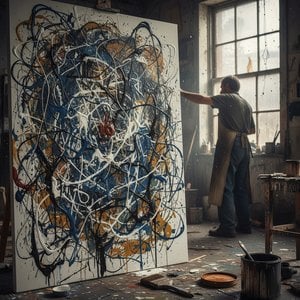
Paul Jackson Pollock: A Radical Departure – Exploring Abstract Expressionism's Pioneering Figure and His Enduring Legacy
Explore the revolutionary art of Jackson Pollock & Abstract Expressionism. Discover his iconic drip paintings, lasting impact, and considerations for collecting this pivotal American artist. Expert insights at ArtsDot.

Top 10 Capodopere ale Expresionismului Abstract: Artă, Artiști și Decorațiuni de Lux | ArtsDot.ro
Descoperă Top 10 capodopere ale Expresionismului Abstract! Explorează poveștile lui Pollock, Rothko și De Kooning. Reproduceri de artă de lux & inspirație decor pe ArtsDot.ro. Găsește pictura perfectă pentru spațiul tău!

Mark Rothko: Cele Mai Iconice 25 De Capodopere – Artă Abstractă pentru Decor Rafinat
Descoperă cele mai iconice 25 de picturi abstracte ale lui Mark Rothko! Explorează istoria, culorile și emoțiile din spatele fiecărei capodopere. Reproduceri artă de calitate muzeală & inspirație decor pe ArtsDot.com.