

- 230.0 x 230.0 cm


Imaginea respectă alegerile tale: , .
Descriere obiect de colecție
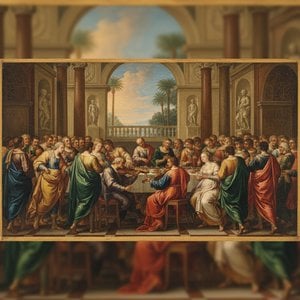
Experience the opulent grandeur of Paolo Veronese's 'Honour'! This iconic Renaissance masterpiece showcases nine figures within a lavish setting, embodying nobility and Venetian artistry.
 Vezi mai mult
Biografie artist
Paolo Veronese (1528-1588): Maestru venetian al culorii și compoziției spectaculoase, renumit pentru scene fastuoase de banchet și arhitectură. Descoperă moștenirea sa!
Reproducere pictată manual în ulei
Pictură în ulei pe pânză, pictată manual de artiștii noștri la dimensiunea și ramele dorite de dumneavoastră, pe comandă. ( Comută pe versiunea Print Comută pe Imagine Digitală)
Mai multe detalii despre această pictură
 Previzualizare
 Trimite prin felicitare
 Distribuie
 Detalii despre lucrare
 Ghid
Ghid

 Descarcă imaginea
 Produse similare
 Radiografie
 Galerie foto
 Întrebări și răspunsuri
 Statistici
Comandați tabloul dumneavoastră în patru pași simpli
Nu vă grăbiți. Puteți modifica orice răspuns; prețul din coșul de comandă se actualizează în funcție de fiecare alegere.
1 Pasul unu din patru
Ce dimensiune doriți?
Aceste dimensiuni păstrează proporțiile tabloului original. Ilustrația prezintă alegerea dumneavoastră pe un perete, deasupra unei canapele de doi metri.
Sau introduceți propriile dimensiuni
Alegeți dintre dimensiunile noastre prestabilite, care respectă proporțiile originale ale operei de artă.

Introduceți lățimea și înălțimea necesare pentru a se potrivi ramei sau peretelui dumneavoastră. Această lucrare este pictată manual, așa că, pentru o dimensiune cu o formă diferită, artistul poate picta puțin mai mult în jurul imaginii sau poate tăia puțin din margini — dumneavoastră decideți. Vă vom trimite o simulare digitală pentru aprobare înainte de a începe pictarea. Imaginea afișată pe această pagină nu reprezintă rezultatul real — doar simularea este reprezentativă.
2 Pasul doi din patru
Cum ar trebui pregătită: rulată, întinsă pe pânză sau înramată?
Prețurile de mai jos sunt pentru dimensiunea aleasă la primul pas.
Alege marginile tabloului pe pânză întinsă
Alege cadrul tău

Alb lei1

Margini difuze lei1

Extins lei1

P118B lei10

P118H lei10

P118W lei10

P438Z lei10

P508JH lei12

P508YH lei12

P805H lei10

P805Z lei10

P919BZ lei10

P919G lei10

P919XJ lei10

P959ZH lei10

P968JZ lei12

W106C lei8

W218G lei10

W218JH lei8

W218Y lei10

W307PJ lei10

W316G lei10

W316PJ lei8

W316Y lei10

W398PJ lei8

W4111J lei10

W500HY lei15

W500JH lei15

W692G lei12

W849H lei8

W940BG lei15

W953PJ lei8

H24-GOLD lei30

H24-SILVER lei30

H36-GOLD lei45

H36-SILVER lei45
Înramat
Ramă: . Dimensiuni cu ramă: .
3 Pasul trei din patru
Doriți să modificați ceva în tabloul respectiv?
Majoritatea oamenilor răspund negativ. Deoarece fiecare pictură este realizată manual, artistul nostru poate adapta lucrarea și pentru dumneavoastră.
După plasarea comenzii, echipa ArtsDot.com va contacta clientul prin e-mail pentru instrucțiuni și va furniza o previzualizare (mockup)
4 Pasul patru din patru
Câteva opțiuni de finisare
Toate sunt opționale. Răspunsurile deja selectate nu implică costuri suplimentare.
Cine este autorul?
Livrare în întreaga lume () în 3-4 săptămâni, în loc de cele 5 săptămâni standard. (4 Noiembrie). Fără compromisuri în ceea ce privește calitatea.
O plăcuță de identificare, ca la muzeu?
Detalii plăcuță din bronz gravat
This elegant plaque features the artist's name and the title of the artwork, finely engraved for a timeless presentation.
It is made from bronze with a refined, elegant finish. The text is precisely laser-engraved for a sharp and permanent result. Measuring 9x2 cm, the plaque is compact yet easy to read. It's built to be durable and scratch-resistant, offering a professional, museum-quality look. Mounting is simple thanks to the included adhesive backing.
Detalii plăcuță din acril transparent
The plaque includes essential engraved details such as the artist's name, the title of the artwork, the date it was created, the type of media used-like oil on canvas or watercolor-a brief description of the piece, and a QR code that links to the complete artwork information.
It is crafted from clear acrylic, offering a sleek, modern appearance. The text is UV-engraved in black to ensure strong visual contrast. With a size of 10x15 cm, it ensures optimal readability. It comes equipped with two metal hooks for secure wall mounting. The plaque is designed to be weather-resistant, making it suitable for various environments, and it includes interactive features that work seamlessly with smartphone scanning.
Detalii placă din acril negru
This elegant plaque includes engraved information such as the artist's name, the title of the artwork, the date it was created, the type of media used (like oil on canvas or watercolor), a short description of the artwork, and a QR code for quick access to more information.
The plaque itself is made from refined black acrylic with a premium finish. The text is laser-engraved in white for high contrast and readability. Its size is 10x15 cm, designed to be easy to read. It comes with two metal hooks for professional mounting. The design is sleek and fits any interior style. It is also weather-resistant and durable, with built-in digital integration for mobile compatibility.
Un lac protector?
Când aveți nevoie de el?
✓ Verifică și comandă
Tabloul tău, exact așa cum l-ai comandat

Honour
Tehnică de reproducere
Dimensiune reproducere
-

Selecție de artiști de elită
Mai multe detalii, rafinament și timp suplimentar de execuție
-

Ramă pentru reproducere artistică
-
-
Pentru opere de artă sau reproduceri care depășesc 105 cm (aproximativ 41 de inch) pe oricare dintre laturi, cadrul va fi livrat demontat, sub formă de kit. Această metodă asigură o livrare sigură și previne deteriorarea în timpul transportului.
Este necesară asamblarea profesională – acest produs nu este de tip DIY (de făcut singur).
Kitul trebuie asamblat, iar pânza întinsă, de către un legător de cadre experimentat, utilizând adeziv pentru lemn (neinclus în colet), o cheie pentru întinderea pânzei și cleme pentru a menține barele la unghi drept în timp ce adezivul se usucă. Asamblarea incorectă sau tensiunea neuniformă a pânzei pot deteriora permanent opera de artă și nu sunt acoperite de garanția noastră.
 Pentru opere de artă sau reproduceri care depășesc 105 cm (aproximativ 41 de inch) pe oricare dintre laturi, cadrul va fi livrat demontat, sub formă de kit. Această metodă asigură o livrare sigură și previne deteriorarea în timpul transportului.
Toate barele din lemn masiv sunt incluse, tăiate cu precizie la dimensiunea necesară.
Asamblat cu șuruburile incluse, plus adeziv pentru lemn pentru îmbinările de colț, care nu este furnizat și trebuie achiziționat de către tâmplarul dumneavoastră.
Sunt necesare unelte profesionale care nu sunt incluse: o șipte de întindere a pânzei (tensionator) și cleme pentru a menține barele la unghi drept în timp ce adezivul se usucă.
Important:
Îmbinările de colț necesită adeziv pentru lemn, barele trebuie fixate cu clești de strângere până când adezivul este complet uscat, iar întinderea pânzei pe cadrul asamblat necesită un clește pentru întins pânza. Niciunul dintre aceste elemente nu este inclus în kit. Vă rugăm să consultați un încadrator profesionist cu experiență înainte de a comanda această dimensiune.

Etichetă de prezentare
-
-

Lac de protecție
Lac lucios (intensifică nuanțele și oferă protecție împotriva luminii și a umidității)
-

Personalizează opera mea de artă
Exemple de elemente ce pot fi personalizate: Înlocuirea feței cu fotografia clientului; Adăugarea unui animal de companie (de exemplu, înlocuirea unei pisici cu un câine); Includerea unui mesaj ascuns în fundal; Modificarea peisajului sau a elementelor din fundal.
-

Livrare rapidă
Livrare la nivel mondial () în 3-4 săptămâni, în loc de cele 5 săptămâni standard. (4 Noiembrie). Fără compromisuri când vine vorba de calitate.
-
Livrare rapidă
Livrare la nivel mondial () în 5 săptămâni. (11 Noiembrie).
Inclus
Preț total calculat
lei 1249
Opțiunea cu sticlă este disponibilă doar pentru dimensiuni de sub 110 cm
Inclus în fiecare comandă
- Livrare expres gratuită la nivel mondial
- Pânză de in de înaltă calitate
- Asigurare completă pentru transport
- Garanție de rambursare a taxelor vamale
- Garanția fidelității culorilor
- Politica de retur în 100 de zile (doar pentru defecte de fabricație)
- Garanție de rambursare 100%
- Ofertă pentru comenzi multiple


The Grand Spectacle of Honour
Paolo Veronese’s “Honour,” painted in 1557, isn't merely a painting; it’s an immersive theatrical experience captured on canvas. Commissioned for the refectory of the Monastery of San Giorgio Maggiore in Venice, this monumental tondo—a circular composition—immediately overwhelms with its scale and opulent detail. It’s a scene brimming with figures, draped in luxurious fabrics, engaged in what appears to be a solemn gathering, yet possesses an underlying sense of playful extravagance that defines Veronese's signature style.
- A Dramatic Narrative: The composition unfolds like a carefully staged drama. A central figure, reclining on a richly embroidered bed, is crowned with a golden circlet – the very symbol of “Honour” itself. His posture and expression suggest both regal authority and a quiet contemplation.
- A Crowd of Dignitaries: Surrounding him are a multitude of figures, each rendered with meticulous detail and vibrant color. These aren’t simply portraits; they represent various roles within Venetian society – nobles, clergy, musicians, and even allegorical figures embodying virtues like Charity and Justice.
- Architectural Splendor: Veronese masterfully integrates architectural elements into the scene, creating a sense of depth and grandeur. The backdrop is dominated by a magnificent palace, its windows filled with musicians playing instruments, further enhancing the feeling of an elaborate celebration.
The Venetian Mannerist Style
“Honour” exemplifies Veronese’s mastery of the Venetian Mannerist style, a movement that flourished in the 16th century and is characterized by its dramatic compositions, rich colors, and intricate details. Unlike the more restrained elegance of earlier Renaissance styles, Mannerism embraced exaggeration, artificiality, and a heightened sense of theatricality. Veronese takes this to new heights, creating a world that feels both real and utterly fantastical.
Technique:- Color Palette: Veronese’s use of color is breathtaking – deep reds, vibrant blues, shimmering golds, and lush greens create a dazzling spectacle. He expertly employs chiaroscuro (the contrast between light and dark) to sculpt the figures and enhance the sense of depth.
- Compositional Complexity: The sheer number of figures in “Honour” is remarkable. Veronese skillfully manages this complexity through careful arrangement, creating a dynamic and engaging composition that draws the viewer’s eye throughout the scene.
- Brushwork: His brushstrokes are loose and expressive, contributing to the painting's overall sense of movement and energy.
Symbolism and Historical Context
Beyond its visual splendor, “Honour” is laden with symbolism. The central figure’s crown represents not just power but also virtue and moral integrity. The surrounding figures embody various aspects of Venetian society and the values it held dear. Painted during a period of significant political and social change in Venice, the painting reflects the city's wealth, power, and its complex relationship with the Catholic Church.
Additional Research:- The Monastery Setting: The painting was originally intended for the refectory of the Monastery of San Giorgio Maggiore, a space where monks would gather to eat and contemplate. This context adds another layer of meaning to the scene – it’s not just a celebration; it's a meditation on virtue and honor.
- Allegorical Figures: The presence of allegorical figures like Charity (represented by a woman holding a child) reinforces the painting’s moral message.
- Influence of Titian: Veronese was deeply influenced by the Venetian painter Titian, particularly his mastery of color and composition. However, Veronese developed his own distinctive style, characterized by greater theatricality and extravagance.
A Timeless Masterpiece
“Honour” remains one of Paolo Veronese’s most celebrated works, admired for its breathtaking beauty, technical brilliance, and profound symbolism. It's a testament to the artist's skill as a colorist, composition designer, and storyteller. Today, reproductions of this magnificent painting continue to inspire awe and wonder, offering a glimpse into the opulent world of 16th-century Venice.
Întrebări și răspunsuri
În ce cameră este recomandată lucrarea "Honour" de Paolo Veronese?
O reproducere a „Honour” se potrivește de minune într-un Living Room.
La ce vârstă a creat Paolo Veronese opera „Honour”?
Paolo Veronese a creat "Honour" la vârsta de 28. Artistul s-a născut în 1528, iar lucrarea datează din 1556.
"Honour" de Paolo Veronese se numără printre operele de artă Mannerism (Late Renaissance) căutate?
În cadrul mișcării Mannerism (Late Renaissance), „Honour” are un nivel de popularitate Iconic.
Opere similare


Paolo Veronese
1528 - 1588, Italia
Biografie artist
A Venetian Visionary: The Life and Art of Paolo Veronese
Paolo Caliari, known to the world as Paolo Veronese, emerged from the vibrant artistic landscape of 16th-century Venice as a master of color, composition, and opulent spectacle. Born in Verona in 1528, the son of a stonecutter, his early life was steeped in the visual richness of his surroundings – the classical architecture, sculpted forms, and burgeoning humanist ideals that characterized the region. His initial training under Antonio Badile and Giovanni Francesco Caroto laid a foundation in traditional techniques, but it was his move to Venice in the 1550s that truly ignited his artistic genius. The city itself became his muse, its bustling marketplaces, grand palazzi, and shimmering waterways informing the scale and drama of his work. He quickly absorbed the influences of established Venetian masters like Titian, whose mastery of color profoundly impacted Veronese’s palette, yet he forged a distinct style characterized by an unparalleled sense of theatricality and grandeur.The Painter of Feasts and Grand Narratives
Veronese's reputation rests upon his monumental paintings, particularly those depicting lavish feasts and biblical scenes transformed into dazzling displays of Venetian life. The Wedding at Cana, completed in 1563 for the Benedictine monastery of San Giorgio Maggiore, stands as a testament to his skill. This colossal canvas isn’t merely an illustration of the miracle; it's a vibrant panorama of 16th-century society, teeming with elegantly dressed figures, musicians, and architectural details rendered with breathtaking precision. The painting is not just about what happened at Cana but *how* it would have looked if it had occurred in Venice during Veronese’s time – a deliberate choice that challenged conventional religious depictions. Similarly, The Feast in the House of Levi, originally titled The Last Supper, caused controversy with the Inquisition due to its inclusion of contemporary figures and a seemingly irreverent atmosphere. Veronese defended his artistic license, asserting that painters were entitled to the same creative freedom as poets and jesters – a bold statement reflecting his belief in art’s power to interpret and reimagine sacred narratives. These works weren't simply religious depictions; they were celebrations of life, wealth, and the splendor of Venice itself. He wasn’t interested in austere spirituality but rather in capturing the joy and abundance of existence. His ability to seamlessly blend historical accuracy with imaginative storytelling cemented his place as one of Venice’s most celebrated artists.Influences and Artistic Development
While Titian’s influence on Veronese’s colorism is undeniable, his artistic development was a complex interplay of various influences. The architectural precision he brought to his compositions owes much to the classical tradition prevalent in Verona during his formative years, particularly the work of architects like Michele Sanmicheli. He also absorbed elements from Central Italian masters such as Raphael and Parmigianino, evident in the graceful lines and harmonious arrangements within his paintings. However, Veronese didn’t simply imitate these influences; he synthesized them into a uniquely Venetian style characterized by its dramatic use of light, vibrant color palettes, and meticulous attention to detail. He excelled at creating illusions of space and depth, employing perspective techniques to draw viewers into the heart of his elaborate scenes. His mastery of oil painting allowed him to achieve an unparalleled luminosity and richness of texture. He also ran a large workshop, with contributions from his brother Benedetto and his sons Gabriele and Carlo (or 'Carletto'), ensuring that his style continued to flourish even after his death in 1588.Major Achievements and Notable Works
Veronese’s career was marked by a remarkable output of significant works, each showcasing his distinctive style and technical prowess. Beyond the aforementioned *Wedding at Cana* and *Feast in the House of Levi*, he produced numerous altarpieces for churches throughout Venice and the surrounding region, including masterpieces such as The Reconciliation of St. Peter and Paul (1575-76) and a series of paintings for the Villa Barbaro at Maser, depicting mythological scenes with an astonishing level of detail and theatricality. His decoration of the library of S. Marco in Venice – featuring intricate ceiling frescoes – remains one of his most ambitious projects. His work during this period demonstrated not only technical skill but also a profound understanding of Venetian society and its values. The *Sacred Life of St. Francis* (1573-76) is another prime example, showcasing his ability to depict both the saint’s spiritual journey and the vibrant life of his followers.Legacy and Historical Significance
Paolo Veronese's impact extends far beyond the realm of Renaissance art. His work has resonated through centuries, inspiring artists across various disciplines. His dramatic compositions and vibrant color schemes have been cited as influences on everything from Baroque painting to modern cinema – even finding echoes in the visual aesthetics of Spaghetti Westerns. He was part of the “great trio” of Venetian painters—alongside Titian and Tintoretto—each contributing uniquely to the city’s artistic legacy, yet Veronese often stands apart for his sheer exuberance and celebration of earthly pleasures. His paintings continue to captivate audiences with their grandeur and spectacle, offering a glimpse into the opulent world of 16th-century Venice. Veronese's legacy is a testament to his artistic genius, his ability to capture the essence of an era, and his enduring contribution to the history of art.


Articole similare
Paolo Veronese: A Renaissance Master of Color, Composition, and Venetian Splendor
Explore the vibrant world of Paolo Veronese, a Renaissance master renowned for his opulent compositions, masterful use of color, and dramatic Venetian scenes. Discover key artworks & legacy.

The Golden Light of Innovation: Exploring the Venetian Renaissance Art Movement (1430–1580)
Explore the Golden Age of Venetian art (1430–1580). Discover Giorgione, Titian & Tintoretto's techniques, the 'colorito' revolution, and lasting influence. Expert insights for collectors & enthusiasts.

Pietro Longhi's Venetian Scenes: A Study of Rococo Society & Domestic Life
Explore the captivating world of Pietro Longhi's Venetian scenes! Discover insightful analysis of his Rococo masterpieces & social commentary on 18th-century life. Learn about this 'Venetian Hogarth' and his lasting artistic legacy.