

 Previzualizare
 Trimite prin felicitare
 Distribuie
 Detalii despre lucrare
 Ghid
Ghid

 Descarcă imaginea
 Produse similare
 Radiografie
 Galerie foto
 Întrebări și răspunsuri
 Statistici
Cupid and Psyche

- 137.0 x 160.0 cm


 Vezi mai mult
Giclée / Imprimare artistică
Printuri giclée sau pe canvas de calitate muzeală, cu proces de producție rapid și opțiuni flexibile de finisare. ( Comandă pictură realizată manual Comută pe Imagine Digitală)




P118B lei10

P118H lei10

P118W lei10

P438Z lei10

P508JH lei12

P508YH lei12

P805H lei10

P805Z lei10

P919BZ lei10

P919G lei10

P919XJ lei10

P959ZH lei10

P968JZ lei12

W106C lei8

W218G lei10

W218JH lei8

W218Y lei10

W307PJ lei10

W316G lei10

W316PJ lei8

W316Y lei10

W398PJ lei8

W4111J lei10

W500HY lei15

W500JH lei15

W692G lei12

W849H lei8

W940BG lei15

W953PJ lei8




Alegeți dintre dimensiunile noastre prestabilite, care respectă proporțiile originale ale operei de artă.

Introduceți lățimea și înălțimea necesare pentru a se potrivi ramei sau peretelui dumneavoastră. O printare poate fi doar tăiată, niciodată extinsă dincolo de dimensiunea imaginii originale, astfel încât o dimensiune cu o formă diferită va pierde o parte din imagine. Vă trimitem o simulare digitală pentru aprobare înainte de a imprima orice. Imaginea afișată pe această pagină nu prezintă tăierea reală — doar simularea arată acest lucru.
Livrare în întreaga lume () în 2 săptămâni, în loc de cele 4/5 săptămâni standard. (15 Noiembrie)

Livrare expres gratuită la nivel mondial

Pânză de in de înaltă calitate

Asigurare completă pentru transport

Garanție de rambursare a taxelor vamale

Garanția fidelității culorilor

Politica de retur în 100 de zile (doar pentru defecte de fabricație)

Garanție de rambursare 100%

Ofertă pentru comenzi multiple
 Opțiunea cu sticlă este disponibilă doar pentru dimensiuni de sub 110 cm

Cupid and Psyche
Giclée / Imprimare artistică
Dimensiune reproducere
-


Preț total calculat
lei 299
A Celestial Encounter: The Radiance of Orazio Gentileschi’s Cupid and Psyche
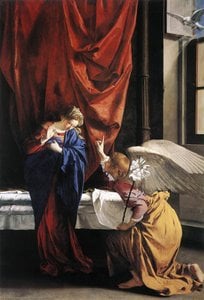
In the quiet, shadowed depths of the early seventeenth century, a transformative magic was unfolding in the heart of Italy, and few works capture this transition as poignantly as Orazio Gentileschi’s “Cupid and Psyche.” Completed in 1628, this masterpiece serves as a breathtaking bridge between the stylized, often artificial elegance of Mannerism and the raw, visceral drama of the Baroque era. The painting invites us into a sacred, intimate space where the boundaries between the mortal and the divine dissolve. As we gaze upon the central figures, we are not merely observers of a myth; we are witnesses to a profound moment of emotional vulnerability and celestial connection. The scene, steeped in the atmosphere of tenebrismo, utilizes stark contrasts of light and shadow to pull the viewer into a realm where every flicker of illumination feels like a divine revelation.
The narrative foundation of this work is drawn from the ancient, enchanting fables of antiquity—specifically the tales of Psyche, a mortal princess whose soul must undergo harrowing trials to prove her worthiness of the god Cupid. Gentileschi translates this epic journey into a singular, quiet moment of intense psychological depth. Through his masterful use of a pyramidal composition, he directs our gaze upward, centering our attention on the tender interaction between the two lovers. The artist’s technique is nothing short of extraordinary; he renders the velvet softness of Psyche’s skin and the powerful, muscular contours of Cupid with such precision that the figures seem to breathe within their dark, mysterious surroundings. This meticulous attention to texture, combined with the dramatic interplay of light, creates a sensory experience that is both tactile and ethereal.
Symbolism and the Baroque Soul
Beyond its technical brilliance, “Cupid and Psyche” is a profound meditation on the nature of love and the human spirit. The presence of two celestial beings, positioned like silent guardians above the lovers, imbues the scene with an undeniable sense of sanctity. These figures serve as reminders that the passion shared between Cupid and Psyche is not merely a fleeting earthly impulse, but a cosmic event sanctioned by the heavens. The deep, enveloping shadows that surround the pair do more than provide contrast; they represent the unknown trials and the darkness of the mortal condition, against which the light of love must constantly struggle to shine. For the discerning collector or interior designer, this painting offers much more than aesthetic beauty; it provides a focal point of profound narrative weight and spiritual resonance.
The emotional impact of the piece lies in its ability to evoke pathos through subtlety rather than overt spectacle. There is an unmistakable tension in the air—a mixture of Psyche’s trepidation and Cupid’s ardent, protective desire. This psychological complexity makes the artwork a timeless addition to any curated collection. Whether placed in a grand, classical hall or used as a sophisticated accent in a contemporary, minimalist space, a high-quality reproduction of this work brings with it an aura of historical importance and emotional sophistication. It is a piece that demands contemplation, inviting anyone who stands before it to reflect on the enduring power of devotion and the beautiful struggle of the soul to find its light.
Întrebări și răspunsuri
Cum este descrisă paleta de culori din "Cupid and Psyche" de Orazio Gentileschi?
Paleta lui "Cupid and Psyche" de Orazio Gentileschi este descrisă ca fiind Earthy, oferind o descriere concisă a culorilor lucrării.
Unde și în ce scop este recomandată piesa „Cupid and Psyche”?
Cele două recomandări pentru "Cupid and Psyche" de Orazio Gentileschi sunt utilizarea în (Focal) și spațiul (Restaurant).
Din ce perioadă istorică face parte "Cupid and Psyche" de Orazio Gentileschi?
Perioada istorică a operei "Cupid and Psyche" de Orazio Gentileschi este Early Modern. Această clasificare plasează lucrarea în contextul istoriei artei.
Opere similare




Biografie artist
A Tuscan Dawn: The Life and Art of Orazio Gentileschi
Born in 1563 amidst the rolling hills of Tuscany, Orazio Gentileschi embarked on a journey that would see him become a pivotal figure in the transition from Mannerism to Baroque painting. Initially known as Orazio Lomi, he gravitated towards Rome, then the epicenter of artistic innovation, where he honed his skills within the workshops of Cola dell’Amata and absorbed the architectural sensibilities of Francesco da Sangallo. These early influences instilled in him a meticulous attention to form and composition, characteristics that would remain hallmarks of his style even as it dramatically evolved. Gentileschi’s initial work often involved contributing figures to larger decorative schemes conceived by other artists – a formative experience that taught him collaboration and adaptability, yet also hinted at a burgeoning ambition for independent expression. He began his career assisting in the creation of frescoes for churches and palaces, learning the fundamentals of perspective, color theory, and composition under the tutelage of established masters. This period provided invaluable training, exposing him to diverse artistic styles and techniques, laying the groundwork for his future development as a painter.Embracing the Shadow: Caravaggio's Influence and Artistic Development
The turn of the 17th century marked a turning point in Gentileschi’s artistic trajectory. The revolutionary naturalism of Caravaggio burst onto the Roman art scene, challenging established conventions with its dramatic use of light and shadow – *tenebrism* – and unflinching realism. Gentileschi was profoundly affected by this seismic shift, adopting elements of Caravaggio's style into his own work. However, he wasn’t merely an imitator; rather, he filtered Caravaggio’s innovations through his existing artistic sensibilities. While retaining the dramatic intensity, Gentileschi softened the harshness of Caravaggio’s *tenebrism*, introducing a lighter palette and a more refined approach to detail. This resulted in paintings that possessed both emotional power and elegant grace – a unique synthesis that distinguished him from his contemporaries. Biblical scenes and mythological narratives became frequent subjects, allowing Gentileschi to explore themes of faith, heroism, and human vulnerability with compelling visual storytelling. He skillfully blended Caravaggio’s stark contrasts with his own penchant for nuanced color gradations, creating an atmosphere of both drama and serenity. His early works demonstrate a clear debt to Caravaggio, yet they also possess a distinct Tuscan lyricism that sets him apart.A Courtly Wanderer: From Paris to London
Gentileschi’s artistic reputation extended beyond Italy’s borders. His talent attracted the patronage of powerful figures, leading him on a peripatetic journey through Europe. He spent time at the court of Marie de' Medici in Paris, where his refined style resonated with the Queen’s taste for elegance and sophistication. This period saw a further evolution in his work, characterized by increasingly elaborate compositions and a heightened sense of decorum. He became known for his ability to capture the nuances of aristocratic life, depicting portraits and scenes of courtly intrigue with remarkable skill and sensitivity. However, it was his invitation to England in 1626 that would define the final chapter of his career. Appointed court painter to Charles I, Gentileschi became one of the first major exponents of Caravaggism in Britain, significantly influencing the development of English Baroque painting. He undertook ambitious projects, including a series of ceiling paintings for Greenwich Palace (now Marlborough House), showcasing his mastery of large-scale decorative schemes and solidifying his position as a leading artist of his time. His work in England reflected a shift towards greater formality and grandeur, aligning with the tastes of the royal court.Key Works and Artistic Style
Gentileschi’s oeuvre encompasses a diverse range of subjects, including biblical scenes, mythological narratives, portraits, and allegorical compositions. His most celebrated works include “Danae,” a dramatic depiction of Zeus’s abduction of Danaë, showcasing his mastery of color and composition; "The Annunciation," a serene portrayal of the Virgin Mary receiving the news of her impending motherhood, demonstrating his ability to evoke spiritual emotion; and “The Virgin Mary with Child” – a testament to his skill in capturing the tenderness and grace of maternal love. His style is characterized by a harmonious blend of Mannerist precision and Caravaggesque dynamism. He employed a rich palette, often utilizing warm earth tones alongside vibrant blues and reds, creating a sense of depth and luminosity. Gentileschi’s compositions are typically balanced and symmetrical, yet they are infused with a dramatic tension that draws the viewer's eye to key figures and moments. His meticulous attention to detail—from the folds of drapery to the expressions on his subjects’ faces—contributes to the overall realism and emotional impact of his paintings.Legacy and Lasting Impact
Orazio Gentileschi’s contributions to the world of art are multifaceted. He bridged the gap between Mannerism and Baroque, absorbing the innovations of Caravaggio while forging his own distinctive style. His use of vibrant colors, dramatic compositions, and refined technique influenced a generation of artists across Europe. He was instrumental in introducing Caravaggism to England, leaving an indelible mark on the artistic landscape there. But perhaps his most enduring legacy lies in his daughter, Artemisia Gentileschi. Trained in her father’s studio, she emerged as one of the most celebrated female painters of the Baroque era, carrying forward the family's artistic tradition and achieving renown in her own right. Today, Gentileschi’s works are held in prestigious museums and galleries worldwide – from the Uffizi Gallery in Florence to the Accademia Gallery in Venice – testaments to his enduring brilliance and lasting impact on the history of art. His paintings continue to captivate viewers with their emotional depth, technical virtuosity, and timeless beauty.- Major Works: “Danae”, "The Annunciation", "The Virgin Mary"
- Key Influences: Mannerism, Caravaggio
- Artistic Style: Baroque, Dramatic compositions, Bright colors.

Orazio Gentileschi
1563 - 1639 , Italia
Detalii rapide
- Artistic Movement Or Style: Baroc, Caravaggism
- Artists Or Movements Influenced By This Artist:
- Artemisia Gentileschi
- Barocco
- Artists Who Influenced This Artist:
- Caravaggio
- Sangallo
- Date Of Birth: 1563
- Date Of Death: 1639
- Full Name: Orazio Gentileschi
- Nationality: Italian
- Notable Artworks:
- Danae
- Annunciata
- Maria cu copil
- Place Of Birth: Tuscany, Italia
Articole similare

From Grandeur to Grace: Exploring the Evolution of Baroque & Rococo Art
Explore the captivating evolution from Baroque's drama to Rococo's grace! Discover key artists, characteristics & lasting influence of these art movements with expert insights at ArtsDot.

Top 10 Capodopere Baroc Olandez: Artă, Istorie și Decorațiuni Interioare de Lux
Descoperă top 10 capodopere Baroc Olandez! Rembrandt, Vermeer și alți maeștri. Explorează istoria artei, tehnicile unice și atmosfera luxoasă a picturilor baroce. Reproduceri de artă de calitate muzeală pe ArtsDot.com.

Lyonel Feininger: Bridging Expressionism & Cubism – A Study of Spiritual Geometry
Explore the captivating world of Lyonel Feininger, a pivotal figure bridging Expressionism & Cubism. Discover his architectural visions, Bauhaus influence, and enduring legacy in modern art history. Learn more at ArtsDot.

The Stillness Within: Contemplation in Art History & its Enduring Aesthetic Force
Explore the profound history of contemplation in art, from Renaissance masterpieces by Botticelli to modern expressions of inner space. Discover iconic artworks & expert insights for discerning collectors at ArtsDot.

Renașterea Timpurie: 10 Capodopere Esențiale pentru Decorul de Lux
Descoperă 10 capodopere renascentiste esențiale – Botticelli, Leonardo da Vinci și Rafael! Explorează istoria artei, tehnicile artistice și simbolismul picturilor. Reproduceri de lux pentru decor interior pe ArtsDot.com.
