


 Previzualizare
 Trimite
 Distribuie
 Detalii despre lucrare

 Descarcă
 Produse similare
 Radiografie
 Diapozitive automate
Interior
 Impressionism
 1938
1938 59.0 x 45.0 cm
 Galeria Națională din Bosnia și Herțegovina
 Vezi mai mult
Giclée / Imprimare artistică
Printuri giclée sau pe canvas de calitate muzeală, cu proces de producție rapid și opțiuni flexibile de finisare. ( Comandă pictură lucrată manual Cumpără imaginea)




































Alegeți dintre dimensiunile noastre prestabilite, care respectă proporțiile originale ale operei de artă.

Puteți introduce propriile dimensiuni pentru a se potrivi unui anumit cadru sau spațiu. Dacă dimensiunea selectată nu corespunde proporțiilor imaginii originale, vom decupa lucrarea de artă sau vom extinde imaginea cu margini oglindite sau cu o culoare uniformă. Un mockup digital va fi trimis pentru aprobarea dumneavoastră înainte de începerea producției.
Vă rugăm să rețineți că previzualizarea de pe ecran nu reflectă decuparea sau extinderea reală. Doar mockup-ul va arăta cu exactitate compoziția finală.
Deși dimensiunile personalizate sunt disponibile, vă recomandăm să selectați o dimensiune din lista predefinită pentru a păstra proporțiile originale.
Livrare în întreaga lume () în 2 săptămâni, în loc de cele 4/5 săptămâni standard. (3 Septembrie)

Livrare expres gratuită la nivel mondial

Pânză de in de înaltă calitate

Asigurare completă pentru transport

Garanție de rambursare a taxelor vamale

Garanția fidelității culorilor

Politica de retur în 60 de zile (doar pentru defecte)

Garanție de rambursare 100%

Ofertă pentru comenzi multiple
 Opțiunea cu sticlă este disponibilă doar pentru dimensiuni de sub 110 cm

Interior
Giclée / Imprimare artistică
Dimensiune reproducere
-


Preț total calculat
$ 62
Opere similare


Biografie artist
Paul Gauguin: A Revolutionary of Color and Spirit
Born Eugène Henri Paul Gauguin in 1848 amidst the tumultuous year of European revolutions, Gauguin’s life was a relentless pursuit of artistic authenticity and a profound rejection of academic conventions. His journey from stockbroker to celebrated Post-Impressionist painter is a testament to his unwavering vision and willingness to forge his own path. Initially raised in Peru by his mother's family, Gauguin’s childhood instilled within him a fascination with the exotic and a deep appreciation for diverse cultures – influences that would profoundly shape his artistic output. Returning to France, he received a rudimentary education before finding himself drawn to the burgeoning art world of Paris, initially as an observer and then, crucially, as a student of Camille Pissarro.
Pissarro’s mentorship proved pivotal, introducing Gauguin to the core tenets of Impressionism. However, Gauguin quickly outgrew the limitations he perceived in this movement, seeking a more expressive and symbolic language for his art. He began experimenting with bolder colors, flattened perspectives, and simplified forms, moving away from the meticulous observation of light and color favored by many of his contemporaries. This nascent style, characterized by its raw emotion and spiritual intensity, would eventually define him as a pioneer of Post-Impressionism.
The Search for Paradise: Tahiti and Beyond
In 1891, Gauguin embarked on a transformative journey to Tahiti, seeking refuge from the perceived corruption and materialism of Western society. This move was not merely an escape but a deliberate attempt to reconnect with a simpler, more authentic way of life – a paradise he envisioned as the ideal setting for his art. His time in Tahiti produced some of his most iconic works, including *Nafea fa tatoua* (When Will You Marry?) and *Ta Horai* (The Vision of Eve), which are characterized by their vibrant colors, simplified forms, and evocative symbolism. These paintings depict Tahitian women in a state of reverie, reflecting Gauguin’s fascination with Polynesian culture and his desire to capture the essence of primal spirituality.
However, his idyllic vision was shattered by illness and financial difficulties. His relationship with Teha'ira, a local woman, ended tragically, and he faced increasing hostility from the Tahitian population. In 1895, disillusioned and increasingly isolated, Gauguin left Tahiti for the Marquesas Islands, continuing his artistic exploration of indigenous cultures and spiritual themes. This period saw the creation of works like *Death Mask*, a haunting portrait that captures the artist’s own sense of isolation and mortality.
A Distinctive Style: Symbolism and Expression
Gauguin's artistic style evolved dramatically throughout his career, moving beyond Impressionistic influences to embrace elements of Symbolism and Primitivism. He rejected traditional academic techniques in favor of a more direct and emotionally charged approach. His brushstrokes were often loose and expressive, applied with a sense of urgency and spontaneity. He employed flattened perspectives, simplified forms, and bold color combinations to create works that are both visually striking and psychologically resonant.
Crucially, Gauguin’s work is imbued with symbolism. He drew inspiration from Polynesian mythology, religious iconography, and his own personal experiences, using these elements to convey complex ideas about love, death, spirituality, and the human condition. His paintings are not merely representations of reality but rather symbolic explorations of inner states and universal themes.
Legacy and Influence
Despite facing considerable criticism during his lifetime, Paul Gauguin’s influence on 20th-century art is undeniable. His radical experimentation with color, form, and symbolism paved the way for movements such as Fauvism and Expressionism. Artists like Henri Matisse and Vincent van Gogh were profoundly inspired by his work, adopting his bold use of color and expressive brushstrokes. Gauguin’s willingness to challenge artistic conventions and pursue his own unique vision continues to resonate with artists today.
Today, Paul Gauguin is recognized as one of the most important figures in modern art—a revolutionary who liberated color and emotion from the constraints of academic tradition, leaving behind a legacy of vibrant, evocative paintings that continue to captivate and inspire audiences around the world. His work stands as a testament to the power of individual expression and the enduring allure of the exotic.

omer mujadžić
1903 - 1991 , Bosnia and Herzegovina
Detalii rapide
- Artistic Movement Or Style:
- Post-Impressionism
- Symbolism
- Artists Or Movements Influenced By This Artist:
- Fauvism
- Expressionism
- Artists Who Influenced This Artist:
- Camille Pissarro
- Paul Cézanne
- Date Of Birth: July 7, 1848
- Date Of Death: May 8, 1903
- Full Name: Eugène Henri Paul Gauguin
- Nationality: French
- Notable Artworks:
- Vision of the Sermon
- Iahona and Her Brother
- The Vision After the Sermon
- Place Of Birth: Paris, France
Articole similare
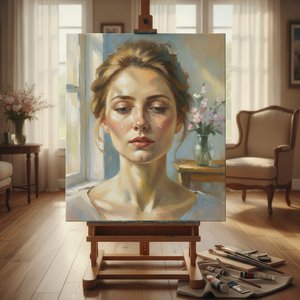
Capturing Light & Emotion: A Guide to Impressionistic Portraiture for Your Home
Discover how Impressionistic portraiture can elevate your home. Learn to use light, color, and texture to create an emotive interior with expert guidance on selecting and customizing museum-quality oil reproductions that transform modern spaces into timeless sanctuaries.

Dincolo de Efemer: Cultivarea unei Estetici Interioare Durabile prin Reverii Renascentiste, Lumina Imresionistă și Vitalitatea Pop Art-ului
Descoperă secretele unei estetici interioare durabile! Consultanță expertă, reproduceri artă de calitate muzeală (Renascentism, Impresionism, Pop Art) și servicii personalizate. Creează spațiul perfect cu ArtsDot.

The Enduring Legacy of Oil on Canvas: Technique, History & Aesthetic Impact
Explore the rich history & techniques of oil painting – from Renaissance masters to Impressionism. Discover pigments, layering methods, and why this timeless medium endures. Expert insights for artists & art enthusiasts.

Renoir: Cele Mai Iconice Capodopere – Artă, Frumusețe și Decorațiuni de Lux
Descoperă cele mai frumoase 25 de picturi Renoir! Explorează capodoperele impresionismului, culorile vibrante și poveștile din spatele fiecărei opere. Reproduceri artă de lux pe ArtsDot.com – adaugă eleganță locuinței tale!

Oil on Canvas: A Historical & Technical Exploration of a Timeless Artistic Medium
Explore the rich history & enduring techniques of oil painting on canvas. Discover the science behind its longevity, conservation practices, and contemporary relevance. Expert insights for art enthusiasts.

