

 Previzualizare
 Trimite prin felicitare
 Distribuie
 Detalii despre lucrare
 Ghid
Ghid

 Descarcă imaginea
 Produse similare
 Radiografie
 Galerie foto
 Întrebări și răspunsuri
 Statistici
Untitled (102)

 Vezi mai mult
Lucrarea de artă afișată pe această pagină este protejată de legile privind drepturile de autor, ceea ce înseamnă că nu putem crea sau vinde în mod legal o reproducere identică. Această protecție este garantată prin acorduri internaționale, precum Convenția de la Berna și de legile naționale, inclusiv cele prevăzute de Legea dreptului de autor din S.U.A. – Titlul 17. Toate drepturile rezervate. Orice reproducere neautorizată este interzisă.
Această metodă respectă pe deplin reglementările privind drepturile de autor, deoarece nu implică copierea sau duplicarea operei protejate. În schimb, este o reinterpretare creativă – o pictură nouă, influențată de original, dar care nu este identică cu acesta.
Giclée / Imprimare artistică
Printuri giclée sau pe canvas de calitate muzeală, cu proces de producție rapid și opțiuni flexibile de finisare. ( Comandă pictură realizată manual Comută pe Imagine Digitală)




P118B lei10

P118H lei10

P118W lei10

P438Z lei10

P508JH lei12

P508YH lei12

P805H lei10

P805Z lei10

P919BZ lei10

P919G lei10

P919XJ lei10

P959ZH lei10

P968JZ lei12

W106C lei8

W218G lei10

W218JH lei8

W218Y lei10

W307PJ lei10

W316G lei10

W316PJ lei8

W316Y lei10

W398PJ lei8

W4111J lei10

W500HY lei15

W500JH lei15

W692G lei12

W849H lei8

W940BG lei15

W953PJ lei8




Alegeți dintre dimensiunile noastre prestabilite, care respectă proporțiile originale ale operei de artă.

Introduceți lățimea și înălțimea necesare pentru a se potrivi ramei sau peretelui dumneavoastră. O printare poate fi doar tăiată, niciodată extinsă dincolo de dimensiunea imaginii originale, astfel încât o dimensiune cu o formă diferită va pierde o parte din imagine. Vă trimitem o simulare digitală pentru aprobare înainte de a imprima orice. Imaginea afișată pe această pagină nu prezintă tăierea reală — doar simularea arată acest lucru.
Livrare în întreaga lume () în 2 săptămâni, în loc de cele 4/5 săptămâni standard. (8 Noiembrie)

Livrare expres gratuită la nivel mondial

Pânză de in de înaltă calitate

Asigurare completă pentru transport

Garanție de rambursare a taxelor vamale

Garanția fidelității culorilor

Politica de retur în 100 de zile (doar pentru defecte de fabricație)

Garanție de rambursare 100%

Ofertă pentru comenzi multiple
 Opțiunea cu sticlă este disponibilă doar pentru dimensiuni de sub 110 cm

Untitled (102)
Giclée / Imprimare artistică
Dimensiune reproducere
-


Preț total calculat
lei 300
Opere similare


Biografie artist
A Life Woven from Fragments
Domenico “Mimmo” Rotella, born in Catanzaro, Italy, on October 7th, 1918, wasn’t simply an artist; he was a chronicler of the urban pulse. His life unfolded as a deliberate dismantling – not just of posters plastered across Roman walls, but also of conventional artistic notions. From his early years immersed in the vibrant, politically charged art scene of post-war Rome, Rotella developed a singular approach: the ‘décollage,’ a technique that transformed fleeting advertisements into enduring works of art. This wasn’t mere collage; it was an interrogation of consumer culture, a visual archaeology of the city's ephemeral narratives.
His initial artistic explorations leaned towards figurative painting, influenced by movements like Cubism and Futurism. However, a pivotal moment arrived in 1953 – what he termed “Zen illumination.” Observing the relentless cycle of posters being torn down and replaced, Rotella recognized a potent metaphor: the transient nature of images and their constant recontextualization within the urban landscape. This insight led him to abandon traditional painting, embracing instead the act of tearing and pasting, transforming discarded advertisements into layered, complex compositions.
The Language of the Street
Rotella’s ‘décollages’ weren't random acts of destruction. Each tear, each overlapping image, carried a deliberate weight. He meticulously selected posters – film stills, fashion advertisements, political slogans – capturing moments of cultural significance and projecting them onto canvas with an almost obsessive precision. The resulting works are not simply reproductions; they are reinterpretations, imbued with the artist’s own sensibility and a profound understanding of the city's visual language.
Influenced by Dadaism and Surrealism, Rotella’s work moved beyond mere representation. He sought to capture the *feeling* of the street – its frenetic energy, its constant flux, its inherent contradictions. The fragmented images, often juxtaposed with unexpected elements, created a sense of disorientation and intrigue, inviting viewers to actively engage with the artwork and decipher its hidden meanings.
From Rome to Paris: A New Realism
In 1961, Rotella’s work gained international recognition when he was invited by critic Pierre Restany to join the Nouveau Réalisme movement in Paris. This marked a significant shift in his artistic trajectory, pushing him towards greater experimentation and collaboration. The ‘Mec-Art’ process, developed during this period, involved projecting negative images onto emulsion-coated canvases – a technique that further emphasized the materiality of the artwork and its relationship to the urban environment.
Rotella's engagement with Nouveau Réalisme extended beyond purely aesthetic considerations. He was deeply interested in exploring the intersection between art, media, and society. His work often addressed themes of consumerism, mass culture, and political propaganda, reflecting the turbulent social and cultural landscape of post-war Europe.
Legacy and Influence
Mimmo Rotella’s contribution to 20th-century art is undeniable. He redefined the boundaries of collage and assemblage, transforming discarded materials into powerful works of art that continue to resonate today. His ‘décollages’ offer a unique perspective on urban life, revealing the hidden narratives embedded within the visual culture of the city.
Beyond his technical innovations, Rotella's legacy lies in his willingness to challenge conventional artistic practices and embrace the unexpected. He demonstrated that beauty could be found in decay, that meaning could emerge from chaos, and that even the most mundane objects – a torn poster – could hold profound significance.

Mimmo Rotella
1918 - 2006
Detalii rapide
- Full Name: Domenico "Mimmo" Rotella
- Nationality: Italian
- Date Of Birth: 1918
- Date Of Death: 2006
- Place Of Birth: Catanzaro, Italy
- Notable Artworks:
- Cinecittà series
- Artypos series
- Plastiforme
- Artistic Movement Or Style:
- Décollage
- Nouveau Réalisme
- Artists Who Influenced This Artist:
- Cubism
- Futurism
- Kandinsky
- Mondrian
- Artists Or Movements Influenced By This Artist:
- Yves Klein
- Pierre Restany
Articole similare

The Enduring Legacy of Fine Art Prints: Technique, History & Aesthetic Impact
Explore the rich history & techniques of fine art prints. Discover investment potential, assess authenticity, and learn how to preserve your collection with expert guidance. Trusted insights for discerning collectors.

Giclée Prints: Archival Quality & Aesthetic Nuances for the Discerning Collector
Explore the world of giclée prints with ArtsDot. Learn about archival quality, aesthetic nuances & investment potential. Expert guidance for discerning art collectors seeking museum-quality reproductions and lasting value.

Top 10 Tablouri Celebre Dominante de Negru: Artă, Istorie și Decor Rafinat
Descoperă Top 10 tablouri celebre dominate de negru! Explorează istoria, simbolismul și tehnicile artistice ale unor opere iconice de Rembrandt, Goya și alți maeștri. Reproduceri de artă de calitate muzeală pe ArtsDot.com – inspiră-ți decorul!
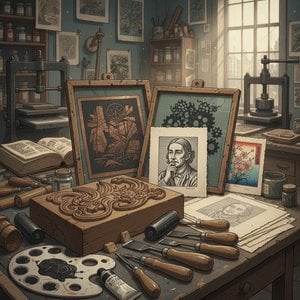
The Enduring Legacy of Printmaking: Techniques, Themes & Artistic Innovation Across Centuries
Explore the rich history of printmaking with ArtsDot. Discover techniques from intaglio to lithography, learn about collecting valuable prints & find museum-quality reproductions. Expert insights for art enthusiasts and collectors.

Echoes of Time: Exploring the Enduring Appeal & Historical Context of Vintage Art Prints
Explore the captivating world of vintage art prints! Discover their history, collecting tips & enduring appeal. Expert insights on chromolithography and building a legacy collection with ArtsDot.