

 Previzualizare
 Trimite prin felicitare
 Distribuie
 Detalii despre lucrare
 Ghid
Ghid

 Descarcă imaginea
 Produse similare
 Radiografie
 Galerie foto
 Întrebări și răspunsuri
 Statistici
Angel

- 100.0 x 115.0 cm


 Vezi mai mult
Lucrarea de artă afișată pe această pagină este protejată de legile privind drepturile de autor, ceea ce înseamnă că nu putem crea sau vinde în mod legal o reproducere identică. Această protecție este garantată prin acorduri internaționale, precum Convenția de la Berna și de legile naționale, inclusiv cele prevăzute de Legea dreptului de autor din S.U.A. – Titlul 17. Toate drepturile rezervate. Orice reproducere neautorizată este interzisă.
Această metodă respectă pe deplin reglementările privind drepturile de autor, deoarece nu implică copierea sau duplicarea operei protejate. În schimb, este o reinterpretare creativă – o pictură nouă, influențată de original, dar care nu este identică cu acesta.
Giclée / Imprimare artistică
Printuri giclée sau pe canvas de calitate muzeală, cu proces de producție rapid și opțiuni flexibile de finisare. ( Comandă pictură realizată manual Comută pe Imagine Digitală)




P118B lei10

P118H lei10

P118W lei10

P438Z lei10

P508JH lei12

P508YH lei12

P805H lei10

P805Z lei10

P919BZ lei10

P919G lei10

P919XJ lei10

P959ZH lei10

P968JZ lei12

W106C lei8

W218G lei10

W218JH lei8

W218Y lei10

W307PJ lei10

W316G lei10

W316PJ lei8

W316Y lei10

W398PJ lei8

W4111J lei10

W500HY lei15

W500JH lei15

W692G lei12

W849H lei8

W940BG lei15

W953PJ lei8




Alegeți dintre dimensiunile noastre prestabilite, care respectă proporțiile originale ale operei de artă.

Introduceți lățimea și înălțimea necesare pentru a se potrivi ramei sau peretelui dumneavoastră. O printare poate fi doar tăiată, niciodată extinsă dincolo de dimensiunea imaginii originale, astfel încât o dimensiune cu o formă diferită va pierde o parte din imagine. Vă trimitem o simulare digitală pentru aprobare înainte de a imprima orice. Imaginea afișată pe această pagină nu prezintă tăierea reală — doar simularea arată acest lucru.
Livrare în întreaga lume () în 2 săptămâni, în loc de cele 4/5 săptămâni standard. (5 Noiembrie)

Livrare expres gratuită la nivel mondial

Pânză de in de înaltă calitate

Asigurare completă pentru transport

Garanție de rambursare a taxelor vamale

Garanția fidelității culorilor

Politica de retur în 100 de zile (doar pentru defecte de fabricație)

Garanție de rambursare 100%

Ofertă pentru comenzi multiple
 Opțiunea cu sticlă este disponibilă doar pentru dimensiuni de sub 110 cm

Angel
Giclée / Imprimare artistică
Dimensiune reproducere
-


Preț total calculat
lei 301
Opere similare


Biografie artist
The Soul of Mediterranean Expressionism
Born in Catania, Italy, Mimmo Germanà embarked on an artistic journey that would eventually redefine the boundaries of contemporary Italian painting. Initially a self-taught creator, his early path was shaped by the post-conceptual climate of his era. His true vocation was revealed unexpectedly during his military service, where he secured a prize in an impromptu painting competition, a moment that solidified his commitment to the brush and canvas. Seeking to refine this raw talent, he moved from his Sicilian homeland to Rome, immersing himself in the rigorous training of the Art Institute and the Academy.
It was in the vibrant intellectual atmosphere of Rome during the late 1960s that Germanà’s trajectory took a transformative turn. Through encounters with fellow artists such as Alessandro Chia and Francesco Clemente, he engaged in revolutionary experiments that challenged traditional forms. These early collaborations, involving everything from photographic compositions to the projection of shadows onto canvas, laid the groundwork for a style that would eventually become uniquely his own.
A Tapestry of Influence and Color
The evolution of Germanà’s technique is a profound dialogue between Northern European intensity and Mediterranean warmth. He drew deep inspiration from the raw emotion of German Expressionists like Kirchner, as well as the haunting psychological depths of Munch. This was balanced by an adoration for the French Fauves and the legendary masters of color, including Matisse, Gauguin, Van Gogh, DeKooning, and Chagall. By weaving together the primitivism of Gauguin with the vivid, sun-drenched palette of Sicily, he birthed what critics have termed “Mediterranean Expressionism.”
His work during the 1970s was marked by a restless exploration of diverse modes, ranging from minimal abstraction to the study of the human figure and complex multi-canvas compositions. As his style matured into the 1980s, his canvases transformed into what has been described as a “dazzling fantasy.” These later works utilized intense colors and strong, tactile materials to evoke a sense of myth and legend, creating landscapes that felt both dreamlike and ancient.
Legacy and the Transavanguardia
A defining milestone in Germanà’s career arrived in 1980, when he was invited by the influential art critic Achille Bonito Oliva to participate in the prestigious Venice Biennale. This invitation placed him at the heart of the Transavanguardia movement, alongside luminaries such as Chia, Cucchi, Paladino, and De Maria. In this era, his work epitomized a significant cultural shift: a return to the "warm joy" of color and the figurative form after the austerity of conceptualism.
His paintings remain celebrated for their bold use of color and their ability to depict soft, sinuous figures immersed in ethereal environments. Whether portraying a woman with a bird on her shoulder or a figure lost in a landscape of vivid oranges and deep violets, Germanà’s art continues to resonate with a sense of soulful, mythological beauty. His contribution to the Italian art scene remains a testament to the power of blending personal heritage with global artistic movements.

Mimmo Germanà
1944 - , Italy
Detalii rapide
- Artistic Movement Or Style: Mediterranean Expressionism, Transavanguardia
- Artists Who Influenced This Artist:
- Kirchner
- Gauguin
- Van Gogh
- Matisse
- Chagall
- Date Of Death: 1992
- Full Name: Mimmo Germanà
- Nationality: Italian
- Notable Artworks:
- Angel
- Rosso in Italy
- Place Of Birth: Catania, Italy
- Date Of Birth: 1944
Articole similare
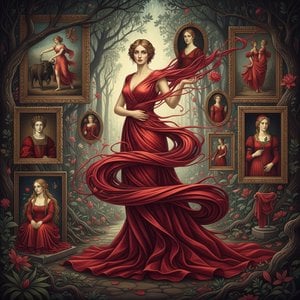
Crimson Threads of Narrative: Exploring Symbolism & Representation in Artworks Featuring the Red Dress
Explore the rich symbolism of the red dress in art history! From ancient power displays to iconic portraits like Cézanne’s 'Madame Cezanne', discover the cultural and artistic significance behind this captivating color. Expert analysis & insights.

Cele Mai Frumoase Picturi în Tonuri de Argilă: O Călătorie Artistică
Descoperă cele mai frumoase picturi în tonuri de argilă! Explorează operele maestrilor precum Van Gogh, Monet și Rembrandt. Reproduceri de artă clasică pentru un decor sofisticat. Găsește inspirație și tablouri perfecte pe ArtsDot.com

Cele Mai Frumoase Picturi în Tonuri de Ciupercă: Artă Clasică pentru Decorul Tău
Descoperă cele mai frumoase picturi în tonuri de ciupercă! Explorează operele clasice ale lui Van Gogh, Monet și alți maeștri. Reproduceri tablouri de calitate muzeală pentru un decor interior elegant. Inspiră-te acum pe ArtsDot.com!

Top 10 Picturi Celebre în Nuanțe de Nisip: Artă, Istorie și Decor Rafinat
Descoperă top 10 picturi celebre în nuanțe de nisip, de la Van Gogh la Monet! Explorează istoria artei, tehnicile și culorile calde ce definesc aceste capodopere. Reproduceri de artă de calitate muzeală pe ArtsDot.com.

The Resonance of Earthly Tones: Exploring Nuance, History & Emotional Impact in Art
Explore the captivating world of earth tones in art! Discover historical context, emotional resonance & artistic techniques behind these timeless colors. Find inspiration for your home decor and museum-quality reproductions.