

 Previzualizare
 Trimite prin felicitare
 Distribuie
 Detalii despre lucrare
 Ghid
Ghid

 Descarcă imaginea
 Produse similare
 Radiografie
 Galerie foto
 Întrebări și răspunsuri
 Statistici
Fruit shop

- 60.0 x 72.0 cm


 Vezi mai mult
Lucrarea de artă afișată pe această pagină este protejată de legile privind drepturile de autor, ceea ce înseamnă că nu putem crea sau vinde în mod legal o reproducere identică. Această protecție este garantată prin acorduri internaționale, precum Convenția de la Berna și de legile naționale, inclusiv cele prevăzute de Legea dreptului de autor din S.U.A. – Titlul 17. Toate drepturile rezervate. Orice reproducere neautorizată este interzisă.
Această metodă respectă pe deplin reglementările privind drepturile de autor, deoarece nu implică copierea sau duplicarea operei protejate. În schimb, este o reinterpretare creativă – o pictură nouă, influențată de original, dar care nu este identică cu acesta.
Giclée / Imprimare artistică
Printuri giclée sau pe canvas de calitate muzeală, cu proces de producție rapid și opțiuni flexibile de finisare. ( Comandă pictură realizată manual Comută pe Imagine Digitală)




P118B lei10

P118H lei10

P118W lei10

P438Z lei10

P508JH lei12

P508YH lei12

P805H lei10

P805Z lei10

P919BZ lei10

P919G lei10

P919XJ lei10

P959ZH lei10

P968JZ lei12

W106C lei8

W218G lei10

W218JH lei8

W218Y lei10

W307PJ lei10

W316G lei10

W316PJ lei8

W316Y lei10

W398PJ lei8

W4111J lei10

W500HY lei15

W500JH lei15

W692G lei12

W849H lei8

W940BG lei15

W953PJ lei8




Alegeți dintre dimensiunile noastre prestabilite, care respectă proporțiile originale ale operei de artă.

Introduceți lățimea și înălțimea necesare pentru a se potrivi ramei sau peretelui dumneavoastră. O printare poate fi doar tăiată, niciodată extinsă dincolo de dimensiunea imaginii originale, astfel încât o dimensiune cu o formă diferită va pierde o parte din imagine. Vă trimitem o simulare digitală pentru aprobare înainte de a imprima orice. Imaginea afișată pe această pagină nu prezintă tăierea reală — doar simularea arată acest lucru.
Livrare în întreaga lume () în 2 săptămâni, în loc de cele 4/5 săptămâni standard. (13 Noiembrie)

Livrare expres gratuită la nivel mondial

Pânză de in de înaltă calitate

Asigurare completă pentru transport

Garanție de rambursare a taxelor vamale

Garanția fidelității culorilor

Politica de retur în 100 de zile (doar pentru defecte de fabricație)

Garanție de rambursare 100%

Ofertă pentru comenzi multiple
 Opțiunea cu sticlă este disponibilă doar pentru dimensiuni de sub 110 cm

Fruit shop
Giclée / Imprimare artistică
Dimensiune reproducere
-


Preț total calculat
lei 300
A Symphony of Color and Commerce
In the vibrant masterpiece Fruit Shop, painted in 1910, Martiros Saryan invites us into a world where the mundane act of commerce is transformed into a celebration of life itself. This captivating work serves as a window into a bustling marketplace, capturing a moment of daily existence with an almost rhythmic energy. The scene is thick with the presence of people—customers and shopkeepers woven into the very fabric of the composition—creating a sense of communal vitality. As we gaze upon the colorful displays of seasonal bounty, we are not merely looking at a storefront; we encounter a sensory experience where the warmth of human interaction meets the lush, sun-drenched textures of nature's harvest.
Saryan’s technique in this period reflects his burgeoning mastery of light and color, utilizing a palette that feels both grounded in reality and elevated by emotion. The artist employs bold, expressive brushstrokes that lend a sense of movement to the crowd, making the air within the shop feel heavy with the scent of ripe fruit and the low hum of conversation. There is a remarkable balance achieved between the structured elements of the shop—the tables, the entrance, the architectural boundaries—and the organic, fluid shapes of the fruits and the figures moving through the space. For the discerning collector or interior designer, this painting offers a profound sense of depth and vitality, making it an ideal centerpiece for spaces that require a touch of warmth and historical soul.
The Soul of Armenian Impressionism
To understand Fruit Shop, one must look toward the heart of Martiros Saryan’s artistic mission. As a pioneer of modern Armenian painting, Saryan possessed a unique ability to translate the rugged beauty and cultural richness of his homeland into a universal visual language. This work, dating from 1910, sits at a fascinating intersection of tradition and modernity. While the subject matter is rooted in the timeless traditions of the marketplace, the execution leans into an evocative impressionism that prioritizes the emotional resonance of light over strict anatomical or architectural precision.
The symbolism within the piece transcends the literal depiction of fruit; the abundance on display serves as a metaphor for the resilience and fertility of life. In the context of Saryan's larger body of work, such scenes represent the "voice of Armenia’s soul"—a celebration of a land that, despite historical shifts, remains vibrantly alive through its people and their customs. For those seeking to adorn a home or gallery with a high-quality reproduction, this piece provides more than just aesthetic pleasure; it offers a connection to a legacy of cultural pride and an enduring optimism that continues to inspire viewers across generations.
Întrebări și răspunsuri
Unde pot descărca imaginea pentru "Fruit shop" de Martiros Sarian?
"Fruit shop" de Martiros Sarian poate fi descărcat de pe pagina dedicată lucrării, Descărcare, sub formă de descărcare imagine digitală de înaltă rezoluție.
„Fruit shop” este mai degrabă o lucrare luminoasă sau întunecată în ansamblu?
"Fruit shop" are balanced în întregime, iar luminozitatea sa este Soft Shadow.
Ce paletă și ce emoție transmite "Fruit shop"?
"Fruit shop" de Martiros Sarian îmbină o paletă Earthy cu un ton Joyful.
Opere similare


Biografie artist
Viața timpurie, familia și formarea artistică
Pentru a înțelege fundamentul picturii moderne armenești, trebuie să privim înapoi, la circumstanțele specifice ale nașterii lui Martiros Saryan. Acesta s-a născut pe 16 februarie [28 februarie, noul stil], 1880, la Nahicevan-on-Don, în Rusia. Fiind al șaptelea copil al lui Sargis Saryan și Ustian Chiligaryan, mediul său de creștere a fost modelat de structura unei familii numeroase. Educația sa inițială nu a provenit dintr-o instituție formală, ci de la fratele său mai mare, Hovhannes Saryan, care i-a oferit primele lecții de bază.
Rigoarea tehnică ce i-a definit opera matură a fost forjată în anii petrecuți la Școala de Pictură, Sculptură și Arhitectură din Moscova. Între 1897 și 1903, Saryan a depășit etapa instruirii domestice oferite de fratele său, intrând în sfera profesională a scenei artistice rusești. Această perioadă nu a fost doar una de învățare a tehnicii, ci de absorbție a metodologiilor specifice ale celor mai importanți maeștri ai epocii. El a lucrat în atelierele lui Konstantin Korovin și Valentin Serov, două figuri care i-au oferit temelia tehnică esențială pentru evoluțiile sale stilistice ulterioare.
Această formare i-a oferit mai mult decât simplă abilitate; a reprezentat o punte directă către standardele în continuă evoluție ale timpului său. Studiind sub îndrumarea lui Korovin și Serov, Martiros Saryan a dobândit o disciplină profesională care i-a permis, în cele din urmă, să transcendă simpla reprezentare vizuală. Tranziția sa de la un simplu student în Moscova la o figură centrală în arta armenească a fost fundamentată pe această combinație unică de îndrumare familială și studiu academic riguros.
Călătorii și Inspirație Artistică
Opera lui Martiros Saryan își găsește logica într-o căutare deliberată a unui limbaj vizual specific, profund înrădăcinat în pământul natal. Călătoria sa din 1901 în Armenia nu a fost o simplă excursie de plăcere, ci un proiect de cercetare artistică focalizat. Traversând regiuni precum Lori, Shirak, Echmiadzin, Haghpat, Sanahin, Yerevan și Sevan, artistul a depășit simpla observație, alegând să documenteze peisajul prin intermediul unei lentile personale și intime. Această perioadă a stabilit fundamentul geografic și emoțional care avea să definească întreaga sa producție artistică.
Perspectiva sa artistică s-a extins prin mișcări strategice prin Orientul Mijlociu și Africa de Nord. A vizitat Constantinopoli în 1910, Egiptul în 1912, sud-vestul Armeniei în 1913 și Persia în 1914. Aceste călătorii i-au permis să absoarbă lumina și motivele ornamentale ale acestor locații diverse, integrându-le într-un stil unitar și coerent. Chiar și scurtul său séjour în Paris, între 1926 și 1928, a funcționat ca o metodă de a interacționa cu estetica internațională, înainte de întoarcerea sa permanentă în peisajul armean.
Tehnică și Stil Artistic
Limbajul vizual al lui Martiros Saryan se bazează pe o directitate care evită complexitatea inutilă. Abordarea sa expresionistă surprinde scenele într-o formă simplă, aproape infantilă, lipsită de orice încărcătură academică. Această claritate este alimentată de o utilizare intensă a culorii. El nu s-a limitat doar la a observa lumina; a folosit-o pentru a defini greutatea și prezența subiectelor sale. Paleta sa reflectă influența profundă a Impresionismului, însă a depășit simplii efecte de lumină pentru a îmbrățișa tonurile îndrăznețe și saturate întâlnite în operele lui Paul Gauguin și Henri Matisse.
Geografia călătoriilor sale dictează compoziția picturilor sale. Timpul petrecut în Armenia și în Orientul Mijlociu i-a oferit datele vizuale esențiale pentru întreaga sa carieră. El nu a pictat doar peisaje; a sintetizat lumina și atmosfera specifice ale acestor regiuni într-un stil național distinct. Această sinteză a inclus integrarea motivelor persane, pe care le-a împletit în compozițiile sale pentru a ancora modernismul său în realitatea regională. Rezultatul este un stil care pare simultan modern și profund înrădăcinat în specificitățile Estului.
Opere cheie și picturi remarcabile
Opera lui Martiros Saryan reflectă o obsesie persistentă pentru particularitățile peisajului armean și pentru schimbările sezoniere din Orientul Mijlociu. Lucrarea sa din 1909, Steppe flowers, demonstrează o stăpânire timpurie a culorii, îndepărtându-se de tonurile muted ale predecesorilor săi. Până în 1916, focalizarea sa s-a mutat către realitatea imediată a patriei sale prin intermediul picturii Flowers of Armenia. Această perioadă a carierei sale marchează o tranziție de la simpla observație la o interpretare a naturii mult mai structurată, aproape grafică. Piesa sa din 1924, Mottled landscape, dovedește în continuare capacitatea sa de a manipula lumina și textura pentru a defini spațiul, fără a se baza pe perspectiva tradițională.
Anii de maturitate ai artistului au fost marcați de o preocupare continuă pentru subiectele botanice și pentru calitățile atmosferice ale terenului armean. El a revenit la motivul regenerării sezoniere în Apricot trees in blossom (1929) și, din nou, în Apricot tree in blossom (1942). Aceste lucrări nu sunt simple studii, ci declarații afirmațive ale unei identități regionale specifice. Pictura sa din 1933, Mountainous march of Armenian units, oferă un contrast puternic cu studiile sale florale, ancorând estetica sa în realitățile sociale și politice ale epocii. Chiar și în 1944, prin April landscape, angajamentul său de a surprinde lumina specifică a primăverii armene a rămas un pilon central al practicii sale artistice.
- Steppe flowers (1909)
- Flowers of Armenia (1916)
- Mottled landscape (1924)
- Apricot trees in blossom (1929)
- Mountainous march of Armenian units (1933)
- Apricot tree in blossom (1942)
Anii de la sfârșit și moștenirea sa
Prezența lui Martiros Saryan în Armenia a devenit una permanentă după mutarea sa la Erevan în 1921. Dacă primii ani ai vieții sale au fost marcați de navigarea printre frontierele schimbătoare ale Imperiului Rus și de scurte escapade la Paris, perioada de maturitate a fost definită de rezidența sa în Armenia sovietică. Între anul 1928 și sfârșitul vieții sale, el a rămas o figură constantă în regiune, generând o vastă colecție de lucrări care au documentat pe amănunț atât peisajele, cât și viața țării pe care o adoptase cu atâta pasiune. Producția sa artistică din aceste decenii a fost una prolifică, menținând un nivel înalt de creativitate chiar și în contextul transformărilor politice profunde care îi înconjurau.
Martiros Saryan a rămas o forță vitală în peisajul artistic armean timp de decenii, având parte de o activitate neîntreruptă până la trecerea sa în neîntunecată, la Erevan, în Republica Socialistă Sovietică Armeană, U.S.S.R. Artistul a încins ultimul său suflu pe data de 5 mai 1972, la vârsta de 92 de ani. Viața sa lungă și plină de intensitate a acoperit tranziția de la era imperială târzie până la complexitățile perioadei sovietice, lăsând în urmă un arciv imens de opere care rămân, și vor rămâne, piloni fundamentali în istoria picturii armenești.
Moștenirea și influența sa
Impactul lui Martiros Saryan este măsurat prin statutul său de fondator al unei școli naționale moderne de pictură armenească. El nu s-a limitat doar la pictarea peisajelor; el a stabilit un limbaj vizual întreg pentru o națiune. Influența sa instituțională a fost semnificativă în timpul erei sovietice, servind ca președinte al Uniunii Artiștilor din Armenia Sovietică între anii 1945 și 1951. Această poziție i-a permis să modeleze peisajul profesional pentru contemporanii săi, iar statutul său a fost consolidat ulterior prin alegerea ca membru al Academiei de Arte Fine din URSS în 1947. Până în 1960, acesta primise deja titlul de Artist al Poporului din URSS.
Opera sa rămâne o referință fundamentală pentru identitatea armenească în artă. S-a distanțat de tradițiile pur academice pentru a crea ceva profund specific patriei sale, un shift care a ajutat la definirea direcției modernismului armean. Capacitatea sa de a sintetiza influențele internaționale cu temele locale i-a asigurat relevanța mult timp după trecerea sa în neființă, în 1972. Martiros Saryan rămâne, în continuare, o figură centrală în istoria culturii vizuale armenești.
Unde pot fi admirate astăzi operele sale
Pentru a întâlni realitatea fizică a creației lui Martiros Saryan, este necesară o călătorie spre Yerevan, în Armenia. Acest oraș servește drept principalul depozit al moștenirii sale vizuale. Galeria Națională de Artă din Armenia păstrează o colecție semnificativă de picturi realizate de acesta, oferind o perspectivă centralizată asupra evoluției sale în cadrul peisajului armean. Această instituție deține greutatea contribuțiilor sale formale la școala națională de pictură.
Pentru o conexiune mai intimă cu omul din spatele pensulei, Casa-Muzeu Martiros Saryan oferă o legătură directă cu viața sa privată. Acest muzeu este găzduit în fosta sa reședință cu trei etaje. Traversarea acestui spațiu specific permite o confruntare cu mediul său personal, situat la doar o scurtă distanță de Piața Libertății. Aceasta rămâne un sit vital pentru înțelegerea dimensiunii și a contextului domestic al existenței sale creative.
Muzeul Saryan din Yerevan funcționează, de asemenea, ca un punct cheie pentru opera sa. Împreună, aceste locații asigură faptul că influența sa rămâne ancorată în geografia pe care a petrecut-o o viață documentând-o. Vizitatorii care caută reprezentările sale specifice ale vieții armene sau studiile sale despre Orientul Mijlociu vor găsi concentrația necesară a lucrărilor sale în cadrul acestor instituții din Yerevan.

Martiros Sarian
1880 - 1972 , Rusia
Detalii rapide
- Artistic Movement Or Style: Post-Impressionism, Fauvism
- Artists Or Movements Influenced By This Artist: ['Școala națională armenească modernă']
- Artists Who Influenced This Artist:
- Paul Gauguin
- Henri Matisse
- Date Of Birth: 1880
- Date Of Death: 1972
- Full Name: Martiros Saryan
- Nationality: Armean
- Notable Artworks:
- Makravank
- Aragats
- Bivolul de la Sevan
- Seară în grădină
- Place Of Birth: Novaya Nakhichevan, Rusia
Articole similare

Transactions on Canvas: Exploring the Intersection of Commerce and Fine Art
Explore the evolution of art commerce from Pissarro to digital auctions. Discover how trade shapes history and start your collection today.
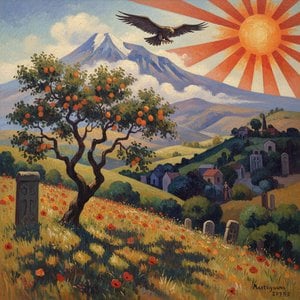
Martiros Saryan: A Revolutionary Vision of Armenian Identity Through Modernist Painting
Explore the revolutionary art of Martiros Saryan, founder of modern Armenian painting. Discover his vibrant landscapes, cultural impact & legacy at ArtsDot.com.

The Bountiful Still Life: Symbolism & Artistic Representation of Fruit Across Art History
Explore the rich history of still life painting & the symbolism of fruit across art movements. Discover masterpieces from Caravaggio to Cézanne with ArtsDot – expert guidance & museum-quality reproductions.

Top 10 Capodopere Impresioniste: Arta care a Schimbat Decorul și Istoria
Descoperă top 10 capodopere impresioniste de la Monet, Renoir și Degas! Explorează istoria artei impresioniste, culorile vibrante și tehnicile inovatoare. Reproduceri tablouri de calitate muzeală pe ArtsDot.com.

Scenes of Daily Life: A Comprehensive Exploration of Genre Painting Through History
Explore the rich history of genre painting! Discover Dutch Masters & European artists who captured everyday life with stunning realism. Learn about symbolism, techniques & lasting influence.