


 Vezi în context
 Trimite
 Distribuie
 Detalii
 Ghidul

 Descarcă
 Produse similare
 Radiografie
 Diaporama
 Statistici
Skulls


 Citește mai mult
Lucrarea de artă afișată pe această pagină este protejată de legile privind drepturile de autor, ceea ce înseamnă că nu putem crea sau vinde în mod legal o reproducere identică. Această protecție este garantată prin acorduri internaționale, precum Convenția de la Berna și de legile naționale, inclusiv cele prevăzute de Legea dreptului de autor din S.U.A. – Titlul 17. Toate drepturile rezervate. Orice reproducere neautorizată este interzisă.
Această metodă respectă pe deplin reglementările privind drepturile de autor, deoarece nu implică copierea sau duplicarea operei protejate. În schimb, este o reinterpretare creativă – o pictură nouă, influențată de original, dar care nu este identică cu acesta.
Giclée / Imprimare artistică
Printuri giclée sau pe canvas de calitate muzeală, cu proces de producție rapid și opțiuni flexibile de finisare. ( Comandă pictură realizată manual Treci la imagine digitală)




P118B lei10

P118H lei10

P118W lei10

P438Z lei10

P508JH lei12

P508YH lei12

P805H lei10

P805Z lei10

P919BZ lei10

P919G lei10

P919XJ lei10

P959ZH lei10

P968JZ lei12

W106C lei8

W218G lei10

W218JH lei8

W218Y lei10

W307PJ lei10

W316G lei10

W316PJ lei8

W316Y lei10

W398PJ lei8

W4111J lei10

W500HY lei15

W500JH lei15

W692G lei12

W849H lei8

W940BG lei15

W953PJ lei8




Alegeți dintre dimensiunile noastre prestabilite, care respectă proporțiile originale ale operei de artă.

Puteți introduce propriile dimensiuni pentru a se potrivi unui anumit cadru sau spațiu. Dacă dimensiunea selectată nu corespunde proporțiilor imaginii originale, vom decupa lucrarea de artă sau vom extinde imaginea cu margini oglindite sau cu o culoare uniformă. Un mockup digital va fi trimis pentru aprobarea dumneavoastră înainte de începerea producției.
Vă rugăm să rețineți că previzualizarea de pe ecran nu reflectă decuparea sau extinderea reală. Doar mockup-ul va arăta cu exactitate compoziția finală.
Deși dimensiunile personalizate sunt disponibile, vă recomandăm să selectați o dimensiune din lista predefinită pentru a păstra proporțiile originale.
Livrare în întreaga lume () în 2 săptămâni, în loc de cele 4/5 săptămâni standard. (13 Octombrie)

Livrare expres gratuită la nivel mondial

Pânză de in premium

Asigurare completă pentru transport

Garanție de rambursare a taxelor vamale

Garanția fidelității culorilor

Politica de retur în 100 de zile (doar pentru defecte)

Garanție de rambursare 100%

Reducere pentru comenzi multiple
 Opțiunea cu sticlă este disponibilă doar pentru dimensiuni de sub 110 cm

Skulls
Giclée / Imprimare artistică
Dimensiune reproducere
-


Preț total
lei 282
Marlene Dumas’s “Skulls”: A Descent into Vulnerability and Remembrance
Marlene Dumas's "Skulls," painted in 2015, isn’t merely a depiction of mortality; it’s an intensely personal meditation on the fragility of existence, layered with echoes of South African history and the unsettling power of photographic memory. The painting immediately confronts the viewer with a stark arrangement: a row of skulls presented against a muted, almost bleached background—a deliberate choice that amplifies their presence and forces a direct engagement with death’s inevitability. Each skull possesses a subtly different expression, hinting at individual stories silenced by time, suggesting a collective mourning rather than a singular loss.
Dumas's technique is characterized by a raw, almost violent application of paint. She eschews meticulous detail, favoring instead broad strokes and gestural marks—drips, smears, and daubs that imbue the work with an immediate sense of urgency. The color palette is deliberately restrained – predominantly blacks, whites, and grays – mirroring the somber subject matter while simultaneously creating a hauntingly beautiful effect. This deliberate lack of polish contributes to the painting’s emotional impact; it feels less like a finished product and more like a fleeting capture of a profound feeling.
The Weight of Photographic Memory
Dumas's artistic practice is deeply rooted in photography, a connection that profoundly shapes her work. She meticulously curates a private archive of images—photographs of herself, children, victims of violence, and the marginalized – transforming these visual fragments into the foundation for her paintings. “Skulls” exemplifies this process; it’s not simply an interpretation of skulls but rather a distillation of countless photographic encounters with mortality. The arrangement itself feels like a carefully constructed memorial, reminiscent of rows of graves or the faces in a forgotten album. This reliance on photographs forces us to confront the mediated nature of reality and the way images can both preserve and distort memory.
Echoes of Apartheid and Universal Loss
Born in Cape Town during the height of apartheid, Dumas’s life has been inextricably linked to themes of social injustice and identity. While “Skulls” doesn't explicitly reference this historical context, it resonates with the broader anxieties surrounding loss and remembrance that permeated South African society. The skulls can be interpreted as a symbol of silenced voices—those who suffered under oppression or were simply forgotten by history. The painting subtly evokes the collective trauma experienced during apartheid, reminding us of the enduring consequences of inequality and violence. However, Dumas transcends specific historical narratives, elevating the image to a universal representation of mortality – a reminder that all lives are finite and ultimately return to dust.
A Study in Vulnerability and Emotional Resonance
Ultimately, “Skulls” is a profoundly moving work that invites introspection and contemplation. It’s not a comfortable painting; it confronts us with the uncomfortable truths of death and loss. Yet, within this darkness lies a strange beauty—a testament to the resilience of the human spirit and the enduring power of art to grapple with life's most difficult questions. Dumas doesn’t offer easy answers or comforting platitudes. Instead, she presents us with a raw, honest portrayal of vulnerability – a reminder that beneath our carefully constructed facades, we are all ultimately fragile and mortal. The painting’s impact is not one of shock but of quiet recognition—a shared acknowledgment of the inevitability of death and the importance of remembering those who have passed.
- Artist: Marlene Dumas
- Year: 2015
- Medium: Oil on Canvas
- Dimensions (Approx.): Unknown
Further Resources: Google Arts & Culture, ArtsDot
Întrebări și răspunsuri
Cât de puternic este contrastul în "Skulls" de Marlene Dumas?
Nivelul de contrast al operei "Skulls" de Marlene Dumas este Serene.
Care este nuanța dominantă în "Skulls" de Marlene Dumas?
"Skulls" tinde spre o nuanță de Ochre to Sepia.
Pentru ce cameră este recomandată lucrarea "Skulls" de Marlene Dumas?
Spațiul recomandat pentru "Skulls" de Marlene Dumas este o Living Room. Sugestia poate fi, desigur, adaptată interiorului dumneavoastră.
Cine a creat "Skulls"?
Artistul din spatele operei „Skulls” este Marlene Dumas. Lucrarea este catalogată sub numele lui Marlene Dumas.
Din ce țară provine lucrarea de Contemporary Realism „Skulls”?
"Skulls" a fost creat de Marlene Dumas, născut în Africa de Sud, în cadrul mișcării Contemporary Realism. Originea artistului leagă opera de Contemporary Realism, așa cum este practicat de artiștii din Africa de Sud.
Cât de cunoscută este opera „Skulls” de Marlene Dumas?
Nivelul de popularitate înregistrat pentru "Skulls" de Marlene Dumas este Recognized.
În ce an a fost creată „Skulls”?
Crearea operei "Skulls" de Marlene Dumas datează din 2015.
Care sunt autorul și data creației pentru "Skulls"?
„Skulls” a fost creat de Marlene Dumas în 2015.
Opere similare


Biografie artist
A Life Shaped by Landscape and Sociopolitical Currents
Marlene Dumas, born in 1953 in Cape Town, South Africa, is a painter whose work resonates with an emotional depth rarely encountered in contemporary art. Her upbringing amidst the stark realities of apartheid profoundly shaped her artistic vision, instilling within her a keen awareness of social injustice and the complexities of human identity. Growing up on her father’s vineyard in Kuils River, she witnessed firsthand the divisions and inequalities that defined South African society during those years—a landscape both beautiful and burdened by history. This early exposure to a fractured world would become a recurring theme throughout her career, informing her exploration of race, sexuality, and the psychological weight of existence. Dumas’s formal artistic journey began at the University of Cape Town in 1972, where she pursued a Bachelor of Fine Arts degree alongside studies in ethics. This combination proved crucial, laying the groundwork for an art practice deeply concerned with moral questions and the human condition. She later continued her education at Ateliers ‘63 in Haarlem, Netherlands, relocating to Amsterdam in 1976—a move that marked a significant shift in both her geographical location and artistic perspective. Further academic pursuits in psychology at the University of Amsterdam between 1979-1980 would further refine her ability to portray inner states with remarkable sensitivity.Early Life and Education
Dumas’s formative years were indelibly imprinted by the pervasive influence of apartheid—a system that rigidly segregated South African society based on racial classification. Her father, Petrus Johannes Dumas, cultivated a vineyard in Kuils River, providing her with a tangible connection to the land and its history. However, this idyllic setting existed alongside the oppressive realities of discriminatory laws and practices, shaping her understanding of social injustice from an early age. The University of Cape Town proved instrumental in nurturing her intellectual curiosity, equipping her with a grounding in ethical philosophy—a discipline that would inform her artistic explorations throughout her life. Alongside her academic pursuits, Dumas developed a passion for drawing, honing her skills at Ateliers ‘63, where she studied under renowned artists and gained invaluable experience in collaborative projects. This period solidified her commitment to observation and experimentation—qualities that would characterize her subsequent artistic endeavors. Her interest in psychology extended beyond mere theoretical study; it instilled within her a profound empathy for human emotions and motivations—a sensitivity that finds its expression in the haunting beauty of her paintings.The Evolution of a Distinctive Style
Dumas’s artistic development has been marked by an unwavering questioning of representation and a courageous willingness to confront uncomfortable truths. Initially, her work directly confronted the moral dilemmas posed by apartheid, reflecting her identity as a white woman grappling with the ethical implications of inhabiting a system predicated on racial segregation. Yet, she swiftly transcended purely political statements, delving into more universal themes—the vulnerability inherent in human existence, the yearning for connection, and the inevitability of loss. Influenced profoundly by the Romantic movement—particularly artists like Édouard Manet and Eugène Delacroix—Dumas adopted a distinctive style characterized by loose brushstrokes, distorted figures, and an evocative use of color. She eschewed traditional techniques of illusionistic painting, favoring instead a method that prioritized emotional expression over meticulous realism. Her artistic process began with the careful selection of source material—often Polaroid photographs of her friends and lovers—images that served as catalysts for introspection and creative exploration. These images were not merely copied but reimagined—transformed into canvases imbued with palpable emotion. Dumas’s technique is notable for its layering—a wet-on-wet approach that builds depth and texture through the interplay of thin and thick paint—creating a mesmerizing visual experience.Work: Exploring Themes of Identity, Sexuality, and Vulnerability
Dumas's oeuvre consistently investigates complex psychological states—themes of identity, sexuality, vulnerability, guilt, innocence, violence, and tenderness—approached with remarkable honesty and nuance. Her subjects range widely—from portraits of individuals—often anonymous—to depictions of nude figures, erotic scenes, and images drawn from popular culture. However, these are never mere representations; they are conduits for exploring the inner landscape of human experience. Dumas’s artistic vision is informed by a deep engagement with psychoanalytic theory—particularly Freud's concept of the unconscious—which encourages her to delve beneath surface appearances and confront hidden desires and anxieties. She employs a deliberate ambiguity—a refusal to offer definitive answers or simplistic interpretations—leaving viewers to grapple with unresolved questions and contemplate the complexities of human emotion. Her canvases are often characterized by fragmented compositions—pieces of fabric, paper, or photographic prints juxtaposed in unexpected ways—creating visual puzzles that invite contemplation and challenge conventional notions of narrative structure. The resulting images possess a haunting beauty—a paradoxical blend of vulnerability and strength—reflecting Dumas’s belief that art can illuminate the darkest recesses of the human psyche while simultaneously affirming our capacity for compassion and understanding.Recognition and Lasting Impact
Marlene Dumas's contributions to contemporary art have garnered widespread acclaim—resulting in numerous exhibitions internationally and establishing her as one of the foremost female painters of her generation. Her debut American museum exhibition, “Measuring Your Own Grave,” presented at the Museum of Contemporary Art Los Angeles in 2008, solidified her position as a visionary artist—a pioneer who dared to confront difficult subjects with unflinching honesty. The retrospective showcased the breadth and depth of her artistic output—spanning decades of experimentation and innovation. Furthermore, Dumas achieved unprecedented commercial success—with *Jule-die Vrou* (1985) selling for over $1 million at Christie’s in 2004—marking her as one of only three living female artists to attain such a monumental price point at the time. Her enduring influence extends beyond the realm of painting; Dumas has challenged artistic conventions and inspired countless aspiring artists—encouraging them to embrace vulnerability, experimentation, and a critical engagement with social issues. Most recently, *The Schoolboys* (1986–87) reached an astounding $9 million at Art Basel Miami Beach in 2023—a new record for a living female artist—demonstrating the enduring power of Dumas’s artistic vision to captivate audiences and provoke profound reflection. Her legacy resides in her ability to create artworks that transcend mere aesthetic beauty—paintings that confront us with our own insecurities, desires, and prejudices—leaving an indelible mark on the history of art.
Marlene Dumas
1953 - , Africa de Sud
Informații rapide
- Artistic Movement Or Style: Romanticism
- Artists Or Movements Influenced By This Artist: ['Contemporary painters']
- Artists Who Influenced This Artist:
- Egon Schiele
- Francis Bacon
- Date Of Birth: 1953
- Full Name: Marlene Dumas
- Nationality: Sud Africană
- Notable Artworks:
- The Last Supper
- Untitled (681)
- Untitled (830)
- Jule-die Vrou
- The Schoolboys
- Place Of Birth: Cape Town, South Africa
Articole conexe

Monochrome Visions: Exploring the Aesthetic & Historical Significance of Black & White Photography
Explore the rich history & artistic power of black and white photography. From early techniques to iconic masters like Ansel Adams, discover why monochrome continues to captivate art lovers today. Expert insights for collectors.
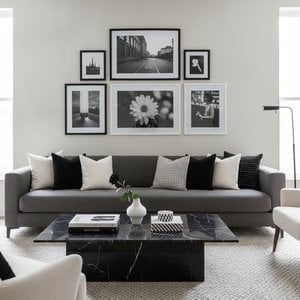
Timeless & Chic: Elevating Your New Home with the Sophistication of Black and White Photography
Transform your new home with the timeless allure of black and white photography. ArtsDot.com specializes in elegant monochrome decor and custom hand-painted wedding portraits that turn cherished milestones into lasting, soulful masterpieces. Elevate your space with ease.

Top 10 Capodopere Alb-Negru: Frumusețe Atemporală în Artă | ArtsDot.ro
Descoperă top 10 picturi celebre dominate de alb, de la Monet la Kandinsky! Explorează istoria artei, tehnicile artistice și frumusețea atemporală a capodoperelor clasice. Reproduceri de calitate muzeală pe ArtsDot.com – inspiră-ți decorul!

Beyond the Lens: Photography's Enduring Influence on Modern & Contemporary Art
Explore photography's pivotal role in shaping modern & contemporary art. Discover key movements, influential artists like Stieglitz, and expert collecting advice from ArtsDot.

Top 10 Tablouri Celebre Dominante de Negru: Artă, Istorie și Decor Rafinat
Descoperă Top 10 tablouri celebre dominate de negru! Explorează istoria, simbolismul și tehnicile artistice ale unor opere iconice de Rembrandt, Goya și alți maeștri. Reproduceri de artă de calitate muzeală pe ArtsDot.com – inspiră-ți decorul!