


 Previzualizare
 Trimite
 Distribuie
 Detalii despre lucrare

 Descarcă
 Produse similare
 Radiografie
 Diapozitive automate
Lovers with Flowers


 Vezi mai mult
Achiziționați o imagine digitală de înaltă rezoluție, îmbunătățită, mult superioară previzualizării online.
Fiecare fișier este pregătit cu meticulozitate de specialiștii noștri interni, utilizând instrumente avansate și retușare manuală expertă. Ne asigurăm că fiecare imagine beneficiază de o claritate excepțională, o acuratețe precisă a culorilor și detalii fine.
Fișierul final este livrat prin e-mail în termen de 72 de ore, optimizat pentru utilizare imediată în medii profesionale, editoriale și de imprimare. Aceasta este aceeași calitate în care au încredere studiouri de design, edituri și galerii de top.
Imagine Digitală
Descărcați un fișier la rezoluție înaltă pentru afișare personală, imprimare și proiecte creative. ( Comandă printul Comandă pictură lucrată manual)
Inclus în fiecare comandă de imagini digitale
Livrare digitală de expertiză, garantată
Când alegeți ArtsDot.com, nu primiți doar o simplă imagine – primiți o operă de artă digitală îmbunătățită profesional, creată cu precizie și susținută de o garanție de satisfacție. Iată tot ceea ce primești odată cu comanda ta, în mod automat:

Livrare rapidă prin e-mail
Fișierul imaginii digitale la rezoluție înaltă vă va fi trimis prin e-mail în termen de 72 de ore de la finalizarea comenzii – gata pentru utilizare imediată.

Fișier digital optimizat prin IA
Opera ta de artă este optimizată profesional prin intermediul unor instrumente AI avansate și al editării manuale, asigurând un nivel maxim de detalii, claritate și acuratețe a culorilor.

Retransmitere gratuită pe viață
Ai șters sau ai pierdut din greșeală fișierul? Nu îți face griji – ți-l vom retrimite oricând, gratuit.

Fără taxe de import – Întotdeauna
Bucură-te instant de noua ta operă de artă, fără taxe vamale, taxe de import sau costuri de livrare – descărcările digitale sunt întotdeauna fără taxe.

Garanția acurateții culorilor
Asigurăm o reflectare cât mai fidelă a culorilor originale în imaginea ta digitală, prin utilizarea unor instrumente profesionale și a proceselor de gestionare a culorii.

Garanție de satisfacție de 60 de zile
Dacă nu sunteți mulțumit de imaginea digitală achiziționată, o vom revizui sau vă vom returna 100% în termen de 60 de zile – fără nicio explicație necesară.

Garanție de returnare 100% a banilor
Nu ești mulțumit? Obține o rambursare completă în termen de 60 de zile de la primirea fișierului tău digital – fără întrebări.

Reduceri pentru comenzi în volum
Cumpără 3 imagini, economisește 10% - Cumpără 5, economisește 15% - Cumpără 10+, economisește 20%. Ideal pentru proiecte creative, galerii și agenții.
A Portrait of Intimacy Amidst Floral Reverie
The painting “Lovers with Flowers,” created by Marc Chagall in 1927, transcends mere representation; it’s an embodiment of dreamlike emotion and a masterful distillation of Chagall's signature style. Captured on canvas, this artwork depicts two figures—a man embracing a woman—positioned before a window bathed in diffused light, surrounded by an abundance of crimson roses. The scene exudes an atmosphere of profound tenderness and unspoken connection, inviting viewers to contemplate the complexities of human relationships.- Subject Matter: At its core, “Lovers with Flowers” explores themes of love, companionship, and vulnerability. Chagall’s deliberate choice to conceal their faces behind blossoms speaks volumes about his desire to protect intimacy and preserve the essence of emotion beyond physical appearance.
- Style: Chagall's artistic vision firmly resides within Surrealism, yet it diverges significantly from its more intellectually driven counterparts. Rather than striving for logical coherence or rational thought, he prioritizes intuition and imagination—elements that propel his canvases into realms of fantasy and symbolism. The figures appear to float slightly above the ground, a characteristic technique that underscores Chagall’s fascination with metamorphosis and transcendence.
Technique and Material Considerations
Chagall employed oil paints on canvas—a traditional medium favored by Impressionists and Post-Impressionists—but he infused it with an unconventional approach. His brushstrokes are loose, expressive, and layered, creating a textured surface that captures the vibrancy of color and movement. The artist’s meticulous attention to detail is evident in the rendering of the roses themselves, which appear almost luminous against the muted backdrop of the windowpane. Chagall's palette leans heavily on reds—primarily crimson—symbolizing passion, desire, and perhaps even sacrifice—a deliberate choice reflecting his Jewish heritage.Historical Context: Vitebsk and Artistic Expression During Weimar Germany
“Lovers with Flowers” emerged during a pivotal moment in European art history – the Weimar Republic. This period witnessed an explosion of artistic experimentation, fueled by disillusionment following World War I and propelled forward by intellectual currents originating from Paris’s Surrealist movement. Chagall's work reflects this spirit of rebellion against convention, rejecting academic realism for a visual language rooted in personal experience and mythic narratives. Vitebsk, where Chagall spent his formative years, served as an incubator for artistic innovation—a place where Jewish culture intertwined with Russian Orthodox traditions to produce a uniquely expressive aesthetic.Symbolism Beyond the Roses
The roses themselves are more than just decorative elements; they function as potent symbols within Chagall’s oeuvre. Traditionally associated with love, beauty, and remembrance, their profusion in “Lovers with Flowers” amplifies the painting's emotional resonance. Furthermore, the window—a recurring motif in Chagall’s art—represents a portal to another realm, symbolizing dreams, memory, and perhaps even spiritual aspiration. The inclusion of a third figure partially obscured by the flowers adds an element of mystery and invites contemplation about hidden desires and unspoken connections.Opere similare


Biografie artist
A Life Painted in Dreams: The World of Marc Chagall
Marc Chagall, born Moishe Shagal in 1887 in the small Belarussian town of Liozna near Vitebsk, wasn’t merely a painter; he was a poet of color, a weaver of dreams, and a chronicler of memory. His life, spanning nearly a century, mirrored the tumultuous currents of the 20th century, yet his art remained steadfastly rooted in a deeply personal vision—one infused with the folklore of his Hasidic Jewish upbringing and an unwavering belief in the power of imagination. Vitebsk itself was more than just a birthplace; it became the emotional core of his artistic universe, a recurring motif populated by flying figures, whimsical animals, and the vibrant hues of remembered landscapes. The town’s unique blend of cultures—Russian Orthodox churches alongside bustling Jewish marketplaces—forged an aesthetic sensibility that would defy easy categorization throughout his long career. Though he sought formal training first with a local sign painter and later in St. Petersburg under Léon Bakst, and then in Paris at the Académie de la Grande Chaumière, Chagall never fully embraced any single artistic movement. He absorbed elements of Cubism, Symbolism, and Fauvism, but always filtered them through his own intensely personal lens, creating a style that was uniquely, unmistakably Chagall.Early Years and Artistic Beginnings
Chagall’s formative years were marked by hardship and displacement. Born into a family of impoverished Jewish artisans, he experienced the trauma of pogroms—violent anti-Jewish riots—which instilled in him a profound awareness of persecution and loss. Despite these challenges, he pursued his artistic ambitions with unwavering determination, initially studying sign painting before enrolling at St. Petersburg’s Imperial Academy of Arts. However, he quickly rejected the academic conventions of the time, preferring to explore alternative approaches to representation. His early canvases—works like I and the Village (1911)—already demonstrated his distinctive style: fragmented landscapes imbued with symbolic meaning, figures rendered in a stylized manner that defied realistic proportions, and a palette dominated by bold, expressive colors. This stylistic choice wasn’t merely aesthetic; it reflected Chagall's desire to convey emotion rather than simply depicting the external world. He sought to capture the essence of experience—the weight of memory—and to express his inner life through visual imagery.The Symbolist Influence and Vitebsk
Chagall’s artistic development was profoundly shaped by Symbolism, a movement that prioritized emotional expression over literal depiction. Artists like Gustave Moreau and Edvard Munch served as important influences, encouraging him to embrace dreamlike imagery and explore the subconscious mind. Vitebsk remained an enduring presence in Chagall's imagination—a town he revisited repeatedly throughout his life, both physically and artistically. The juxtaposition of Orthodox churches and Jewish marketplaces became a recurring motif in his paintings, symbolizing the tensions between tradition and modernity that characterized Russian Jewish culture. This visual language—characterized by flattened perspectives, stylized figures, and fantastical landscapes—became synonymous with Chagall’s artistic vision.The Revolution and Parisian Years
The Russian Revolution of 1917 irrevocably altered Chagall's life trajectory. He returned to Vitebsk, where he established an art school that briefly flourished before succumbing to the pressures of Soviet repression. This period was marked by both creative energy and political disillusionment—a tension that would continue to inform his artistic output. Simultaneously, Chagall moved to Paris in 1923, immersing himself in the vibrant cultural landscape of the city and engaging with fellow Surrealists like André Breton and Pablo Picasso. He experimented with new techniques and explored themes related to mythology and folklore, solidifying his reputation as a visionary artist.Mature Style and Major Achievements
Chagall’s mature style—characterized by lyrical abstraction and emotionally charged imagery—reached its zenith in the 1930s and 1940s. Paintings like Over Vitebsk (1920-1922) exemplify his masterful blending of Cubist influences with Symbolist sensibilities, creating canvases that are both intellectually stimulating and profoundly moving. The horrors of World War II prompted him to relocate to New York City, where he continued to produce monumental works—including The Four Seasons (1946-1948)—that captured the anxieties of the era while reaffirming his belief in beauty and transcendence. He received numerous prestigious commissions, including the ceiling of the Paris Opera (1964), a breathtaking spectacle of color and form that celebrated musical masterpieces. Chagall’s legacy extends beyond his paintings; he became an internationally recognized icon—a symbol of Jewish culture and artistic innovation—whose work continues to inspire artists and audiences alike. His enduring influence testifies to the power of art to transcend boundaries, to connect us to our shared humanity, and to illuminate the beauty and mystery of life.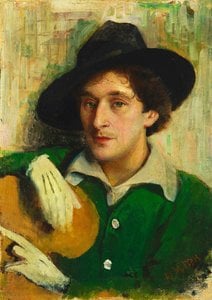
Marc Chagall
1887 - 1985 , Білорусь
Detalii rapide
- Artistic Movement Or Style: Cubism și simbolism
- Artists Or Movements Influenced By Acest Artist: ['Surrealism']
- Artists Who Influenced This Artist:
- Bakst
- Delaunay
- Date Of Birth: 6 iulie 1887
- Date Of Death: 28 martie 1985
- Full Name: Marc Chagall
- Nationality: Rusă (acum Belarus)
- Notable Artworks:
- I și Orașul
- În Vinovație
- Place Of Birth: Liozna, Belarus

