

 Previzualizare
 Trimite prin felicitare
 Distribuie
 Detalii despre lucrare
 Ghid
Ghid

 Descarcă imaginea
 Produse similare
 Radiografie
 Galerie foto
 Întrebări și răspunsuri
 Statistici
Me, She


 Vezi mai mult
Lucrarea de artă afișată pe această pagină este protejată de legile privind drepturile de autor, ceea ce înseamnă că nu putem crea sau vinde în mod legal o reproducere identică. Această protecție este garantată prin acorduri internaționale, precum Convenția de la Berna și de legile naționale, inclusiv cele prevăzute de Legea dreptului de autor din S.U.A. – Titlul 17. Toate drepturile rezervate. Orice reproducere neautorizată este interzisă.
Această metodă respectă pe deplin reglementările privind drepturile de autor, deoarece nu implică copierea sau duplicarea operei protejate. În schimb, este o reinterpretare creativă – o pictură nouă, influențată de original, dar care nu este identică cu acesta.
Giclée / Imprimare artistică
Printuri giclée sau pe canvas de calitate muzeală, cu proces de producție rapid și opțiuni flexibile de finisare. ( Comandă pictură realizată manual Comută pe Imagine Digitală)




































Alegeți dintre dimensiunile noastre prestabilite, care respectă proporțiile originale ale operei de artă.

Introduceți lățimea și înălțimea necesare pentru a se potrivi ramei sau peretelui dumneavoastră. O printare poate fi doar tăiată, niciodată extinsă dincolo de dimensiunea imaginii originale, astfel încât o dimensiune cu o formă diferită va pierde o parte din imagine. Vă trimitem o simulare digitală pentru aprobare înainte de a imprima orice. Imaginea afișată pe această pagină nu prezintă tăierea reală — doar simularea arată acest lucru.
Livrare în întreaga lume () în 2 săptămâni, în loc de cele 4/5 săptămâni standard. (10 Noiembrie)

Livrare expres gratuită la nivel mondial

Pânză de in de înaltă calitate

Asigurare completă pentru transport

Garanție de rambursare a taxelor vamale

Garanția fidelității culorilor

Politica de retur în 100 de zile (doar pentru defecte de fabricație)

Garanție de rambursare 100%

Ofertă pentru comenzi multiple
 Opțiunea cu sticlă este disponibilă doar pentru dimensiuni de sub 110 cm

Me, She
Giclée / Imprimare artistică
Dimensiune reproducere
-


Preț total calculat
lei 301
A Surreal Encounter: Exploring Man Ray's "Me, She"
Man Ray’s “Me, She,” created in 1934, is a captivating example of surrealist photography that continues to intrigue and inspire. This black and white rayograph presents an unexpected juxtaposition of objects, defying logical arrangement and inviting viewers into the realm of dreams and subconscious exploration. The artwork's power lies not just in its visual composition but also in its ability to evoke a sense of mystery and symbolic resonance, characteristic of the surrealist movement that sought to liberate art from rational constraints.Technique & Composition: The Art of the Rayograph
The photograph’s unique aesthetic stems from Man Ray's innovative use of the rayograph technique – also known as a photogram. Unlike traditional photography, which relies on a lens, the rayograph involves placing objects directly onto photosensitive paper and exposing it to light. This process eliminates the camera entirely, allowing for direct manipulation of photographic materials and resulting in ethereal, often abstract compositions. In "Me, She," this technique is brilliantly employed. A small sculpted figure of a woman appears suspended in mid-air, seemingly supported by a hand emerging from the bottom of the frame. Scattered around her are playing cards, their geometric shapes contrasting with the organic form of the sculpture. The grainy texture of the photographic paper and the soft shadows further enhance the image's dreamlike quality, flattening perspective and creating a graphic aesthetic that is both striking and unsettling.Symbolism & Interpretation: Chance, Relationships, and the Subconscious
The symbolism within "Me, She" remains open to interpretation, a hallmark of surrealist art. The sculpted female figure could represent various concepts – femininity, vulnerability, or perhaps even an idealized representation of the subconscious mind. The playing cards introduce elements of chance, fate, and gamesmanship, suggesting themes of relationships and unpredictable life events. Their scattered arrangement further disrupts any sense of order, reinforcing the surreal nature of the scene. Man Ray was deeply interested in exploring the unconscious, and this work can be seen as a visual manifestation of those explorations – a glimpse into the illogical yet compelling world of dreams and hidden desires. The absence of a clear narrative encourages viewers to project their own interpretations onto the image, making it a profoundly personal experience.Historical Context & Man Ray's Legacy
Created in 1934, "Me, She" reflects the broader artistic climate of the interwar period. The surrealist movement, born out of Dadaism’s rejection of logic and reason following World War I, sought to challenge conventional notions of art and reality. Man Ray was a pivotal figure within this movement, alongside artists like Salvador Dalí and René Magritte. His experimental photographic techniques and his ability to create evocative imagery cemented his place as a pioneer of surrealist photography. "Me, She" exemplifies his signature style – unexpected juxtapositions, dreamlike imagery, and a playful disregard for traditional artistic boundaries. It stands as a testament to Man Ray’s enduring influence on the art world and continues to inspire contemporary artists and photographers today.Întrebări și răspunsuri
Pot folosi realitatea augmentată pentru a vedea "Me, She" de Man Ray în camera mea?
Pagina Previzualizare în AR pentru "Me, She" de Man Ray folosește realitatea augmentată pentru a vizualiza opera de artă în propriul tău spațiu, pe un dispozitiv compatibil.
Care este formatul pentru "Me, She"?
Formatul pentru "Me, She" este Portrait. Acest lucru este util atunci când planificați unde va fi amplificată o reproducere.
Câți oameni vizualizează "Me, She"?
Pagina Statistici pentru "Me, She" de Man Ray prezintă statistici privind vizitele publice: numărul de vizite lunare ale acestei opere, o comparație cu cele mai vizionate lucrări ale artistului și proveniența vizitatorilor.


Biografie artist
A Life Illuminated by Shadows
Emmanuel Radnitzky, a name that would eventually transform into Man Ray, was born in Philadelphia in 1890 to Russian-Jewish immigrant parents. His early life was steeped in the traditions of his family’s heritage and shaped by the bustling energy of New York City, where they relocated when he was young. From a tender age, he displayed an innate artistic sensibility, nurtured by his father's tailoring business – a world of fabrics, patterns, and meticulous craftsmanship that would subtly inform his later work. His mother, a skilled seamstress, instilled in him a love for creativity and experimentation, fostering a spirit of innovation that would become central to his artistic identity. This early exposure to both the practicalities of textile production and the imaginative possibilities of design laid the groundwork for his future explorations across various mediums. The Ferrer Centre, with its emphasis on free expression and radical ideas, proved particularly formative during this period. Surrounded by artists and intellectuals committed to challenging conventional norms, Ray developed a deep appreciation for avant-garde movements and embraced a philosophy that prioritized experimentation and artistic liberation. This environment fostered a sense of intellectual curiosity and encouraged him to break away from traditional constraints—a crucial step in his journey towards becoming a truly original artist. It was here he first encountered the work of European modernists, whose bold visions ignited his own desire to push the boundaries of art.Dada, Surrealism, and the Pursuit of the Impossible
Man Ray’s artistic trajectory took a dramatic turn with his encounter with Marcel Duchamp in New York around 1915. This meeting sparked a shared fascination with challenging traditional notions of art, leading to explorations of “ready-mades”—ordinary manufactured objects elevated to the status of artwork. This rebellious spirit propelled Ray into the heart of the Dada movement, an anti-art protest born from the disillusionment of World War I. Dada artists sought to dismantle established artistic conventions and expose the absurdity of bourgeois society through provocative displays and conceptual challenges. Man Ray’s involvement in this movement was characterized by a willingness to embrace radical ideas and experiment with unconventional materials and techniques. He actively participated in organizing exhibitions, publishing manifestos, and engaging in debates about the future of art—all while maintaining a distinct artistic voice that blended Dada’s irreverence with his own unique sensibilities. His association with Duchamp proved particularly influential, shaping his approach to conceptual art and encouraging him to question the very definition of what constitutes “art.” Ray's exploration of ready-mades paved the way for later developments in Pop Art and Conceptualism, demonstrating his pioneering role in challenging traditional artistic hierarchies. This period marked a significant shift in his artistic practice—a move away from representational painting towards abstraction and experimentation with new forms of expression.Rayographs and the Alchemy of Light
Perhaps Man Ray is most celebrated for his invention of the “rayograph,” a cameraless photographic technique he stumbled upon almost by accident. These images—created by placing objects directly onto light-sensitive paper and exposing them to light—resulted in ethereal, ghostly compositions that defied conventional photographic representation. The rayograph wasn't simply an alternative method; it was a philosophical statement about the nature of photography itself. By eliminating the camera lens, Ray stripped away the illusion of objectivity, revealing the inherent subjectivity of the medium. These weren’t representations *of* things, but rather direct imprints *from* them, imbued with a sense of mystery and otherworldliness. Beyond rayographs, his photographic portraits – particularly those of artists like Lee Miller (who would become both his muse and collaborator) – are renowned for their striking compositions and psychological depth. He experimented relentlessly with solarization, multiple exposures, and darkroom manipulation, pushing the boundaries of what photography could achieve. Solarization, in particular, became a signature technique, creating dramatic reversals of tone that added an element of the uncanny to his portraits.Beyond Stillness: Film and a Lasting Legacy
Man Ray’s artistic curiosity extended beyond still images into the realm of filmmaking. His experimental films, such as *Le Retour à la Raison* (1923) and *L'Étoile de Mer* (1928), were characterized by their surreal imagery, unconventional editing techniques, and rejection of narrative conventions. These weren’t stories told in a traditional sense; they were visual poems, explorations of form, rhythm, and the subconscious. He often employed innovative techniques like stop-motion animation and superimposition to create disorienting and dreamlike effects. Though his film work remained relatively small in volume, it was profoundly influential on subsequent generations of avant-garde filmmakers. Throughout his long career, Man Ray continued to challenge artistic norms, refusing to be confined by labels or expectations. He died in Paris in 1976, leaving behind a body of work that continues to inspire and provoke. His legacy lies not only in his technical innovations but also in his unwavering commitment to artistic freedom and his relentless pursuit of the impossible—a true pioneer who forever altered our perception of art and reality. His influence can be seen across various disciplines, from contemporary photography and film to fashion and design, demonstrating the enduring power of his vision.A Continuing Influence
- Photography: Man Ray’s techniques, particularly rayography and solarization, continue to be explored by contemporary photographers.
- Surrealism: His contributions solidified the movement's visual language and inspired countless artists across disciplines.
- Experimental Film: His pioneering work in film laid the groundwork for future generations of avant-garde filmmakers.
- Fashion Photography: Ray’s innovative approach to portraiture and composition influenced the development of modern fashion photography.

Man Ray
1890 - 1976 , Statele Unite ale Americii
Detalii rapide
- Artistic Movement Or Style: Dada, Surrealism
- Artists Or Movements Influenced By This Artist: ['Surrealism']
- Artists Who Influenced This Artist: ['Marcel Duchamp']
- Date Of Birth: 27 august 1890
- Date Of Death: 18 noiembrie 1976
- Full Name: Emmanuel Radnitzky
- Nationality: American
- Notable Artworks:
- Rayographs
- L'Étoile de Mer
- Place Of Birth: Philadelphia, SUA
Articole similare

Top 10 Tablouri Celebre Dominante de Negru: Artă, Istorie și Decor Rafinat
Descoperă Top 10 tablouri celebre dominate de negru! Explorează istoria, simbolismul și tehnicile artistice ale unor opere iconice de Rembrandt, Goya și alți maeștri. Reproduceri de artă de calitate muzeală pe ArtsDot.com – inspiră-ți decorul!

Monochrome Visions: Exploring the Aesthetic & Historical Significance of Black & White Photography
Explore the rich history & artistic power of black and white photography. From early techniques to iconic masters like Ansel Adams, discover why monochrome continues to captivate art lovers today. Expert insights for collectors.

Beyond the Lens: Photography's Enduring Influence on Modern & Contemporary Art
Explore photography's pivotal role in shaping modern & contemporary art. Discover key movements, influential artists like Stieglitz, and expert collecting advice from ArtsDot.

Pictorialism: A Search for Artistic Photography's Soul – Aesthetics, Techniques & Legacy
Explore the captivating world of Pictorialism – a pivotal movement that transformed photography into fine art. Discover key artists like Stieglitz & Käsebier, techniques, and collecting tips from experts.
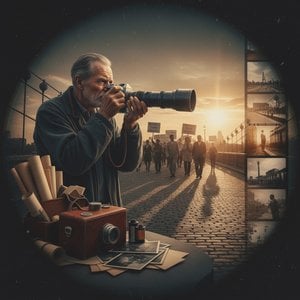
Witnessing History Through Lens & Light: Documentary Photography's Enduring Legacy
Explore the powerful history of documentary photography – from its origins to contemporary masters like Gordon Parks & W. Eugene Smith. Discover how this art form shapes our understanding of society and witness pivotal moments in time.
