


 Previzualizare
 Trimite
 Distribuie
 Detalii despre lucrare

 Descarcă
 Produse similare
 Radiografie
 Diapozitive automate
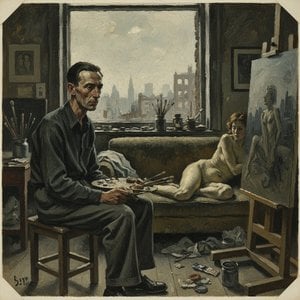
The Painter's Room
 Oil On Canvas
- WallArt
- Surrealism
 1944
1944 76.0 x 62.0 cm
 Vezi mai mult
Reproducere pictată manual în ulei
Pictură în ulei pe pânză, realizată manual de artiștii noștri la dimensiunea și ramele dorite de dumneavoastră, pe comandă. ( Comandă printul Cumpără imaginea)




P118B $10

P118H $10

P118W $10

P438Z $10

P508JH $12

P508YH $12

P805H $10

P805Z $10

P919BZ $10

P919G $10

P919XJ $10

P959ZH $10

P968JZ $12

W106C $8

W218G $10

W218JH $8

W218Y $10

W307PJ $10

W316G $10

W316PJ $8

W316Y $10

W398PJ $8

W4111J $10

W500HY $15

W500JH $15

W692G $12

W849H $8

W940BG $15

W953PJ $8




Alegeți dintre dimensiunile noastre prestabilite, care respectă proporțiile originale ale operei de artă.

Puteți introduce propriile dimensiuni pentru a se potrivi unui anumit cadru sau spațiu. Dacă dimensiunea selectată nu corespunde proporțiilor imaginii originale, vom decupa opera de artă sau vom extinde pictura cu elemente suplimentare pictate manual. O simulare digitală vă va fi trimisă pentru aprobare înainte de începerea producției.
Vă rugăm să rețineți că previzualizarea de pe ecran nu reflectă decuparea sau extinderea reală. Doar macheta va arăta cu exactitate compoziția finală.
Deși sunt disponibile dimensiuni personalizate, vă recomandăm să selectați o dimensiune din lista predefinită pentru a păstra proporțiile originale.
După plasarea comenzii, echipa ArtsDot.com va contacta clientul prin e-mail pentru instrucțiuni și îi va furniza o previzualizare a machetei
Livrare în întreaga lume () în 3-4 săptămâni, în loc de cele 5 săptămâni standard. (30 August). Fără compromisuri în ceea ce privește calitatea.

Livrare expres gratuită la nivel mondial

Pânză de in de înaltă calitate

Asigurare completă pentru transport

Garanție de rambursare a taxelor vamale

Garanția fidelității culorilor

Politica de retur în 60 de zile (doar pentru defecte)

Garanție de rambursare 100%

Ofertă pentru comenzi multiple
 Opțiunea cu sticlă este disponibilă doar pentru dimensiuni de sub 110 cm

The Painter's Room
Tehnică de reproducere
Dimensiune reproducere
-


Preț total calculat
$ 263
A Glimpse into the Subconscious Workshop
To stand before Lucian Freud's "The Painter's Room" is not merely to observe a painting; it is to step through a threshold into a meticulously rendered, yet utterly dreamlike, interior space. Created in 1944, this work captures an atmosphere thick with the residue of creativity and the peculiar weight of the subconscious mind. The scene itself presents a tableau vivant—a room where the mundane objects of artistic endeavor collide with the startling presence of the wild. Notice the juxtaposition: the worn elegance of the light beige sofa, suggesting domestic comfort, sits in conversation with the exotic, almost theatrical inclusion of the zebra head gazing down at a tiny black bird perched delicately upon its nose. This initial encounter between civilization and untamed nature sets the tone for the entire piece.
The Language of Surrealism and Realism
Artistically, "The Painter's Room" is a masterful negotiation between two seemingly opposing forces: the rigorous observation of reality and the boundless expanse of the surreal. While Freud was renowned for his unflinching commitment to the physical presence of his subjects—a hallmark of his later career—here, in 1944, he channels the spirit of Surrealism. The loose brushstrokes and palpable texture visible across the canvas suggest an immediacy, as if the scene were captured in a fleeting moment of heightened reality. The warm orange tones of the floor provide a grounding warmth that contrasts beautifully with the cooler blues suggested on the walls, creating a visual vibration that keeps the viewer perpetually engaged. It is this tension—the hyper-real detail applied to an impossible arrangement—that gives the work its enduring, whimsical yet profound quality.
Symbolism Woven into the Canvas
The objects within the room seem imbued with personal mythology. The zebra, standing sentinel near the sofa, acts as a potent symbol; it represents the unpredictable, vital energy that an artist must harness to fuel creation. Complementing this is the small bird, often interpreted as a delicate emblem of freedom or nascent inspiration, resting upon the wild creature's head. Further details, such as the dark hat lying beside the vibrant red cloth on the floor, add layers of narrative suggestion—are these discarded props from a performance, or simply remnants of an intense creative session? These elements invite contemplation, suggesting that the true subject is not the room itself, but the complex interplay between discipline and impulse.
An Invitation for Modern Living
For those who appreciate art that transcends mere decoration to become an emotional anchor, "The Painter's Room" offers profound resonance. Its blend of rich color saturation and palpable texture makes it a stunning focal point for any sophisticated interior design scheme. Whether placed in a gallery setting or integrated into a uniquely styled drawing-room, the painting brings with it a narrative depth that sparks conversation. Owning a reproduction allows one to incorporate this piece of art history—a dialogue between Freud's intense vision and the enduring mystery of human creativity—into your personal sanctuary.
Opere similare


Biografie artist
Lucian Freud - A Life Forged in Realism
Lucian Michael Freud, born December 8, 1922, Berlin (then part of the Weimar Republic), carried a lineage steeped in intellectual weight—the grandson of the pioneering psychoanalyst Sigmund Freud. Yet, young Lucian’s path diverged from exploring the subconscious through theory, instead finding expression through the intensely physical act of painting. The looming shadow of Nazism forced his family to flee Germany in 1933, settling in London, a relocation that profoundly shaped both his life and the often somber, unsettling tone defining his artistic vision. His early education was fragmented, marked by expulsion from Bryanston School, but formative instruction at Cedric Morris’s East Anglian School of Painting and Drawing proved pivotal. There, an emphasis on direct observation took root, becoming a cornerstone of his evolving style—a deliberate departure from the growing abstraction embraced by many contemporaries. This grounding in meticulous study of the visible world set him apart, establishing a unique artistic identity.- Early Life and Family
- Education
- The Surrealist Echoes
- Developing Realism
- Legacy and Influence
Early Life and Family
Lucian Freud was the son of Ernst L. Freud, an architect who emigrated to Berlin in 1933 to escape racial persecution, and Lucie Brasch, his mother—a German Jewish woman. The family’s experience during the Nazi era instilled a deep sense of urgency and shaped Freud's worldview. He attended Dartington Hall School from 1933-36, followed by Bryanston School (an independent public school in Devon) where he was expelled due to disruptive behaviour. Despite this setback, his artistic inclinations were nurtured at Cedric Morris’s East Anglian School of Painting and Drawing, fostering a lifelong fascination with observation and materiality. Freud's formative years instilled a profound appreciation for the tangible world—a perspective that would permeate his entire oeuvre.Education
Freud pursued formal artistic training at Central School of Arts and Crafts in London and East Anglian School of Painting and Drawing, where he honed his skills under Cedric Morris’s guidance. He was particularly drawn to the influence of Impressionism and Post-Impressionism, absorbing techniques that would later inform his distinctive style. His exposure to these movements broadened his artistic horizons and solidified his commitment to capturing fleeting moments of beauty—a characteristic that distinguishes him from many other artists of his time.The Surrealist Echoes
Freud’s early artistic explorations encompassed Surrealism and Expressionism, blending dreamlike imagery with emotional intensity. Influenced by artists such as Giorgio De Chirico and Hans Arp, he experimented with unconventional compositions and symbolic representations—reflecting the anxieties of the interwar period. However, these influences gradually yielded to a more disciplined approach, prioritizing meticulous detail and psychological depth.Developing Realism
By the early 1950s, Freud established his signature style: thickly impastoed paint, muted backgrounds amplifying flesh tones, and an almost brutal honesty in depicting the human form. He eschewed idealization or flattery, seeking instead to capture raw physicality, vulnerability, and psychological weight. This uncompromising vision—characterized by a profound respect for the materiality of paint—became his hallmark and distinguished him from many contemporaries who favored abstraction.Legacy and Influence
Lucian Freud’s 60-year career left an indelible mark on British portraiture, challenging conventional notions of beauty and representation. He wasn't interested in capturing social status or outward appearances; he sought to reveal something deeper, more primal—the essence of being human in all its complexity and imperfection. His influence extends beyond painting, inspiring artists across disciplines with his uncompromising vision and technical mastery. Freud’s work remains a powerful reminder of the enduring power of figurative art to confront us with ourselves. He was a key member of the “School of London,” a group of figurative painters working in London during a period dominated by abstract expressionism, united by their commitment to direct observation and emotional honesty. His paintings are held in major museums globally—the Tate in London, the Freud Museum London, and Goldsmiths’ College, University of London—enduring testaments to his artistic genius.
Lucian Freud
1922 - 2011 , Germania
Detalii rapide
- Artistic Movement Or Style: Școala Londoneză
- Artists Or Movements Influenced By This Artist: ['Francis Bacon']
- Artists Who Influenced This Artist:
- Sigmund Freud
- Hans Arp
- Joan Miró
- Giorgio De Chirico
- Date Of Birth: 8 decembrie 1922
- Full Name: Lucian Michael Freud
- Nationality: Britanic
- Notable Artworks:
- Camera pictorului
- Beneficii Supervisor Sleeping
- Place Of Birth: Berlin, Germania
Articole similare
Lucian Freud: A Psychological Portraiture of Post-War Existence
Explore the profound psychological depth of Lucian Freud's portraits. Discover his unique realism, artistic evolution, and lasting influence on modern art. A collector’s guide to a master.

Giclée Prints: Archival Quality & Aesthetic Nuances for the Discerning Collector
Explore the world of giclée prints with ArtsDot. Learn about archival quality, aesthetic nuances & investment potential. Expert guidance for discerning art collectors seeking museum-quality reproductions and lasting value.

Echoes of Time: Exploring the Enduring Appeal & Historical Context of Vintage Art Prints
Explore the captivating world of vintage art prints! Discover their history, collecting tips & enduring appeal. Expert insights on chromolithography and building a legacy collection with ArtsDot.

The Enduring Legacy of Fine Art Prints: Technique, History & Aesthetic Impact
Explore the rich history & techniques of fine art prints. Discover investment potential, assess authenticity, and learn how to preserve your collection with expert guidance. Trusted insights for discerning collectors.

Top 10 Capodopere Ulei pe Lemn care au Schimbat Arta – Inspirație pentru Decor
Descoperă Top 10 capodopere ulei pe lemn care au revoluționat arta! Explorează poveștile lui Van Gogh, Monet și Rembrandt. Inspirație pentru decor interior cu reproduceri de artă clasică de calitate muzeală. Găsește tabloul perfect pe ArtsDot.com


