


 Previzualizare
 Trimite
 Distribuie
 Detalii despre lucrare

 Descarcă
 Produse similare
 Radiografie
 Diapozitive automate
 Statistici
November
 Watercolor
- WallArt
- Vienna Secession
 1902
1902- Modern
 21.0 x 23.0 cm
 Vezi mai mult
Reproducere pictată manual în ulei
Pictură în ulei pe pânză, realizată manual de artiștii noștri la dimensiunea și ramele dorite de dumneavoastră, pe comandă. ( Comută pe Print Comută pe Imagine Digitală)




P118B $10

P118H $10

P118W $10

P438Z $10

P508JH $12

P508YH $12

P805H $10

P805Z $10

P919BZ $10

P919G $10

P919XJ $10

P959ZH $10

P968JZ $12

W106C $8

W218G $10

W218JH $8

W218Y $10

W307PJ $10

W316G $10

W316PJ $8

W316Y $10

W398PJ $8

W4111J $10

W500HY $15

W500JH $15

W692G $12

W849H $8

W940BG $15

W953PJ $8




Alegeți dintre dimensiunile noastre prestabilite, care respectă proporțiile originale ale operei de artă.

Puteți introduce propriile dimensiuni pentru a se potrivi unui anumit cadru sau spațiu. Dacă dimensiunea selectată nu corespunde proporțiilor imaginii originale, vom decupa opera de artă sau vom extinde pictura cu elemente suplimentare pictate manual. O simulare digitală vă va fi trimisă pentru aprobare înainte de începerea producției.
Vă rugăm să rețineți că previzualizarea de pe ecran nu reflectă decuparea sau extinderea reală. Doar macheta va arăta cu exactitate compoziția finală.
Deși sunt disponibile dimensiuni personalizate, vă recomandăm să selectați o dimensiune din lista predefinită pentru a păstra proporțiile originale.
După plasarea comenzii, echipa ArtsDot.com va contacta clientul prin e-mail pentru instrucțiuni și îi va furniza o previzualizare a machetei
Livrare în întreaga lume () în 3-4 săptămâni, în loc de cele 5 săptămâni standard. (14 Septembrie). Fără compromisuri în ceea ce privește calitatea.

Livrare expres gratuită la nivel mondial

Pânză de in de înaltă calitate

Asigurare completă pentru transport

Garanție de rambursare a taxelor vamale

Garanția fidelității culorilor

Politica de retur de 100 de zile (doar pentru defecte)

Garanție de rambursare 100%

Ofertă pentru comenzi multiple
 Opțiunea cu sticlă este disponibilă doar pentru dimensiuni de sub 110 cm

November
Tehnică de reproducere
Dimensiune reproducere
-


Preț total calculat
$ 263
A Haunting Encounter in Monochrome: The Mystery of November
In the quiet, shadowed corners of art history, few works capture the ephemeral tension between presence and absence as poignantly as Koloman Moser’s "November." Created in 1902, this evocative piece serves as a window into the soul of the Vienna Secession movement, offering a glimpse into a world where the boundaries between reality and dream become blurred. The painting presents us with three figures gathered within a darkened interior, their forms emerging from the gloom like memories struggling to remain visible. On the left, a woman with a veiled head stands as a silent sentinel, her shrouded features adding a layer of profound enigma to the composition. Beside her, two other figures stand in close proximity, their silhouettes creating a sense of shared secrets and hushed whispers. The atmosphere is thick with an eerie, almost spectral stillness, inviting the viewer to lean in and decipher the unspoken narrative unfolding in the dark.
The technique employed by Moser in this work is nothing short of masterful, utilizing a delicate watercolor style that lends itself perfectly to the Art Nouveau aesthetic. Through subtle gradations of tone and soft, bleeding edges, he achieves a sense of depth that feels both atmospheric and ethereal. Even when viewed through the lens of a monochromatic photograph, the interplay of light and shadow remains strikingly potent. The lack of vibrant color forces the eye to focus on the structural elegance of the figures and the rhythmic flow of the composition, highlighting Moser’s legendary ability to marry graphic precision with organic, flowing lines. This mastery of form ensures that every brushstroke contributes to the overarching sense of mystery, making the piece feel less like a static image and more like a captured moment of profound psychological weight.
For the discerning collector or interior designer, "November" offers an unparalleled opportunity to introduce a sense of intellectual depth and historical prestige into a curated space. The painting’s ability to evoke emotion—ranging from contemplative melancholy to a thrilling sense of intrigue—makes it a versatile centerpiece for sophisticated environments. Whether placed in a minimalist modern gallery or a classic, richly textured study, the work acts as a conversational anchor, drawing guests into its enigmatic world. Owning a high-quality reproduction of this masterpiece allows one to possess a fragment of the Secessionist spirit, bringing the haunting beauty of early 20th-century Vienna into the contemporary home. It is more than mere decoration; it is an invitation to contemplate the shadows and find beauty in the unknown.
Opere similare


Biografie artist
Early Life and Artistic Roots
Koloman Moser, a name synonymous with Viennese Art Nouveau and the innovative spirit of the early 20th century, was born on March 30, 1868, in Vienna, Austria-Hungary – a city that would profoundly shape his artistic vision. His birthplace, nestled within the heart of the Habsburg Empire, provided him with an environment steeped in tradition yet simultaneously receptive to new ideas and influences. His family background played a crucial role in nurturing his nascent artistic sensibilities; his father, Josef Moser, was a respected administrator for the prestigious Theresianum, an aristocratic academy renowned for its diverse range of craft workshops – an exposure that undoubtedly ignited young Koloman’s fascination with materials, techniques, and the tangible beauty of creation. Secretly, he pursued drawing lessons, demonstrating a quiet determination to hone his skills outside the formal curriculum, foreshadowing the multifaceted nature of his future career. This early immersion in both academic rigor and hands-on craftsmanship would become a defining characteristic of his artistic approach.A Multifaceted Career: Graphic Art, Fashion, and Architecture
Moser’s artistic journey transcended simple categorization, manifesting as a remarkable convergence of disciplines. He wasn't merely a painter; he was a designer, an architect, a craftsman, and a visionary. His impact on graphic art is particularly noteworthy – he designed postage stamps with striking geometric patterns, created elegant vignettes for magazines, and masterfully employed typography to convey both information and aesthetic appeal. Beyond the printed page, Moser’s talent extended into the realm of fashion, where his designs incorporated flowing lines and intricate details, reflecting the elegance of the Art Nouveau movement. He also contributed significantly to applied arts, designing stained glass windows for the Kirche am Steinhof (1904), porcelains, ceramics, blown glass, tableware, silver, and jewelry – a testament to his commitment to integrating art into everyday life. His architectural designs, most notably the apse mosaic and glass windows of the same church, stand as masterpieces of Art Nouveau architecture, seamlessly blending artistic vision with functional design principles. These works demonstrate his ability to create spaces that are both visually stunning and inherently practical.The Wiener Werkstätte: A Collaborative Utopia
In 1903, Koloman Moser joined forces with Josef Hoffmann and Fritz Wärndorfer to establish the Wiener Werkstätte – a collaborative workshop dedicated to producing aesthetically pleasing household goods through the union of artists and craftsmen. This venture embodied the “Gesamtkunstwerk” (total work of art) philosophy, demanding that every element of an object—from its initial design to its final production—be meticulously considered. Moser’s involvement in the Wiener Werkstätte solidified his commitment to functional beauty and elevated the status of applied arts within Viennese society. The workshop became a crucible for innovation, pushing the boundaries of design and challenging conventional notions of craftsmanship.Influences and Artistic Evolution
Moser's artistic development was shaped by a confluence of influential movements. Art Nouveau, with its emphasis on organic forms and flowing lines, provided a foundational aesthetic framework. He also drew inspiration from Symbolism, embracing evocative imagery and exploring the emotional depths of his subjects. Crucially, he found resonance in Japanese woodblock prints, which informed his use of flat planes of color, simplified forms, and a deliberate sense of restraint. Over time, his style evolved, becoming increasingly abstract and geometric while retaining an underlying elegance and refinement. His work reflected a constant dialogue between tradition and innovation, resulting in a uniquely Viennese aesthetic that continues to captivate audiences today.Legacy and Enduring Influence
Koloman Moser’s legacy extends far beyond the confines of his lifetime. His designs were immortalized on the Austrian 100 Euro commemorative coin (2005), recognizing his enduring influence on art and design. He died in Vienna in 1918, leaving behind a substantial body of work that continues to inspire artists and designers worldwide. His contributions fundamentally shaped the course of modern art and design, emphasizing the importance of integrating beauty into everyday objects and spaces—a principle that remains profoundly relevant in our contemporary world.
Koloman Moser
1868 - 1918 , Croația
Detalii rapide
- Artistic Movement Or Style: Secesiunea Viena
- Artists Or Movements Influenced By This Artist: ['Secesiunea Viena']
- Artists Who Influenced This Artist: ['Wiener Werkstätte']
- Date Of Birth: 30 martie 1868
- Date Of Death: 18 oct 1918
- Full Name: Koloman Moser
- Nationality: Austrian
- Notable Artworks:
- Decorarea fațadei
- Dansatoare
- Cele trei femei ghemuite
- Regele broasca
- Clashul titanilor
- Cele trei gracii
- Lumina
- Place Of Birth: Viena, Croația
Articole similare

Top 10 Capodopere Acvarelă Legendară care au Schimbat Arta pentru Totdeauna | ArtsDot.ro
Descoperă Top 10 capodopere acuarelă legendară de la Sargent, Turner și alți maeștri! Explorează istoria artei, tehnicile unice și paletele vibrante. Reproduceri de artă de calitate muzeală pentru decorul perfect pe ArtsDot.com.

Ephemeral Visions: Exploring the History & Emotional Resonance of Watercolor Painting
Explore the captivating history of watercolor painting, from ancient techniques to modern masters like Kandinsky & Blake. Discover essential artists, collecting tips & the emotional power of this luminous medium. Expert insights for art enthusiasts.

Ephemeral Visions: Exploring the Artistic Legacy & Contemporary Practice of Watercolor Painting
Explore the captivating world of watercolor painting! Discover its rich history, essential techniques, influential artists & collecting tips. A comprehensive guide for art enthusiasts from ArtsDot.

Koloman Moser: A Synthesis of Art Nouveau, Secessionism & the Gesamtkunstwerk Ideal
Explore the life & work of Koloman Moser, a pivotal figure in the Vienna Secession & Wiener Werkstätte. Discover his stunning graphic design, architecture, and applied arts – a true pioneer of Viennese Art Nouveau. Learn more at ArtsDot.
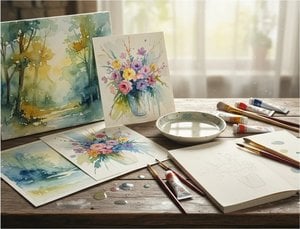
Ephemeral Visions: Exploring the Artistic Legacy & Nuances of Watercolor Painting
Explore the captivating world of watercolor painting! Discover its rich history, essential techniques, influential artists & collecting tips from art experts. A comprehensive guide for enthusiasts.
