

 Previzualizare
 Trimite
 Distribuie
 Detalii despre lucrare

 Descarcă
 Produse similare
 Radiografie
 Diapozitive automate
Placa redonda


 Vezi mai mult
Giclée / Imprimare artistică
Printuri giclée sau pe canvas de calitate muzeală, cu proces de producție rapid și opțiuni flexibile de finisare. ( Comandă pictură lucrată manual Cumpără imaginea)




P118B $10

P118H $10

P118W $10

P438Z $10

P508JH $12

P508YH $12

P805H $10

P805Z $10

P919BZ $10

P919G $10

P919XJ $10

P959ZH $10

P968JZ $12

W106C $8

W218G $10

W218JH $8

W218Y $10

W307PJ $10

W316G $10

W316PJ $8

W316Y $10

W398PJ $8

W4111J $10

W500HY $15

W500JH $15

W692G $12

W849H $8

W940BG $15

W953PJ $8




Alegeți dintre dimensiunile noastre prestabilite, care respectă proporțiile originale ale operei de artă.

Puteți introduce propriile dimensiuni pentru a se potrivi unui anumit cadru sau spațiu. Dacă dimensiunea selectată nu corespunde proporțiilor imaginii originale, vom decupa lucrarea de artă sau vom extinde imaginea cu margini oglindite sau cu o culoare uniformă. Un mockup digital va fi trimis pentru aprobarea dumneavoastră înainte de începerea producției.
Vă rugăm să rețineți că previzualizarea de pe ecran nu reflectă decuparea sau extinderea reală. Doar mockup-ul va arăta cu exactitate compoziția finală.
Deși dimensiunile personalizate sunt disponibile, vă recomandăm să selectați o dimensiune din lista predefinită pentru a păstra proporțiile originale.
Livrare în întreaga lume () în 2 săptămâni, în loc de cele 4/5 săptămâni standard. (1 Septembrie)

Livrare expres gratuită la nivel mondial

Pânză de in de înaltă calitate

Asigurare completă pentru transport

Garanție de rambursare a taxelor vamale

Garanția fidelității culorilor

Politica de retur în 60 de zile (doar pentru defecte)

Garanție de rambursare 100%

Ofertă pentru comenzi multiple
 Opțiunea cu sticlă este disponibilă doar pentru dimensiuni de sub 110 cm

Placa redonda
Giclée / Imprimare artistică
Dimensiune reproducere
-


Preț total calculat
$ 62
A Whimsical World Unveiled: Exploring Joan Miró’s “Placa redonda”
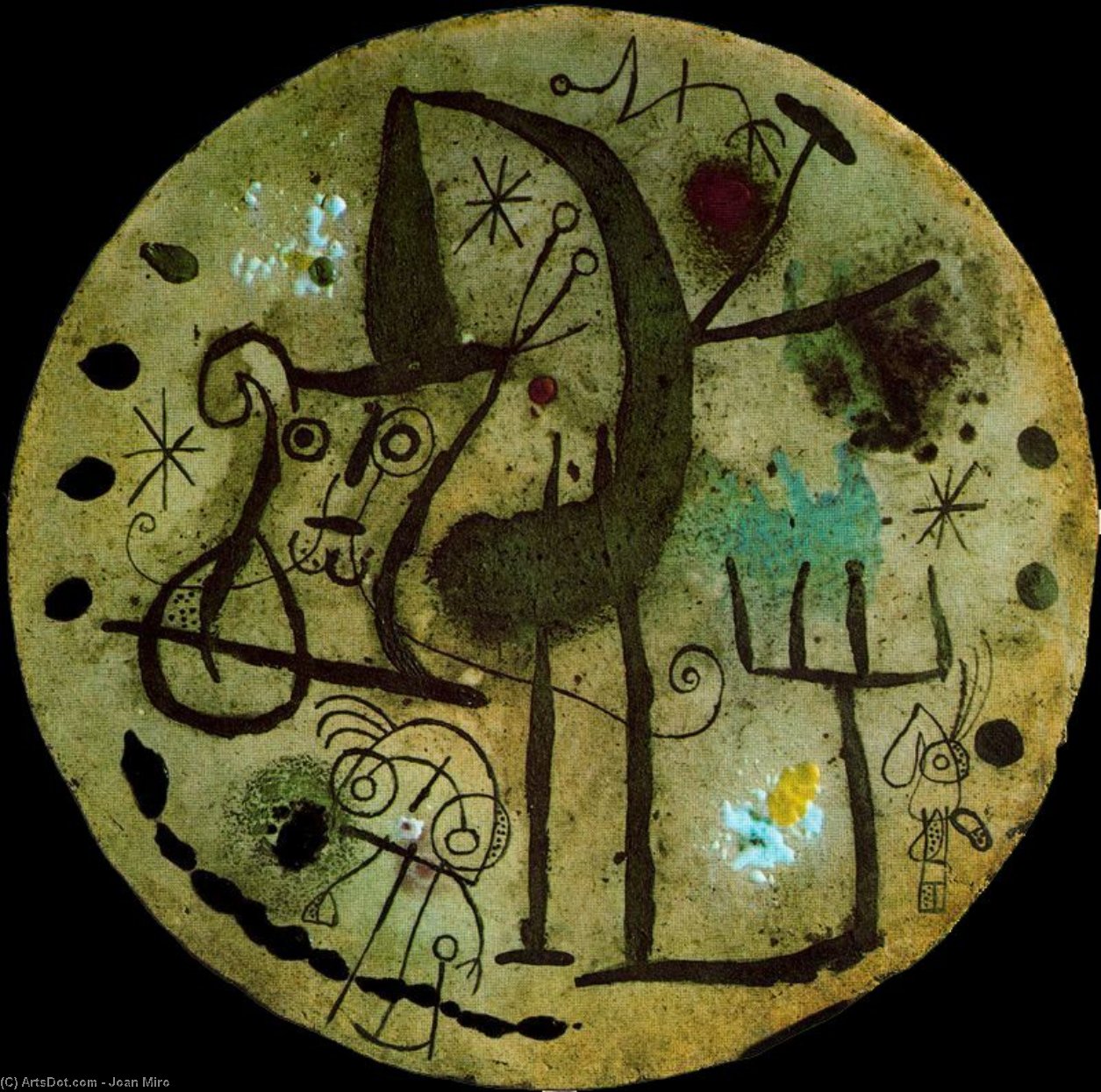
Joan Miró's “Placa redonda” is not merely a painting; it’s an invitation into a dreamscape, a visual poem brimming with the artist’s signature blend of playful abstraction and profound symbolism. This captivating work, though modest in size (the exact dimensions remain undocumented), possesses an expansive quality, drawing the viewer into its intricate world of biomorphic forms and vibrant hues. At first glance, one is struck by the prominent canine figure—a whimsical dog standing upright, almost human in posture. But to perceive this as simply a depiction of an animal would be to miss the deeper currents flowing beneath the surface. Miró wasn’t interested in replicating reality; he sought to unlock the subconscious, to translate the language of dreams and instincts onto canvas.
The Language of Symbols: Decoding Miró's Visual Vocabulary
Born in Barcelona in 1893, Joan Miró developed a unique artistic vocabulary deeply rooted in Catalan identity and Surrealist exploration. While he briefly engaged with movements like Cubism, he quickly forged his own path, rejecting rigid structures in favor of intuitive expression. “Placa redonda” exemplifies this approach. The dog, often interpreted as a self-portrait or a representation of loyalty and companionship, is surrounded by an array of enigmatic shapes and figures. These aren’t random arrangements; they are carefully considered symbols drawn from Miró's personal mythology. The scattered forms—floating eyes, ladder-like structures, and amorphous blobs—evoke a sense of childlike wonder and primal energy. The painting isn’t about *what* is depicted but rather *how* it feels. It taps into universal archetypes, resonating with the viewer on an emotional level.
Technique and Texture: A Masterclass in Subtlety
Miró's technique in “Placa redonda” is deceptively simple yet remarkably sophisticated. He employed a limited palette of primary colors—red, blue, yellow—alongside black lines to define forms and create spatial relationships. The application of paint appears fluid and spontaneous, but closer inspection reveals a meticulous control over texture and layering. He often thinned his paints, allowing them to bleed into the canvas, creating a sense of luminosity and depth. This technique contributes to the painting’s ethereal quality, as if the images are emerging from a hazy dream. The circular format itself—the “placa redonda” or round plate—adds another layer of meaning, suggesting wholeness, unity, and the cyclical nature of life.
A Legacy of Innovation: Miró's Enduring Influence
Joan Miró’s impact on 20th-century art is undeniable. He paved the way for abstract expressionism and influenced generations of artists with his innovative use of color, form, and symbolism. “Placa redonda,” though a relatively lesser-known work compared to some of his larger canvases, encapsulates the essence of his artistic vision. It’s a testament to his ability to transform personal experiences and subconscious impulses into universally accessible works of art. For collectors and interior designers alike, a reproduction of this painting offers more than just aesthetic appeal; it provides a window into a world of imagination, inviting contemplation and sparking creativity within any space.


Biografie artist
Un vizionar catalan: Viața și artă lui Joan Miró
Joan Miró i Ferrà, născut în Barcelona în 1893, se impune ca una dintre cele mai semnificative figuri ale artei secolului XX. Călătoria sa nu a fost doar o progresie prin stiluri, ci o explorare a lumilor interioare, traducând vise, amintiri și identitatea catalană pe pânză printr-un limbaj vizual unic, profund poetic. Pornind de la începuturi modeste, marcate de boală și de inițialele rezerve ale părinților sale cu privire la pasiunea sa artistică, Miró a perseverat, condus de nevoia înnăscută de a exprima intangibilul — emoțiile, senzațiile și curentul subconștient care zac sub suprafața realității. Primele sale ani de viață au fost îmbibați în tradițiile Barcelonei, un oraș plin de minuni arhitecturale datorită lui Antoni Gaudí, ale cărui forme organice vor influența subtil abstractizările ulterioare ale lui Miró. Profesia de aurar a tatălui său i-a insuflat aprecierea pentru măiestria meticuloasă, în timp ce peisajul aspru catalan a devenit un motiv recurent și o sursă de inspirație pe tot parcursul carierei sale.Influențe timpurii și drumul către Surrealism
Formarea artistică formală a lui Miró a început la La Llotja din Barcelona, unde și-a perfecționat abilitățile în tehnici tradiționale. Totuși, contactul cu mișcările de avangardă care străbateau Parisul a fost cel care i-a aprins cu adevărat evoluția creativă. Culorile vibrante ale Fauvismului și formele fragmentate ale Cubismului au rezonat profund în sufletul său, determinându-l să se mute la Paris în াহত 1920. Această perioadă s-a dovedit a fi crucială, deoarece a întâlnit artiști precum Pablo Picasso și a început să experimenteze compoziții tot mai abstracte. Cu toate acestea, Miró nu a adoptat pur și simplu aceste stiluri; el le-a sintetizat, făurind o cale către propria sa estetică distinctivă. El a căutat să destileze formele până la esența lor, eliminând detaliile reprezentative în favoarea formelor simbolice și a culorilor evovatoare. Această explorare l-a condus către grupul Surrealist în 1924, aliniindu-l cu artiști precum Max Ernst și Salvador Dalí. Deși a îmbrățișat interesul surrealist pentru subconștient, Miró și-a păstrat o sensibilitate unică — opera sa nu era mai degrabă despre imagini șocante sau simbolism freudian, ci despre crearea unei lumi a formelor jucăușe și a sugestiei poetice.Limbajul simbolurilor: Opere cheie și inovații artistice
Pe parcursul anilor 1920 și 1930, Miró și-a dezvoltat vocabularul vizual semnătură — un univers populat de forme biomorfice, forme plutitoare și culori vibrante. Fermă (1922), adesea considerată o piatră de temelie a operei sale, exemplifică această tranziție. Nu este doar o reprezentare a vieții rurale, ci o evocare a identității catalane și o reprezentare simbolică a lumii naturale. Spiritul său colaborativ a dus la tehnici inovatoare precum *grattage*, pionierat împreună cu Max Ernst în 1926 pentru designuri destinate baletului lui Sergei Diaghilev, unde texturile erau descoperite prin zgârierea vopselei pe pânză. Seria Interioare Olandeze (1928) a demonstrat capacitatea sa de a reinterpreta maeștrii vechi printr-o lentilă distinct modernă, transformând scene domestice în abstractizări onirice. Pictură (1933), cu culorile sale îndrăznețe și formele simplificate, întipărește explorarea lui Miró asupra subconștientului și respingerea limitelor artistice convenționale. Dincolo de pictură, Miró a experimentat fără teamă cu sculptura, ceramica și gravura, extinzându-și orizonturile creative și demonstrând o versatilitate remarcabilă.Moștenire și influență durabilă
Impactul lui Joan Miró asupra artei secolului XX este incontestabil. El nu a fost pur și simplu un pictor; a fost un vizionar care a provocat însăși definiția expresiei artistice. Opera sa a deschis calea către expresionismul abstract și continuă să inspire artiști din diverse discipline. El a înființat două fundații — Fundació Joan Miró în Barcelona (1975) și Fundació Pilar i Joan Miró în Palma de Mallorca (1981) — asigurându-se astfel că moștenirea sa va dăinui, oferind spații pentru explorare artistică și educație. Pe parcursul lungii sale cariere, a rămas dedicat sfidării limitelor, cuestionării convențiilor și explorării adâncimilor imaginației umane. Arta lui Miró este o mărturie a puterii abstractizării, a simbolismului și a expresiei poetice — o celebrare vibrantă a vieții, a viselor și a spiritului nemuritor al culturii catalane. Opera sa continuă să rezoneze cu publicul din întreaga lume, invitându-ne să intrăm într-o lume în care orice este posibil, iar granițele dintre realitate și fantezie se estompează într-un dans captivant de culoare și formă.
Joan Miró
1893 - 1983 , Spania
Detalii rapide
- Artistic Movement Or Style: Surrealism, Abstract Art
- Artists Or Movements Influenced By This Artist: ['Fauvism']
- Artists Who Influenced This Artist: ['Pablo Picasso']
- Date Of Birth: 1893
- Date Of Death: 1983
- Full Name: Joan Miró i Ferrà
- Nationality: Spaniol
- Notable Artworks:
- The Farm
- Dutch Interiors
- Painting
- Place Of Birth: Barcelona, Spania
Articole similare

Joan Miró: Cele Mai Iconice 25 De Opere – Artă Modernă pentru Decorul Tău
Descoperă cele mai iconice 25 de opere Joan Miró! Explorează biografiile, tehnicile și simbolismul din spatele picturilor abstracte, suprarealiste și catalane. Găsește inspirație pentru decorul tău cu reproduceri artă de calitate superioară pe ArtsDot.com.

Top 10 Opere de Artă Plină de Joacă: Bucurie și Spirit Liber în Decorul Tău
Descoperă top 10 opere de artă pline de joacă și bucurie! Explorează poveștile din spatele picturilor Matisse, Renoir, Van Gogh și alți artiști renumiți. Găsește inspirație pentru decorul tău cu reproduceri de calitate muzeală pe ArtsDot.com.

Top 10 Capodopere ale Expresionismului Abstract: Artă, Artiști și Decorațiuni de Lux | ArtsDot.ro
Descoperă Top 10 capodopere ale Expresionismului Abstract! Explorează poveștile lui Pollock, Rothko și De Kooning. Reproduceri de artă de lux & inspirație decor pe ArtsDot.ro. Găsește pictura perfectă pentru spațiul tău!

Cele mai importante 10 capodopere ale abstracției geometrice | Artă & Decor de lux pe ArtsDot.com
Descoperă cele mai importante 10 capodopere ale abstracției geometrice! Explorează istoria, artiștii (Mondrian, Kandinsky) și culorile vibrante care au definit arta modernă. Reproduceri de tablouri de lux pe ArtsDot.com pentru un decor interior rafinat. Explorează colecția online!

Surrealism: Cele Mai Importante 10 Capodopere Artistice – ArtsDot.ro
Descoperă cele mai importante 10 capodopere ale suprarealismului! Explorează poveștile din spatele picturilor lui Dali, Magritte și Miró. Reproduceri de artă de calitate muzeală pentru un decor interior unic pe ArtsDot.ro.



