

 Previzualizare
 Trimite prin felicitare
 Distribuie
 Detalii despre lucrare
 Ghid
Ghid

 Descarcă imaginea
 Produse similare
 Radiografie
 Galerie foto
 Întrebări și răspunsuri
 Statistici
Maternity

- 92.0 x 73.0 cm


 Vezi mai mult
Lucrarea de artă afișată pe această pagină este protejată de legile privind drepturile de autor, ceea ce înseamnă că nu putem crea sau vinde în mod legal o reproducere identică. Această protecție este garantată prin acorduri internaționale, precum Convenția de la Berna și de legile naționale, inclusiv cele prevăzute de Legea dreptului de autor din S.U.A. – Titlul 17. Toate drepturile rezervate. Orice reproducere neautorizată este interzisă.
Această metodă respectă pe deplin reglementările privind drepturile de autor, deoarece nu implică copierea sau duplicarea operei protejate. În schimb, este o reinterpretare creativă – o pictură nouă, influențată de original, dar care nu este identică cu acesta.
Giclée / Imprimare artistică
Printuri giclée sau pe canvas de calitate muzeală, cu proces de producție rapid și opțiuni flexibile de finisare. ( Comandă pictură realizată manual Comută pe Imagine Digitală)




P118B lei10

P118H lei10

P118W lei10

P438Z lei10

P508JH lei12

P508YH lei12

P805H lei10

P805Z lei10

P919BZ lei10

P919G lei10

P919XJ lei10

P959ZH lei10

P968JZ lei12

W106C lei8

W218G lei10

W218JH lei8

W218Y lei10

W307PJ lei10

W316G lei10

W316PJ lei8

W316Y lei10

W398PJ lei8

W4111J lei10

W500HY lei15

W500JH lei15

W692G lei12

W849H lei8

W940BG lei15

W953PJ lei8




Alegeți dintre dimensiunile noastre prestabilite, care respectă proporțiile originale ale operei de artă.

Introduceți lățimea și înălțimea necesare pentru a se potrivi ramei sau peretelui dumneavoastră. O printare poate fi doar tăiată, niciodată extinsă dincolo de dimensiunea imaginii originale, astfel încât o dimensiune cu o formă diferită va pierde o parte din imagine. Vă trimitem o simulare digitală pentru aprobare înainte de a imprima orice. Imaginea afișată pe această pagină nu prezintă tăierea reală — doar simularea arată acest lucru.
Livrare în întreaga lume () în 2 săptămâni, în loc de cele 4/5 săptămâni standard. (17 Noiembrie)

Livrare expres gratuită la nivel mondial

Pânză de in de înaltă calitate

Asigurare completă pentru transport

Garanție de rambursare a taxelor vamale

Garanția fidelității culorilor

Politica de retur în 100 de zile (doar pentru defecte de fabricație)

Garanție de rambursare 100%

Ofertă pentru comenzi multiple
 Opțiunea cu sticlă este disponibilă doar pentru dimensiuni de sub 110 cm

Maternity
Giclée / Imprimare artistică
Dimensiune reproducere
-


Preț total calculat
lei 299
A Surrealist Dreamscape: Unpacking Joan Miró’s “Maternity”
Joan Miró's "Maternity," painted in 1924, isn’t merely a depiction of motherhood; it’s an immersion into the artist’s intensely personal and profoundly evocative inner world. This oil-on-canvas work, housed within the Fundació Joan Miró in Barcelona, transcends simple representation to become a shimmering embodiment of subconscious imagery and Catalan identity. The painting immediately captivates with its dreamlike quality – a carefully orchestrated chaos of biomorphic shapes arranged against a stark white backdrop that amplifies their strangeness and invites endless interpretation. It’s a testament to Miró's pioneering role in Surrealism, where the familiar is deliberately distorted and the rational yields to the intuitive. The work feels both intensely private and universally resonant, tapping into primal themes of creation, nurture, and perhaps even a touch of unsettling vulnerability.Composition and Technique: A Language of Symbols
The composition of “Maternity” is remarkably balanced despite its apparent randomness. A dominant, almost monolithic black shape anchors the lower right quadrant, providing a grounding element to the otherwise fluid arrangement of forms. Thin, curving lines – like veins or pathways – connect these shapes, creating a network that subtly guides the eye through the scene. Miró masterfully employs asymmetry; this prevents the image from feeling static and encourages the viewer to actively engage with its narrative. The brushwork is remarkably smooth, suggesting a controlled application of paint rather than an impastoed texture, contributing to the painting’s overall sense of flatness and dreamlike detachment. Miró's technique here isn’t about meticulous detail but about conveying feeling – a deliberate rejection of photographic realism in favor of a purely expressive language. The use of limited color—primarily white, black, red, yellow, and blue—further emphasizes the symbolic weight of each element.Decoding the Symbolism: Beyond the Literal
While “Maternity” undeniably evokes themes of motherhood and nurturing, Miró intentionally resists straightforward interpretation. The central figure, reduced to a series of interconnected lines and suggestive shapes, is barely recognizable as a woman. Instead, we encounter a complex iconography – a large, black shape resembling a womb or perhaps a stylized mountain, two insect-like infants suspended from breasts, and a piercing hole in what appears to be a skirt. These elements, combined with the sperm-like form swimming across the canvas, create a potent visual metaphor for creation, vulnerability, and the cyclical nature of life. The reference to a Spanish dancer’s polka-dot dress—a fleeting memory from Miró's early years—adds another layer of intrigue, hinting at the artist’s personal history and artistic evolution. The painting is not about depicting motherhood; it’s about embodying its essence through a carefully constructed system of symbols.Historical Context and Artistic Influence
“Maternity” was created during a pivotal period in Miró's career – following his move to Paris in 1920 and his immersion within the burgeoning Surrealist movement. Influenced by artists like André Masson, he began to prioritize inner experience over external observation, developing a unique visual language characterized by abstract forms, biomorphic shapes, and a deliberate rejection of traditional perspective. The painting reflects this shift, moving away from the detailed landscapes of his earlier work towards a more symbolic and emotionally charged style. It’s important to note that Miró's artistic journey was deeply rooted in Catalan tradition – the rugged landscape, the folklore, and the spirit of his homeland all found their way into his art, albeit filtered through the lens of Surrealism. The Fundació Joan Miró, established in Barcelona, stands as a testament to this enduring connection between the artist and his cultural heritage.Emotional Resonance and Artistic Legacy
“Maternity” possesses a lingering sense of both whimsy and melancholy. It’s a painting that invites contemplation, prompting viewers to project their own emotions and experiences onto its enigmatic imagery. The ambiguity inherent in Miró's work—the lack of clear narrative or definitive meaning—is precisely what makes it so compelling. It’s a reminder that art can be more than just representation; it can be a portal into the subconscious, a space for dreams and fantasies, and a profound exploration of the human condition. Reproductions of this iconic piece offer a unique opportunity to bring this surrealist masterpiece into any interior space, sparking conversation and inviting viewers to lose themselves in its captivating world.Întrebări și răspunsuri
Unde se încadrează "Maternity" în întreaga creație a lui Joan Miró?
"Maternity" face parte din perioada Surrealist Expressionism a lui Joan Miró, ale cărei teme recurente includ gaudí’s organic forms, catalan identity, dreams, subconscious, primal instincts, procreation, fertility, maternal themes.
Ce nivel de luminozitate are "Maternity" de Joan Miró?
"Maternity" de Joan Miró are o luminanță de Luminous. Luminația descrie câtă lumină par să reflecte culorile.
Ce dimensiune de reproducere se recomandă pentru "Maternity" de Joan Miró?
Pentru "Maternity" de Joan Miró, recomandăm o reproducere de dimensiunea Large. Dimensiunea poate fi ajustată păstrând proporțiile intacte.
Opere similare


Biografie artist
Viața și arta lui Joan Miró
Barcelona, 20 aprilie 1893. Joan Miró i Ferrà pășește într-o lume a preciziei și a mecanismelor, fiind născut într-o familie de ceasornici. Acest mediu de început îi oferă un fundal de măiestrie meticuloasă, care persistă pe tot parcursul evoluției sale ca pictor, sculptor și ceramist. El traversează deceniile nu urmând un drum prestabilit, ci prin schimbarea constantă a focalizării, devenind în cele din urmă o figură centrală în dezvoltarea Surrealismului și a Artei Abstracte.
Opera sa creatoare rezistă oricărei categorisiri facile. În timp ce mulți încearcă să îl plaseze într-o singură mișcare, Joan Miró rămâne feroce independent, exprimând adesea dorința de a răsturna ierarhiile estetice stabilite. El lucrează cu o energie neliniștită, experimentând diverse medii pentru a surprinde subconștientul. Practica sa este o tensiune constantă între organic și geometric, între oniric și tangibil. Până la trecerea sa în neființă, pe 25 decembrie 1983, el a lăsat în urmă un limbaj vizual care sfidează însăși definiția expresiei artistice.
- The Farm
- The Tilled Field
- The Birth of the World
- Peisajul Catalan (The Hunter)
- The Family
- Dutch Interior I
Tinerețea, familia și formarea artistică
Barcelona, 1893. Fundamentele limbajului vizual al lui Joan Miró prind viață în capitala catalană. Primii săi ani sunt marcați de o existență duală, un echilibru fragil între pragmatism și inspirație. La vârsta de paisprezece ani, acesta intră în școala de comerț, un drum practic ce va rula în paralel cu impulsurile sale creative tot mai puternice. Miró nu a ales între comerț și artă; a ales să le exploreze pe ambele. În timp ce se dedică studiilor de afaceri, el se înscrie simultan la cursurile de artă de la Escuela Superior de Artes Industriales y Bellas Artes, împletind astfel rigoarea disciplinei cu libertatea estetică.
Momentum-ul creativ este inevitabil. Până în 1911, Miró pășește deja în lumina publică, expunându-și prima pictură la a șasea Exposición Internacional de Arte din Barcelona. Această primă expunere marchează tranziția sa de la mediul academic la sfera profesională. Formarea sa formală se adâncește între anii 1912 și 1915, sub îndrumarea lui Francesc Galí la Escola d’Art. Acești ani de instruire riguroasă îi vor oferi structura tehnică necesară pentru revoluțiile stilistice și plecările radicale care vor urma în cariera sa.
Anii de Formare din Paris
Paris, 1920. Orașul îl atrage magnetic. Joan Miró ajunge în capitala franceză, un spațiu în care tensiunea dintre curenturile modernismului și propria sa identitate catalană începe să îi zgârie nucleul creativ. Își parcurge străzile, întâlnind prezența unor artiști precum Pablo Picasso. Aceasta este o perioadă de intensă fricțiune și experimentare. El nu se limitează la a absorbi stiluri; el navighează prin spațiul dintre avangardă și rădăcinile propriului său peisaj interior.
Climatul politic se schimbă, iar izbucnirea Războiului Civil Spaniol îi forțează geografia existenței. Se trezește trăind într-un exil involuntar în Franța până la mijlocul anului 1940. Această perioadă de deplasare marchează o detașare de explorările sale anterioare, mai stabile. Între 1937 și începutul anului 1938, opera sa trece printr-o transformare bruscă și profundă. El produce două picturi cu un stil unic, rupându-se de tiparele stabilite pentru a crea ceva cu totul diferit de tot ce realizase până atunci.
Tehnică și stilul artistic unic
Joan Miró respinge siguranța metodelor consacrate. El privește pictura convențională ca pe un instrument al societății burgheze, o abordare pe care încearcă să o deconstruiască printr-o practică neliniștită și iconoclastă. Opera sa sfidează adesea orice clasificare simplistă, fiind interpretată frecvent ca fiind Surrealistă, dar fiind ghidată de un stil profund personal care rezistă oricărui „ism” definitiv. El navighează prin diverse media cu o energie febrilă, experimentând cu pictură, pastel, gravură, sculptură, ceramică, colaj, muralism și tapiserie. Această versatilitate îi permite să evadeze de sub constrângerile reprezentării tradiționale.
Picturile sale biomorfe emerg prin forme brute și obiecte care rămân doar marginal recunoscute. Există o tensiune în aceste forme, o senzație a subconștientului redată printr-un idiom pictural unic. El utilizează acrilicul pentru a construi suprafețe luminoase și texturate, care oferă compozițiilor sale o prezență fizică palpabilă. Formele nu stau pur și simplu pe pânză; ele există într-o stare de flux, apărând adesea ca glife sau simboluri care jetează un pod peste prăpastia dintre ceea ce este văzut și ceea ce este imaginat.
- The Farm (1922)
- The Tilled Field (1924)
- The Birth of the World (1925)
- The Gold of the Azure (1967)
Opere cheie și capodopere majore
Tranziția către un limbaj personal și simbolic își găsește ancorarea în pictura The Farm. Această operă marchează o detașare de studiile sale inițiale, devenind o piatră de temelie a întregului său oeuvre prin ancorarea abstractizării în continuă evoluție în realitatea peisajului catalan. Până în 1924, această legătură profundă cu pământul se intensifică în The Tilled Field, o lucrare în care granițele dintre lumea fizică și subconștient încep să se estompeze, iar imaginierea se îndepărtează de reprezentarea tradițională pentru a adopta un vocabular privat și codificat.
În anul 1925, apare The Birth of the World, semnalând o trecere către un spațiu mai fluid și primordial. Aici, pânza devine un loc al creației spontane, unde formele par să se coalesceze din nimic. Această experimentare cu originile formei continuă să îl definească și în anii de maturitate. În 1967, The wing of the lark ... demonstrează o stăpânire continuă a limbajului său vizual unic, păstrând un sentiment de mișcare și sugestie poetică chiar și atunci când stilul său ajuns la apogeu.
Prezența sa în spațiul public s-a manifestat, de asemenea, prin lucrări monumentale, de o dimensiune impresionantă. Dona i Ocell se ridică ca un simbol semnificativ al eliberării catalane, utilizând mozaicul și contururile iregulare pentru a revendica un spațiu în mediul urban. Această lucrare face puntea între picturile sale intime, onirice, și dimensiunea arhitecturală, publică, a viziunii sale ulterioare.
- The Farm
- The Tilled Field (1924)
- The Birth of the World (1925)
- The wing of the lark ... (1967)
- Dona i Ocell
Moștenire și influență durabilă
Plecarea lui Joan Miró la vârsta de 90 de ani marchează sfârșitul unei epoci; acesta era considerat pe îndelete de mulți ca fiind ultima dintre stelele modernismului. Abordarea sa neliniștită și iconoclastă a pânzii a făcut mai mult decât a sfida simplu ierarhiile estetice. Prin despovățirea formelor până la esența lor, opera sa a deschis calea către expresionismul abstract. Personajele sale unice — acele figuri idiosincratice și simbolice — au lăsat o amprentă profundă pe traiectoria artei moderne, influențându-i pe artiști de talie precum Robert Motherwell și Louise Bourgeois.
Angajamentul său față de viitorul artei a căpătat formă fizică prin instituțiile pe care le-a înființat pentru a încuraja experimentarea. În 1975, el a fondat Fundació Joan Miró în Barcelona. Această inițiativă a fost urmată de înființarea Fundației Pilar i Joan Miró în Palma de Mallorca, în 1981. Aceste spații asigură faptul că influența sa rămâne activă, depășind simpla expunere statică a obiectelor pentru a servi drept centre de explorare contemporană.
Unde poți descoperi astăzi aceste capodopere
Cea mai intensă întâlnire cu universul creativ al lui Joan Miró are loc pe dealul Montjuïc din Barcelona, în Spania. Aici, Fundació Joan Miró păstrează o colecție vastă, formată din peste 10.000 de opere de artă. Atmosfera muzeală, concepută de arhitectul Josep Lluís Sert, permite vizitatorului să parcurgă terase și curți interioare care oglindesc abordarea organică a artistului față de spațiu. Această locație rămâne principalul punct de referință pentru studiul evoluției limbajului său vizual unic.
Dincolo de granițele Spaniei, prezența sa artistică este resimțită în marile centre instituționale ale lumii artei. În New York, Museum of Modern Art găzduiește câteva dintre lucrările sale emblematice, în timp ce Metropolitan Museum of Art păstrează, de asemenea, piese importante în colecția sa permanentă. Aceste colecții oferă o perspectivă fascinantă asupra modului în care stilul său specific de abstractizare și simbolism s-a integrat în narațiunea mai largă a modernismului. La Paris, Centre Pompidou reprezintă o altă locație esențială pentru a observa influența sa asupra avangardei europene.
- The Farm (1922)
- The Tilled Field (1924)
- Dutch Interior I (1928)
- Painting (1933)
- Head of a Man (1935)
- Still Life with Old Shoe (1937)

Joan Miró
1893 - 1983 , Spania
Detalii rapide
- Artistic Movement Or Style:
- Surrealism
- Fauvism
- Expresionism
- Artists Or Movements Influenced By This Artist: ['Expresionismul abstract']
- Artists Who Influenced This Artist:
- Antoni Gaudí
- Pablo Picasso
- Date Of Birth: 1893
- Date Of Death: 1983
- Full Name: Joan Miró i Ferrà
- Nationality: Spanioară
- Notable Artworks:
- The Farm
- The Tilled Field
- The Birth of the World
- Painting
- Place Of Birth: Barcelona, Spania
Articole similare

Joan Miró: Cele Mai Iconice 25 De Opere – Artă Modernă pentru Decorul Tău
Descoperă cele mai iconice 25 de opere Joan Miró! Explorează biografiile, tehnicile și simbolismul din spatele picturilor abstracte, suprarealiste și catalane. Găsește inspirație pentru decorul tău cu reproduceri artă de calitate superioară pe ArtsDot.com.

Top 10 Capodopere Suprarealiste: Artă, Artiști și Decor Inspirat
Descoperă top 10 capodopere suprarealiste de la Salvador Dalí, René Magritte și alți artiști iconici. Explorează simbolismul, culorile vibrante și istoria fascinantă a acestei mișcări artistice revoluționare. Reproduceri tablouri de calitate muzeală pe ArtsDot.com!

Beyond Shapes: 10 Iconic Abstract Masterpieces That Redefine Art
Journey through history with 10 iconic abstract masterpieces. From bold expressionism to geometric elegance, discover the stories behind these timeless works. Find museum-quality art reproductions and curated decor inspiration. Explore the full collection online at ArtsDot.com.

Top 10 Capodopere Suprarealiste: Arta Visează Realitatea | ArtsDot.ro
Descoperă top 10 capodopere suprarealiste de la Dalí, Magritte și Miró! Explorează poveștile din spatele picturilor iconice, simbolismul lor profund și impactul asupra artei moderne. Reproduceri de calitate muzeală pe ArtsDot.com.
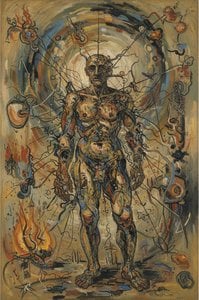
André Masson: Automatism, Surrealism & Primal Expression in 20th-Century Art
Explore the revolutionary art of André Masson – pioneer of automatism & Surrealist expression. Discover his powerful imagery, innovative techniques, and lasting influence on modern art. Learn more at ArtsDot.


