

 Previzualizare
 Trimite prin felicitare
 Distribuie
 Detalii despre lucrare
 Ghid
Ghid

 Descarcă imaginea
 Produse similare
 Radiografie
 Galerie foto
 Întrebări și răspunsuri
 Statistici
Reclining Nude

- 70.0 x 180.0 cm


 Vezi mai mult
Giclée / Imprimare artistică
Printuri giclée sau pe canvas de calitate muzeală, cu proces de producție rapid și opțiuni flexibile de finisare. ( Comandă pictură realizată manual Comută pe Imagine Digitală)




P118B lei10

P118H lei10

P118W lei10

P438Z lei10

P508JH lei12

P508YH lei12

P805H lei10

P805Z lei10

P919BZ lei10

P919G lei10

P919XJ lei10

P959ZH lei10

P968JZ lei12

W106C lei8

W218G lei10

W218JH lei8

W218Y lei10

W307PJ lei10

W316G lei10

W316PJ lei8

W316Y lei10

W398PJ lei8

W4111J lei10

W500HY lei15

W500JH lei15

W692G lei12

W849H lei8

W940BG lei15

W953PJ lei8




Alegeți dintre dimensiunile noastre prestabilite, care respectă proporțiile originale ale operei de artă.

Introduceți lățimea și înălțimea necesare pentru a se potrivi ramei sau peretelui dumneavoastră. O printare poate fi doar tăiată, niciodată extinsă dincolo de dimensiunea imaginii originale, astfel încât o dimensiune cu o formă diferită va pierde o parte din imagine. Vă trimitem o simulare digitală pentru aprobare înainte de a imprima orice. Imaginea afișată pe această pagină nu prezintă tăierea reală — doar simularea arată acest lucru.
Livrare în întreaga lume () în 2 săptămâni, în loc de cele 4/5 săptămâni standard. (13 Noiembrie)

Livrare expres gratuită la nivel mondial

Pânză de in de înaltă calitate

Asigurare completă pentru transport

Garanție de rambursare a taxelor vamale

Garanția fidelității culorilor

Politica de retur în 100 de zile (doar pentru defecte de fabricație)

Garanție de rambursare 100%

Ofertă pentru comenzi multiple
 Opțiunea cu sticlă este disponibilă doar pentru dimensiuni de sub 110 cm

Reclining Nude
Giclée / Imprimare artistică
Dimensiune reproducere
-


Preț total calculat
lei 300
A Moment of Quietude: Jean Frédéric Bazille’s ‘Reclining Nude’
Jean Frédéric Bazille's 'Reclining Nude,' painted in 1864, is more than just a depiction of the human form; it’s a carefully constructed evocation of serenity and sensual grace, a testament to the burgeoning academic realism that would soon give way to the revolutionary currents of Impressionism. This horizontal canvas, measuring 70 x 180 cm, immediately draws the viewer into a space of contemplative stillness, dominated by a female figure posed diagonally across the frame – a deliberate choice designed to imbue the scene with a dynamic energy despite her apparent repose.
The Language of Form and Color
- Realism Elevated: Bazille’s mastery lies in his meticulous rendering of the human form. The figure's curves are sculpted with an almost obsessive attention to detail, reflecting a deep understanding of anatomy gleaned from his early medical studies – a fascinating juxtaposition of disciplines that informed his artistic vision.
- Earthy Palette, Subtle Contrast: The color palette is deliberately restrained, dominated by earthy tones—pinks, beiges, and ochres—that evoke the natural world. Yet, subtle accents of red, orange, and green within the drapery introduce a delicate visual tension, preventing the scene from becoming overly somber.
- Texture as Narrative: The artist skillfully employs texture to enhance the sense of realism. Smooth skin contrasts beautifully with the folds and creases of the draped fabric, creating a tactile quality that invites the viewer to almost reach out and touch the canvas.
A Window into 19th-Century Sensibilities
Painted during a pivotal moment in French art history, ‘Reclining Nude’ embodies the ideals of academic realism prevalent at the time. This style prioritized accurate representation and meticulous detail, reflecting a desire to return to classical artistic traditions after the Romantic era's emphasis on emotion and subjectivity. Bazille’s work speaks to a broader cultural fascination with beauty, sensuality, and the idealized human form – themes that resonated deeply within 19th-century society.
Technique and the Artist’s Hand
Bazille's technique is characterized by a masterful use of glazes—thin layers of oil paint applied one over another—to achieve a luminous effect. This painstaking process allowed him to build up color gradually, creating subtle gradations of tone and depth that contribute significantly to the painting’s overall richness. The application of pigment with linseed oil on a primed canvas demonstrates a deep understanding of materials and their potential for expressive effect. The layering technique is particularly evident in the drapery, where light seems to catch and shimmer within the folds.
Symbolism and Emotional Resonance
While ‘Reclining Nude’ avoids overt symbolic representation – there are no allegorical figures or explicit references to mythology – it possesses a profound emotional resonance. The figure's pose, her relaxed posture, and the diffused lighting evoke a sense of quiet contemplation and peaceful sensuality. It is a moment captured in time, inviting the viewer to share in this private space of serenity. This piece offers a glimpse into the artistic sensibilities of a generation grappling with questions of beauty, truth, and the human condition.
Întrebări și răspunsuri
Ce nivel de saturație și intensitate prezintă "Reclining Nude" de Frédéric Bazille?
Culoarea operei "Reclining Nude" prezintă o Muted a saturației și o Monochromatic a intensității.
Ce reprezintă "Reclining Nude" și ce atmosferă transmite?
„Reclining Nude” surprinde nude figure, reclining pose, academic art, bazille painting, oil on canvas, sensualism, 19th century, având o atmosferă Calm.
Care este dimensiunea de imprimare recomandată pentru "Reclining Nude" de Frédéric Bazille?
Dimensiunea de imprimare recomandată pentru "Reclining Nude" de Frédéric Bazille este Large.
Opere similare


Biografie artist
The Brief Radiance of Jean Frédéric Bazille
Jean Frédéric Bazille’s story is one of immense promise tragically cut short, a fleeting yet significant contribution to the burgeoning Impressionist movement. Born in Montpellier, France, on December 6, 1841, into a prosperous Protestant family involved in wine production, Bazille initially seemed destined for a life far removed from the world of art. His parents, while supportive, insisted he pursue medical studies alongside his artistic inclinations – a compromise reflecting the societal expectations of the time and their desire for his financial security. This duality would shape his early years, dividing his attention between anatomical dissection and the captivating allure of color and light. However, it was within the vibrant atmosphere of Paris, where he relocated in 1862 to continue his medical training, that Bazille’s artistic path truly began to unfold.Forging a Path Amongst Giants
Paris proved to be a crucible for young Bazille. He quickly fell in with a circle of artists who would become synonymous with Impressionism: Claude Monet, Pierre-Auguste Renoir, and Alfred Sisley. Studying under Charles Gleyre provided him with formal training, but it was the shared passion and radical ideas exchanged amongst these friends that truly ignited his artistic vision. Bazille’s financial stability – a fortunate contrast to the often precarious existence of his companions – allowed him to generously support them, offering studio space and materials. This generosity wasn't merely practical; it stemmed from a deep camaraderie and belief in their collective potential. He became a vital hub for this emerging group, fostering an environment of experimentation and mutual encouragement. His early works, like *The Pink Dress* (c. 1864), already demonstrate a keen eye for capturing fleeting moments and the effects of light – hallmarks that would define Impressionism. He wasn’t simply mimicking established styles; he was actively participating in the creation of something entirely new. The influence of Eugène Delacroix, with his dramatic use of color and dynamic compositions, is subtly present in Bazille's early work, yet he quickly moved beyond academic conventions to embrace a more modern sensibility.A Style Defined by Light and Friendship
Bazille’s artistic style, though developing rapidly, possessed a unique character within the broader Impressionist aesthetic. While sharing their fascination with *plein air* painting – working outdoors to directly capture the nuances of natural light – his compositions often exhibited a more structured quality than Monet’s or Renoir’s. He frequently combined figure painting with landscape, placing his subjects thoughtfully within their environment, as seen in masterpieces like *Family Reunion* (1867-1868). This work is not merely a depiction of familial gathering; it's an exploration of light filtering through the trees, animating the scene and imbuing it with a sense of warmth and intimacy. His paintings weren’t just about *what* he saw, but *how* he saw it – the emotional resonance evoked by color, form, and light. He was deeply influenced by Eugène Delacroix, whose vibrant use of color resonated with his own artistic sensibilities, yet he moved beyond academic conventions to embrace a more modern sensibility. Bazille’s palette often leaned towards darker tones than many of his Impressionist colleagues, reflecting the Languedoc's dramatic contrasts and creating a sense of depth and atmosphere.A Life Interrupted: Legacy and Remembrance
The blossoming career of Jean Frédéric Bazille was brutally interrupted by the Franco-Prussian War in 1870. Driven by a sense of patriotic duty, he joined a Zouave regiment just months after the conflict erupted. Tragically, he was killed in action on November 28, 1870, at the young age of 28, near Beaune-la-Rolande. His death sent shockwaves through the artistic community, robbing them of a talented friend and generous benefactor. His premature demise meant his work remained relatively unknown for many years. However, in recent decades, Bazille’s contributions have been increasingly recognized and celebrated. Today, his paintings are held in prestigious museums like the Musée d'Orsay in Paris, and reproductions allow art lovers worldwide to experience the beauty and innovation of his vision. Bazille’s legacy extends beyond his artistic output; he embodies the spirit of youthful idealism, unwavering dedication, and the power of friendship that defined the early days of Impressionism. He remains a poignant reminder of the potential lost, yet also a testament to the enduring impact of a brief but brilliant career. His work serves as a vital link between the Realist traditions of artists like Courbet and the revolutionary innovations of Monet, Renoir, and Sisley, demonstrating a unique synthesis of observation, emotion, and light.- Key Influences: Eugène Delacroix, Realism (Courbet), Impressionism (Monet, Renoir, Sisley)
- Notable Works: *The Pink Dress*, *Family Reunion*, *Studio in Rue de Furstenberg*, *Bathers (Summer Scene)*
- Technique: *Plein air* painting, careful observation of light and color, integration of figure and landscape.

Frédéric Bazille
1841 - 1870 , Franța
Detalii rapide
- Artistic Movement Or Style: Impressionism
- Artists Or Movements Influenced By This Artist: ['Impressionism']
- Artists Who Influenced This Artist: ['Delacroix']
- Date Of Birth: 6 dec. 1841
- Date Of Death: 28 nov. 1870
- Full Name: Jean Frédéric Bazille
- Nationality: Francez
- Notable Artworks:
- Pink Dress
- Reuniune familială
- Place Of Birth: Montpellier, Franța
Articole similare

Masterpieces of Realism: The Top 25 Gustave Courbet Artworks
Immerse yourself in the raw beauty of Realism with our curated guide to the top 25 Gustave Courbet artworks. From powerful landscapes to iconic portraits, explore the stories behind these masterpieces and find museum-quality reproductions for your decor. Discover all on ArtsDot.com.

The Eloquent Form: A Historical & Aesthetic Exploration of the Nude in Art
Explore the captivating history of the nude in art! From ancient Greece to modern masters, discover its evolving symbolism, techniques & enduring beauty. Expert insights for collectors and enthusiasts.

Serenity Embodied: Exploring Themes of Peacefulness in Art History & Contemporary Practice
Explore the history of serenity in art, from Romantic landscapes to minimalist masterpieces. Discover calming paintings & expert advice for creating a peaceful home with ArtsDot.
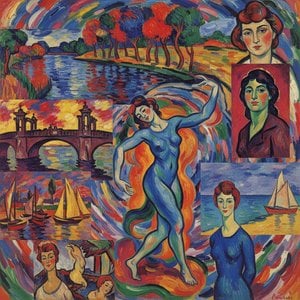
Top 10 Capodopere Fauviste: Explozie de Culoare și Expresivitate în Artă | ArtsDot.ro
Descoperă Top 10 capodopere fauviste – Matisse, Derain și alți maeștri ai culorii! Explorează istoria, tehnicile și expresivitatea picturilor fauve. Reproduceri de artă de calitate muzeală pe ArtsDot.com. Inspiră-te pentru decorul tău!

Modigliani: Cele Mai Iconice 25 De Opere – Artă, Frumusețe și Decorațiuni de Lux
Descoperă cele mai frumoase 25 de opere Modigliani! Explorează portrete expresive, sculpturi unice și nuduri iconice. Află povestea fiecărei picturi și adaugă eleganță locuinței tale cu replici de artă de lux pe ArtsDot.com.

