
 Oil On Canvas
- WallArt
- Romanticism
 1876
1876- 19th Century
 323.0 x 230.0 cm

The picture follows your choices: , .
Descriere obiect de colecție
Explore Repin’s ‘Sadko,’ a mesmerizing Romantic masterpiece! Dive into an underwater world of mermaids & mythic beauty. A luminous, symbolic painting by a Russian icon.
 Vezi mai mult
Biografie artist
Ilya Repin: pictor rus genial, maestru al realismului social și portretist de excepție. 'Barge Haulers' și 'Reply of the Cossacks' - opere emblematice ale unei vieți dedicate artă și umanitate.
Reproducere pictată manual în ulei
Pictură în ulei pe pânză, pictată manual de artiștii noștri la dimensiunea și ramele dorite de dumneavoastră, pe comandă. ( Comută pe versiunea Print Comută pe Imagine Digitală)
More about this painting
 Previzualizare
 Trimite prin felicitare
 Distribuie
 Detalii despre lucrare
 Ghid
Ghid

 Descarcă imaginea
 Produse similare
 Radiografie
 Galerie foto
 Q&A
Q&A Statistici
Order your painting in four simple steps
Take your time. You can change any answer; the price in your order card follows each choice.
1 Step one of four
Which size would you like?
These sizes keep the proportions of the original painting. The drawing shows your choice on a wall, above a two-metre sofa.
Or give your own measurements
Alegeți dintre dimensiunile noastre prestabilite, care respectă proporțiile originale ale operei de artă.

Introduceți lățimea și înălțimea necesare pentru a se potrivi ramei sau peretelui dumneavoastră. Această lucrare este pictată manual, așa că, pentru o dimensiune cu o formă diferită, artistul poate picta puțin mai mult în jurul imaginii sau poate tăia puțin din margini — dumneavoastră decideți. Vă vom trimite o simulare digitală pentru aprobare înainte de a începe pictarea. Imaginea afișată pe această pagină nu reprezintă rezultatul real — doar simularea este reprezentativă.
2 Step two of four
How should it be prepared: rolled, stretched or framed?
The prices below are for the size you chose in step one.
Choose the edges of the stretched canvas
Choose your frame

White lei1

Blurside lei1

Extended lei1

P118B lei10

P118H lei10

P118W lei10

P438Z lei10

P508JH lei12

P508YH lei12

P805H lei10

P805Z lei10

P919BZ lei10

P919G lei10

P919XJ lei10

P959ZH lei10

P968JZ lei12

W106C lei8

W218G lei10

W218JH lei8

W218Y lei10

W307PJ lei10

W316G lei10

W316PJ lei8

W316Y lei10

W398PJ lei8

W4111J lei10

W500HY lei15

W500JH lei15

W692G lei12

W849H lei8

W940BG lei15

W953PJ lei8

H24-GOLD lei30

H24-SILVER lei30

H36-GOLD lei45

H36-SILVER lei45
Înramat
Moulding: . Overall size with the frame: .
3 Step three of four
Would you like anything changed in the painting?
Most people answer no. Because each painting is made by hand, our artist can also adapt it for you.
After order, ArtsDot.com team will email client for instructions and provide a mockup preview
4 Step four of four
A few finishing options
All of them are optional. The answers already selected cost nothing extra.
Who paints it?
Livrare în întreaga lume () în 3-4 săptămâni, în loc de cele 5 săptămâni standard. (30 Octombrie). Fără compromisuri în ceea ce privește calitatea.
A nameplate, as in a museum?
Detalii plăcuță din bronz gravat
This elegant plaque features the artist's name and the title of the artwork, finely engraved for a timeless presentation.
It is made from bronze with a refined, elegant finish. The text is precisely laser-engraved for a sharp and permanent result. Measuring 9x2 cm, the plaque is compact yet easy to read. It's built to be durable and scratch-resistant, offering a professional, museum-quality look. Mounting is simple thanks to the included adhesive backing.
Detalii plăcuță din acril transparent
The plaque includes essential engraved details such as the artist's name, the title of the artwork, the date it was created, the type of media used-like oil on canvas or watercolor-a brief description of the piece, and a QR code that links to the complete artwork information.
It is crafted from clear acrylic, offering a sleek, modern appearance. The text is UV-engraved in black to ensure strong visual contrast. With a size of 10x15 cm, it ensures optimal readability. It comes equipped with two metal hooks for secure wall mounting. The plaque is designed to be weather-resistant, making it suitable for various environments, and it includes interactive features that work seamlessly with smartphone scanning.
Detalii placă din acril negru
This elegant plaque includes engraved information such as the artist's name, the title of the artwork, the date it was created, the type of media used (like oil on canvas or watercolor), a short description of the artwork, and a QR code for quick access to more information.
The plaque itself is made from refined black acrylic with a premium finish. The text is laser-engraved in white for high contrast and readability. Its size is 10x15 cm, designed to be easy to read. It comes with two metal hooks for professional mounting. The design is sleek and fits any interior style. It is also weather-resistant and durable, with built-in digital integration for mobile compatibility.
A protective varnish?
When do you need it?
✓ Check and order
Your painting, as you ordered it

Sadko
Tehnică de reproducere
Dimensiune reproducere
-

Selecție de artiști de elită
Mai multe detalii, rafinament și timp suplimentar de execuție
-

Ramă pentru reproducere artistică
-
-
Pentru opere de artă sau reproduceri care depășesc 105 cm (aproximativ 41 de inch) pe oricare dintre laturi, cadrul va fi livrat demontat, sub formă de kit. Această metodă asigură o livrare sigură și previne deteriorarea în timpul transportului.
Este necesară asamblarea profesională – acest produs nu este de tip DIY (de făcut singur).
Kitul trebuie asamblat, iar pânza întinsă, de către un legător de cadre experimentat, utilizând adeziv pentru lemn (neinclus în colet), o cheie pentru întinderea pânzei și cleme pentru a menține barele la unghi drept în timp ce adezivul se usucă. Asamblarea incorectă sau tensiunea neuniformă a pânzei pot deteriora permanent opera de artă și nu sunt acoperite de garanția noastră.
 Pentru opere de artă sau reproduceri care depășesc 105 cm (aproximativ 41 de inch) pe oricare dintre laturi, cadrul va fi livrat demontat, sub formă de kit. Această metodă asigură o livrare sigură și previne deteriorarea în timpul transportului.
Toate barele din lemn masiv sunt incluse, tăiate cu precizie la dimensiunea necesară.
Asamblat cu șuruburile incluse, plus adeziv pentru lemn pentru îmbinările de colț, care nu este furnizat și trebuie achiziționat de către tâmplarul dumneavoastră.
Sunt necesare unelte profesionale care nu sunt incluse: o șipte de întindere a pânzei (tensionator) și cleme pentru a menține barele la unghi drept în timp ce adezivul se usucă.
Important:
Îmbinările de colț necesită adeziv pentru lemn, barele trebuie fixate cu clești de strângere până când adezivul este complet uscat, iar întinderea pânzei pe cadrul asamblat necesită un clește pentru întins pânza. Niciunul dintre aceste elemente nu este inclus în kit. Vă rugăm să consultați un încadrator profesionist cu experiență înainte de a comanda această dimensiune.

Etichetă de prezentare
-
-

Lac de protecție
Lac lucios (intensifică nuanțele și oferă protecție împotriva luminii și a umidității)
-

Personalizează opera mea de artă
Exemple de elemente ce pot fi personalizate: Înlocuirea feței cu fotografia clientului; Adăugarea unui animal de companie (de exemplu, înlocuirea unei pisici cu un câine); Includerea unui mesaj ascuns în fundal; Modificarea peisajului sau a elementelor din fundal.
-

Livrare rapidă
Livrare la nivel mondial () în 3-4 săptămâni, în loc de cele 5 săptămâni standard. (30 Octombrie). Fără compromisuri când vine vorba de calitate.
-
Livrare rapidă
Livrare la nivel mondial () în 5 săptămâni. (6 Noiembrie).
Inclus
Preț total calculat
lei 1938
Opțiunea cu sticlă este disponibilă doar pentru dimensiuni de sub 110 cm
Included with every order
- Livrare expres gratuită la nivel mondial
- Pânză de in de înaltă calitate
- Asigurare completă pentru transport
- Garanție de rambursare a taxelor vamale
- Garanția fidelității culorilor
- Politica de retur în 100 de zile (doar pentru defecte de fabricație)
- Garanție de rambursare 100%
- Ofertă pentru comenzi multiple


A Dream Beneath the Waves: Repin's "Sadko"
Ilya Repin’s “Sadko,” completed in 1876, is not merely a depiction of a fantastical tale; it’s an immersion into a world where myth and reality intertwine. This monumental canvas, measuring 323 x 230 cm, captures the essence of Russian folklore – the legend of the Volga boatman Sadko, who traded his riches for three beautiful daughters with the Sea King. The scene unfolds as a vibrant, almost overwhelming, tableau of mermaids, a central male figure adorned in opulent attire, and an atmosphere thick with enchantment and a subtle melancholy.
- Romanticism’s Embrace: “Sadko” firmly establishes Repin within the Romantic movement. The emphasis isn't on precise realism but rather on evoking powerful emotions – wonder, longing, and a profound connection to nature’s beauty. This is evident in the swirling waters, the luminous figures, and the overall sense of dreamlike unreality.
- A Crowded Narrative: Repin masterfully employs a dense composition, layering figures and details to create a feeling of mystery and abundance. The sheer number of mermaids contributes to the artwork’s captivating energy, drawing the viewer into this submerged world.
Technique and Artistic Vision
Repin's technical prowess is immediately apparent in the meticulous brushwork and the masterful layering of colors. He utilizes a technique that builds up luminosity through multiple applications of paint, creating shimmering effects on the water’s surface and illuminating the figures with an ethereal glow. The fluid lines mimic the movement of water, while the rougher textures applied to the garments and scales add depth and tactile quality. The color palette – dominated by deep blues and greens punctuated by gold and pink – isn't simply decorative; it reinforces the otherworldly atmosphere and evokes a sense of magic.
- Flattened Perspective: The slightly flattened perspective contributes to the dreamlike quality, further distancing the viewer from a strictly realistic representation.
- Detailed Brushwork: Repin’s attention to detail is remarkable, particularly in rendering the intricate scales of the mermaids and the folds of the central figure's clothing.
Symbolism and Narrative Depth
Beyond its surface beauty, “Sadko” is rich with symbolic meaning. The mermaids, archetypal figures of feminine allure and mystery, represent a potent force – perhaps a temptation or a reflection of human longing. The central male figure, often interpreted as Sadko himself, embodies the themes of sacrifice, desire, and the pursuit of unattainable beauty. The entire scene speaks to the timeless struggle between humanity and the untamed forces of nature, a core concern within Russian art and literature.
- Mythic Resonance: The artwork draws directly from Russian folklore, offering a visual interpretation of a beloved legend.
- Emotional Undertones: Despite its fantastical elements, “Sadko” carries a subtle melancholic tone, hinting at the fleeting nature of beauty and happiness.
Historical Context and Legacy
Completed in 1876, "Sadko" reflects a pivotal moment in Russian art history – the rise of Realism alongside Romantic tendencies. Repin’s work bridges these movements, offering a visually stunning and emotionally resonant interpretation of a traditional tale. This painting solidified Repin's reputation as one of Russia’s most important artists, influencing generations of painters to come. A hand-painted reproduction offers an unparalleled opportunity to experience the full power and beauty of this iconic masterpiece in your own space.
Întrebări și răspunsuri
Cât de multă lumină par să reflecte culorile din "Sadko"?
Culorile din "Sadko" prezintă o luminanță Dark.
Sub ce alte nume este cunoscut/ă Ilya Repin?
Alte nume înregistrate pentru Ilya Repin, creatorul operei „Sadko”, includ Ilie Repin, Ilarie Repin.
La ce vârstă a creat Ilya Repin opera „Sadko”?
Ilya Repin a creat "Sadko" la vârsta de 32. Artistul s-a născut în 1844, iar lucrarea datează din 1876.
Opere similare


Ilya Repin
1844 - 1930, Ucraina
Biografie artist
Early Life and the Seeds of Realism
Ilya Yefimovich Repin, a name that echoes through the very heart of Russian art, was born in 1844 within the humble Ukrainian town of Chuguev. His origins were far removed from the opulent circles often associated with artistic patronage; his father, a former soldier who traded horses, and his mother, deeply rooted in local traditions, instilled in young Ilya a profound connection to the land and its people – an understanding of hardship, resilience, and the vibrant spirit of rural life that would become the cornerstone of his artistic vision. Formal education began at a local school where his mother served as teacher, but a brief period followed at a military cantonist school, an experience he later recalled with a touch of wryness. Yet, even within the constraints of military discipline, his innate talent for drawing blossomed, revealing a nascent gift that would eventually shape his destiny. At sixteen, he embarked on an apprenticeship with Ivan Bunakov, an icon painter, immersing himself in the rigorous world of religious art – a training that honed his skills in meticulous detail and compositional precision. These formative years weren’t merely technical exercises; they represented a crucial immersion into the visual language of Russian culture, laying the groundwork for his later explorations of national identity and social commentary. Through restoring ancient icons and fulfilling portrait commissions, Repin began to observe and capture the essence of human character – a skill he would master throughout his illustrious career, developing an uncanny ability to portray not just appearances but also the inner lives of his subjects.St. Petersburg and the Embrace of Social Consciousness
Driven by an unyielding ambition, Repin journeyed to St. Petersburg in 1863, seeking admission to the prestigious Imperial Academy of Arts – a move fueled by a desire to elevate his artistic standing and contribute to the burgeoning Russian art scene. Initial rejection didn’t deter him; instead, he diligently audited classes, immersing himself in the city's vibrant artistic milieu, absorbing the techniques and philosophies of established masters. It was here that he encountered Ivan Kramskoi, a leading figure within the Peredvizhniki movement – a collective of realist artists who boldly rejected the rigid conventions of academic art and sought to depict Russian life with unflinching honesty and social awareness. Kramskoi became Repin’s mentor, guiding him towards a more politically engaged approach to his work. The influence of critic Vladimir Stasov was also pivotal, encouraging Repin to focus on contemporary themes – the lives of ordinary Russians, their struggles, and their aspirations. This period marked a significant shift in Repin's artistic trajectory; he began to prioritize portraying the realities of Russian society rather than adhering to idealized or historical subjects. His talent quickly gained recognition, earning him awards and accolades, including gold medals for works like “Job and His Friends” (1869) and "The Raising of Jairus’ Daughter" (1871). These early successes signaled the arrival of a powerful new voice in Russian art – one that would challenge established norms and capture the spirit of a rapidly changing nation. A formative experience was his journey along the Volga River in 1870, sketching the arduous lives of barge haulers; this provided the inspiration for what would become his most famous painting, a work that would forever cement his reputation as a champion of the downtrodden.Masterpieces of Realism and Historical Drama
Repin’s name became inextricably linked with realism through works that unflinchingly portrayed the realities of Russian society. “Barge Haulers on the Volga” (1873), a monumental canvas depicting exhausted laborers dragging boats along the river, shocked and captivated audiences. It wasn't merely a depiction of physical hardship; it was a powerful indictment of social injustice and a testament to human endurance – a scene that resonated deeply with the growing awareness of class inequality in Russia. This painting launched Repin into national prominence and established him as a leading voice for the marginalized. He continued to explore themes of Russian life in works like *“Religious Procession in Kursk Province”* (1883), which offered a nuanced portrayal of faith, superstition, and social hierarchy, revealing the complexities of rural life. However, Repin’s artistic vision extended beyond contemporary issues; he also tackled historical subjects with dramatic flair. “Ivan the Terrible and His Son Ivan” (1885), depicting a moment of horrific violence and remorse – Tsar Ivan IV brutally slaying his own son in a fit of rage – caused a scandal upon its unveiling but remains one of his most iconic works, a chilling exploration of power, guilt, and human fallibility. Perhaps his most celebrated painting is *“Reply of the Zaporozhian Cossacks”* (1880-91), a vibrant scene capturing the defiant spirit of Ukrainian Cossacks composing a satirical letter to the Ottoman Sultan – a symbol of resistance, national pride, and the enduring strength of the Ukrainian people. These paintings were not simply historical recreations; they were imbued with psychological depth and emotional intensity, bringing the past vividly to life for viewers.Legacy and Enduring Influence
Throughout his long and prolific career, Repin continued to paint portraits of prominent figures – Leo Tolstoy, Modest Mussorgsky, Pavel Tretyakov – capturing their personalities with remarkable insight and empathy. He also taught at the Academy of Arts in St. Petersburg, influencing generations of Russian artists with his commitment to realism and social commentary. His work served as a powerful critique of Tsarist oppression and inspired reform movements within Russia. Following the February Revolution of 1917, Repin initially embraced the new order, but he was deeply disillusioned by the subsequent violence and terror unleashed by the Bolsheviks. He retreated to his estate, Penates, in Kuokkala (now Repino), Finland, where he continued to paint until his death in 1930. Despite facing political challenges and exile, Repin’s legacy endures as one of Russia's most important cultural figures – a master painter who captured the essence of his time with unparalleled skill and emotional depth. His home, Penates, is now a museum, preserving not only his artistic legacy but also offering a poignant glimpse into the life of a man deeply committed to portraying the realities of Russian society through his art. Repin’s influence extends far beyond his individual paintings; he helped define Russian realism and paved the way for Socialist Realism, inspiring countless artists to use their work as a means of social critique and artistic expression. His ability to capture the human condition with both empathy and unflinching honesty continues to resonate with audiences today, ensuring his place among the giants of 19th-century art.


Articole similare

Top 10 Capodopere Albastre: Picturi Celebre și Inspirație pentru Decor
Descoperă top 10 picturi celebre dominate de nuanțe subtile de albastru! Explorează poveștile din spatele capodoperelor Monet, Renoir și Van Gogh. Inspirație decor interior & reproducere tablouri pe ArtsDot.com
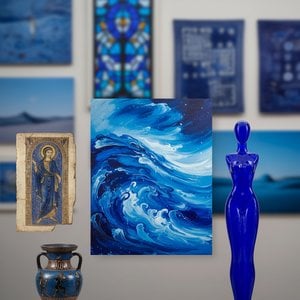
The Allure of Azure: Exploring the Symbolic & Aesthetic Depths of Blue in Art History
Explore the rich history of blue in art! Discover its symbolism, from ancient pigments to modern masterpieces by Kandinsky & Seurat. Uncover the psychological impact and cultural meanings behind this captivating hue.

Ivan Bilibin: A Synthesis of Folklore, Modernism & National Identity in Russian Illustration
Explore the enchanting world of Ivan Bilibin, a master Russian illustrator who synthesized folklore, Art Nouveau & national identity. Discover his iconic fairy tale illustrations and legacy with ArtsDot.