

 Previzualizare
 Trimite prin felicitare
 Distribuie
 Detalii despre lucrare
 Ghid
Ghid

 Descarcă imaginea
 Produse similare
 Radiografie
 Galerie foto
 Q&A
Q&A Statistici
Minerva

- 214.0 x 120.0 cm


 Vezi mai mult
Giclée / Imprimare artistică
Printuri giclée sau pe canvas de calitate muzeală, cu proces de producție rapid și opțiuni flexibile de finisare. ( Comandă pictură realizată manual Comută pe Imagine Digitală)




P118B lei10

P118H lei10

P118W lei10

P438Z lei10

P508JH lei12

P508YH lei12

P805H lei10

P805Z lei10

P919BZ lei10

P919G lei10

P919XJ lei10

P959ZH lei10

P968JZ lei12

W106C lei8

W218G lei10

W218JH lei8

W218Y lei10

W307PJ lei10

W316G lei10

W316PJ lei8

W316Y lei10

W398PJ lei8

W4111J lei10

W500HY lei15

W500JH lei15

W692G lei12

W849H lei8

W940BG lei15

W953PJ lei8




Alegeți dintre dimensiunile noastre prestabilite, care respectă proporțiile originale ale operei de artă.

Introduceți lățimea și înălțimea necesare pentru a se potrivi ramei sau peretelui dumneavoastră. O printare poate fi doar tăiată, niciodată extinsă dincolo de dimensiunea imaginii originale, astfel încât o dimensiune cu o formă diferită va pierde o parte din imagine. Vă trimitem o simulare digitală pentru aprobare înainte de a imprima orice. Imaginea afișată pe această pagină nu prezintă tăierea reală — doar simularea arată acest lucru.
Livrare în întreaga lume () în 2 săptămâni, în loc de cele 4/5 săptămâni standard. (2 Noiembrie)

Livrare expres gratuită la nivel mondial

Pânză de in de înaltă calitate

Asigurare completă pentru transport

Garanție de rambursare a taxelor vamale

Garanția fidelității culorilor

Politica de retur în 100 de zile (doar pentru defecte de fabricație)

Garanție de rambursare 100%

Ofertă pentru comenzi multiple
 Opțiunea cu sticlă este disponibilă doar pentru dimensiuni de sub 110 cm

Minerva
Giclée / Imprimare artistică
Dimensiune reproducere
-


Preț total calculat
lei 295
Minerva - A Trio of Renaissance Idealism
For centuries these three paintings – Minerva, Mercury and Hercules – have represented an inseparable triad within the artistic landscape of Northern Mannerism. Yet their creation unfolded across several years, reflecting the evolving tastes and ambitions of a particular era. Hendrick Goltzius’s masterful depiction of Minerva and Mercury in 1611 established a foundational aesthetic, followed by Hercules and Cacus completed in 1613, likely commissioned by Johan Colterman Junior – a young man embodying youthful vigor and intellectual prowess. This artwork distinguishes itself subtly from its predecessors; its dimensions differ slightly, and its original frame bore a distinct character, hinting at meticulous attention to detail and preservation of artistic heritage. The earliest documented sighting of the trio hanging together dates back to 1671, where they resided within the home of Colterman Junior’s descendants – a testament to their enduring appeal and significance as emblems of humanist education.- Subject Matter: The painting portrays a woman seated gracefully, her hand resting confidently on her hip—a posture conveying poise and authority. Alongside her stands a man wielding a spear and shield, symbolizing strength and protection. Complementing this dynamic duo are two additional figures positioned strategically within the composition, adding depth and narrative complexity to the scene.
- Style & Technique: Goltzius’s approach exemplifies Northern Mannerism, characterized by dramatic lighting, stylized forms, and an emphasis on emotional expression. He skillfully employs “swelling line,” a technique that enhances visual impact and contributes to the painting's overall sense of grandeur. The artist meticulously renders textures—particularly in Minerva’s drapery—demonstrating exceptional draughtsmanship.
- Historical Context: Created during the early Baroque period, this artwork reflects the humanist ideals prevalent at the time – a belief that contemplation (Mercury) and action (Minerva) cultivate wisdom and virtue. Hercules's triumph over Cacus serves as a powerful allegory for overcoming obstacles and achieving excellence.
Symbolism & Attributes: Minerva’s Embrace of Knowledge
Minerva, the goddess of wisdom and patron saint of the arts, is depicted leaning upon her shield—a device emblazoned with the head of Medusa, symbolizing vigilance against evil and fearlessness in confronting challenges. At her feet lie symbolic objects – books representing erudition, a portfolio signifying artistic creativity, a pen and penholder embodying intellectual discourse, a weaver’s shuttle symbolizing craftsmanship, and a lute representing musical artistry. These attributes collectively underscore the painting's central theme: the harmonious balance between intellect and practice—a cornerstone of Renaissance humanism.The Portrait of Youthful Power
The depiction of Hercules is particularly noteworthy. Goltzius skillfully captures the youthful dynamism of Johan Colterman Junior, portraying him as a figure radiating confidence and vitality. This portrayal aligns perfectly with the humanist aspiration to cultivate virtue through active engagement—a concept powerfully conveyed by Hercules’s victory over Cacus, representing triumph over adversity and unwavering determination.A Legacy Enduring Through Time
The painting's enduring fascination stems from its masterful execution and profound symbolic resonance. Its meticulous detail, combined with Goltzius’s innovative technique and the artwork’s connection to a pivotal moment in humanist thought, ensures that Minerva—and her companions—continue to inspire admiration and contemplation centuries after their creation. It stands as an exceptional example of Renaissance artistic achievement, inviting viewers to engage with its beauty and contemplate its enduring message.Întrebări și răspunsuri
Pot vedea "Minerva" de Hendrik Goltzius sub diferite lumini?
„Minerva” poate fi explorat strat cu strat pe pagina Raze X a operei de artă, printr-un vizualizator inspirat de masa de lumină a unui conservator, care oferă unsprezece lecturi optice ale imaginii.
Ce dimensiuni are originalul "Minerva"?
Lucrarea originală "Minerva" de Hendrik Goltzius are dimensiunile de 214 x 120 cm.
Este "Minerva" de Hendrik Goltzius în domeniul public și care este motivul?
"Minerva" de Hendrik Goltzius este în domeniul public – drepturile de autor au expirat. Durata protecției drepturilor de autor se calculează de la data decesului artistului, survenit în anul 1617.
Opere similare


Biografie artist
Early Life and Artistic Foundations
Hendrik Goltzius, a name synonymous with the vibrant dynamism of Northern Mannerism in Dutch art, emerged from humble beginnings in the Rhineland region of Germany. Born around 1558 in Mulebrecht, near Viersen – a town steeped in artistic tradition due to his family’s lineage as stained-glass painters – Goltzius's early life was shaped by exposure to both visual arts and craftsmanship. His father, Jan Goltz II, continued the family legacy, establishing a workshop dedicated to creating intricate glass designs. This formative environment instilled within him an appreciation for detail, precision, and the transformative power of artistic skill. However, fate intervened dramatically when he was just three years old; a devastating fire ravaged their home in Duisburg, leaving him with a permanently deformed right hand – a physical characteristic that would ironically become his greatest asset as an engraver. This injury, rather than hindering his potential, fostered a unique and powerful control over the burin, allowing him to develop a distinctive “swelling line” technique, where he manipulated the tool’s pressure to create varying thicknesses of lines, adding depth and nuance to his prints in a way few others could achieve. His early training was further solidified by studying under Dirck Volckertszoon Coornhert, a renowned polymath and engraver in Cleves, who introduced him to the technical intricacies of copperplate engraving – a crucial step towards mastering his craft.A Career Forged in Haarlem
The pivotal moment in Goltzius’s artistic journey arrived in 1577 when he relocated with Coornhert to Haarlem, a thriving center for printmaking and trade within the burgeoning Dutch Republic. This move marked not just a geographical shift but also the beginning of a prolific and influential career. Haarlem offered him a vibrant artistic community, access to wealthy patrons eager to acquire exquisite prints, and a stimulating environment conducive to experimentation and innovation. He quickly established himself as a respected engraver, securing commissions from prominent figures like Philip Galle, who employed him to produce a series of engravings depicting the history of Lucretia – a project that showcased his burgeoning talent for dramatic composition and meticulous detail. Goltzius’s workshop flourished, employing numerous assistants and producing an astonishing volume of work, ranging from faithful reproductions of master prints to original designs reflecting his own artistic vision. His ambition extended beyond mere replication; he sought to elevate the status of engraving within the art world, challenging established conventions and pushing the boundaries of technique.Technique and Artistic Innovation
Goltzius’s genius lay not only in his technical mastery but also in his innovative approach to engraving. He was a pioneer of the “dot and lozenge” technique – a sophisticated method of creating tonal shading by strategically placing dots within lozenge-shaped spaces, meticulously crafted through cross-hatching. This technique allowed him to achieve an unprecedented level of realism and atmospheric depth in his prints, rivaling the effects of oil painting. His command of the burin was legendary; many art historians consider it to be comparable to that of Albrecht Dürer, the undisputed master of German engraving. He didn’t merely copy existing works; he transformed them, imbuing them with a sense of movement, drama, and psychological insight. Furthermore, Goltzius's engravings were frequently used as models for other artists, notably Bartholomeäus Spranger, whose Mannerist style was profoundly influenced by Goltzius’s innovative techniques. His willingness to experiment extended beyond engraving; he also ventured into painting, producing a series of works that demonstrated his versatility and artistic range – including chiaroscuro woodcuts that showcased his ability to manipulate light and shadow with remarkable skill.Legacy and Recognition
Hendrik Goltzius’s impact on the history of art is undeniable. During his lifetime, he enjoyed widespread recognition throughout Europe, attracting the patronage of royalty and nobility alike. His journey to Italy in 1590 solidified his reputation as a leading figure in the international art scene, where he sought inspiration from classical sculpture and Renaissance painting. His legacy continues to resonate today, with his engravings and paintings held in prestigious collections around the world – including the Rijksmuseum in Amsterdam, the Metropolitan Museum of Art in New York, and the British Museum in London. Goltzius’s work exemplifies the dynamism and sophistication of Northern Mannerism, bridging the gap between Renaissance tradition and Baroque innovation. He remains a pivotal figure in the development of printmaking, his techniques and artistic vision continuing to inspire artists and scholars centuries after his death in 1617. His unique approach to engraving—combining technical precision with expressive flair—established him as one of the most important and influential engravers of his time, securing his place within the pantheon of great masters.
Hendrik Goltzius
1558 - 1617 , Germania
Detalii rapide
- Artistic Movement Or Style: Mannerism & gravură baroca
- Artists Or Movements Influenced By This Artist: ['Jacques Bellange']
- Artists Who Influenced This Artist: ['Dirck Volckertszoon Coornhert']
- Date Of Birth: Ianuarie/Februarie 1558
- Date Of Death: 1 ianuarie 1617
- Full Name: Hendrik Goltzius
- Nationality: Olandez
- Notable Artworks:
- Jupiter
- Minerva
- Prophetul Baruch
- Place Of Birth: Braunschweig, Italia
Articole similare

Hendrick Goltzius: Master Engraver & the Flourishing of Dutch Mannerism
Explore the life & art of Hendrick Goltzius, a master engraver of Dutch Mannerism. Discover his innovative techniques, iconic engravings like 'Jahel', and lasting influence on Baroque art. Learn about collecting Goltzius today.

The Enduring Legacy of Fine Art Prints: Technique, History & Aesthetic Impact
Explore the rich history & techniques of fine art prints. Discover investment potential, assess authenticity, and learn how to preserve your collection with expert guidance. Trusted insights for discerning collectors.

Giclée Prints: Archival Quality & Aesthetic Nuances for the Discerning Collector
Explore the world of giclée prints with ArtsDot. Learn about archival quality, aesthetic nuances & investment potential. Expert guidance for discerning art collectors seeking museum-quality reproductions and lasting value.
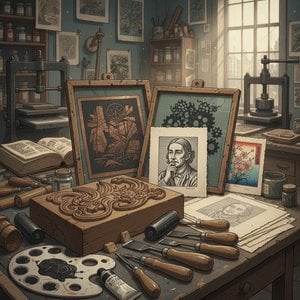
The Enduring Legacy of Printmaking: Techniques, Themes & Artistic Innovation Across Centuries
Explore the rich history of printmaking with ArtsDot. Discover techniques from intaglio to lithography, learn about collecting valuable prints & find museum-quality reproductions. Expert insights for art enthusiasts and collectors.

Echoes of Time: Exploring the Enduring Appeal & Historical Context of Vintage Art Prints
Explore the captivating world of vintage art prints! Discover their history, collecting tips & enduring appeal. Expert insights on chromolithography and building a legacy collection with ArtsDot.
