
- Acasă

- Imagine digitală
- gianfranco baruchello
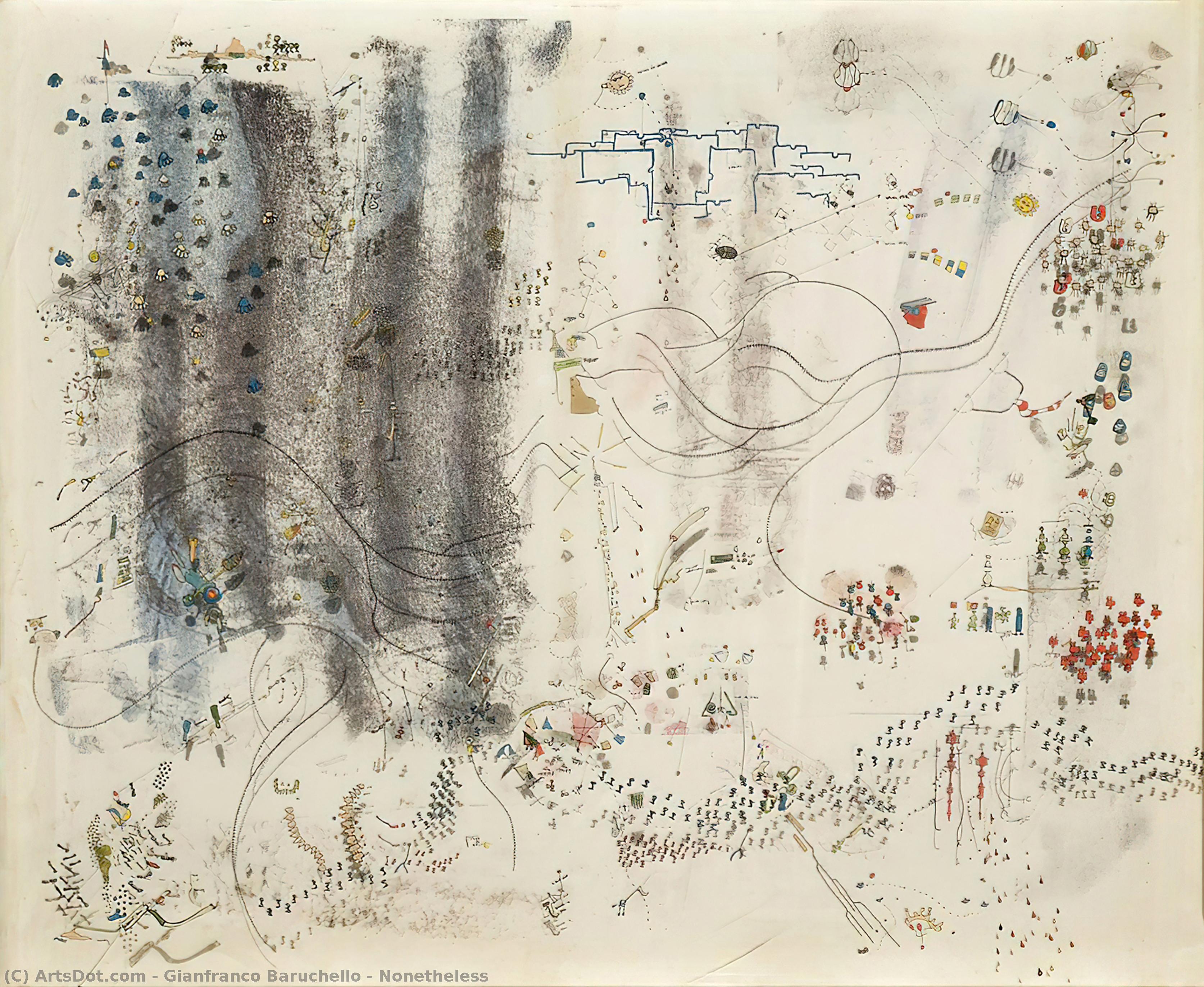
- Nonetheless
 Preview
 Comandă tipăritul Comandă reproducere pictată
 Trimite
 Distribuie
 Detalii despre lucrare
 Adaugă la favorite

 Descarcă
 Similare
 Radiografie
 Diaporama
Nonetheless
 1964
1964 46.0 x 56.0 cm
 Vezi mai mult
Achiziționați o imagine digitală îmbunătățită și de înaltă rezoluție, mult superioară previzualizării online.
Fiecare fișier este pregătit cu meticulozitate de specialiștii noștri interni, utilizând instrumente avansate și retușare manuală expertă. Ne asigurăm că fiecare imagine beneficiază de o claritate excepțională, o acuratețe precisă a culorilor și detalii fine.
Fișierul final este livrat prin e-mail în termen de 72 de ore, optimizat pentru utilizare imediată în medii profesionale, editoriale și de imprimare. Aceasta este aceeași calitate în care au încredere studiouri de design, edituri și galerii de top.
Imagine Digitală
Descărcați un fișier la rezoluție înaltă pentru afișare personală, imprimare și proiecte creative.
Inclus în fiecare comandă de imagini digitale
Livrare digitală de expertiză, garantată
Când alegeți ArtsDot.com, nu primiți doar o simplă imagine – primiți o operă de artă digitală îmbunătățită profesional, creată cu precizie și susținută de o garanție de satisfacție. Iată tot ceea ce primești odată cu comanda ta, în mod automat:

Livrare rapidă prin e-mail
Fișierul imaginii digitale la rezoluție înaltă vă va fi trimis prin e-mail în termen de 72 de ore de la finalizarea comenzii – gata pentru utilizare imediată.

Fișier digital optimizat prin IA
Opera ta de artă este optimizată profesional prin intermediul unor instrumente AI avansate și al editării manuale, asigurând un nivel maxim de detalii, claritate și acuratețe a culorilor.

Retransmitere gratuită pe viață
Ai șters sau ai pierdut din greșeală fișierul? Nu îți face griji – ți-l vom retrimite oricând, gratuit.

Fără taxe de import – Întotdeauna
Bucură-te instant de opera ta de artă, fără taxe vamale, taxe de import sau costuri de livrare – descărcările digitale sunt întotdeauna fără taxe.

Garanția acurateței culorilor
Asigurăm că imaginea ta digitală reflectă culorile originale cât mai fidel posibil, utilizând instrumente profesionale și procese de gestionare a culorii.

Garanție de satisfacție de 60 de zile
Dacă nu sunteți mulțumit de imaginea digitală achiziționată, o vom revizui sau vă vom returna 100% în termen de 60 de zile – fără nicio explicație necesară.

Garanție de returnare 100% a banilor
Nu ești mulțumit? Obține o rambursare completă în termen de 60 de zile de la primirea fișierului tău digital – fără întrebări.

Reduceri pentru comenzi multiple
Cumpără 3 imagini, economisește 10% - Cumpără 5, economisește 15% - Cumpără 10+, economisește 20%. Ideal pentru proiecte creative, galerii și agenții.
Opere de artă similare


Biografie Artist
Gianfranco Baruchello: Architect of the Unseen
Gianfranco Baruchello’s life and art represent a profound, almost hermetic engagement with the complexities of modern existence – a relentless interrogation of language, perception, and the very nature of representation. Born in Livorno, Italy, in 1924, into a family steeped in both legal and industrial tradition, Baruchello’s early years were shaped by the turbulent backdrop of post-war Italy and the lingering shadow of Fascism. His father, a prominent figure in the General Fascist Confederation for Italian Industry, instilled in him a critical awareness of societal structures, while his mother's role as an elementary school teacher fostered a deep appreciation for the power of communication. This confluence of influences would profoundly shape Baruchello’s artistic trajectory, leading him to develop a uniquely challenging and intellectually rigorous practice. Early experimentation in the late 1950s saw Baruchello navigating the currents of informal and neo-Dada movements, exploring themes of word, object, and painting – all within the context of burgeoning dialogues between art and everyday life. He moved fluidly between Rome, Paris, and New York, immersing himself in a vibrant intellectual landscape populated by writers like Calvino and Sanguineti, philosophers such as Lyotard, and artists including Marcel Duchamp, Roberto Matta, and Alan Jouffroy. The encounter with Duchamp proved particularly transformative, establishing a foundational relationship built on shared skepticism towards traditional artistic conventions and a fascination with the conceptual underpinnings of art itself. This period laid the groundwork for Baruchello’s distinctive approach – one characterized by a deliberate blurring of boundaries between disciplines and a constant questioning of established systems. A pivotal moment in his career arrived in 1962, when he was invited to participate in “New Realists,” a landmark exhibition at Sidney Janis Gallery in New York. This inclusion marked Baruchello’s entry onto the international stage and solidified his position within the burgeoning movement that sought to redefine the role of art in a rapidly changing world. The exhibition showcased his early explorations with black stripes, canvases imbued with fragmented symbols and seemingly random geometric lines – works that reflected a deep engagement with the anxieties and uncertainties of the era. Simultaneously, he began a series of ambitious projects, most notably *Artiflex* (1968), a fictitious company designed to expose the mechanics of the art market and challenge conventional notions of authorship and ownership. Through this provocative undertaking, Baruchello critiqued consumerism, industrial production, and the commodification of artistic labor – themes that would continue to resonate throughout his career. Baruchello’s practice extended far beyond painting, encompassing film, literature, happenings, and even agricultural experimentation. His 1973 establishment of *Agricola Cornelia SpA* on the outskirts of Rome represents a particularly fascinating chapter in his artistic journey. This venture wasn't merely a foray into farming; it was a meticulously constructed allegory – a microcosm reflecting broader societal concerns about land ownership, economic systems, and the relationship between humanity and nature. The farm became a site for experimentation, critique, and ultimately, a profound meditation on the complexities of existence. He described his work as “to make sense of the *use*and *maintenance*of concepts starting from the *percepti*, considering the error and the loss of quality as a *motif*for the discovery of the diversity.” In later years, Baruchello shifted his focus to architecture and living spaces, culminating in the creation of gardens and forests – environments that served as extensions of his artistic investigations. His work consistently prioritized the exploration of uncertainty, embracing ambiguity and challenging viewers to actively engage with the inherent contradictions within his creations. Gianfranco Baruchello’s legacy lies not simply in a collection of artworks, but in a profound philosophical approach to art-making – one that continues to inspire artists and thinkers today. He died in 2023 at the age of ninety-eight, leaving behind a body of work characterized by its intellectual rigor, emotional depth, and unwavering commitment to challenging conventional modes of thought.
gianfranco baruchello
1924 -
Detalii rapide
- Artistic Movement Or Style: Surrealism, experimental art
- Artists Or Movements Influenced By This Artist:
- Neo-Dada
- Pop Art
- Artists Who Influenced This Artist:
- Marcel Duchamp
- John Cage
- Date Of Birth: August 24, 1924
- Date Of Death: January 14, 2023
- Full Name: Gianfranco Baruchello
- Nationality: Italian
- Notable Artworks:
- Zero Has No Counterpart
- Chateau-Le-Moi
- The Much Beloved Brother
- Place Of Birth: Livorno, Italy

