

 Vezi în context
 Trimite
 Distribuie
 Detalii
 Ghidul

 Descarcă
 Produse similare
 Radiografie
 Diaporama
 Statistici
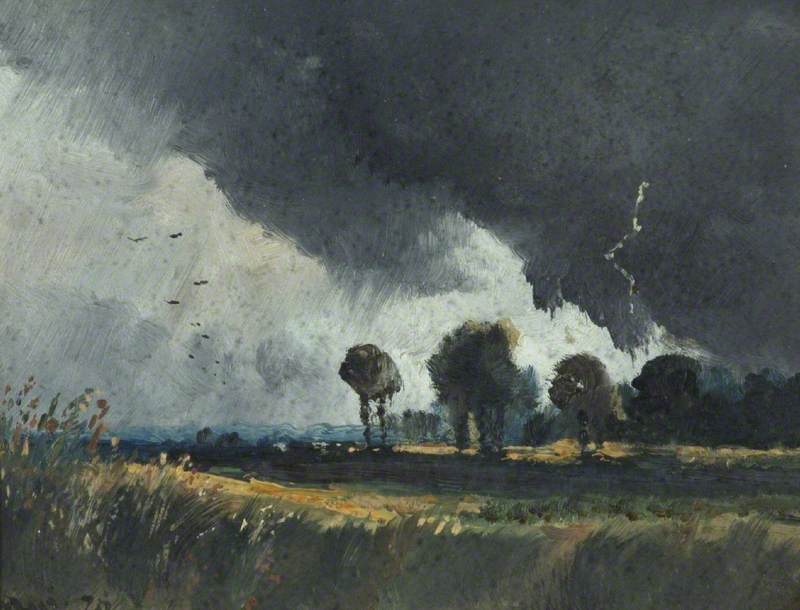
Stormy Landscape
 Romanticism
 1878
1878 18.0 x 22.0 cm
 Victoria Art Gallery
 Citește mai mult
Giclée / Imprimare artistică
Printuri giclée sau pe canvas de calitate muzeală, cu proces de producție rapid și opțiuni flexibile de finisare. ( Comandă pictură realizată manual Treci la imagine digitală)




































Alegeți dintre dimensiunile noastre prestabilite, care respectă proporțiile originale ale operei de artă.

Introduceți lățimea și înălțimea de care aveți nevoie, pentru a se potrivi ramei sau peretelui dumneavoastră. O printare poate fi doar tăiată, niciodată extinsă dincolo de dimensiunea imaginii originale, astfel încât o dimensiune cu o formă diferită va pierde o parte din imagine. Vă trimitem o simulare digitală pentru aprobare înainte de a imprima orice. Imaginea afișată pe această pagină nu prezintă tăierea reală — doar simularea arată acest lucru.
Livrare în întreaga lume () în 2 săptămâni, în loc de cele 4/5 săptămâni standard. (24 Octombrie)

Livrare expres gratuită la nivel mondial

Pânză de in premium

Asigurare completă pentru transport

Garanție de rambursare a taxelor vamale

Garanția fidelității culorilor

Politica de retur în 100 de zile (doar pentru defecte)

Garanție de rambursare 100%

Reducere pentru comenzi multiple
 Opțiunea cu sticlă este disponibilă doar pentru dimensiuni de sub 110 cm

Stormy Landscape
Giclée / Imprimare artistică
Dimensiune reproducere
-


Preț total
lei 288
Opere similare


Biografie artist
A Romantic Vision of Coastal England
George Hornblower Simms, a British landscape painter born in 1818, remains a poignant voice from the Victorian era, capturing the sublime and often turbulent beauty of the English coastline. His artistic journey was deeply rooted in the burgeoning Romantic movement, a period defined by an intense fascination with the power of nature and the emotional resonance of the landscape. Through his meticulous observations, Simms did more than merely document scenery; he translated the fleeting atmospheric conditions of the British Isles into enduring, emotive compositions that speak to the soul of the viewer.
The foundations of Simms’ technique were laid in Newcastle upon Tyne, where his early training under the prominent Romantic painter William Henry Haydon provided him with a sophisticated understanding of tonal painting. From Haydon, he inherited an appreciation for the expressive potential of color and the ability to use subtle gradations to create depth and drama. This formative period instilled in him a lifelong pursuit of capturing light—whether it be the golden, tranquil glow of a seaside hamlet or the brooding, heavy shadows of an approaching tempest.
Mastery of Light and Atmosphere
As his career progressed, Simms moved from the industrial heart of Newcastle to the coastal serenity of Brighton in 1853, a transition that profoundly influenced his subject matter. His oeuvre, consisting of approximately 200 paintings, serves as a testament to his devotion to seascapes and rural landscapes. He became a master of the Luminist style, utilizing light not just as an illumination, but as a central protagonist in his narratives. In works such as “Beach with Village,” one can witness his ability to bathe a tranquil scene in a warmth that evokes a sense of peace and nostalgia.
Conversely, Simms was equally adept at portraying the more violent aspects of nature. His “Stormy Landscape” stands as a powerful example of his ability to convey turbulent energy through expressive brushwork and dramatic, silhouetted forms against heavy, churning skies. In these pieces, the boundaries between realism and impressionism begin to blur, as he uses impasto textures and vigorous strokes to mimic the raw power of wind and water. This duality—the ability to pivot from the serene to the catastrophic—is what defines his unique artistic identity.
Legacy and Artistic Significance
Throughout his life, Simms achieved significant recognition within the prestigious art circles of his time, exhibiting extensively at the Royal Academy and the Tate Gallery. His work resonated with a Victorian public that was increasingly captivated by the dramatic interplay between man and the natural world. By blending the precision of traditional landscape painting with the emotional depth of Romanticism, he carved out a niche that remains highly regarded by collectors of nineteenth-century British art.
The historical significance of George Hornblower Simms lies in his role as a chronicler of an era's aesthetic sensibilities. His paintings, such as “River with Windmill, Stormy Sky,” offer more than just visual beauty; they provide a window into the Victorian fascination with the sublime. Through his mastery of tonal gradations and atmospheric perspective, Simms ensured that the fleeting moments of the English coast—the shifting clouds, the rising tides, and the play of light upon the waves—would be preserved in a state of eternal, evocative grace.

George Hornblower Simms
1818 - 1889
Informații rapide
- Full Name: George Hornblower Simms
- Nationality: British
- Date Of Birth: 1818
- Date Of Death: 1889
- Place Of Birth: London, England
- Notable Artworks:
- Beach with Village
- Stormy Landscape
- Artistic Movement Or Style: Romantic/Luminist
- Artists Who Influenced This Artist: ['Turner']
- Artists Or Movements Influenced By This Artist: ['Hudson River School']
Articole conexe

Peisaje Romantice Iconice: 10 Capodopere Artistice pentru Decorul de Lux
Descoperă 10 capodopere romantice iconice de Caspar David Friedrich, Turner și alți maeștri. Explorează istoria artei, emoțiile din peisaje și găsește tablouri canvas perfecte pentru decorul tău pe ArtsDot.com!

Georges Braque: Cele Mai Iconice 25 De Opere – Artă Modernă pentru Decorul Tău
Descoperă cele mai importante 25 de opere ale lui Georges Braque, pionier al cubismului! Explorează istoria, tehnicile și semnificația fiecărei picturi. Reproduceri artă de calitate muzeală pentru decorul tău pe ArtsDot.com.

The Sublime and the Picturesque: Exploring Emotion & Nature in Romantic Landscape Painting
Explore the emotional power of Romantic landscape painting! Discover the sublime & picturesque traditions, key artists like Friedrich & Cole, and find your perfect artwork at ArtsDot.

Evocations of Place: A Historical Journey Through Landscape Art
Explore the rich history of landscape art with ArtsDot. Discover renowned artists, movements like Impressionism & Romanticism, and expert guidance for collecting timeless pieces. Find your perfect serene escape today!

Georges Seurat: Cele Mai Remarcabile 25 de Opere – Artă, Decorațiuni și Inspirație
Descoperă cele mai frumoase 25 de picturi ale lui Georges Seurat! Explorează arta Pointillismului, culorile vibrante și stilul unic al acestui maestru impresionist. Reproduceri de calitate superioară pentru decor interior rafinat pe ArtsDot.com.