

 Previzualizare
 Trimite prin felicitare
 Distribuie
 Detalii despre lucrare
 Ghid
Ghid

 Descarcă imaginea
 Produse similare
 Radiografie
 Galerie foto
 Întrebări și răspunsuri
 Statistici
Creamer


 Vezi mai mult
Giclée / Imprimare artistică
Printuri giclée sau pe canvas de calitate muzeală, cu proces de producție rapid și opțiuni flexibile de finisare. ( Comandă pictură realizată manual Comută pe Imagine Digitală)




P118B lei10

P118H lei10

P118W lei10

P438Z lei10

P508JH lei12

P508YH lei12

P805H lei10

P805Z lei10

P919BZ lei10

P919G lei10

P919XJ lei10

P959ZH lei10

P968JZ lei12

W106C lei8

W218G lei10

W218JH lei8

W218Y lei10

W307PJ lei10

W316G lei10

W316PJ lei8

W316Y lei10

W398PJ lei8

W4111J lei10

W500HY lei15

W500JH lei15

W692G lei12

W849H lei8

W940BG lei15

W953PJ lei8




Alegeți dintre dimensiunile noastre prestabilite, care respectă proporțiile originale ale operei de artă.

Introduceți lățimea și înălțimea necesare pentru a se potrivi ramei sau peretelui dumneavoastră. O printare poate fi doar tăiată, niciodată extinsă dincolo de dimensiunea imaginii originale, astfel încât o dimensiune cu o formă diferită va pierde o parte din imagine. Vă trimitem o simulare digitală pentru aprobare înainte de a imprima orice. Imaginea afișată pe această pagină nu prezintă tăierea reală — doar simularea arată acest lucru.
Livrare în întreaga lume () în 2 săptămâni, în loc de cele 4/5 săptămâni standard. (15 Noiembrie)

Livrare expres gratuită la nivel mondial

Pânză de in de înaltă calitate

Asigurare completă pentru transport

Garanție de rambursare a taxelor vamale

Garanția fidelității culorilor

Politica de retur în 100 de zile (doar pentru defecte de fabricație)

Garanție de rambursare 100%

Ofertă pentru comenzi multiple
 Opțiunea cu sticlă este disponibilă doar pentru dimensiuni de sub 110 cm

Creamer
Giclée / Imprimare artistică
Dimensiune reproducere
-


Preț total calculat
lei 299
A Dance of Fire and Clay: Unveiling George Edgar Ohr’s “Creamer”
George Edgar Ohr, affectionately dubbed the "Mad Potter of Biloxi," wasn't merely a ceramicist; he was a revolutionary, a provocateur who shattered conventional notions of form and function within the world of art. His work, particularly pieces like “Creamer,” embodies this spirit – a vibrant explosion of texture, color, and unapologetic experimentation that foreshadowed much of 20th-century abstract expressionism. “Creamer,” created around 1908, isn’t simply a pitcher; it's a captured moment of molten energy, a testament to Ohr’s relentless pursuit of artistic freedom and his profound understanding of the inherent beauty within imperfection. The piece immediately commands attention with its audacious palette – a swirling vortex of deep reds, fiery oranges, sun-baked yellows, and earthy browns that seem to pulse with an internal heat. These aren't carefully blended hues; rather, they’re layered glazes applied with a deliberate roughness, mimicking the chaotic yet controlled process of metalworking or even volcanic activity. The surface is far from smooth; it’s deliberately textured with ridges, drips, and pools of glaze, creating a tactile experience that invites close inspection – a direct challenge to the polished perfection often associated with traditional ceramics.The Biloxi Crucible: Contextualizing Ohr's Innovation
Ohr’s artistic journey was inextricably linked to his birthplace, Biloxi, Mississippi—a port city steeped in maritime history and brimming with diverse cultural influences. This unique environment profoundly shaped his aesthetic sensibilities. He initially worked as a utilitarian potter, producing functional wares for the local community. However, he quickly grew dissatisfied with this limited role, yearning to explore the expressive potential of clay. The fires that frequently ravaged Biloxi – devastating both physically and emotionally – became a crucial catalyst for his artistic evolution. These destructive events, particularly the 1894 fire that consumed his studio and much of his work, served as a powerful impetus for experimentation. He began to embrace the accidental, the broken, and the imperfect, transforming these losses into opportunities for innovation. This period saw him moving away from rigid forms and embracing techniques like “throwing” – creating shapes by hand without using a potter’s wheel—and layering glazes in ways that defied conventional ceramic practices.A Symphony of Texture: Technique and Materiality
The creation of "Creamer" exemplifies Ohr's distinctive technique, a masterful blend of intuition and controlled chaos. He didn’t adhere to established methods; instead, he developed his own unique approach, often working directly on the clay surface with tools like knives, spatulas, and even his hands. The layering of glazes is particularly noteworthy – multiple applications were built up over time, creating a complex interplay of color and texture. The deliberate roughness isn’t simply accidental; it's a conscious choice to emphasize the materiality of the clay itself, celebrating its inherent irregularities and imperfections. Ohr’s use of glaze was revolutionary for his time, moving beyond traditional transparent glazes to create opaque, richly pigmented surfaces that seemed to glow from within. The piece is a testament to his mastery of material – he coaxed extraordinary effects from humble clay and simple glazes, transforming them into something truly remarkable.Symbolism in the Shimmer: Interpretation and Emotional Resonance
While Ohr himself resisted definitive interpretations of his work, “Creamer” undeniably resonates with themes of transformation, resilience, and the beauty of imperfection. The fiery colors evoke images of molten metal – a primal force both destructive and creative. This imagery can be interpreted as a reflection of Biloxi’s history, its vulnerability to storms and fires, yet also its enduring spirit. The piece's irregular forms suggest a rejection of rigid order and an embrace of spontaneity and chance. The “Creamer” itself—a vessel designed for holding cream—adds another layer of complexity. It’s a seemingly mundane object elevated to the realm of art through Ohr’s transformative vision, suggesting that even the most ordinary things can be imbued with extraordinary beauty and meaning. The overall effect is one of intense energy and emotional depth – a captivating invitation to contemplate the power of creativity and the acceptance of imperfection.Întrebări și răspunsuri
Ce subiecte sunt reprezentate în "Creamer" de George Edgar Ohr (Mad Potterul din Biloxi)?
"Creamer" de George Edgar Ohr (Mad Potterul din Biloxi) surprinde: ceramic pitcher, glaze texture, molten metal effect, abstract form, rich colors, handcrafted art, ohr pottery.
Cum pot descoperi opere de artă similare cu "Creamer" de George Edgar Ohr (Mad Potterul din Biloxi)?
Descoperă lucrări similare cu „Creamer” în pagina Lucrări similare a operei de artă.
Cum se îmbină suportul și mișcarea în "Creamer"?
În "Creamer", tehnica Acrylic On Canvas întâlnește mișcarea Contemporary Realism.
Opere similare


Biografie artist
The Singular Vision of George Edgar Ohr: The Mad Potter of Biloxi
George Edgar Ohr, a name that echoes through the annals of American ceramics, is synonymous with audacious innovation and delightfully eccentric artistry. Born on July 12, 1857, in the vibrant coastal city of Biloxi, Mississippi, he wasn’t merely a potter; he was an explorer, a rebel against convention, and ultimately, a visionary who redefined the possibilities of clay. His story is one of relentless experimentation, unwavering artistic freedom, and a surprising journey to posthumous recognition as a pioneer of abstract expressionism decades before the movement fully blossomed.
Early Influences and a Restless Youth
Ohr’s early life was marked by a restless spirit and a series of diverse experiences. After a youth spent navigating various trades in New Orleans, he found himself apprenticed to Joseph Fortune Meyer, a potter connected to the burgeoning Arts & Crafts movement. This initial training provided him with a foundational understanding of traditional techniques – throwing on the wheel, shaping clay, and applying glazes. However, it was his subsequent travels across sixteen states—a veritable pilgrimage through American pottery workshops—that truly ignited his creative fire. He absorbed diverse methods, styles, and approaches, but he wasn’t content to simply imitate; he sought to transcend established norms, to forge a distinctly personal voice within the craft.
A Revolution in Clay: Technique and Innovation
What set Ohr apart from his contemporaries was an almost radical departure from conventional ceramic practices. While many potters focused on producing functional, symmetrical pieces—jugs, bowls, and vases designed for everyday use—Ohr embraced asymmetry, distortion, and a deliberate rejection of perfect symmetry. He wasn’t interested in creating aesthetically pleasing objects; he was driven by a desire to explore the very nature of form, texture, and color. His techniques were revolutionary: he twisted, crumpled, folded, and stretched the clay while it was still wet, pushing its boundaries to create vessels that seemed to defy gravity and challenge expectations. His glazes were equally experimental—often vibrant, unpredictable, and resembling molten metal or iridescent jewels – a far cry from the muted tones of traditional ceramics. He wasn’t interested in simply decorating pottery; he was sculpting with color and light. Ohr achieved an astonishing delicacy by thinning his walls to almost impossible levels, creating pieces that were both visually stunning and structurally audacious. This daring approach, combined with his unique glazes, foreshadowed the abstract expressionist movement decades before it fully emerged, demonstrating a willingness to prioritize form and emotion over representational accuracy.
Years of Isolation and Rediscovery
Despite his innovative spirit and growing reputation within certain circles, Ohr struggled for widespread recognition during his lifetime. The public wasn’t always receptive to his radical designs, and he often found himself at odds with prevailing tastes. Frustrated by the lack of appreciation and unwilling to compromise his artistic integrity, he ceased production around 1910, meticulously packing away thousands of pieces in his studio – a testament to his belief that future generations would be more attuned to his vision. Sadly, George Edgar Ohr passed away on April 7, 1918, during the influenza pandemic, largely unknown outside of Biloxi. It wasn’t until the late 1960s and early 1970s that his genius was finally recognized. James Carpenter, an antiques dealer, discovered the hidden trove of pottery – a veritable time capsule of artistic experimentation – and began to champion Ohr's work, introducing it to a wider audience. The rediscovery sparked a renewed interest in American ceramics and cemented Ohr’s place as a visionary artist.
Legacy and Enduring Influence
Today, George Edgar Ohr is celebrated as one of the most important figures in American ceramic history. His pioneering spirit continues to inspire artists around the world. His work can be found in major museums, including the Smithsonian Institution and the Metropolitan Museum of Art, and a dedicated museum – the Ohr–O'Keefe Museum of Art in Biloxi – stands as a testament to his enduring legacy. Ohr’s influence extends beyond ceramics; his willingness to challenge conventions resonates with artists across disciplines. He demonstrated that true artistic expression requires courage, independence, and an unwavering commitment to one’s vision. The “Mad Potter of Biloxi” may have been ahead of his time, but his work continues to speak volumes about the power of innovation, the beauty of imperfection, and the enduring allure of a truly singular artistic voice.

George Edgar Ohr (Mad Potterul din Biloxi)
1857 - 1918 , Statele Unite ale Americii
Detalii rapide
- Artistic Movement Or Style: Abstract Expressionism
- Artists Or Movements Influenced By This Artist: ['Ceramica Americană']
- Artists Who Influenced This Artist: ['Joseph Meyer']
- Date Of Birth: 12 iulie 1857
- Date Of Death: 7 aprilie 1918
- Full Name: George Edgar Ohr
- Nationality: American
- Notable Artworks:
- Ceainic
- Vas
- Vazut
- Place Of Birth: Biloxi, SUA
Articole similare

Hubert Robert: Picturing Ruins, Preserving Memory – A Study of Romantic Antiquarianism & Artistic Innovation
Explore the captivating world of Hubert Robert, master of Romantic landscape painting & 'capriccio' ruins. Discover his historical context, artistic innovations, and collecting insights with ArtsDot.

Mastering the Classics: The Top 25 Iconic Works by Marc Duvallier
Experience the magic of Marc Duvallier’s top 25 artworks. Explore his masterful reinterpretation of classical movements through a modern lens. Find museum-quality art reproductions and curated decor inspiration for your home. Discover all masterpieces on ArtsDot.com.

Transmutația Emoțională în Arta Vizuală: O Explorare a Reprezentării Afective prin Culoare, Formă și Textură
Explorați puterea emoției în arta vizuală! Ghid expert despre expresionism, psihologia culorilor și cum să colecționați artă care vă inspiră. Descoperiți valoarea autentică a fiecărei opere.
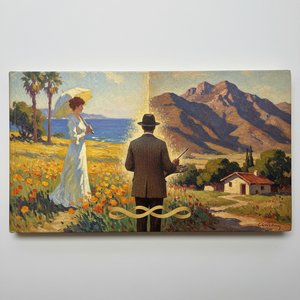
Joseph Kleitsch: Bridging Impressionism & California Regionalism – A Study of Light and Identity
Explore the life & work of Joseph Kleitsch, a pivotal California Impressionist painter. Discover his vibrant landscapes, portraits, and legacy within the Laguna Beach art colony. A comprehensive study for collectors & enthusiasts.

The Alchemy of Clay: A Collector's Guide to the Mastery, Texture, and Timeless Form of Ceramic Art
Discover the profound beauty of ceramic art. Our expert guide explores the alchemy of clay, texture, and glaze, offering collectors deep insights into mastering earth and fire to create timeless, sculptural masterpieces for any curated collection.
