


Imaginea respectă alegerile tale: , .
Descriere obiect de colecție
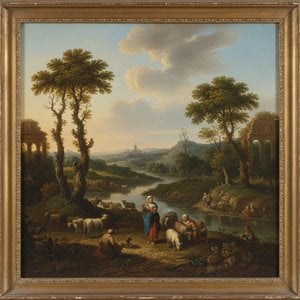
Admire 'Winter Scene' by Kruseman – a serene Dutch Romantic landscape painting featuring dramatic lighting & impasto texture. Explore this captivating 19th-century artwork.
Biografie artist
Discover Frederik Marianus Kruseman's captivating landscape paintings! Explore his Dutch Romantic style featuring idyllic scenes of nature, winter landscapes & genre works. A significant figure in 19th-century Dutch art.
 Vezi mai mult
Reproducere pictată manual în ulei
Pictură în ulei pe pânză, pictată manual de artiștii noștri la dimensiunea și ramele dorite de dumneavoastră, pe comandă. ( Comută pe versiunea Print Comută pe Imagine Digitală)
Mai multe detalii despre această pictură
 Previzualizare
 Trimite prin felicitare
 Distribuie
 Detalii despre lucrare
 Ghid
Ghid

 Descarcă imaginea
 Produse similare
 Radiografie
 Galerie foto
 Întrebări și răspunsuri
 Statistici
Comandați tabloul dumneavoastră în patru pași simpli
Nu vă grăbiți. Puteți modifica orice răspuns; prețul din coșul de comandă se actualizează în funcție de fiecare alegere.
1 Pasul unu din patru
Ce dimensiune doriți?
Aceste dimensiuni păstrează proporțiile tabloului original. Ilustrația prezintă alegerea dumneavoastră pe un perete, deasupra unei canapele de doi metri.
Sau introduceți propriile dimensiuni
Alegeți dintre dimensiunile noastre prestabilite, care respectă proporțiile originale ale operei de artă.

Introduceți lățimea și înălțimea necesare pentru a se potrivi ramei sau peretelui dumneavoastră. Această lucrare este pictată manual, așa că, pentru o dimensiune cu o formă diferită, artistul poate picta puțin mai mult în jurul imaginii sau poate tăia puțin din margini — dumneavoastră decideți. Vă vom trimite o simulare digitală pentru aprobare înainte de a începe pictarea. Imaginea afișată pe această pagină nu reprezintă rezultatul real — doar simularea este reprezentativă.
2 Pasul doi din patru
Cum ar trebui pregătită: rulată, întinsă pe pânză sau înramată?
Prețurile de mai jos sunt pentru dimensiunea aleasă la primul pas.
Alege marginile tabloului pe pânză întinsă
Alege cadrul tău

Alb lei1

Margini difuze lei1

Extins lei1

P118B lei10

P118H lei10

P118W lei10

P438Z lei10

P508JH lei12

P508YH lei12

P805H lei10

P805Z lei10

P919BZ lei10

P919G lei10

P919XJ lei10

P959ZH lei10

P968JZ lei12

W106C lei8

W218G lei10

W218JH lei8

W218Y lei10

W307PJ lei10

W316G lei10

W316PJ lei8

W316Y lei10

W398PJ lei8

W4111J lei10

W500HY lei15

W500JH lei15

W692G lei12

W849H lei8

W940BG lei15

W953PJ lei8

H24-GOLD lei30

H24-SILVER lei30

H36-GOLD lei45

H36-SILVER lei45
Înramat
Ramă: . Dimensiuni cu ramă: .
3 Pasul trei din patru
Doriți să modificați ceva în tabloul respectiv?
Majoritatea oamenilor răspund negativ. Deoarece fiecare pictură este realizată manual, artistul nostru poate adapta lucrarea și pentru dumneavoastră.
După plasarea comenzii, echipa ArtsDot.com va contacta clientul prin e-mail pentru instrucțiuni și va furniza o previzualizare (mockup)
4 Pasul patru din patru
Câteva opțiuni de finisare
Toate sunt opționale. Răspunsurile deja selectate nu implică costuri suplimentare.
Cine este autorul?
Livrare în întreaga lume () în 3-4 săptămâni, în loc de cele 5 săptămâni standard. (7 Noiembrie). Fără compromisuri în ceea ce privește calitatea.
O plăcuță de identificare, ca la muzeu?
Detalii plăcuță din bronz gravat
This elegant plaque features the artist's name and the title of the artwork, finely engraved for a timeless presentation.
It is made from bronze with a refined, elegant finish. The text is precisely laser-engraved for a sharp and permanent result. Measuring 9x2 cm, the plaque is compact yet easy to read. It's built to be durable and scratch-resistant, offering a professional, museum-quality look. Mounting is simple thanks to the included adhesive backing.
Detalii plăcuță din acril transparent
The plaque includes essential engraved details such as the artist's name, the title of the artwork, the date it was created, the type of media used-like oil on canvas or watercolor-a brief description of the piece, and a QR code that links to the complete artwork information.
It is crafted from clear acrylic, offering a sleek, modern appearance. The text is UV-engraved in black to ensure strong visual contrast. With a size of 10x15 cm, it ensures optimal readability. It comes equipped with two metal hooks for secure wall mounting. The plaque is designed to be weather-resistant, making it suitable for various environments, and it includes interactive features that work seamlessly with smartphone scanning.
Detalii placă din acril negru
This elegant plaque includes engraved information such as the artist's name, the title of the artwork, the date it was created, the type of media used (like oil on canvas or watercolor), a short description of the artwork, and a QR code for quick access to more information.
The plaque itself is made from refined black acrylic with a premium finish. The text is laser-engraved in white for high contrast and readability. Its size is 10x15 cm, designed to be easy to read. It comes with two metal hooks for professional mounting. The design is sleek and fits any interior style. It is also weather-resistant and durable, with built-in digital integration for mobile compatibility.
Un lac protector?
Când aveți nevoie de el?
✓ Verifică și comandă
Tabloul tău, exact așa cum l-ai comandat

Winter scene
Tehnică de reproducere
Dimensiune reproducere
-

Selecție de artiști de elită
Mai multe detalii, rafinament și timp suplimentar de execuție
-

Ramă pentru reproducere artistică
-
-
Pentru opere de artă sau reproduceri care depășesc 105 cm (aproximativ 41 de inch) pe oricare dintre laturi, cadrul va fi livrat demontat, sub formă de kit. Această metodă asigură o livrare sigură și previne deteriorarea în timpul transportului.
Este necesară asamblarea profesională – acest produs nu este de tip DIY (de făcut singur).
Kitul trebuie asamblat, iar pânza întinsă, de către un legător de cadre experimentat, utilizând adeziv pentru lemn (neinclus în colet), o cheie pentru întinderea pânzei și cleme pentru a menține barele la unghi drept în timp ce adezivul se usucă. Asamblarea incorectă sau tensiunea neuniformă a pânzei pot deteriora permanent opera de artă și nu sunt acoperite de garanția noastră.
 Pentru opere de artă sau reproduceri care depășesc 105 cm (aproximativ 41 de inch) pe oricare dintre laturi, cadrul va fi livrat demontat, sub formă de kit. Această metodă asigură o livrare sigură și previne deteriorarea în timpul transportului.
Toate barele din lemn masiv sunt incluse, tăiate cu precizie la dimensiunea necesară.
Asamblat cu șuruburile incluse, plus adeziv pentru lemn pentru îmbinările de colț, care nu este furnizat și trebuie achiziționat de către tâmplarul dumneavoastră.
Sunt necesare unelte profesionale care nu sunt incluse: o șipte de întindere a pânzei (tensionator) și cleme pentru a menține barele la unghi drept în timp ce adezivul se usucă.
Important:
Îmbinările de colț necesită adeziv pentru lemn, barele trebuie fixate cu clești de strângere până când adezivul este complet uscat, iar întinderea pânzei pe cadrul asamblat necesită un clește pentru întins pânza. Niciunul dintre aceste elemente nu este inclus în kit. Vă rugăm să consultați un încadrator profesionist cu experiență înainte de a comanda această dimensiune.

Etichetă de prezentare
-
-

Lac de protecție
Lac lucios (intensifică nuanțele și oferă protecție împotriva luminii și a umidității)
-

Personalizează opera mea de artă
Exemple de elemente ce pot fi personalizate: Înlocuirea feței cu fotografia clientului; Adăugarea unui animal de companie (de exemplu, înlocuirea unei pisici cu un câine); Includerea unui mesaj ascuns în fundal; Modificarea peisajului sau a elementelor din fundal.
-

Livrare rapidă
Livrare la nivel mondial () în 3-4 săptămâni, în loc de cele 5 săptămâni standard. (7 Noiembrie). Fără compromisuri când vine vorba de calitate.
-
Livrare rapidă
Livrare la nivel mondial () în 5 săptămâni. (14 Noiembrie).
Inclus
Preț total calculat
lei 1254
Opțiunea cu sticlă este disponibilă doar pentru dimensiuni de sub 110 cm
Inclus în fiecare comandă
- Livrare expres gratuită la nivel mondial
- Pânză de in de înaltă calitate
- Asigurare completă pentru transport
- Garanție de rambursare a taxelor vamale
- Garanția fidelității culorilor
- Politica de retur în 100 de zile (doar pentru defecte de fabricație)
- Garanție de rambursare 100%
- Ofertă pentru comenzi multiple


Opere similare


Frederick Marianus Kruseman
1817 - 1882, Netherlands
Biografie artist
The Poet of the Dutch Landscape
Frederik Marianus Kruseman stands as a cornerstone of Dutch Romantic landscape painting, embodying the profound spirit of his era and leaving an indelible mark on the history of European art. Born in 1816 in Haarlem to a family steeped in artistic tradition—his father was a hatter and his lineage connected to the vibrant creative pulse of the Netherlands—Kruseman’s early life fostered a deep appreciation for the nuances of light and observation. His journey began with formal drawing lessons under Jan Reekers, where he mastered the fundamental rules of perspective and the art of sketching directly from nature. This foundational training prepared him for a career that would eventually transcend mere topographical accuracy, moving instead toward a soulful exploration of the natural world.
As his talent blossomed, Kruseman sought out the masters of his time, studying under Nicolaas Johannes Roosenboom and later engaging with the advanced techniques of Jan van Ravenswaay. His artistic formation was further enriched by brief but significant encounters with the works of Barend Cornelis Koekkoek, a titan of the Romantic landscape tradition. These influences coalesced to create a style that was uniquely his own—a blend of meticulous detail and atmospheric grandeur. While his early years were spent navigating the artistic hubs of Haarlem and The Hague, his travels through Kleve and eventually his settlement in Brussels allowed him to absorb the diverse light and textures of Northern Europe, imbuing his canvases with a cosmopolitan yet deeply Dutch sensibility.
Atmospheric Mastery and the Winter Vision
The true essence of Kruseman’s oeuvre lies in his ability to capture the fleeting, ephemeral moments of the natural world. He was a master of the sublime, particularly through his celebrated winter landscapes, which constitute approximately two-thirds of his total body of work. In these compositions, the artist achieved a breathtaking realism; he perfected the rendering of the jet-black, mirror-like surface of frozen rivers and the delicate, intricate marks left by skaters upon the ice. His ability to depict the skeletal beauty of coral-like tree branches against a pale, wintry sky demonstrates a technical precision that serves an even higher emotional purpose: the evocation of solitude and quiet contemplation.
As his career progressed toward its full fruition around 1860, Kruseman’s palette underwent a fascinating evolution. The cool, silvery grey-blue tones that characterized his earlier works gradually gave way to a much warmer, more luminous spectrum. This transition allowed him to capture the magical transition of light during the fading hours of early evening. His most evocative scenes often feature a soft warmth emanating from a distant, small interior or a low sun breaking through mist, creating a sense of profound psychological depth. Through this mastery of light and temperature, Krusebman did not merely paint scenery; he painted the very feeling of a season, inviting the viewer to experience the stillness and the biting chill of a Dutch winter.
Legacy of a Romantic Visionary
Beyond the technical brilliance of his brushwork, Kruseman’s historical significance lies in his role as a bridge between the classical traditions of the Dutch Golden Age revival and the burgeoning emotionalism of 19th-century Romanticism. He moved away from the rigid documentation of landscapes to embrace a more symbolic approach, where a misty vista or a lonely castle on a hill served as metaphors for the human condition. His work resonates with the themes of solitude and the spiritual resonance found in the works of Caspar David Friedrich, yet it remains grounded in the specific, tactile beauty of the Low Countries.
Throughout his life, from his debut at the Exhibition for Living Masters in The Hague to his final years in Sint-Gillis, Kruseman remained a dedicated observer of the earth's quietest transformations. His legacy is preserved in canvases that continue to captivate collectors and historians alike, serving as a testament to a period when art sought to find the infinite within the intimate. Today, we remember him not just as a painter of landscapes, but as a poet of the atmosphere, whose work continues to breathe with the light and shadows of a bygone era.
Articole similare

Charles Leickert: Capturing the Dutch Golden Age Light – A Comprehensive Study of Technique, Context, and Legacy
Explore the captivating winter landscapes of Charles Leickert, a master of Dutch Golden Age light & atmosphere. Discover his techniques, symbolism, and lasting legacy – a comprehensive study for art enthusiasts and collectors.
Nicolaes Berchem: Dutch Golden Age Pastoralism & the Evolution of Landscape Painting
Explore the captivating world of Nicolaes Berchem, a leading Dutch Golden Age painter. Discover his idyllic landscapes, masterful technique & lasting influence on art history. Learn more at ArtsDot.

Peisaje Romantice Iconice: 10 Capodopere Artistice pentru Decorul de Lux
Descoperă 10 capodopere romantice iconice de Caspar David Friedrich, Turner și alți maeștri. Explorează istoria artei, emoțiile din peisaje și găsește tablouri canvas perfecte pentru decorul tău pe ArtsDot.com!