


 Vezi în context
 Trimite
 Distribuie
 Detalii
 Ghid
Ghid

 Descarcă
 Produse similare
 Radiografie
 Diaporama
 Statistici
Flowers
 Oil On Canvas
- WallArt
- Italian Romanticism
 19th Century
 124.0 x 95.0 cm
 Pinacoteca di Brera
 Citește mai mult
Reproducere pictată manual în ulei
Pictură în ulei pe pânză, realizată manual de artiștii noștri la dimensiunea și ramele dorite de dumneavoastră, pe comandă. ( Comută pe versiunea Print Treci la imagine digitală)




P118B $10

P118H $10

P118W $10

P438Z $10

P508JH $12

P508YH $12

P805H $10

P805Z $10

P919BZ $10

P919G $10

P919XJ $10

P959ZH $10

P968JZ $12

W106C $8

W218G $10

W218JH $8

W218Y $10

W307PJ $10

W316G $10

W316PJ $8

W316Y $10

W398PJ $8

W4111J $10

W500HY $15

W500JH $15

W692G $12

W849H $8

W940BG $15

W953PJ $8




Alegeți dintre dimensiunile noastre prestabilite, care respectă proporțiile originale ale operei de artă.

Puteți introduce propriile dimensiuni pentru a se potrivi unui anumit cadru sau spațiu. Dacă dimensiunea selectată nu corespunde proporțiilor imaginii originale, vom decupa opera de artă sau vom extinde pictura cu elemente suplimentare pictate manual. O simulare digitală vă va fi trimisă pentru aprobare înainte de începerea producției.
Vă rugăm să rețineți că previzualizarea de pe ecran nu reflectă decuparea sau extinderea reală. Doar macheta va arăta cu exactitate compoziția finală.
Deși sunt disponibile dimensiuni personalizate, vă recomandăm să selectați o dimensiune din lista predefinită pentru a păstra proporțiile originale.
După plasarea comenzii, echipa ArtsDot.com va contacta clientul prin e-mail pentru instrucțiuni și îi va furniza o previzualizare a machetei
Livrare în întreaga lume () în 3-4 săptămâni, în loc de cele 5 săptămâni standard. (21 Septembrie). Fără compromisuri în ceea ce privește calitatea.

Livrare expres gratuită la nivel mondial

Pânză de in premium

Asigurare completă pentru transport

Garanție de rambursare a taxelor vamale

Garanția fidelității culorilor

Politica de retur în 100 de zile (doar pentru defecte)

Garanție de rambursare 100%

Reducere pentru comenzi multiple
 Opțiunea cu sticlă este disponibilă doar pentru dimensiuni de sub 110 cm

Flowers
Tip de reproducere
Dimensiune reproducere
-


Preț total
$ 263
A Symphony of Petals: The Romantic Soul of Francesco Hayez
In the quietude of a masterfully rendered still life, Francesco Hayez’s “Flowers” emerges not merely as a botanical study, but as a profound whisper from the heart of Italian Romanticism. Created between 1834 and 1835, this exquisite work transcends the boundaries of simple decoration to offer a window into a turbulent era. While the eye is immediately drawn to the vibrant, overflowing bouquet, the discerning viewer senses an underlying tension—a delicate balance between the ephemeral beauty of nature and the enduring spirit of a nation yearning for unity. Hayez, a master of capturing both the tangible and the intangible, uses this arrangement of blossoms to compose a visual poem that resonates with hope, vitality, and a subtle, poetic melancholy.
The composition is a triumph of classical balance and dramatic contrast. A central vase, brimming with an abundance of life, sits anchored upon a dark, richly patterned cloth. This deep, grounding element serves as the perfect stage for the luminous explosion of color above it. Hayez’s technique is nothing short of breathtaking; through the meticulous application of oil glazes, he achieves a translucent quality that allows light to seemingly dance within each petal. One can almost feel the velvety texture of the crimson roses and the delicate, papery lightness of the lilies. The artist’s ability to manipulate light creates an illusion of shimmering movement, as if a gentle breeze might stir the arrangement at any moment, making the painting feel less like a static object and more like a living, breathing presence.
Symbolism and the Echo of History
To look upon “Flowers” is to engage with the political pulse of nineteenth-century Italy. During this period, much of the Italian peninsula languished under foreign dominion, yet beneath this surface of repression, a fervent nationalist sentiment was beginning to bloom. In the language of Romanticism, flowers were rarely just flowers; they were potent allegories. The lushness of the bouquet can be interpreted as a metaphor for the latent potential and burgeoning strength of the Italian identity. The interplay of light and shadow—the chiaroscuro effect—mirrors the struggle between the darkness of political fragmentation and the bright promise of a unified future.
For the collector or interior designer, this piece offers an unparalleled opportunity to introduce a sense of historical depth and sophisticated elegance into a space. The painting’s ability to harmonize intense color with a serene atmosphere makes it a versatile masterpiece for high-end curation. Whether placed in a sunlit gallery or a moody, classical study, the work commands attention through its sheer technical brilliance and emotional complexity. It is an investment in a piece of history that continues to bloom with new meanings, offering a timeless aesthetic that celebrates both the delicate beauty of the natural world and the indomitable strength of the human spirit.
Opere similare


Biografie artist
Early Life and Artistic Foundations
Francesco Hayez, a pivotal figure in the Italian Romantic movement, was born on February 10th, 1791, in the heart of Venice – a city steeped in artistic tradition and historical significance. His lineage traced back to humble beginnings; his father, Giovanni, was a fisherman hailing from France, while his mother, Chiara Torcella, originated from Murano, renowned for its exquisite glassmaking. From a young age, Francesco displayed an innate talent for drawing, nurtured by his uncle, Giovanni Binasco, who recognized and fostered this gift, apprenticing him to the role of art restorer. This early training instilled in Hayez a deep appreciation for technique, materials, and the meticulous process of preserving artistic heritage – skills that would profoundly influence his own creative endeavors. His exposure to Venetian masters during his apprenticeship shaped his initial style, laying the groundwork for his later development within the Neoclassical tradition before he embraced the dramatic spirit of Romanticism.The Academy Years and Roman Influences
Hayez’s formal artistic education commenced in 1806 when he enrolled at the newly reformed Accademia di Belle Arti in Milan. There, under the guidance of Teodoro Matteini, a prominent Neoclassicist, he honed his skills and absorbed the principles of classical art – particularly the works of Raphael, which were meticulously studied within the academy’s curriculum. In 1809, Hayez secured a prestigious scholarship to the Accademia di San Luca in Rome, an opportunity that proved transformative. Rome's vibrant artistic scene exposed him to a diverse range of influences, including Antonio Canova, whose sculptural mastery profoundly impacted Hayez’s understanding of form and expression. This period marked a crucial shift as he began to experiment with Romantic themes, moving beyond the rigid constraints of Neoclassicism towards a more emotionally charged and dramatic style.The Rise of Romanticism in Milan
Returning to Milan in 1823, Hayez quickly established himself as a leading figure within the burgeoning Italian Romantic movement. The city’s dynamic cultural landscape – fueled by political unrest and nationalist aspirations – provided fertile ground for his artistic explorations. He became associated with the “Salotto Maffei,” a salon hosted by Clara Maffei, a prominent intellectual and patron of the arts, whose portrait he painted in 1827. This association exposed him to a circle of writers, artists, and intellectuals who championed Romantic ideals – emphasizing emotion, imagination, and the celebration of individual experience. Hayez’s work during this period reflected these influences, incorporating historical narratives, literary themes, and a heightened sense of drama and emotional intensity.Notable Works and Lasting Legacy
Hayez's oeuvre is characterized by grand historical paintings, political allegories, and exquisitely rendered portraits. Among his most celebrated works are *The Kiss*, a masterpiece that captured the spirit of Romanticism with its evocative depiction of love and passion; *Pope Urban II Preaching the First Crusade in the Square of Clermont*, a monumental work showcasing his mastery of historical narrative; and *Portrait of Matilde Juva-Branca*, an example of his exceptional ability to capture the essence of his subjects. His paintings often served as visual commentaries on contemporary events, reflecting the political and social realities of 19th-century Italy. Hayez’s influence extended beyond individual works; he played a significant role in shaping Italian Romanticism, inspiring generations of artists with his dramatic style and emotional depth. He died on December 21st, 1882, leaving behind a rich legacy that continues to resonate within the annals of Italian art history. His work remains a testament to the power of imagination, emotion, and the enduring spirit of Romanticism.
Francesco Hayez
1791 - 1882 , Italia
Informații rapide
- Artistic Movement Or Style: Romanticism
- Artists Or Movements Influenced By This Artist: ['Neoclassicismo']
- Artists Who Influenced This Artist: ['Teodoro Matteini']
- Date Of Birth: 10 Feb 1791
- Date Of Death: 12 Feb 1882
- Full Name: Francesco Hayez
- Nationality: Italian
- Notable Artworks:
- The Kiss
- Papa Urbano II
- Ritratto Matilde Juva
- Place Of Birth: Venice, Italia
Articole conexe

Jan Jansz Wijnants: A Study in Dutch Golden Age Still Life & Floral Transience
Explore the captivating world of Jan Wijnants and Dutch Golden Age still life painting. Discover symbolism, masterful techniques & lasting influence on floral art history. Learn more!

Abraham Hendricksz van Beyeren: Pioneering Dutch Still Life & the Banquet Tradition
Explore the captivating world of Dutch Golden Age still life with Abraham van Beyeren. Discover his innovative techniques, symbolic banquet scenes & lasting influence on art history. Learn about collecting these masterpieces.

De la Natura Mortă Clasică la Abstactul Contemporan: Elevarea Spațiilor de Recepție din Vilă prin Reproduceri Artistice Rafinate
Descoperiți cum reproducerile artistice rafinate pot transforma spațiile de recepție din vila dumneavoastră! Ghid expert, calitate superioară și personalizare exclusivă. Inspirați-vă acum!

Silent Narratives: Exploring the Enduring Appeal of Still Life Painting Across Centuries
Explore the rich history of still life painting with ArtsDot. Discover Dutch Masters, decode vanitas symbolism & learn about collecting timeless art. Expert insights and museum-quality reproductions.
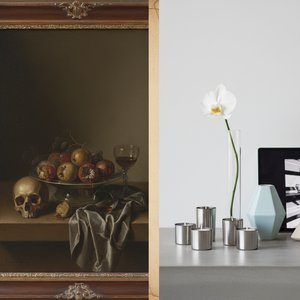
The Enduring Appeal of Still Life: A Historical & Contemporary Exploration
Explore the rich history & symbolism of still life painting with ArtsDot. Discover masterpieces from the Dutch Golden Age, learn about vanitas art, and find expert guidance for collecting timeless artworks.


