


 Vezi în context
 Trimite
 Distribuie
 Detalii
 Ghidul

 Descarcă
 Produse similare
 Radiografie
 Diaporama
 Statistici
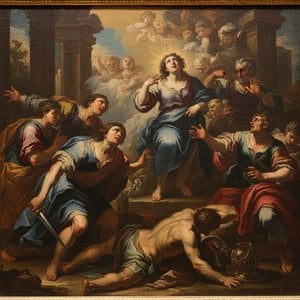
Crucifixion
 Oil On Canvas
- WallArt
- Baroque
 1709
1709- Early Modern
 320.0 x 216.0 cm
 Basilica di San Lorenzo
 Citește mai mult
Giclée / Imprimare artistică
Printuri giclée sau pe canvas de calitate muzeală, cu proces de producție rapid și opțiuni flexibile de finisare. ( Comandă pictură realizată manual Treci la imagine digitală)




P118B $10

P118H $10

P118W $10

P438Z $10

P508JH $12

P508YH $12

P805H $10

P805Z $10

P919BZ $10

P919G $10

P919XJ $10

P959ZH $10

P968JZ $12

W106C $8

W218G $10

W218JH $8

W218Y $10

W307PJ $10

W316G $10

W316PJ $8

W316Y $10

W398PJ $8

W4111J $10

W500HY $15

W500JH $15

W692G $12

W849H $8

W940BG $15

W953PJ $8




Alegeți dintre dimensiunile noastre prestabilite, care respectă proporțiile originale ale operei de artă.

Puteți introduce propriile dimensiuni pentru a se potrivi unui anumit cadru sau spațiu. Dacă dimensiunea selectată nu corespunde proporțiilor imaginii originale, vom decupa lucrarea de artă sau vom extinde imaginea cu margini oglindite sau cu o culoare uniformă. Un mockup digital va fi trimis pentru aprobarea dumneavoastră înainte de începerea producției.
Vă rugăm să rețineți că previzualizarea de pe ecran nu reflectă decuparea sau extinderea reală. Doar mockup-ul va arăta cu exactitate compoziția finală.
Deși dimensiunile personalizate sunt disponibile, vă recomandăm să selectați o dimensiune din lista predefinită pentru a păstra proporțiile originale.
Livrare în întreaga lume () în 2 săptămâni, în loc de cele 4/5 săptămâni standard. (25 Septembrie)

Livrare expres gratuită la nivel mondial

Pânză de in premium

Asigurare completă pentru transport

Garanție de rambursare a taxelor vamale

Garanția fidelității culorilor

Politica de retur în 100 de zile (doar pentru defecte)

Garanție de rambursare 100%

Reducere pentru comenzi multiple
 Opțiunea cu sticlă este disponibilă doar pentru dimensiuni de sub 110 cm

Crucifixion
Giclée / Imprimare artistică
Dimensiune reproducere
-


Preț total
$ 62
The painting depicts the scene of the Crucifixion, with Jesus Christ at the center, surrounded by three figures: two women and a man. The use of light on the central figure of Christ creates a dramatic contrast against the darker tones of the surrounding environment. The overall composition and style suggest that this painting belongs to the Baroque period, which was marked by its dramatic and emotional themes.
Artistic Style and Influences
The Crucifixion by Francesco Conti is a testament to the artist's skill and mastery of the Baroque style. The painting's use of light and shadow, as well as its emphasis on emotion and movement, are all characteristic of this period. Other notable artists of the Baroque period include Fra Filippo Lippi, who created the Annunciation (detail) painting, and Annibale Carracci, who painted the Pietà.For more information on these artists and their works, visit Francesco Conti: Crucifixion and Fra Filippo Lippi: Annunciation (detail) on ArtsDot.com. You can also learn more about the San Lorenzo museum and its collection on The Museum San Lorenzo (Florence, Italy).
Notable Artists from Italy
Italy has a rich history of producing talented artists, including Jacopo Confortini, who was an Italian painter of the Baroque period. For a list of notable individuals from Italy, visit List of people from Italy on Wikipedia.- Francesco Conti: A Italian painter of the Baroque period
- Fra Filippo Lippi: A Italian painter of the Renaissance period
- Annibale Carracci: A Italian painter of the Baroque period
Opere similare


Biografie artist
Francesco Conti (1681 – 1760): A Florentine Baroque Master
Francesco Conti, born in Caivano near Naples in 1681, emerged as a prominent figure within the vibrant artistic landscape of Florence during the Baroque era. His formative years were steeped in the tutelage of Giovanni Maria Morandi and Carlo Maratta – masters whose stylistic approaches profoundly shaped his own artistic vision. These influential mentors instilled in Conti a dedication to dramatic realism and masterful chiaroscuro techniques, characteristics that would define his oeuvre for decades to come.- Early Influences: Conti’s initial training under Morandi exposed him to the refined elegance of Roman Baroque painting, emphasizing idealized forms and balanced compositions. Simultaneously, Maratta's teachings championed theatrical grandeur and emotional intensity – elements that would become integral to Conti’s artistic sensibilities.
- Florence & Patronage: Returning to Florence after his formative years in Rome, Conti secured invaluable support from the Riccardi family, who regularly commissioned him for monumental altarpieces and provided a stable income. This patronage allowed him to pursue his artistic endeavors with unwavering commitment and fostered collaborations that enriched Florentine art history.
Notable Works & Artistic Style
Conti’s artistic style was characterized by an uncompromising embrace of Baroque principles – particularly chiaroscuro, the dramatic interplay between light and shadow—which he skillfully employed to convey emotion and heighten visual impact. His paintings pulsated with palpable energy, capturing moments of profound spiritual contemplation alongside scenes of heroic action. Among his most celebrated achievements are “Madonna & Child with Saint Sylvester I, Saint Paul and Saint Catherine of Alexandria” (1738), commissioned for Sant’Andrea della Minerva by the Rucellai family—a masterpiece lauded for its masterful composition and luminous illumination—and “Death of King Josiah,” a monumental depiction of biblical drama executed in 1740. These works stand as testament to Conti's ability to fuse technical virtuosity with expressive storytelling.- Dominant Technique: Conti’s signature technique involved meticulous layering of paint, creating textures that mirrored the grandeur and solemnity of his subjects. He skillfully manipulated light sources to sculpt forms and imbue canvases with an ethereal glow—a hallmark of Maratta's influence.
- Religious Themes: Conti dedicated his artistic energies primarily to religious iconography, producing a prolific output of altarpieces and devotional paintings that reflected the spiritual fervor of his time. His depictions of saints and biblical narratives resonated deeply with audiences and cemented his reputation as one of Florence’s foremost Baroque artists.
Legacy & Influence
Francesco Conti's artistic legacy extends beyond his individual masterpieces; he served as a mentor to numerous aspiring painters, fostering the development of Florentine Baroque art for generations to come. His pupil Anna Bacherini Piattoli continued Conti’s stylistic traditions and contributed significantly to the artistic discourse of the era. Conti’s unwavering commitment to Baroque principles—particularly chiaroscuro and dramatic realism—established him as a pivotal figure in Florentine art history, ensuring his enduring influence on subsequent artists and shaping the visual culture of his time. His work continues to inspire admiration for its expressive power and technical brilliance.Further Exploration
For deeper insights into Francesco Conti’s artistic journey and contributions to Baroque painting, explore resources such as:Recommended Resources
- Museum Database: Сан Франческо делла Вінья

Francesco Conti
1681 - 1760 , Italy
Informații rapide
- Artistic Movement Or Style: Baroque
- Artists Or Movements Influenced By This Artist: ['Simone Pignoni']
- Artists Who Influenced This Artist:
- Giovanni Maria Morandi
- Carlo Maratta
- Date Of Birth: Caivano, Italy (1681)
- Date Of Death: Florence (1760)
- Full Name: Francesco Conti
- Nationality: Italian
- Notable Artworks:
- Madonna & Child with St. Sylvester I, St. Paul and St. Catherine of Alexandria
- Death of King Josiah
- Return to Nazareth from Egypt
- Saint Joseph with the Christ Child
- The Crucifixion of Jesus
- Pietà
- Allegory of Musica Gentleman
- Place Of Birth: Florence, Italy
Articole conexe

The Dramatic Flourish: Exploring the Baroque Movement's Enduring Legacy in Art History
Explore the dramatic world of Baroque art! Discover iconic artists like Caravaggio & Rubens, defining techniques, and its lasting impact on art history. Expert insights for collectors & enthusiasts at ArtsDot.
The Dramatic Flourish: Exploring Baroque Painting's Emotional Intensity & Artistic Innovations
Explore the dramatic world of Baroque painting! Discover its history, defining characteristics, iconic artists like Caravaggio & Rubens, and lasting influence on Western art. Expert insights for collectors.

The Golden Age Reforged: Dramatic Realism & Religious Zeal in Spanish Baroque Art
Explore the dramatic world of Spanish Baroque art! Discover masters like Zurbarán & the powerful influence of religious zeal on painting techniques – a guide for collectors and enthusiasts.

The Visceral Stage: Exploring Dramatic Narratives & Emotional Intensity in Baroque Art
Explore the dramatic world of Baroque art! Discover iconic masters like Caravaggio & Rembrandt, their techniques, and the movement's lasting impact. Expert insights for collectors & enthusiasts at ArtsDot.

Chiaroscuro & Emotional Resonance: Exploring Dramatic Light in Western Painting
Explore the captivating world of chiaroscuro & tenebrism! Discover Caravaggio's influence, Baroque masters, and the enduring power of dramatic lighting in art history. Learn about these techniques with ArtsDot.
