

- 166.0 x 166.0 cm


Imaginea respectă alegerile tale: , .
Descriere obiect de colecție
Experience Fra Diamante's 'The Nativity' (1465), a stunning Renaissance masterpiece depicting the birth of Christ. Explore its rich symbolism and artistic details within the Louvre.
 Vezi mai mult
Biografie artist
Explore the Renaissance art of Fra Diamante, a Florentine painter known for his frescoes & religious works. Discover his legacy at Cortona's Diocesan Museum.
Reproducere pictată manual în ulei
Pictură în ulei pe pânză, pictată manual de artiștii noștri la dimensiunea și ramele dorite de dumneavoastră, pe comandă. ( Comută pe versiunea Print Comută pe Imagine Digitală)
Mai multe detalii despre această pictură
 Previzualizare
 Trimite prin felicitare
 Distribuie
 Detalii despre lucrare
 Ghid
Ghid

 Descarcă imaginea
 Produse similare
 Radiografie
 Galerie foto
 Întrebări și răspunsuri
 Statistici
Comandați tabloul dumneavoastră în patru pași simpli
Nu vă grăbiți. Puteți modifica orice răspuns; prețul din coșul de comandă se actualizează în funcție de fiecare alegere.
1 Pasul unu din patru
Ce dimensiune doriți?
Aceste dimensiuni păstrează proporțiile tabloului original. Ilustrația prezintă alegerea dumneavoastră pe un perete, deasupra unei canapele de doi metri.
Sau introduceți propriile dimensiuni
Alegeți dintre dimensiunile noastre prestabilite, care respectă proporțiile originale ale operei de artă.

Introduceți lățimea și înălțimea necesare pentru a se potrivi ramei sau peretelui dumneavoastră. Această lucrare este pictată manual, așa că, pentru o dimensiune cu o formă diferită, artistul poate picta puțin mai mult în jurul imaginii sau poate tăia puțin din margini — dumneavoastră decideți. Vă vom trimite o simulare digitală pentru aprobare înainte de a începe pictarea. Imaginea afișată pe această pagină nu reprezintă rezultatul real — doar simularea este reprezentativă.
2 Pasul doi din patru
Cum ar trebui pregătită: rulată, întinsă pe pânză sau înramată?
Prețurile de mai jos sunt pentru dimensiunea aleasă la primul pas.
Alege marginile tabloului pe pânză întinsă
Alege cadrul tău

Alb lei1

Margini difuze lei1

Extins lei1

P118B lei10

P118H lei10

P118W lei10

P438Z lei10

P508JH lei12

P508YH lei12

P805H lei10

P805Z lei10

P919BZ lei10

P919G lei10

P919XJ lei10

P959ZH lei10

P968JZ lei12

W106C lei8

W218G lei10

W218JH lei8

W218Y lei10

W307PJ lei10

W316G lei10

W316PJ lei8

W316Y lei10

W398PJ lei8

W4111J lei10

W500HY lei15

W500JH lei15

W692G lei12

W849H lei8

W940BG lei15

W953PJ lei8

H24-GOLD lei30

H24-SILVER lei30

H36-GOLD lei45

H36-SILVER lei45
Înramat
Ramă: . Dimensiuni cu ramă: .
3 Pasul trei din patru
Doriți să modificați ceva în tabloul respectiv?
Majoritatea oamenilor răspund negativ. Deoarece fiecare pictură este realizată manual, artistul nostru poate adapta lucrarea și pentru dumneavoastră.
După plasarea comenzii, echipa ArtsDot.com va contacta clientul prin e-mail pentru instrucțiuni și va furniza o previzualizare (mockup)
4 Pasul patru din patru
Câteva opțiuni de finisare
Toate sunt opționale. Răspunsurile deja selectate nu implică costuri suplimentare.
Cine este autorul?
Livrare în întreaga lume () în 3-4 săptămâni, în loc de cele 5 săptămâni standard. (6 Noiembrie). Fără compromisuri în ceea ce privește calitatea.
O plăcuță de identificare, ca la muzeu?
Detalii plăcuță din bronz gravat
This elegant plaque features the artist's name and the title of the artwork, finely engraved for a timeless presentation.
It is made from bronze with a refined, elegant finish. The text is precisely laser-engraved for a sharp and permanent result. Measuring 9x2 cm, the plaque is compact yet easy to read. It's built to be durable and scratch-resistant, offering a professional, museum-quality look. Mounting is simple thanks to the included adhesive backing.
Detalii plăcuță din acril transparent
The plaque includes essential engraved details such as the artist's name, the title of the artwork, the date it was created, the type of media used-like oil on canvas or watercolor-a brief description of the piece, and a QR code that links to the complete artwork information.
It is crafted from clear acrylic, offering a sleek, modern appearance. The text is UV-engraved in black to ensure strong visual contrast. With a size of 10x15 cm, it ensures optimal readability. It comes equipped with two metal hooks for secure wall mounting. The plaque is designed to be weather-resistant, making it suitable for various environments, and it includes interactive features that work seamlessly with smartphone scanning.
Detalii placă din acril negru
This elegant plaque includes engraved information such as the artist's name, the title of the artwork, the date it was created, the type of media used (like oil on canvas or watercolor), a short description of the artwork, and a QR code for quick access to more information.
The plaque itself is made from refined black acrylic with a premium finish. The text is laser-engraved in white for high contrast and readability. Its size is 10x15 cm, designed to be easy to read. It comes with two metal hooks for professional mounting. The design is sleek and fits any interior style. It is also weather-resistant and durable, with built-in digital integration for mobile compatibility.
Un lac protector?
Când aveți nevoie de el?
✓ Verifică și comandă
Tabloul tău, exact așa cum l-ai comandat

The Nativity
Tehnică de reproducere
Dimensiune reproducere
-

Selecție de artiști de elită
Mai multe detalii, rafinament și timp suplimentar de execuție
-

Ramă pentru reproducere artistică
-
-
Pentru opere de artă sau reproduceri care depășesc 105 cm (aproximativ 41 de inch) pe oricare dintre laturi, cadrul va fi livrat demontat, sub formă de kit. Această metodă asigură o livrare sigură și previne deteriorarea în timpul transportului.
Este necesară asamblarea profesională – acest produs nu este de tip DIY (de făcut singur).
Kitul trebuie asamblat, iar pânza întinsă, de către un legător de cadre experimentat, utilizând adeziv pentru lemn (neinclus în colet), o cheie pentru întinderea pânzei și cleme pentru a menține barele la unghi drept în timp ce adezivul se usucă. Asamblarea incorectă sau tensiunea neuniformă a pânzei pot deteriora permanent opera de artă și nu sunt acoperite de garanția noastră.
 Pentru opere de artă sau reproduceri care depășesc 105 cm (aproximativ 41 de inch) pe oricare dintre laturi, cadrul va fi livrat demontat, sub formă de kit. Această metodă asigură o livrare sigură și previne deteriorarea în timpul transportului.
Toate barele din lemn masiv sunt incluse, tăiate cu precizie la dimensiunea necesară.
Asamblat cu șuruburile incluse, plus adeziv pentru lemn pentru îmbinările de colț, care nu este furnizat și trebuie achiziționat de către tâmplarul dumneavoastră.
Sunt necesare unelte profesionale care nu sunt incluse: o șipte de întindere a pânzei (tensionator) și cleme pentru a menține barele la unghi drept în timp ce adezivul se usucă.
Important:
Îmbinările de colț necesită adeziv pentru lemn, barele trebuie fixate cu clești de strângere până când adezivul este complet uscat, iar întinderea pânzei pe cadrul asamblat necesită un clește pentru întins pânza. Niciunul dintre aceste elemente nu este inclus în kit. Vă rugăm să consultați un încadrator profesionist cu experiență înainte de a comanda această dimensiune.

Etichetă de prezentare
-
-

Lac de protecție
Lac lucios (intensifică nuanțele și oferă protecție împotriva luminii și a umidității)
-

Personalizează opera mea de artă
Exemple de elemente ce pot fi personalizate: Înlocuirea feței cu fotografia clientului; Adăugarea unui animal de companie (de exemplu, înlocuirea unei pisici cu un câine); Includerea unui mesaj ascuns în fundal; Modificarea peisajului sau a elementelor din fundal.
-

Livrare rapidă
Livrare la nivel mondial () în 3-4 săptămâni, în loc de cele 5 săptămâni standard. (6 Noiembrie). Fără compromisuri când vine vorba de calitate.
-
Livrare rapidă
Livrare la nivel mondial () în 5 săptămâni. (13 Noiembrie).
Inclus
Preț total calculat
lei 1257
Opțiunea cu sticlă este disponibilă doar pentru dimensiuni de sub 110 cm
Inclus în fiecare comandă
- Livrare expres gratuită la nivel mondial
- Pânză de in de înaltă calitate
- Asigurare completă pentru transport
- Garanție de rambursare a taxelor vamale
- Garanția fidelității culorilor
- Politica de retur în 100 de zile (doar pentru defecte de fabricație)
- Garanție de rambursare 100%
- Ofertă pentru comenzi multiple


The Silent Witness: Fra Diamante’s “The Nativity”
Fra Diamante's "The Nativity," painted in 1465-1470, isn’t merely a depiction of a biblical scene; it’s a poignant window into the burgeoning artistic spirit of Renaissance Florence and a testament to a tragically obscured master. Often overshadowed by his more celebrated collaborator, Filippo Lippi, Diamante's work possesses a quiet intensity and a remarkable sensitivity that deserves far greater recognition. This panel painting, now residing within the hallowed halls of the Louvre, offers a glimpse into a world where faith, artistry, and personal circumstance intertwined in complex ways.
The scene unfolds with a restrained elegance – Mary, draped in flowing robes of deep blue, cradles the infant Jesus amidst the humble surroundings of a stable. Joseph stands protectively nearby, his gaze filled with a mixture of tenderness and solemnity. The composition isn’t overtly dramatic; instead, it radiates a profound sense of intimacy and reverence. Angels, rendered with delicate features and ethereal grace, observe from above, their presence signifying divine approval and the fulfillment of prophecy. A donkey and an ox, symbols of earthly simplicity and service, complete the tableau, grounding the miraculous event in the realities of everyday life.
A Master Forged by Circumstance
Diamante’s story is one of remarkable talent overshadowed by unfortunate circumstances. Born in Prato, Tuscany, he entered the Carmelite order at a young age and quickly established himself as Lippi's trusted assistant. Their collaborative work on the east end of Prato Cathedral – particularly Diamante’s depiction of the Nativity and St. Jerome – is considered one of Lippi’s finest achievements, showcasing a masterful blend of Byzantine influence and Florentine naturalism. However, tragedy struck when Lippi died, leaving Diamante to care for his young son, Filippino. The Carmelite order, recognizing Diamante's dedication, recalled him to Florence, effectively severing his connection to the monumental project and plunging his career into a period of obscurity.
This relocation, coupled with accusations of financial impropriety (likely stemming from the circumstances surrounding Lippi’s guardianship), led to a life largely removed from the artistic spotlight. Despite his talent, Diamante remained a “silent witness” to the flourishing Renaissance, his contributions often relegated to the shadows. His brief but impactful work on the Spoleto Cathedral frescoes – completed just before his death – stands as a poignant reminder of his artistic capabilities and the unfortunate fate that befell him.
Technique and Symbolism: A Delicate Balance
Diamante’s technique is characterized by a remarkable restraint and an exquisite attention to detail. He skillfully employs oil paint on wood, a relatively new medium in Italy at the time, allowing for subtle gradations of color and a nuanced rendering of textures – from the folds of Mary's robes to the rough-hewn timbers of the stable. The use of light is particularly effective, casting a soft glow upon the figures and creating a sense of depth and atmosphere. The composition itself is carefully balanced, with the central focus firmly placed on the infant Jesus, while the surrounding elements contribute to a harmonious whole.
Beyond its technical merits, “The Nativity” is rich in symbolism. The stable represents humility and vulnerability, highlighting the unexpected nature of divine intervention. The angels symbolize God’s grace and protection. The donkey and ox represent earthly service and loyalty. Mary's posture – a gentle embrace of her child – embodies maternal love and devotion. Even the muted color palette contributes to the painting’s overall mood of quiet contemplation and spiritual reverence.
An Echo of Faith and Emotion
“The Nativity” transcends its religious subject matter to offer a profound meditation on human experience. It speaks to themes of faith, hope, and love – emotions that resonate deeply across cultures and generations. Diamante’s ability to capture the tenderness of the mother-child bond, combined with his masterful use of light and color, creates an image that is both visually stunning and emotionally moving. This painting isn't just a representation of a biblical story; it’s a testament to the enduring power of art to inspire awe, wonder, and a sense of connection to something greater than ourselves. It remains a poignant reminder of a forgotten genius – a silent witness to the beauty and complexity of the Renaissance.
Întrebări și răspunsuri
La ce vârstă a creat Fra Diamante opera „The Nativity”?
Fra Diamante avea 10 ani când a creat "The Nativity" în 1465. Vârsta este calculată pe baza anului nașterii artistului, 1455.
Pot viziona "The Nativity" sub formă de diaporama cu ecran întreg?
Este disponibil un diaporama: pagina Galerie foto pentru "The Nativity" de Fra Diamante.
Ce nivel de saturație și intensitate prezintă "The Nativity" de Fra Diamante?
Culorile din "The Nativity" de Fra Diamante prezintă o saturație de Balanced Soft cu o intensitate de Balanced.
Opere similare


Fra Diamante
1455 - 1492, Italy
Biografie artist
A Silent Witness to Florentine Renaissance Splendor
The history of the Italian Renaissance is often told through the luminous triumphs of its most celebrated masters, yet within the shadows of these giants lie figures whose contributions are as profound as they are enigmatic. Fra Diamante, a Carmelite friar hailing from the Tuscan town of Prato, stands as one such figure—a painter whose life and legacy were inextricably woven into the fabric of the Quattrocento. Born around 1430, Diamante’s early years were defined by monastic devotion within the Carmelite convent, an environment that would later provide both the spiritual subject matter for his art and the professional connections that shaped his career. He emerged not merely as a monk, but as a skilled garzone and eventually a trusted protégé of the legendary Fra Filippo Lippi, forming a partnership that would leave an indelible mark on the religious landscapes of Tuscany.
The collaboration between Diamante and Lippi was more than a simple master-apprentice relationship; it was a dynamic artistic synergy that fueled some of the era's most significant fresco cycles. Together, they undertook the monumental task of decorating the east end of the Prato Cathedral, a project where Diamante’s hand helped translate Byzantine-inspired reverence into the burgeoning naturalism of the Florentine style. His contributions to works such as the depictions of the Nativity and St. Jerome showcase a remarkable sensitivity to light and human emotion. In these sacred scenes, one can observe a quiet intensity—a mastery of atmosphere that allowed the divine to feel intimately present within the earthly realm. Even when his individual hand is difficult to distinguish from Lippi’s, the spiritual weight of the compositions speaks to a shared vision of grace and devotion.
Resilience Amidst Shadow and Change
The trajectory of Diamante’s life was marked by dramatic shifts in fortune and sudden departures. His career was not without its tribulations; historical records suggest a period of imprisonment in Florence in 1463, an event that briefly halted the progress of the great fresco projects in Prato. Yet, his importance to the artistic community was such that the commune of Prato actively petitioned for his release, recognizing that his absence threatened the very continuity of Lippi’s work. This period of upheaval only served to highlight his indispensability to the Florentine school. Following the death of Lippi in 1469, Diamante found himself at a pivotal crossroads, assuming the heavy responsibility of caring for Lippi’s young son, Filippino. This act of guardianship linked him forever to the lineage of one of Italy's greatest artistic families.
As his career progressed into the later decades of the fifteenth century, Diamante demonstrated an impressive ability to navigate the shifting political and religious landscapes of Italy. He moved beyond the confines of Prato to contribute to the magnificent frescoes of the Spoleto Cathedral, completing works that had been left unfinished by his late master. This transition from a collaborative assistant to a lead executor of major commissions illustrates a growing artistic independence and resilience. While much of his early work in the Carmelite convent was lost to time due to the suppression of religious buildings and subsequent architectural alterations, the surviving fragments and documented achievements allow us to glimpse a painter who possessed a unique ability to blend the solemnity of his monastic roots with the evolving elegance of Renaissance humanism.
Today, the legacy of Fra Diamante serves as a poignant reminder of the collaborative nature of Renaissance art. His life was a tapestry of devotion, partnership, and survival, contributing to a period where the boundaries between the sacred and the aesthetic were beautifully blurred. Through his work, we encounter a silent witness to the splendor of Florence—a painter whose quiet strength helped sustain the flame of one of history's most transformative artistic eras.
Articole similare
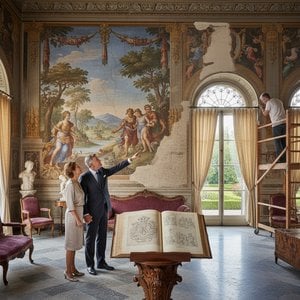
Moștenirea Frescei: Pictând Istoria Familiei pe Pereți
Transformă istoria familiei tale într-o frescă unică! Artiști profesioniști, tehnici moderne și consultanță gratuită. Creează o moștenire vizuală de neuitat cu .

The Enduring Legacy of Fresco: Technique, History & Artistic Expression
Explore the rich history & enduring artistry of fresco painting. Discover techniques from Giotto to Michelangelo, conservation efforts, & modern applications. Learn how ArtsDot brings this timeless art form to your home.

Fra Angelico: Cele Mai Frumoase Capodopere – Artă Sacră pentru Decorul Casei Tale
Descoperă cele mai frumoase 25 de picturi Fra Angelico, capodopere ale artei renascentiste. Fresce religioase pline de culoare și emoție, perfecte pentru decorul casei tale. Reproduceri de artă de calitate muzeală pe ArtsDot.com! Explorează colecția online.