

 Previzualizare
 Trimite prin felicitare
 Distribuie
 Detalii despre lucrare
 Ghid
Ghid

 Descarcă imaginea
 Produse similare
 Radiografie
 Galerie foto
 Întrebări și răspunsuri
 Statistici
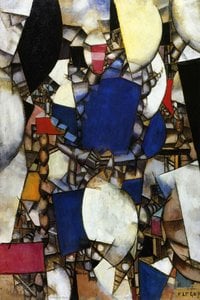
Trouville

- 73.0 x 92.0 cm


 Vezi mai mult
Obțineți un fișier gata de imprimare care depășește cu mult calitatea previzualizării web. Fiecare imagine digitală pe care o vindem provine dintr-un master de înaltă rezoluție din baza noastră de date — având, de regulă, o lățime între 5.000 și 15.000 de pixeli — astfel încât să puteți printa în format mare, să decupați strâns sau să reproduceți detalii fine cu încredere.
Niciun fișier nu părăsește studioul nostru fără să fie tratat. Un expert digital verifică nuanțele de culoare în raport cu pictura originală și le corectează acolo unde este necesar, apoi îmbunătățește claritatea și detaliile folosind instrumente profesionale de retușare — rămânând întotdeauna fidel gestului pictural și stilului artistului. Rezultatul este o imagine care seamănă cu tabloul propriu-zis, nu cu o scanare filtrată.
Aprobați înainte de finalizare: expertul nostru vă va trimite imaginea prin e-mail în termen de 72 de ore pentru revizuire. Nu sunteți mulțumit? Solicitați îmbunătățiri sau corecturi, ori cereți o restituire a plății dacă calitatea nu este pe măsura așteptărilor.
Aceasta este calitatea pe care se bazează editorii, studiourile de design, galeriile și tipăriturile.
Imagine Digitală
Descărcați un fișier la rezoluție înaltă pentru afișare personală, imprimare și proiecte creative. ( Comută pe versiunea Print Comandă pictură realizată manual)
Inclus în fiecare comandă de imagini digitale
Livrare digitală de expertiză, garantată
Când alegeți ArtsDot.com, nu primiți doar o simplă imagine – primiți o operă de artă digitală îmbunătățită profesional, creată cu precizie și susținută de o garanție de satisfacție. Iată tot ceea ce primești odată cu comanda ta, în mod automat:

Livrare rapidă prin e-mail
Fișierul imaginii digitale la rezoluție înaltă vă va fi trimis prin e-mail în termen de 72 de ore de la finalizarea comenzii – gata pentru utilizare imediată.

Fișier digital optimizat prin IA
Opera ta de artă este optimizată profesional prin intermediul unor instrumente AI avansate și al editării manuale, asigurând un nivel maxim de detalii, claritate și acuratețe a culorilor.

Retransmitere gratuită pe viață
Ai șters sau ai pierdut din greșeală fișierul? Nu îți face griji – ți-l vom retrimite oricând, gratuit.

Fără taxe de import – Întotdeauna
Bucură-te instant de noua ta operă de artă, fără taxe vamale, taxe de import sau costuri de livrare – descărcările digitale sunt întotdeauna fără taxe.

Garanția acurateții culorilor
Asigurăm o reflectare cât mai fidelă a culorilor originale în imaginea ta digitală, prin utilizarea unor instrumente profesionale și a proceselor de gestionare a culorii.

Garanție de satisfacție de 100 de zile
Dacă nu sunteți mulțumit de imaginea digitală achiziționată, o vom revizui sau vă vom returna 100% în termen de 100 de zile – fără nicio întrebare.

Garanție de returnare 100% a banilor
Nu ești mulțumit? Primești rambursarea integrală în termen de 100 de zile de la primirea fișierului digital – fără nicio întrebare.

Reduceri pentru comenzi în volum
Cumpără 3 imagini, economisește 10% - Cumpără 5, economisește 15% - Cumpără 10+, economisește 20%. Ideal pentru proiecte creative, galerii și agenții.
Fernand Léger’s ‘Trouville’: A Cubist Snapshot of Modern Life
Trouville, painted in 1921 by the influential French artist Fernand Léger, is more than just a depiction of three women enjoying a meal; it's a meticulously crafted embodiment of the burgeoning cubist movement and a profound reflection on the changing rhythms of modern life. Measuring 73 x 92 cm, this artwork offers an intimate glimpse into a domestic scene, rendered with Léger’s signature bold geometric forms and vibrant palette. The painting captures a moment of quiet conviviality – one woman holding a plate laden with food, two others engaged in animated conversation – within a room that feels both familiar and subtly fractured by the artist's deliberate stylistic choices.
Cubism and the Machine Age
Léger’s artistic trajectory was inextricably linked to the rise of industrialization and the impact of the machine age. Rejecting the prevailing trend towards pure abstraction, he sought a way to represent the world as it appeared to him – fragmented, dynamic, and infused with the influence of mechanical forms. His exploration began with an interest in architecture, but quickly evolved into a passionate engagement with the visual language of industry. *Trouville* exemplifies this approach; the figures are not rendered with traditional realism but rather broken down into geometric shapes, echoing the angularity of machinery and suggesting movement and energy. The bowls on the table, the clock hanging on the wall – all become stylized elements within Léger’s carefully constructed composition.
Technique and Materiality
Executed in oil paint, *Trouville* showcases Léger's distinctive technique characterized by thick impasto—a building up of paint that creates a tactile surface. This heavy application of color contributes significantly to the painting’s visual impact, emphasizing the forms and adding a sense of solidity and presence. The palette is dominated by earthy tones – ochres, browns, and grays – punctuated by bursts of vibrant blues and reds, reflecting Léger's fascination with both industrial hues and the natural world. The artist’s deliberate brushstrokes are visible, further emphasizing the materiality of the paint itself, a key element in his approach to representing reality.
Symbolism and Emotional Resonance
Beyond its formal qualities, *Trouville* carries subtle symbolic weight. The scene suggests a moment of respite from the increasingly frenetic pace of modern life – a gathering of friends or family sharing a simple meal. The clock, a recurring motif in Léger’s work, serves as a reminder of time's relentless march and perhaps hints at the anxieties associated with this new era. Despite its fragmented representation, the painting evokes a sense of warmth, intimacy, and human connection – qualities that Léger sought to preserve amidst the perceived dehumanizing effects of industrialization. The composition invites contemplation on the relationship between humanity and technology, a theme central to Léger’s artistic vision.
A Legacy in Reproduction
ArtsDot offers meticulously crafted hand-painted reproductions of *Trouville*, allowing you to bring this iconic work of modern art into your home or office. Each reproduction is created using the same techniques and materials as the original, ensuring an authentic representation of Léger’s artistic vision. Whether you are a seasoned collector, an interior designer seeking to add a touch of Cubist flair, or simply an admirer of Fernand Léger's groundbreaking work, our hand-painted reproductions provide a unique opportunity to experience the power and beauty of *Trouville* firsthand.
Întrebări și răspunsuri
Care sunt tehnica și dimensiunile lucrării "Trouville" de Fernand Léger?
"Trouville" a fost realizat în Acrylic On Canvas și măsoară 73 x 92 cm în forma sa originală.
Ce culoare domină compoziția lucrării "Trouville" de Fernand Léger?
Culoarea dominantă a operei "Trouville" de Fernand Léger este Espresso (#5b555a).
Culorile din "Trouville" par intense sau delicate?
Culorile din "Trouville" de Fernand Léger au o intensitate Monochromatic.
Opere similare




Biografie artist
A Life Forged in Form: The World of Fernand Léger
Fernand Léger, born Joseph Fernand Henri Léger in 1881 amidst the rural landscapes of Argentan, Normandy, stands as a pivotal figure in the evolution of modern art. His journey from the farmlands of his youth to the forefront of Parisian avant-garde circles is a testament to an unwavering artistic vision and a relentless pursuit of capturing the spirit of the machine age. Unlike many of his contemporaries who embraced abstraction as a retreat from representation, Léger sought to *integrate* modernity – its dynamism, its mechanical forms, its very essence – into a new visual language that was both powerfully abstract and deeply rooted in the observable world. His early life, steeped in the physicality of agricultural labor, provided a grounding contrast to the industrialized future he would so passionately depict. Initially destined for architecture, Léger’s path shifted towards painting after arriving in Paris around 1900, supporting himself through drafting work while honing his artistic skills. This period was marked by traditional academic training, but it wasn't until encountering the groundbreaking work of Paul Cézanne that a true transformation began to unfold.The Birth of ‘Tubism’ and the Section d’Or
Cézanne’s retrospective in 1907 acted as a catalyst, liberating Léger from conventional representation and propelling him towards a more geometric and structural approach. He began dismantling forms, analyzing their underlying structures, and rebuilding them on canvas with a newfound emphasis on solidity and volume. This exploration quickly led him into the orbit of Cubism, but Léger wasn’t content to simply replicate the styles of Picasso or Braque. Instead, he developed his own distinct idiom – a personal form of Cubism that critics playfully dubbed “Tubism.” Characterized by cylindrical forms, flattened planes, and bold color contrasts, Tubism celebrated the machine aesthetic long before it became a widespread artistic preoccupation. It was an art born from observing the burgeoning industrial world, recognizing beauty in its functional shapes and mechanical rhythms. Léger’s approach differed significantly; he retained a sense of volume and depth, unlike some Cubists who completely flattened their canvases. This allowed him to depict figures with a recognizable solidity, even as they were broken down into geometric components. The movement was closely associated with the *Section d’Or* (The Golden Section), a group of artists – including Metzinger, Le Fauconnier, and Duchamp – who explored mathematical principles of harmony and proportion in their work. They sought to infuse their art with a sense of order and rationality, believing that beauty could be found in the application of geometric ratios. Léger’s participation in the Section d’Or provided him with a theoretical framework for his artistic explorations and fostered a collaborative environment where new ideas were constantly exchanged.War, Mechanization, and a New Aesthetic
The outbreak of World War I profoundly impacted Léger’s life and work. Serving at the front from 1914 to 1916 exposed him to the brutal realities of modern warfare – artillery barrages, aerial combat, and the dehumanizing effects of mechanized conflict. This experience didn't lead to disillusionment or a rejection of modernity; rather, it solidified his fascination with machines and their power. Sketches made during his service documented the stark beauty of military technology, transforming instruments of destruction into subjects of artistic contemplation. The repetitive patterns of trenches, the gleaming metal of tanks and airplanes – all became sources of inspiration for Léger’s evolving aesthetic. Upon returning to civilian life, Léger’s paintings began to reflect a more streamlined, mechanistic sensibility, celebrating the dynamism and efficiency of the industrial world. *Soldier with a Pipe* (1916) exemplifies this shift, showcasing simplified forms and bold colors that evoke the feeling of mechanical precision. The figure is rendered in stark geometric shapes, almost resembling a machine itself, reflecting Léger’s fascination with the intersection of humanity and technology. This wasn't merely an aesthetic choice; it was a philosophical statement – an affirmation of modernity’s potential for progress and renewal, even in the face of devastating loss.The Development of Tubism and Beyond
Following the war, Léger continued to refine his distinctive style, solidifying what became known as “Tubism.” He moved away from the fragmented forms of early Cubism, developing a more unified visual language characterized by cylindrical shapes, bold colors, and simplified figures. His paintings often depicted industrial objects – cars, trains, factories – alongside human subjects, blurring the boundaries between the natural and the artificial. He experimented with techniques such as *peinture industrielle*, using industrial pigments and applying paint in layers to create a textured surface that resembled machine parts. This period saw the creation of iconic works like *Manufacturers* (1923), a vibrant depiction of a factory scene filled with geometric forms and bold colors, capturing the energy and rhythm of modern industry. However, Léger’s artistic vision wasn't static; he continued to evolve his style throughout his career, incorporating elements of Surrealism and exploring new mediums such as sculpture and film.Legacy and Lasting Influence
In his post-war years, Léger continued to explore the intersection of art and industry, creating works that celebrated modern life with a unique blend of abstraction and figuration. His *Paysages animés* (Animated Landscapes) series from 1921 showcased figures and animals seamlessly integrated into streamlined compositions, blurring the boundaries between organic and inorganic forms. He also experimented with sculpture and filmmaking, expanding his artistic practice beyond the confines of traditional painting. Léger’s influence on subsequent generations of artists is undeniable. His bold simplification of form, his embrace of industrial imagery, and his celebration of popular culture anticipated the emergence of Pop Art decades later. Artists like Roy Lichtenstein and Andy Warhol owe a clear debt to Léger's pioneering work. He bridged the gap between abstract art and figurative representation, demonstrating that it was possible to create works that were both intellectually rigorous and visually engaging. Today, Fernand Léger’s paintings are held in major museums worldwide, including the Musée d'Art et d'Histoire in France and the Musée National Fernand Léger, dedicated solely to his work. He remains a towering figure of 20th-century art – a visionary who dared to find beauty in the machine age and to translate its energy onto canvas with unparalleled boldness and originality. His legacy is not merely as a painter, but as a prophet of modernity. A true pioneer whose work continues to resonate with audiences today.
Fernand Léger
1881 - 1955 , Franța
Detalii rapide
- Artistic Movement Or Style: Cubism, Tubism
- Artists Or Movements Influenced By This Artist: ['Pop Art']
- Artists Who Influenced This Artist: ['Paul Cézanne']
- Date Of Birth: 4 Feb 1881
- Date Of Death: 17 Aug 1955
- Full Name: Fernand Léger
- Nationality: Francez
- Notable Artworks:
- Les Nus dans la forêt
- Machine Element
- The Great Parade
- Place Of Birth: Argentan, Franța