


 Previzualizare
 Trimite
 Distribuie
 Detalii despre lucrare

 Descarcă
 Produse similare
 Radiografie
 Diapozitive automate
 Statistici
Recovering
 Acrylic On Canvas
- WallArt
- École de Paris
 1744
1744 44.0 x 33.0 cm
 Muzeul Hermitaj
 Vezi mai mult
Giclée / Imprimare artistică
Printuri giclée sau pe canvas de calitate muzeală, cu proces de producție rapid și opțiuni flexibile de finisare. ( Comandă pictură lucrată manual Comută pe Imagine Digitală)




P118B $10

P118H $10

P118W $10

P438Z $10

P508JH $12

P508YH $12

P805H $10

P805Z $10

P919BZ $10

P919G $10

P919XJ $10

P959ZH $10

P968JZ $12

W106C $8

W218G $10

W218JH $8

W218Y $10

W307PJ $10

W316G $10

W316PJ $8

W316Y $10

W398PJ $8

W4111J $10

W500HY $15

W500JH $15

W692G $12

W849H $8

W940BG $15

W953PJ $8




Alegeți dintre dimensiunile noastre prestabilite, care respectă proporțiile originale ale operei de artă.

Puteți introduce propriile dimensiuni pentru a se potrivi unui anumit cadru sau spațiu. Dacă dimensiunea selectată nu corespunde proporțiilor imaginii originale, vom decupa lucrarea de artă sau vom extinde imaginea cu margini oglindite sau cu o culoare uniformă. Un mockup digital va fi trimis pentru aprobarea dumneavoastră înainte de începerea producției.
Vă rugăm să rețineți că previzualizarea de pe ecran nu reflectă decuparea sau extinderea reală. Doar mockup-ul va arăta cu exactitate compoziția finală.
Deși dimensiunile personalizate sunt disponibile, vă recomandăm să selectați o dimensiune din lista predefinită pentru a păstra proporțiile originale.
Livrare în întreaga lume () în 2 săptămâni, în loc de cele 4/5 săptămâni standard. (10 Septembrie)

Livrare expres gratuită la nivel mondial

Pânză de in de înaltă calitate

Asigurare completă pentru transport

Garanție de rambursare a taxelor vamale

Garanția fidelității culorilor

Politica de retur de 100 de zile (doar pentru defecte)

Garanție de rambursare 100%

Ofertă pentru comenzi multiple
 Opțiunea cu sticlă este disponibilă doar pentru dimensiuni de sub 110 cm

Recovering
Giclée / Imprimare artistică
Dimensiune reproducere
-


Preț total calculat
$ 62
Recovering: A Portrait of Resilience by Étienne Jeaurat
Étienne Jeaurat’s “Recovering,” painted in 1744, isn't merely a depiction of two women engaged in conversation; it’s a poignant study of connection and the quiet strength found within shared intimacy. This intimate portrait, housed within the Hermitage Museum collection, offers a rare glimpse into the burgeoning world of Parisian genre painting during a period of significant social and artistic transition – a world that Jeaurat masterfully captured with an almost Impressionistic sensitivity decades before the movement formally emerged.
The scene unfolds within a modestly furnished room, bathed in soft light that suggests either early morning or late afternoon. A simple table and chair anchor the composition, while a vase of flowers – likely lilies, judging by their delicate form – adds a touch of understated elegance to the space. The central focus is undeniably on the two women: one seated gracefully, her gaze directed towards her companion; the other standing beside her, holding what appears to be a cup or teapot, an offering of warmth and perhaps solace. Their postures are relaxed yet attentive, conveying a sense of comfortable familiarity – a silent dialogue that transcends mere words.
Jeaurat’s technique is characterized by a remarkable ability to render texture and light with subtle brushstrokes. He employs a loose, almost sketch-like approach, prioritizing the capturing of atmosphere and mood over precise detail. Notice how he uses broken color – small, distinct strokes of paint layered upon one another – to create a sense of depth and luminosity. The fabrics of their clothing are rendered with a delicate sheen, while the shadows beneath them hint at the softness of the light. This technique, reminiscent of Chardin’s work, contributes significantly to the painting's intimate and inviting quality.
A Window into 18th-Century Parisian Life
“Recovering” is firmly rooted in the vibrant social landscape of 18th-century Paris. Jeaurat was a keen observer of everyday life, documenting scenes of commerce, leisure, and domesticity with an unparalleled eye for detail. His paintings offer invaluable insights into the customs, manners, and values of the time. The presence of the teapot suggests a scene of hospitality and social interaction – a common occurrence in Parisian households. The room itself is not opulent, reflecting the realities of middle-class life rather than the extravagant displays favored by the aristocracy.
Furthermore, Jeaurat’s work aligns with the broader artistic currents of his era. He was influenced by the Rococo style, characterized by its emphasis on elegance, grace, and playful subject matter. However, unlike many of his contemporaries, Jeaurat possessed a remarkable ability to infuse his paintings with a sense of realism and psychological depth. This is particularly evident in the subtle expressions on the women’s faces – hints of amusement, contemplation, and perhaps even vulnerability.
Symbolism and Emotional Resonance
While seemingly straightforward, “Recovering” is rich in symbolic meaning. The act of offering a cup of tea can be interpreted as an expression of generosity, friendship, or reconciliation. The seated woman’s gaze suggests a receptive attitude – a willingness to listen and understand. The painting speaks volumes about the importance of human connection and the restorative power of shared moments.
More profoundly, considering the context of Jeaurat's life and the period in which he painted, “Recovering” can be viewed as an allegory for resilience and emotional recovery. The title itself – "Recovering" – immediately evokes a sense of healing and renewal. The painting’s quiet intimacy and understated beauty offer a comforting reminder that even after periods of hardship or loss, connection and solace can still be found in the simple pleasures of human interaction.
A Timeless Masterpiece for Your Collection
Reproductions of “Recovering” by Étienne Jeaurat capture the essence of this remarkable painting while offering a beautiful addition to any interior space. The delicate brushwork, evocative lighting, and subtle symbolism create a work that is both visually stunning and emotionally resonant. Whether you are an art collector, an interior designer seeking to infuse your home with character, or simply someone who appreciates the beauty of timeless artistry, “Recovering” offers a unique opportunity to own a piece of 18th-century Parisian life – a testament to the enduring power of human connection.
Opere similare


Biografie artist
The Parisian Impressionist Before Impressionism
In the grand tapestry of eighteenth-century French art, certain names shine with a permanent, gilded luster, while others exist in the soft, flickering shadows of history. Étienne Jeaurat belongs to that evocative second group—a painter whose work possesses a rhythmic vitality that seems to pulse with the very heartbeat of pre-revolutionary Paris. Often described as a precursor to the Impressionist movement, Jeaurat did not merely paint scenes; he captured the fleeting essence of urban life, transforming mundane street encounters into enduring vignettes of human connection and atmospheric light.
Born in 1699 in Vercheny, near Auxerre, Jeaurat’s early years were shadowed by the profound loss of his father. This early tragedy, however, did not stifle his creative spirit; instead, it led him toward a destiny shaped by familial devotion and mentorship. His brother, Edme Jeaurat, an accomplished engraver, played a pivotal role in his ascent, guiding him toward the tutelage of Nicolas Vleughels. This connection proved transformative, as Vleughels—a close associate of the legendary Antoine Watteau—introduced the young artist to the sophisticated nuances of the Roman Baroque and the delicate, theatrical grace of the Rococo style.
A Journey Through Light and Shadow
The trajectory of Jeaurat’s artistic development was irrevocably altered by his time in Rome. Immersed in the cradle of classical antiquity, he absorbed the monumental grandeur of Bernini’s sculptures and the dramatic, chiaroscroll intensity of Caravaggio. Yet, Jeaurat was never a mere imitator of the past. His true genius emerged from a sophisticated synthesis of disparate worlds: he possessed the ability to marry the formal rigor of the Baroque with the quiet, understated realism found in the works of Chardin. This unique stylistic alchemy allowed him to move between the epic and the intimate, applying masterful brushwork to convey both the weight of history and the lightness of a passing breeze.
Upon his return to Paris, Jeaurat’s ascent within the prestigious Académie Royale was swift and significant. He became a member of the Academy in 1733 and eventually rose to the esteemed positions of professor and chancellor. His professional life was deeply intertwined with the French monarchy; from 1767, he served as the guardian of the king's collection of paintings at Versailles. This proximity to the pinnacle of royal patronage undoubtedly refined his eye for detail and his understanding of how art functions as both a personal expression and a monumental cultural record.
The Legacy of the Street Scene
While his official duties were centered around the halls of power, Jeaurat’s heart remained in the streets. He became celebrated for his genre paintings—lively, bustling depictions of Parisian life that breathed with an unprecedented sense of movement. Unlike the stiff, idealized portraits of the era, Jeaurat’s compositions often felt spontaneous, as if the viewer had stumbled upon a private moment in a crowded marketplace or a quiet corner of a city square. His work is characterized by:
- Atmospheric Precision: A remarkable ability to use tonal gradations to suggest the humidity of a summer afternoon or the cool dampness of a morning mist.
- Human Connection: An empathetic gaze that captured the subtle gestures, expressions, and social interplays of common citizens.
- Narrative Depth: The use of small, seemingly incidental details to hint at larger stories unfolding within his crowded street scenes.
As the eighteenth century drew to a close, Jeaurat remained a steadfast observer of a world on the brink of monumental change. He passed away in 1789, the same year the French Revolution began to reshape the landscape of Europe forever. Though he lived through the twilight of the Ancien Régime, his artistic legacy remains bright. By finding extraordinary beauty in the ordinary and capturing the ephemeral spirit of the streets, Étienne Jeaurat bridged the gap between the classical traditions of his ancestors and the modern, light-drenched sensibilities of the generations to come.

Étienne Jeaurat
1699 - 1789 , France
Detalii rapide
- Artistic Movement Or Style: Rococo
- Artists Or Movements Influenced By This Artist: Chardin
- Artists Who Influenced This Artist: Nicolas Vleughels
- Date Of Birth: February 9, 1699
- Date Of Death: December 14, 1789
- Full Name: Étienne Jeaurat
- Nationality: French
- Notable Artworks:
- Girls of Pleasure at Salpétrière
- The Favourite Sultana
- Place Of Birth: Vercheny, France
Articole similare

Roger de la Fresnaye: Cubism, Tradition & the Search for Order in Early 20th-Century French Painting
Explore the captivating world of Roger de la Fresnaye, a pivotal French Cubist painter. Discover his unique blend of tradition & modernity, influences, and lasting legacy with ArtsDot.
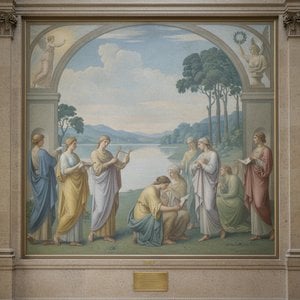
Pierre Puvis de Chavannes: Symbolism, Mural Painting, and the Pursuit of Ideal Beauty
Explore the life & work of Pierre Puvis de Chavannes, a pivotal Symbolist painter renowned for his monumental murals. Discover his aesthetic principles, key artworks like 'Hope,' and lasting influence on modern art. A deep dive into 19th-century French painting.

Cu privire la noi
Descoperă povestea noastră! Aduceți arta de talie mondială în viața dumneavoastră prin selecție expertă, creații personalizate și previzualizări gratuite. Aprobate de persoane fizice și companii din 2000.

Maurice Quentin de La Tour: Light, Shadow & the Rococo Portrait
Explore the captivating world of Maurice Quentin de La Tour, a master of Rococo portraiture. Discover his innovative pastel techniques, intimate depictions of French aristocracy, and lasting artistic legacy. Learn more at ArtsDot.

Goya: Cele Mai Iconice Capodopere – Artă Spaniolă pentru Decor Rafinat | ArtsDot.ro
Descoperă cele mai frumoase 25 de picturi ale lui Francisco Goya! Explorează capodoperele romantice, portretele impresionante și gravurile puternice. Reproduceri artă spaniolă de calitate muzeală pentru un decor rafinat. Explorează colecția completă online pe ArtsDot.com