

 Previzualizare
 Trimite prin felicitare
 Distribuie
 Detalii despre lucrare
 Ghid
Ghid

 Descarcă imaginea
 Produse similare
 Radiografie
 Galerie foto
 Întrebări și răspunsuri
 Statistici
untitled (9391)

 Vezi mai mult
Giclée / Imprimare artistică
Printuri giclée sau pe canvas de calitate muzeală, cu proces de producție rapid și opțiuni flexibile de finisare. ( Comandă pictură realizată manual Comută pe Imagine Digitală)




P118B lei10

P118H lei10

P118W lei10

P438Z lei10

P508JH lei12

P508YH lei12

P805H lei10

P805Z lei10

P919BZ lei10

P919G lei10

P919XJ lei10

P959ZH lei10

P968JZ lei12

W106C lei8

W218G lei10

W218JH lei8

W218Y lei10

W307PJ lei10

W316G lei10

W316PJ lei8

W316Y lei10

W398PJ lei8

W4111J lei10

W500HY lei15

W500JH lei15

W692G lei12

W849H lei8

W940BG lei15

W953PJ lei8




Alegeți dintre dimensiunile noastre prestabilite, care respectă proporțiile originale ale operei de artă.

Introduceți lățimea și înălțimea necesare pentru a se potrivi ramei sau peretelui dumneavoastră. O printare poate fi doar tăiată, niciodată extinsă dincolo de dimensiunea imaginii originale, astfel încât o dimensiune cu o formă diferită va pierde o parte din imagine. Vă trimitem o simulare digitală pentru aprobare înainte de a imprima orice. Imaginea afișată pe această pagină nu prezintă tăierea reală — doar simularea arată acest lucru.
Livrare în întreaga lume () în 2 săptămâni, în loc de cele 4/5 săptămâni standard. (15 Noiembrie)

Livrare expres gratuită la nivel mondial

Pânză de in de înaltă calitate

Asigurare completă pentru transport

Garanție de rambursare a taxelor vamale

Garanția fidelității culorilor

Politica de retur în 100 de zile (doar pentru defecte de fabricație)

Garanție de rambursare 100%

Ofertă pentru comenzi multiple
 Opțiunea cu sticlă este disponibilă doar pentru dimensiuni de sub 110 cm

untitled (9391)
Giclée / Imprimare artistică
Dimensiune reproducere
-


Preț total calculat
lei 299
A Portrait of Existential Tension: Unpacking Egon Schiele's "Untitled (9391)"
Egon Schiele’s “Untitled (9391),” a black-and-white photograph capturing an earlier painting, is not merely a depiction of a reclining woman; it’s a visceral exploration of mortality, vulnerability, and the unsettling beauty of the human form. Created during a tumultuous period in Schiele's life – just before his untimely death in 1918 – this work embodies the artist’s signature style: bold lines that seem to vibrate with nervous energy, a profound sense of psychological depth, and an unflinching gaze at the darker aspects of existence. The photograph itself, rendered in stark monochrome, amplifies the painting's inherent drama, stripping away any superficial distractions and forcing the viewer to confront the raw emotion embedded within the image.
The subject, a woman lying on her back with one leg raised, is presented in a state of near-nakedness. However, Schiele deliberately avoids explicit eroticism. Instead, he focuses on the subtle gestures – the curve of her spine, the delicate positioning of her hand – to convey a sense of profound vulnerability and quiet contemplation. The stockings she wears, a detail often overlooked, add another layer of complexity, hinting at societal constraints and the precariousness of female identity within Schiele’s world. The composition is dominated by the figure's left side, drawing the eye into her gaze – an intense, almost challenging stare that suggests both defiance and a deep-seated sadness.
Expressionism in Motion: Line, Form, and Emotional Resonance
Schiele’s artistic approach firmly resides within the realm of Expressionism. His use of line is particularly striking; each contour is deliberately exaggerated, creating a sense of dynamism and movement. The lines aren't meant to simply outline form but rather to convey feeling – anxiety, longing, perhaps even a touch of despair. The painting’s flatness, achieved through simplified forms and the absence of traditional shading, further contributes to its emotionally charged atmosphere. This deliberate flattening pushes the subject forward, placing her directly before the viewer, demanding an intimate engagement with her inner world.
The black-and-white photography employed here serves as a crucial element in preserving Schiele’s original vision. The lack of color allows the inherent structure and emotional weight of the painting to take center stage. It's reminiscent of early 20th-century photographic techniques, lending the image a timeless quality while simultaneously highlighting the artist’s innovative approach to form and composition. The photograph itself feels like a carefully considered study – an attempt to capture not just a likeness but also the very essence of Schiele’s artistic intent.
A Legacy of Anxiety and Beauty: Contextualizing the Work
To fully appreciate “Untitled (9391),” it's essential to understand the context in which it was created. Egon Schiele’s life was marked by profound personal hardship, including the early deaths of his father and sister, and a constant struggle with illness and mental instability. These experiences profoundly shaped his artistic vision, leading him to explore themes of mortality, loss, and the fragility of human existence. His work is often characterized by a sense of unease – a feeling that something is always just beneath the surface.
Schiele’s exploration of the female form, particularly in works like this one, was controversial during his lifetime. He frequently depicted women with a frankness and intensity that challenged conventional artistic norms. However, it's important to recognize that Schiele wasn't simply interested in portraying physical beauty; he sought to capture the psychological complexities of womanhood – their strength, vulnerability, and inherent contradictions. The painting’s enduring power lies in its ability to evoke a profound sense of empathy and understanding for this enigmatic figure.
ArtsDot offers meticulously crafted hand-painted reproductions of “Untitled (9391),” allowing art lovers to experience the raw emotion and artistic brilliance of Egon Schiele's masterpiece within their own homes. Each reproduction is created by skilled artists using traditional techniques, ensuring a faithful representation of the original while retaining its unique character and impact.
Întrebări și răspunsuri
Ce reprezintă "untitled (9391)" și ce atmosferă transmite?
"untitled (9391)" de Egon Schiele îmbină woman, nakedness, line, mortality, anxiety, figure, expressionism cu o atmosferă Dramatic.
Care este nuanța dominantă în "untitled (9391)"?
"untitled (9391)" tinde spre o nuanță de Ochre to Sepia.
Ce dimensiune de reproducere se recomandă pentru "untitled (9391)" de Egon Schiele?
Pentru "untitled (9391)", se recomandă o dimensiune de imprimare de Medium. Sunt disponibile și alte dimensiuni, păstrând aceleași proporții.
Opere similare


Biografie artist
Viața lui Egon Schiele
Tulln, din Austria Inferioară, oferă cadrul pentru începutul vieții lui Egon Schiele. Născut pe 12 iunie 1890, acesta intră într-o lume definită de structurile rigide ale Imperiului Austro-Ungar. Tatăl său, Adolf Schiele, gestionează gara locală în calitate de șef de stație pentru Căile Ferate Austriece Federale. Mama sa, Marie, este cunoscută sub numele de familie, Soukup. În cadrul familiei, Egon crește alături de cele trei surorile sale: Elvira, Melanie și Gertrude.
Stabilitatea acestei vieți domestice se fracturează prematur. Umbra bolii străbate căminul, lăsând o marcă permanentă asupra psihicului tânărului artist. Aceste perturbări personale nu trec pur și simplu; ele se infiltrează în însăși măduva viitoarei sale opere. El traversează lumea cu o sensibilitate față de mortalitate care îi va defini, în cele din urmă, locul în Expresionismul Austriac. Existența sa devine o luptă pentru a traduce tensiunea internă pe suprafața pânzei.
Calea sa îl conduce spre centrul unui peisaj european în continuă transformare. El navighează prin tensiunea dintre așteptările academice tradiționale și nevoia emergentă de adevăr psihologic brut. Viața lui Egon Schiele este o serie de confruntări intense, adesea inconfortabile, cu condiția umană. El nu caută să depingă lumea așa cum apare aceasta pentru ochi, ci așa cum vibrează în interiorul sistemului nervos.
Tinerețea, familia și formarea artistică
Stabilitatea tinereții lui Schiele se fragmentează în anul 1904, când tatăl său, Adolf Schiele, un maestru de gară, cedează în fața sifilisului. Această boală, contractată în timpul unei luni de plin în Trieste, lasă familia în sărăcie și marchează psihicul tânărului artist cu umbra confuziei mentale și a furiei tatălui său. Egon crește alături de cele trei surorale ale sale, Elvira, Melanie și Gertrude, sub tutela unchiului său prin alianță, Leopold Czihaczek. Chiar și în acești ani tulburători, fascinația pentru trenuri persistă, un motiv care va apărea ulterior în opera sa.
Formarea sa formală începe sub îndrumarea tutorelui Ludwig Karl Strauch. Până în 1906, Schiele se mută la Viena pentru a studia la Academia de Arte Fine (Akademie der bildenden Künste). Atmosfera este rigidă, iar el se trezește tot mai mult în conflict cu predarea ultra-conservatoare a profesorului Christian Griepenkerl. Fricțiunea devine insuportabilă, iar după trei ani de navigare prin aceste stricte tradiții academice, Egon Schiele abandonează Academia pentru a-și croi propriul drum independent.
O schimbare profundă are loc atunci când acesta îl întâlnește pe Gustav Klimt. Artistul consacrat devine un mentor, oferindu-i tânărului pictor modele și introducându-l în cercul Secesiunii de la Viena. Această conexiune marchează tranziția de la un student care se lupta împotriva tradiției, la o figură centrală în avangarda înfloritoare.
Dezvoltarea artistică în Viena
Viena devine centrul fricțiunii creative a lui Egon Schiele. El navighează prin cercurile artistice ale orașului, ajungând în cele din urmă să îl întâlnească pe Gustav Klimt. Această întâlnire marchează o schimbare semnificativă în traiectoria sa artistică. Deși absoarbe influența mentorului său, Egon Schiele nu se limitează la a replica modelele decorative ale Secesiunii. Dimpotrivă, el începe să elimine ornamentul, căutând o adevăr mai visceral. Până în 1909, acesta sfidează activ ordinea stabilită, fiind cofondator al grupului Neues Wiener Kunstgruppe și al Neukunstgruppe. Aceste mișcări semnalează ruptura sa definitivă față de tradiție.
Prezența sa în oraș este marcată de o mișcare neliniștită între centrele urbane și periferiile mai liniștite. El își desfășoară creația prin Viena, Krems, Klosterneuburg, Neulengbach și Praga. Această dispersie geografică oglindește o expansiune psihologică. Arta sa evoluează de la constrângerile formale ale primelor sale studii către o explorare brută, lipsită de protecție, a condiției umane. Tensiunea epocii este palpabilă în schițele și compozițiile sale în continuă transformare.
- Portretul lui Leopold Czihaczek, 1907
- Portretul criticului de artă, Arthur Roessler, 1910
- Compoziție cu trei nude masculine, 1910
Tehnică și Stilul Expresionist
Linia reprezintă motorul principal al viziunii lui Egon Schiele. Aceasta nu se limitează la simpla conturarea unei forme; ea vibrează de o energie nervoasă, neliniștită. Artistul folosește linii expresive pentru a cartografia tensiunea psihologică, rezultând adesea în posturi contorsionate și forme corporale distorsionate. Figurile par alungite, cu membre întinse dincolo de proporțiile naturale, pentru a transmite un sentiment profund de neliniște. Aceasta nu este o căutare a perfecțiunii anatomice, ci o încercare de a expune starea internă a subiectului. Tonurile pielii par adesea emaciate sau de o culoare bolnăvicioasă, subliniind un sentiment de fragilitate și vulnerabilitate fizică.
Abordarea sa tehnică variază în funcție de mediul utilizat, însă intensitatea rămâne constantă. În picturile sale pe acuarelă, el apelează la lavări libere de culoare pentru a crea profunzime și atmosferă, lăsând adesea mare parte din hârtie nesfârșită pentru a accentua senzația de izolare. Când lucrează în ulei pe pânză, brushwork-ul păstrează aceeași urgență sacadată întâlnită în desenurile sale. Dincolo de planul bidimensional, el a explorat forma și prin sculptură, lucrând în argilă și gips pentru a surprinde greutatea prezenței umane.
Lucrări Cheie și Tematică
Pânza devine un spațiu al excavației psihologice, unde Egon Schiele confruntă prezența apăsătoare a morții, a sexualității, a anxietății și a izolării printr-o lentilă de o sinceritate neclintită. În 1915, el realizează Moartea și Tânăra, o operă în care prezența mortalității se intersectează cu erosul. Figurile trăiesc într-o stare de tensiune, reflectând luptele interne care îi definesc viziunea. El revine adesea la forma umană pentru a cartografia aceste stări invizibile, utilizând corpul ca pe un vas pentru complexitățile existenței.
Autoportretul acționează ca o metodă recurentă de introspecție. El nu caută să prezinte o imagine perfectizată, ci una vulnerabilă, apărând adesea în stări contorsionate sau emaciate. În Autoportret cu Physalis, el utilizează planta Physalis ca pe un motiv recurent. Planta, cu învelișul său delicat și subțire ca hârtia, simbolizează trecerea și fragilitatea vieții. Acest element botanic îi ancorează preocuparea pentru decoadere și natura efemeră a condiției umane.
Relațiile sale intime găsesc, de asemenea, locul lor în compozițiile sale. În 1915, el pictă Portretul lui Edith Schiele, surprinzându-și soția într-un mod care reflectă limbajul său expresiv specific. Subiecții săi sunt rareori statici; ei pulsează cu o energie nervoasă care oglindește peisajele sociale și psihologice în continuă schimbare ale epocii. Următoarele lucrări reprezintă puncte semnificative în explorarea sa a acestor teme:
- Moartea și Tânăra (1915)
- Autoportret cu Physalis
- Portretul lui Edith Schiele (1915)
Anii de la sfârșit și moartea
Peisajul vieții lui Egon Schiele se transformă odată cu apropierea Primului Război Mondial. El se căsătorește cu Edith Harms, o uniune care marchează o tranziție personală semnificativă. Totuși, stabilitatea căsniciei este întreruptă rapid de cerințele conflictului. Este înrolat pentru serviciul militar, o perioadă care îl plasează în mijlocul haosului generat de război.
Sfârșitul survine cu o ferocitate biologică și bruscă. În 1918, pandemia de gripă spaniolă mătură Viena. Virusul îl ia pe Egon Schiele la vârsta de 28 de ani. El moare pe 31 octombrie 1918. Plecarea sa are loc la scurt timp după mortea soției sale, Edith, care a cedat în fața aceleiași boli. Viața artistului se încheie brusc, lăsând în urmă o operă care surprinde tensiunea unei lumi în colaps.
Moștenire și influență artistică
Egon Schiele emerge din primele decenii ale secolului XX ca o figură de talie, un pilon al expresionismului austriac. Plecarea sa de la aurul decorativ al mișcării Secesiunii, în favoarea unei explorări mai viscerale și psihologice a formei umane, a schimbat definitiv traiectoria picturii figurative. El a îndepărtat stratul superficial pentru a cartografia sistemul nervos, utilizând linii sacadate și neliniștite pentru a capta tremurul anxietății și al dorinței. Această concentrare asupra peisajului interior, în detrimentul frumuseții idealizate, l-a consacrat drept unul dintre cei mai importanți pictori figurativi ai erei sale.
Impactul operii sale se extinde mult dincolo de granițele Vienei. Generații ulterioare de artiști au găsit un precedent în sinceritatea sa radicală, în special cei atrași de straturile mai întunecate și mai complexe ale psihicului uman. Capacitatea sa de a traduce trauma personală și tensiunea existențială într-un limbaj vizual universal îi asigură prezența în discursul artei moderne. Astăzi, picturile sale sunt păstrate în colecțiile marilor muzee din întreaga lume, fiind considerate documente esențiale ale transformărilor psihologice ale timpului său.
- Self-Portrait with Physalis
- Couple Embracing
- Field Landscape (Kreuzberg near Krumau)
- Death and the Maiden
Unde pot fi admirate astăzi operele sale
Efortul creativ și intensitatea creației lui Egon Schiele se simt cel mai puternic în Viena, orașul care îi păstrează esența. Muzeul Leopold găzduiește o concentrare vastă a lucrărilor sale, păstrând intactă energia brută a schițelor și picturilor sale. Într-un alt punct de referință, Galeria Austriacă Belvedere adăpostește piese de o importanță istorică, printre care se numără și celebrul Death and the Maiden (1915). Peisajul instituțional al capitalei austriace continuă să protejeze moștenirea sa prin intermediul Muzeului de Istorie a Artei și al Albertina, ambele deținând piese esențiale din întregul său oeuvre.
Dincolo de capitala austriacă, Centrul de Artă Egon Schiele din Český Krumlov, în Republica Cehă, oferă un spațiu dedicat întregi sale creații. Acest muzeu urmărește evoluția sa prin intermediul unei colecții permanente care include atât picturi pe apă, cât și desene cu cerneală. Într-un astfel de cadru, vizitatorii pot experimenta intensitatea specifică a liniei sale, un element central în dezvoltarea stilului său expresionist.
- Death and the Maiden (1915)
- Self-Portrait with Physalis
- Couple Embracing
- The Family

Egon Schiele
1890 - 1918 , Austria
Detalii rapide
- Artistic Movement Or Style: Expresionism austriac
- Artists Or Movements Influenced By This Artist: ['Expresionism austriac']
- Artists Who Influenced This Artist: ['Gustav Klimt']
- Date Of Birth: 1890
- Date Of Death: 1918
- Full Name: Egon Schiele
- Nationality: Austriac
- Notable Artworks:
- Autoportret cu Physalis
- Cuplu îmbrățișat
- Peisaj de câmp (Kreuzberg lângă Krumau)
- Moartea și tânăra
- Place Of Birth: Viena, Croația
Articole similare

Expresionismul în Artă: 10 Capodopere Definitorii pentru Decorul Tău
Descoperă 10 capodopere expresioniste de la Munch, Van Gogh și Kandinsky! Explorează istoria artei moderne, emoțiile puternice și culorile vibrante. Reproduceri tablouri de calitate muzeală pentru un decor unic pe ArtsDot.com

Edvard Munch: Cele Mai Iconice 25 De Opere – Artă, Decorațiuni și Emoții Profunde | ArtsDot
Descoperă cele mai emblematice 25 de opere ale lui Edvard Munch! Explorează expresionismul, simbolismul și emoțiile profunde din tablouri precum 'Țipătul' și 'Madona'. Reproduceri artă de calitate muzeală & inspirație decor pe ArtsDot.com.
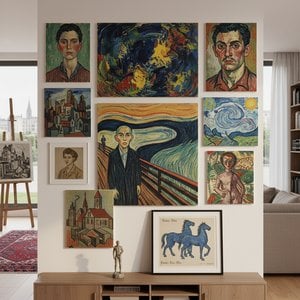
Expresionismul în Artă: Cele Mai Reprezentative 10 Capodopere | ArtsDot.ro
Descoperă cele mai importante 10 capodopere ale expresionismului! Explorează poveștile lui Munch, Van Gogh și Kandinsky. Reproduceri de artă de calitate muzeală pentru un decor interior unic. ArtsDot.ro

Egon Schiele: Cele Mai Remarcabile 25 De Opere – Artă, Decorațiuni și Inspirație
Descoperă cele mai importante 25 de opere ale lui Egon Schiele! Explorează expresionismul austriac, portretele intense și autoportretele emoționante. Reproduceri artă de calitate muzeală & inspirație decor pe ArtsDot.com.

Egon Schiele: Expressionism, Anxiety & the Modern Condition – A Comprehensive Exploration
Explore the emotionally charged world of Egon Schiele (1890-1918). Discover his Expressionist masterpieces, psychological themes, and lasting impact on modern art. A comprehensive guide for collectors & enthusiasts.


