

 Trimite prin felicitare
 Distribuie
 Detalii despre lucrare
 Ghid
Ghid

 Descarcă imaginea
 Produse similare
 Galerie foto
 Q&A
Q&A Statistici
St George


 Vezi mai mult
Giclée / Imprimare artistică
Printuri giclée sau pe canvas de calitate muzeală, cu proces de producție rapid și opțiuni flexibile de finisare. ( Comandă pictură realizată manual Comută pe Imagine Digitală)




































Alegeți dintre dimensiunile noastre prestabilite, care respectă proporțiile originale ale operei de artă.

Introduceți lățimea și înălțimea necesare pentru a se potrivi ramei sau peretelui dumneavoastră. O printare poate fi doar tăiată, niciodată extinsă dincolo de dimensiunea imaginii originale, astfel încât o dimensiune cu o formă diferită va pierde o parte din imagine. Vă trimitem o simulare digitală pentru aprobare înainte de a imprima orice. Imaginea afișată pe această pagină nu prezintă tăierea reală — doar simularea arată acest lucru.
Livrare în întreaga lume () în 2 săptămâni, în loc de cele 4/5 săptămâni standard. (2 Noiembrie)

Livrare expres gratuită la nivel mondial

Pânză de in de înaltă calitate

Asigurare completă pentru transport

Garanție de rambursare a taxelor vamale

Garanția fidelității culorilor

Politica de retur în 100 de zile (doar pentru defecte de fabricație)

Garanție de rambursare 100%

Ofertă pentru comenzi multiple
 Opțiunea cu sticlă este disponibilă doar pentru dimensiuni de sub 110 cm

St George
Giclée / Imprimare artistică
Dimensiune reproducere
-


Preț total calculat
lei 295
The Knight’s Valor: Donatello's St. George
Donatello’s “St. George,” sculpted in 1416 for the Museo Nazionale del Bargello in Florence, isn’t merely a depiction of a biblical hero; it’s a potent distillation of Renaissance ideals – courage, virtue, and the burgeoning humanist fascination with classical antiquity. This marble statue, standing proud within the museum's hallowed halls, immediately commands attention not just through its imposing scale but also through the remarkably lifelike quality of its subject. The sculpture captures St. George in the midst of his legendary triumph over the dragon, a scene brimming with dramatic tension and heroic resolve.
Donatello’s genius lies in his masterful manipulation of form and texture. He eschews the overly stylized representations common in earlier medieval art, opting instead for a remarkably naturalistic approach. The musculature of St. George is powerfully rendered, conveying both strength and vulnerability. Note the subtle creases in his armor, meticulously sculpted to suggest movement and the weight of battle. The folds of his cloak ripple with an almost palpable energy, mirroring the dragon’s fury. Donatello's use of *contrapposto*, a technique borrowed from classical Greek sculpture where the figure shifts its weight, creates a dynamic sense of balance and poise – a hallmark of Renaissance art.
A Synthesis of Faith and Classical Influence
The creation of “St. George” occurred during a pivotal moment in Florentine history—the early Renaissance. Florence was experiencing a renewed interest in the artistic and philosophical achievements of ancient Greece and Rome. Donatello, deeply influenced by this revival, sought to integrate classical principles into his work while simultaneously retaining a distinctly Christian subject matter. The statue’s composition – reminiscent of Roman portrait sculpture – is a testament to this dual influence. The heroic stance, the idealized physique, and the emphasis on individual character all echo the values celebrated in classical art.
Furthermore, St. George himself held significant symbolic weight for the Florentines. He was revered as a protector against evil, a symbol of Christian virtue battling pagan darkness. The dragon, often interpreted as representing sin or temptation, is vanquished not through brute force alone but through faith and righteous action – mirroring the broader Renaissance emphasis on moral strength and spiritual fortitude.
The Dragon’s Shadow and the Hero's Resolve
Donatello doesn’t shy away from depicting the brutality of the encounter. The dragon, rendered with a terrifying realism—its scales meticulously detailed, its eyes burning with malevolent intent—looms large in the background, casting a dramatic shadow over St. George. This visual contrast underscores the hero's struggle and highlights his unwavering commitment to his faith. The spear, held aloft by St. George, isn’t simply a weapon; it represents divine intervention and the triumph of good over evil.
Despite the intensity of the scene, “St. George” possesses an underlying sense of dignity and composure. The hero's gaze is direct and unwavering, conveying both determination and a quiet confidence in his mission. This combination of action and serenity elevates the sculpture beyond a mere historical narrative; it becomes a timeless meditation on courage, faith, and the enduring power of the human spirit.
A Timeless Masterpiece for Collectors and Designers
Reproductions of Donatello’s “St. George” offer an exceptional opportunity to bring this iconic Renaissance masterpiece into any setting. Whether adorning a grand salon or a more intimate space, its powerful presence and exquisite detail will undoubtedly captivate viewers. The sculpture's inherent symbolism continues to resonate today, reminding us of the timeless values of bravery, faith, and the pursuit of righteousness. Consider how the cool tones of the marble and the dynamic composition can complement a variety of interior design styles – from classic elegance to modern minimalism.
Întrebări și răspunsuri
Ce tehnică a fost utilizată pentru "St George" de Donatello?
"St George" este realizat în Marble."
Pot folosi realitatea augmentată pentru a vedea "St George" de Donatello în camera mea?
Poți vizualiza "St George" de Donatello pe propriul tău perete folosind pagina Previzualizare în AR a operei de artă, prin intermediul realității augmentate pe un dispozitiv compatibil.
Ce atmosferă conferă "St George" de Donatello unui interior?
Cu atmosfera sa Elegant, „St George” este recomandată pentru o Hotel Lobby.
Opere similare


Biografie artist
Early Life and Artistic Beginnings
Donato di Niccolò di Betto Bardi, universally known as Donatello, emerged from the bustling heart of Florence around 1386 – a time when the city was poised on the cusp of an extraordinary artistic revolution. His early life remains shrouded in some mystery, yet it’s understood that he received his initial training within the workshops of Florentine sculptors, absorbing the techniques and traditions of the era. It's believed he began his apprenticeship around 1400, likely under the tutelage of masters working on the magnificent Duomo – Florence’s iconic cathedral. This formative period exposed him to a wealth of artistic influences, from the Gothic styles that still held sway to the nascent stirrings of Renaissance humanism. Donatello's father, Niccolò di Betto Bardi, was a wool carder, placing his son within a merchant family and providing him with an early exposure to the commercial world – a characteristic that would later impact Donatello’s approach to commissions and his sometimes challenging relationship with patrons. The precise details of his upbringing are scarce, but it's clear that he developed a keen eye for form, proportion, and the expressive potential of sculpture during these crucial formative years.Key Works and Artistic Innovations
Donatello’s legacy rests upon a remarkable body of work, each piece reflecting a deepening understanding of classical ideals and a bold departure from established conventions. His most celebrated creation, undoubtedly, is the bronze *David* (circa 1446), a sculpture that irrevocably altered the course of Western art. Unlike previous depictions of the biblical hero, Donatello’s David stands nude, powerfully embodying youthful strength and vulnerability. This was a revolutionary gesture – the first freestanding nude male sculpture to be created since antiquity – and it immediately captivated audiences with its realism and emotional intensity. The *David* wasn't merely a technical achievement; it represented a profound shift in artistic philosophy, prioritizing human anatomy and psychological depth over idealized beauty. Beyond *David*, Donatello produced a series of equally significant works, including the poignant *St. Louis of Toulouse* (1423-1425), a marble sculpture that showcased his mastery of drapery and expressive detail; the dramatic *Sacrifice of Isaac* (circa 1457-1469) for the Santa Maria del Fiore’s campanile, which boldly employed perspective to create a dynamic and engaging composition; and the emotionally charged *Crucifix* (1425), a testament to his ability to convey profound spiritual anguish. These works demonstrate Donatello's versatility across materials – bronze, marble, wood – and his willingness to experiment with new techniques, such as the “schiacciato” relief method, which created an illusion of depth and volume.Artistic Style and Influences
Donatello’s artistic style evolved dramatically throughout his career, reflecting a constant dialogue between classical antiquity and contemporary Florentine sensibilities. Initially influenced by the Gothic traditions prevalent in Florence, he gradually embraced the principles of Renaissance humanism, drawing inspiration from ancient Roman sculpture – particularly the works of artists like Pollione and Leoquinto. He meticulously studied casts of Greek and Roman statues, analyzing their proportions, musculature, and expressive gestures. This deep engagement with classical models informed his own work, resulting in a remarkable synthesis of stylistic elements. Donatello’s sculptures are characterized by their anatomical accuracy, emotional intensity, and dynamic compositions. Unlike the static, idealized figures of earlier Renaissance artists, Donatello's subjects appear to be caught in moments of action or contemplation, conveying a sense of immediacy and vitality. His use of light and shadow further enhances this effect, creating a dramatic interplay between form and space. Furthermore, Donatello’s work was not immediately embraced by the Florentine community; his innovative approach often met with resistance from conservative critics who favored more traditional styles. However, his talent and artistic vision eventually prevailed, establishing him as one of the most influential sculptors of his time and profoundly shaping the course of Renaissance art.Legacy and Historical Significance
Donatello’s impact on Western art is immeasurable. He not only revitalized interest in classical sculpture but also pioneered new techniques and approaches to representation. His emphasis on realism, emotional expression, and dynamic composition set a precedent for generations of artists who followed. Donatello's work served as a crucial bridge between the Gothic and Renaissance periods, demonstrating the potential for artistic innovation while retaining a deep respect for the past. He was a true innovator, pushing the boundaries of sculpture and inspiring countless artists to explore new possibilities. His legacy continues to resonate today, with his sculptures admired and studied by art lovers around the world. Donatello’s contributions extend beyond the purely aesthetic; he embodied the spirit of Renaissance humanism, celebrating the beauty and potential of the human form and reflecting a profound engagement with the complexities of the human experience. He remains one of the most important figures in the history of Western art, a testament to the power of artistic vision and technical mastery.
Donatello
1386 - 1466 , Italia
Detalii rapide
- Artistic Movement Or Style: Renaissance
- Artists Or Movements Influenced By This Artist: ['Renăscut']
- Artists Who Influenced This Artist: ['Sculptură clasică']
- Date Of Birth: c. 1386
- Date Of Death: 1466
- Full Name: Donato di Niccolò
- Nationality: Italian
- Notable Artworks:
- David
- St. Louis
- Sacrificiu
- Place Of Birth: Florența, Italia
Articole similare
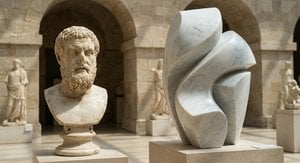
The Enduring Allure of Marble in Art History: From Classical Sculpture to Modern Abstraction
Explore the captivating history of marble sculpture from ancient Greece to modern art. Discover renowned artists like Canova & Michelangelo, carving techniques, and investment insights at ArtsDot.

Top 10 Capodopere din Bronz care au Revoluționat Arta – Inspirație pentru Decor
Descoperă Top 10 sculpturi din bronz care au schimbat istoria artei! Explorează operele lui Rodin, Michelangelo și alți maeștri, tehnicile lor unice și inspirația pentru decorul casei tale. Replici de calitate muzeală pe ArtsDot.com.

The Enduring Form: Exploring Themes & Techniques in Sculpture Across Historical Periods
Explore the rich history of sculpture from ancient masterpieces to contemporary innovations. Discover key techniques, influential artists & investment potential for discerning art collectors.

Georges Braque: Cele Mai Iconice 25 De Opere – Artă Modernă pentru Decorul Tău
Descoperă cele mai importante 25 de opere ale lui Georges Braque, pionier al cubismului! Explorează istoria, tehnicile și semnificația fiecărei picturi. Reproduceri artă de calitate muzeală pentru decorul tău pe ArtsDot.com.

Georges Seurat: Cele Mai Remarcabile 25 de Opere – Artă, Decorațiuni și Inspirație
Descoperă cele mai frumoase 25 de picturi ale lui Georges Seurat! Explorează arta Pointillismului, culorile vibrante și stilul unic al acestui maestru impresionist. Reproduceri de calitate superioară pentru decor interior rafinat pe ArtsDot.com.
