


 Trimite
 Distribuie
 Detalii
 Ghidul

 Descarcă
 Produse similare
 Diaporama
 Statistici
David Bailey Self-Portrait


 Citește mai mult
Lucrarea de artă afișată pe această pagină este protejată de legile privind drepturile de autor, ceea ce înseamnă că nu putem crea sau vinde în mod legal o reproducere identică. Această protecție este garantată prin acorduri internaționale, precum Convenția de la Berna și de legile naționale, inclusiv cele prevăzute de Legea dreptului de autor din S.U.A. – Titlul 17. Toate drepturile rezervate. Orice reproducere neautorizată este interzisă.
Ca alternativă respectuoasă și legală, oferim tablouri pictate manual, personalizate, inspirate de original. Artistii noștri experimentați și profesioniști studiază cu atenție stilul, starea de spirit și esența artistică a originalului pentru a crea o piesă nouă și unică, care evocă aceeași emoție – rămânând, în același timp, o creație originală în sine.
Această metodă respectă pe deplin reglementările privind drepturile de autor, deoarece nu implică copierea sau duplicarea operei protejate. În schimb, este o reinterpretare creativă – o pictură nouă, influențată de original, dar care nu este identică cu acesta.
Reproducere pictată manual în ulei
Pictură în ulei pe pânză, realizată manual de artiștii noștri la dimensiunea și ramele dorite de dumneavoastră, pe comandă. ( Comută pe versiunea Print Treci la imagine digitală)




































Alegeți dintre dimensiunile noastre prestabilite, care respectă proporțiile originale ale operei de artă.

Introduceți lățimea și înălțimea de care aveți nevoie, pentru a se potrivi ramei sau peretelui dumneavoastră. Această lucrare este pictată manual, așa că pentru o dimensiune cu o formă diferită, artistul poate picta puțin mai mult în jurul imaginii sau poate tăia puțin din margini — dumneavoastră decideți. Vă vom trimite o simulare digitală pentru aprobare înainte de a începe pictarea. Imaginea afișată pe această pagină nu reprezintă rezultatul real — doar simularea este reprezentativă.
După plasarea comenzii, echipa ArtsDot.com va contacta clientul prin e-mail pentru instrucțiuni și îi va furniza o previzualizare a machetei
Livrare în întreaga lume () în 3-4 săptămâni, în loc de cele 5 săptămâni standard. (24 Octombrie). Fără compromisuri în ceea ce privește calitatea.

Livrare expres gratuită la nivel mondial

Pânză de in premium

Asigurare completă pentru transport

Garanție de rambursare a taxelor vamale

Garanția fidelității culorilor

Politica de retur în 100 de zile (doar pentru defecte)

Garanție de rambursare 100%

Reducere pentru comenzi multiple
 Opțiunea cu sticlă este disponibilă doar pentru dimensiuni de sub 110 cm

David Bailey Self-Portrait
Tip de reproducere
Dimensiune reproducere
-


Preț total
lei 1218
The Intimacy of the Lens: A Glimpse into Bailey’s Inner World
In the vast canon of 20th-century photography, few images possess the raw, unvarnished vulnerability found in David Bailey’s Self-Portrait. Captured in 1957, long before he became the definitive eye of the "Swinging London" era, this black and white photograph serves as a profound psychological window into the artist himself. The composition is strikingly intimate, presenting a young Bailey seated upon a bed, propped against pillows in what feels like a private, unguarded moment of repose. There is no artifice here; no polished studio lighting or elaborate backdrops to shield the subject from the viewer's gaze. Instead, we are met with a stark, grainy texture that lends the image an almost tactile quality, pulling the observer into the quiet, cluttered sanctuary of his bedroom.
The photograph’s power lies in its directness. Bailey stares straight into the lens, his expression a complex tapestry of seriousness and a subtle, haunting melancholy. This piercing eye contact establishes an immediate emotional bridge between the subject and the spectator, demanding a level of engagement that is rare in portraiture. The surrounding environment—a dresser, a wooden cabinet, a stray hat hanging on a rack—adds a layer of documentary realism, suggesting a life in progress, caught in a moment of stillness amidst the inevitable movement of youth.
Technique and the Aesthetic of Authenticity
From a technical perspective, the self-portrait is a masterclass in the use of monochromatic depth. The reliance on black and white film allows the artist to strip away the distractions of color, focusing instead on the interplay of light, shadow, and form. The lighting appears natural and diffused, casting soft shadows that sculpt Bailey’s features and provide a sense of three-dimensional weight to his physique. This use of light creates a rhythmic contrast between the organic curves of the human body and the rigid, geometric lines of the furniture in the background.
The graininess of the film is not merely a byproduct of the era's technology but functions as an essential aesthetic element. It imbues the print with a sense of grit and immediacy, characteristic of the mid-century documentary style. This texture works in harmony with the varied surfaces within the frame—the smoothness of skin, the heavy weave of a blanket, and the weathered wood of the cabinetry—to create a rich, sensory experience. For the collector or interior designer, this piece offers a sophisticated textural element that brings a sense of historical weight and "soul" to any curated space.
A Legacy of Identity and Vision
Beyond its visual merits, the self-portrait is heavy with symbolism. It represents the foundational moment of an artist discovering his own identity through the medium of light. By stripping himself bare—both physically and emotionally—Bailey explores themes of vulnerability and introspection that would later define his ability to capture the true essence of the world's most iconic celebrities. This image is a precursor to the "Black Trinity" revolution, embodying the same spirit of spontaneity and truth that would soon transform the fashion industry.
For those seeking to adorn a space with art that tells a story, this reproduction offers more than just decoration; it offers a conversation piece rooted in photographic history. It is an invitation to contemplate the quiet moments that precede greatness. Whether placed in a modern minimalist gallery or a classic study, Bailey’s self-portrait remains a timeless testament to the power of the honest gaze, making it an invaluable acquisition for any serious lover of fine art photography.
Întrebări și răspunsuri
Ce atmosferă ar aduce într-o încăpere o reproducere a operei "David Bailey Self-Portrait" de David Royston Bailey?
"David Bailey Self-Portrait" de David Royston Bailey emană o atmosferă Elegant și este recomandată pentru o Living Room. Întreaga dispoziție este ceea ce lucrarea aduce în spațiul din jurul său.
Ce atmosferă transmite "David Bailey Self-Portrait"?
Ambianta generală a operei "David Bailey Self-Portrait" de David Royston Bailey este Elegant. Această stare descrie atmosfera generală a lucrării.
Este "David Bailey Self-Portrait" reprezentativ pentru ceea ce crea în mod obișnuit David Royston Bailey?
Printre temele renumite ale lui David Royston Bailey - documentary style, british fashion iconography, youthful confidence, social revolution, authentic portraiture - „David Bailey Self-Portrait” aduce o perspectivă proprie asupra fashion photography, celebrity portraits, london sixties, documentary style, minimal composition, authenticity.
Opere similare


Biografie artist
David Royston Bailey: Capturing the Pulse of a Generation
David Royston Bailey, born in London in 1938, isn’t merely a photographer; he's a chronicler of an era. Often referred to as David Bailey or simply “Bailey,” his work transcends simple documentation, offering instead a vibrant and often provocative glimpse into the heart of the Swinging Sixties – a period defined by youthful exuberance, social upheaval, and a burgeoning cultural revolution. His early career with Vogue magazine established him as a pivotal figure in shaping the visual language of fashion and celebrity culture, while his subsequent work continues to resonate with its raw energy and undeniable style.
Bailey’s rise began amidst the post-war optimism of London, a city rapidly transforming under the influence of new music, art, and social movements. Unlike many of his contemporaries who favored polished studio settings, Bailey embraced spontaneity and immediacy. He famously eschewed elaborate backdrops, often utilizing stark white walls or simply the urban landscape as a backdrop for his subjects. This approach, coupled with his signature cropped perspectives and direct eye contact, created portraits that felt remarkably intimate and authentic – capturing not just appearances but also the personalities of those he photographed. His early collaborations with Jean Shrimpton, particularly the iconic “Jump” photograph, cemented his reputation for capturing a sense of movement and dynamism rarely seen in portraiture at the time.
The Swinging Sixties: A Visual Revolution
Bailey’s work during the 1960s is inextricably linked to the cultural phenomenon known as the ‘Swinging Sixties.’ He documented the rise of British pop music, the emergence of a new youth culture, and the changing social landscape with an unparalleled eye. His photographs of The Beatles – particularly their early, raw energy – became synonymous with the decade’s rebellious spirit. Beyond music, Bailey captured the glamour and intrigue of celebrities like Mick Jagger, showcasing their charisma and confidence in a way that redefined celebrity photography. He wasn't just taking pictures; he was actively participating in shaping the image of London as a global center for fashion and culture.
His influence extended beyond individual portraits. Bailey’s innovative use of location shooting – capturing models in unexpected places like telephone boxes or on bustling city streets – challenged traditional notions of fashion photography. He collaborated with *Ritz Newspaper*, pioneering the paparazzi style, which would later become a cornerstone of glossy magazines. This shift reflected a broader cultural change—a desire to capture candid moments and break down the barriers between celebrity and everyday life.
Technique and Style: A Distinctive Vision
Bailey’s photographic style is instantly recognizable. His use of black and white photography, often with starkly contrasting tones, creates a powerful visual impact. The cropped perspectives, frequently emphasizing the subjects' eyes and creating a sense of intimacy, are hallmarks of his work. He was a master of capturing fleeting moments – a glance, a gesture, a smile – that conveyed volumes about his subjects’ personalities. Bailey’s approach wasn’t simply about technical skill; it was about an intuitive understanding of how to capture the essence of a person or scene.
He famously stated that he didn't want to make models look like "stuffed shop mannequins." Instead, he sought to reveal their individuality and personality. This philosophy is evident in his portraits of figures like Kate Moss, who embodies a similar spirit of effortless cool and understated confidence. Bailey’s influence on subsequent generations of photographers is undeniable; his techniques and aesthetic continue to be studied and emulated today.
Beyond the Sixties: A Continuing Legacy
While his work during the 1960s remains his most celebrated period, Bailey's career has spanned decades. He’s continued to photograph a diverse range of subjects – from fashion icons to political figures – always maintaining his distinctive style and approach. His documentary film *Warhol by Bailey* (1973), exploring Andy Warhol’s creative process, demonstrated his versatility as a filmmaker and further cemented his reputation for challenging conventions.
Bailey's legacy extends beyond the realm of photography. He played a significant role in shaping London’s image during a transformative era, capturing its energy, dynamism, and cultural vibrancy. His photographs are not merely images; they are windows into a pivotal moment in history – a testament to his artistic vision and enduring influence.

David Royston Bailey
1938 - , United Kingdom
Informații rapide
- Full Name: David Royston Bailey
- Nationality: British
- Date Of Birth: 1938
- Place Of Birth: London, United Kingdom
- Notable Artworks:
- Jean Shrimpton, New York
- The Beatles
- Mick Jagger
- Artistic Movement Or Style: Fashion photography, Portraiture
- Artists Who Influenced This Artist:
- Richard Avedon
- Cecil Beaton
- Artists Or Movements Influenced By This Artist:
- Pop Art
- Swinging Sixties
Articole conexe

Beyond the Lens: Photography's Enduring Influence on Modern & Contemporary Art
Explore photography's pivotal role in shaping modern & contemporary art. Discover key movements, influential artists like Stieglitz, and expert collecting advice from ArtsDot.

Top 10 Capodopere ale Fotografiilor Documentare care au Definit Arta Modernă | ArtsDot.ro
Descoperă Top 10 capodopere ale fotografiei documentare care au schimbat arta! Explorează poveștile artiștilor, tehnicile și impactul emoțional al acestor imagini iconice. Reproduceri artă de calitate muzeală pe ArtsDot.ro – inspiră-ți decorul!
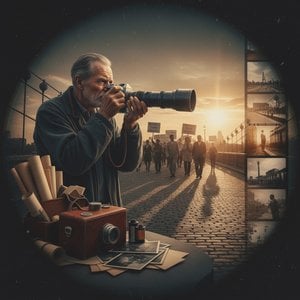
Witnessing History Through Lens & Light: Documentary Photography's Enduring Legacy
Explore the powerful history of documentary photography – from its origins to contemporary masters like Gordon Parks & W. Eugene Smith. Discover how this art form shapes our understanding of society and witness pivotal moments in time.

Top 10 Capodopere Alb-Negru: Frumusețe Atemporală în Artă | ArtsDot.ro
Descoperă top 10 picturi celebre dominate de alb, de la Monet la Kandinsky! Explorează istoria artei, tehnicile artistice și frumusețea atemporală a capodoperelor clasice. Reproduceri de calitate muzeală pe ArtsDot.com – inspiră-ți decorul!

Monochrome Visions: Exploring the Aesthetic & Historical Significance of Black & White Photography
Explore the rich history & artistic power of black and white photography. From early techniques to iconic masters like Ansel Adams, discover why monochrome continues to captivate art lovers today. Expert insights for collectors.