


 Vezi în context
 Trimite
 Distribuie
 Detalii
 Ghidul

 Descarcă
 Produse similare
 Radiografie
 Diaporama
 Statistici
A.158
 Acrylic On Canvas
- WallArt
- Abstract Expressionism
 100.0 x 100.0 cm
 MAGA - Museo Arte Gallarate
 Citește mai mult
Lucrarea de artă afișată pe această pagină este protejată de legile privind drepturile de autor, ceea ce înseamnă că nu putem crea sau vinde în mod legal o reproducere identică. Această protecție este garantată prin acorduri internaționale, precum Convenția de la Berna și de legile naționale, inclusiv cele prevăzute de Legea dreptului de autor din S.U.A. – Titlul 17. Toate drepturile rezervate. Orice reproducere neautorizată este interzisă.
Ca alternativă respectuoasă și legală, oferim tablouri pictate manual, personalizate, inspirate de original. Artistii noștri experimentați și profesioniști studiază cu atenție stilul, starea de spirit și esența artistică a originalului pentru a crea o piesă nouă și unică, care evocă aceeași emoție – rămânând, în același timp, o creație originală în sine.
Această metodă respectă pe deplin reglementările privind drepturile de autor, deoarece nu implică copierea sau duplicarea operei protejate. În schimb, este o reinterpretare creativă – o pictură nouă, influențată de original, dar care nu este identică cu acesta.
Reproducere pictată manual în ulei
Pictură în ulei pe pânză, realizată manual de artiștii noștri la dimensiunea și ramele dorite de dumneavoastră, pe comandă. ( Comută pe versiunea Print Treci la imagine digitală)




P118B lei10

P118H lei10

P118W lei10

P438Z lei10

P508JH lei12

P508YH lei12

P805H lei10

P805Z lei10

P919BZ lei10

P919G lei10

P919XJ lei10

P959ZH lei10

P968JZ lei12

W106C lei8

W218G lei10

W218JH lei8

W218Y lei10

W307PJ lei10

W316G lei10

W316PJ lei8

W316Y lei10

W398PJ lei8

W4111J lei10

W500HY lei15

W500JH lei15

W692G lei12

W849H lei8

W940BG lei15

W953PJ lei8




Alegeți dintre dimensiunile noastre prestabilite, care respectă proporțiile originale ale operei de artă.

Introduceți lățimea și înălțimea de care aveți nevoie, pentru a se potrivi ramei sau peretelui dumneavoastră. Această lucrare este pictată manual, așa că pentru o dimensiune cu o formă diferită, artistul poate picta puțin mai mult în jurul imaginii sau poate tăia puțin din margini — dumneavoastră decideți. Vă vom trimite o simulare digitală pentru aprobare înainte de a începe pictarea. Imaginea afișată pe această pagină nu reprezintă rezultatul real — doar simularea este reprezentativă.
După plasarea comenzii, echipa ArtsDot.com va contacta clientul prin e-mail pentru instrucțiuni și îi va furniza o previzualizare a machetei
Livrare în întreaga lume () în 3-4 săptămâni, în loc de cele 5 săptămâni standard. (19 Octombrie). Fără compromisuri în ceea ce privește calitatea.

Livrare expres gratuită la nivel mondial

Pânză de in premium

Asigurare completă pentru transport

Garanție de rambursare a taxelor vamale

Garanția fidelității culorilor

Politica de retur în 100 de zile (doar pentru defecte)

Garanție de rambursare 100%

Reducere pentru comenzi multiple
 Opțiunea cu sticlă este disponibilă doar pentru dimensiuni de sub 110 cm

A.158
Tip de reproducere
Dimensiune reproducere
-


Preț total
lei 1207
The Luminous Path: An Exploration of A.158
To stand before A.158 is to encounter a moment suspended between vibrant energy and serene contemplation. Claudio Verna’s canvas presents an immediate, arresting visual dialogue—a field of soft, enveloping pink bisected by a decisive, radiant yellow line. This is not merely decoration; it is a carefully orchestrated optical experience. The background itself seems imbued with the warmth of a blush-toned dawn, suggesting emotional resonance and gentle expanse. Yet, this softness is challenged, guided, and ultimately elevated by that singular streak of yellow. It draws the eye with an almost magnetic force, inviting the viewer into its luminous passage.
Technique and Compositional Flow
Verna’s mastery in this piece lies in his handling of acrylic on canvas. The application appears fluid yet controlled, allowing the pink ground to breathe while maintaining a palpable depth. The yellow line functions as more than just a compositional element; it is a vector, an invisible current guiding the viewer's gaze across the 100 x 100 cm square. While there is a subtle human presence anchored in the lower left corner, its relative quietude allows the abstract interplay of color and line to dominate the narrative. The technique speaks to a modern sensibility—one that values graphic clarity alongside atmospheric wash.
Symbolism of Color and Line
In art history, color choices are rarely accidental. Here, the pairing of soft pink with brilliant yellow evokes themes of optimism, transition, and illumination. Pink often symbolizes tenderness or nascent emotion, providing a receptive emotional field. Against this, the sharp, bright yellow acts as a conduit—a path toward understanding or breakthrough. The line itself suggests journey, connection, or perhaps even the passage of time viewed through an optimistic lens. It is the visible manifestation of an idea moving from one state to another.
Integrating Art into Living Space
For the discerning collector or interior designer, A.158 offers unparalleled versatility. Its abstract nature means it complements a vast array of décor styles, from minimalist modernism to richly textured bohemian spaces. Imagine this piece anchoring a room—the soft pink echoing blush textiles or pale wood tones, while the yellow line provides the necessary jolt of curated energy against deep jewel-toned furniture. It is a focal point that whispers rather than shouts, adding intellectual depth without overwhelming the domestic harmony.
The Enduring Resonance of Modern Abstraction
Claudio Verna’s work situates itself within a lineage of post-war Italian abstractionism, yet it possesses a distinctly contemporary lightness. It speaks to an era where academic rigor met emotional freedom. Owning this reproduction is acquiring a piece that honors the journey of modern art—a dialogue between structure and feeling. It invites daily contemplation, suggesting that even in the most structured environments, there remains room for a luminous, guiding path.
Întrebări și răspunsuri
Cine este autorul operei "A.158" și din ce curent face parte?
Claudio Verna a creat "A.158" în cadrul mișcării Abstract Expressionism.
Unde pot vedea originalul "A.158" de Claudio Verna?
Originalul "A.158" de Claudio Verna este păstrat la MAGA - Museo Arte Gallarate, Gallarate, Italy. O reproducere permite expunerea operei în propria locuință.
Unde pot descărca "A.158" de Claudio Verna?
Imaginea pentru "A.158" de Claudio Verna poate fi descărcată de pe pagina dedicată lucrării, Descarcă: descărcare imagine digitală de înaltă rezoluție.
Opere similare


Biografie artist
Early Life and Artistic Foundations
Claudio Verna, born in the picturesque town of Guardiagrele, Italy, in 1937, embarked on an artistic journey that would establish him as a pivotal figure in Italian post-war painting. His early life, marked by a family relocation to Foligno in Umbria, instilled within him a deep appreciation for the region’s rich cultural heritage and landscape—elements that subtly permeate his later work despite its abstract nature. Verna's formal education began with studies in Umbria before he pursued a degree in political science at the University of Florence, graduating in 1961 with a thesis exploring the complex relationship between “Figurative Arts in Industrial Civilization.” This academic grounding proved crucial, providing him with a framework for understanding art’s evolving role within a rapidly changing society. It was during his time in Florence that Verna first engaged with the currents of classical abstractionism and began exhibiting his work, laying the initial foundations for a career defined by rigorous exploration and independent thought.The Birth of Pittura Analitica
Following his move to Rome in 1961, Verna deliberately withdrew from the public art scene for several years. This period wasn’t one of inactivity but rather intense self-examination—a crucial phase where he sought to define a unique artistic language and methodology. By 1967, when he re-emerged, it was with a clear vision that would give rise to *Pittura Analitica* (Analytical Painting). This movement, born from Verna’s conviction in the “ancient and indispensable reasons” of painting, represented a profound reflection on the very act of creation and its connection to artistic tradition. Pittura Analitica wasn't merely about what was depicted but *how* it was depicted—a focus on the fundamental elements of color, form, and surface. It became an Italian response to the prevailing minimalism, yet distinguished itself through a heightened sensitivity to chromatic intensity and emotional resonance.A Language of Color and Rigor
Verna’s paintings are characterized by their striking simplicity and essentiality. He strips away extraneous detail, focusing instead on the pure expressive power of color. His canvases become arenas where hues interact, vibrate, and define space—often employing vertical lines and muted tones that create a sense of contemplative calm. The artist doesn't simply apply color; he investigates its qualities, exploring saturation, light, and texture with meticulous precision. This pursuit isn’t cold or detached, however. Verna describes his work as existing “between the polarity of extreme rigor and intense emotional abandon,” suggesting a dynamic tension between intellectual control and visceral feeling. His works from the 1970s demonstrate this shift towards greater freedom of expression after an initial period of austerity linked to the principles of Analytical Painting, revealing a pulsating relationship between geometry and color.Exhibitions, Recognition, and Lasting Influence
Throughout his prolific career, Claudio Verna has held over one hundred solo exhibitions in Italy and abroad, cementing his reputation as a leading figure in contemporary Italian art. His work has been showcased at prestigious venues including the Venice Biennale (1970 and 1980), and retrospectives have graced museums in Gibellina, Spoleto, Ferrara, Conegliano, Treviso, L’Aquila, and Milan's Mudima Foundation. He has also participated in numerous group exhibitions across Europe and beyond—from Düsseldorf to London, Philadelphia to Moscow—further expanding his international reach. In 2008, Verna received the esteemed “Antonio Feltrinelli” Prize for painting from the National Academy of the Lincei, a testament to his significant contributions to the art world. His appointment as a National Academician of the Accademia di San Luca further solidified his position within Italy’s artistic establishment.A Legacy of Reflection and Innovation
Claudio Verna's enduring legacy lies in his unwavering commitment to exploring the fundamental principles of painting. He challenged conventional notions of representation, prompting viewers to engage with art on a deeper, more intellectual level. The publication of the Catalogue Raisonné of his work in 2010, curated by Volker W. Feierabend and Marco Meneguzzo, serves as a comprehensive testament to his artistic journey and its profound impact on contemporary art discourse. Verna’s influence extends beyond his own canvases; he inspired generations of artists to question the nature of their practice and to seek new ways of expressing themselves through color, form, and texture. He remains an active artist today, continuing to refine his unique vision and contribute to the ongoing evolution of abstract painting.
Claudio Verna
1937 - , Italy
Informații rapide
- Full Name: Claudio Verna
- Nationality: Italian
- Date Of Birth: 1937
- Place Of Birth: Guardia Grele, Italy
- Notable Artworks:
- Pittura
- Deriva
- Costellazione
- Artistic Movement Or Style: Pittura Analitica, Minimalism
Articole conexe

Cele mai importante 10 capodopere ale abstracției geometrice | Artă & Decor de lux pe ArtsDot.com
Descoperă cele mai importante 10 capodopere ale abstracției geometrice! Explorează istoria, artiștii (Mondrian, Kandinsky) și culorile vibrante care au definit arta modernă. Reproduceri de tablouri de lux pe ArtsDot.com pentru un decor interior rafinat. Explorează colecția online!

Wassily Kandinsky: Cele Mai Iconice 25 De Opere – Artă Abstractă pentru Decor Rafinat
Descoperă cele mai emblematice 25 de opere ale lui Wassily Kandinsky, pionierul artei abstracte! Explorează culorile vibrante, compozițiile unice și istoria fascinantă din spatele fiecărei picturi. Reproduceri de calitate muzeală pe ArtsDot.com – inspiră-ți decorul cu artă modernă!

Top 10 Capodopere ale Expresionismului Abstract: Artă, Artiști și Decorațiuni de Lux | ArtsDot.ro
Descoperă Top 10 capodopere ale Expresionismului Abstract! Explorează poveștile lui Pollock, Rothko și De Kooning. Reproduceri de artă de lux & inspirație decor pe ArtsDot.ro. Găsește pictura perfectă pentru spațiul tău!
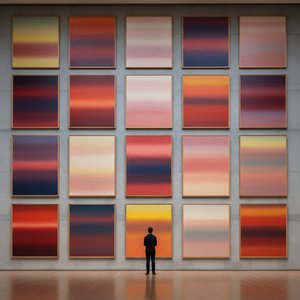
Mark Rothko: Cele Mai Iconice 25 De Capodopere – Artă Abstractă pentru Decor Rafinat
Descoperă cele mai iconice 25 de picturi abstracte ale lui Mark Rothko! Explorează istoria, culorile și emoțiile din spatele fiecărei capodopere. Reproduceri artă de calitate muzeală & inspirație decor pe ArtsDot.com.

Top 10 Tablouri Celebre Îmbălsămate în Nuanțe de Roz Palid | Artă & Decor
Descoperă top 10 tablouri celebre îmbibate în nuanțe delicate de roz palid! De la Monet și Renoir la opere romantice, explorează istoria artei și găsește inspirație pentru decorul tău. Reproduceri de calitate muzeală pe ArtsDot.com.