

 Previzualizare
 Trimite prin felicitare
 Distribuie
 Detalii despre lucrare
 Ghid
Ghid

 Descarcă imaginea
 Produse similare
 Radiografie
 Galerie foto
 Întrebări și răspunsuri
 Statistici
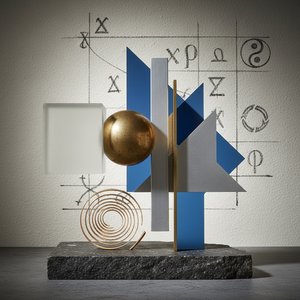
Untitled

- 22.0 x 29.0 cm


 Vezi mai mult
Lucrarea de artă afișată pe această pagină este protejată de legile privind drepturile de autor, ceea ce înseamnă că nu putem crea sau vinde în mod legal o reproducere identică. Această protecție este garantată prin acorduri internaționale, precum Convenția de la Berna și de legile naționale, inclusiv cele prevăzute de Legea dreptului de autor din S.U.A. – Titlul 17. Toate drepturile rezervate. Orice reproducere neautorizată este interzisă.
Această metodă respectă pe deplin reglementările privind drepturile de autor, deoarece nu implică copierea sau duplicarea operei protejate. În schimb, este o reinterpretare creativă – o pictură nouă, influențată de original, dar care nu este identică cu acesta.
Giclée / Imprimare artistică
Printuri giclée sau pe canvas de calitate muzeală, cu proces de producție rapid și opțiuni flexibile de finisare. ( Comandă pictură realizată manual Comută pe Imagine Digitală)




































Alegeți dintre dimensiunile noastre prestabilite, care respectă proporțiile originale ale operei de artă.

Introduceți lățimea și înălțimea necesare pentru a se potrivi ramei sau peretelui dumneavoastră. O printare poate fi doar tăiată, niciodată extinsă dincolo de dimensiunea imaginii originale, astfel încât o dimensiune cu o formă diferită va pierde o parte din imagine. Vă trimitem o simulare digitală pentru aprobare înainte de a imprima orice. Imaginea afișată pe această pagină nu prezintă tăierea reală — doar simularea arată acest lucru.
Livrare în întreaga lume () în 2 săptămâni, în loc de cele 4/5 săptămâni standard. (11 Noiembrie)

Livrare expres gratuită la nivel mondial

Pânză de in de înaltă calitate

Asigurare completă pentru transport

Garanție de rambursare a taxelor vamale

Garanția fidelității culorilor

Politica de retur în 100 de zile (doar pentru defecte de fabricație)

Garanție de rambursare 100%

Ofertă pentru comenzi multiple
 Opțiunea cu sticlă este disponibilă doar pentru dimensiuni de sub 110 cm

Untitled
Giclée / Imprimare artistică
Dimensiune reproducere
-


Preț total calculat
lei 301
Opere similare


Biografie artist
The Architect of Abstraction: The Life and Vision of Charles Green Shaw
In the vibrant, pulse-quickening atmosphere of 1920s New York, where the jazz age roared through smoky cafés and theatrical halls, a unique creative spirit began to emerge. Charles Green Shaw was not merely an observer of this era but a chronicler of its wit and social complexity. Before he became a titan of American geometric abstraction, Shaw established himself as a sharp-witted writer and illustrator, lending his pen to prestigious publications such as The New Yorker, Vanity Fair, and Smart Set. His early literary career allowed him to navigate the intellectual currents of Manhattan, documenting the theatrical world with a precision that would later translate into his meticulous approach to canvas and form.
While his initial inclinations were rooted in the written word and the social satire of the urban landscape, a profound artistic metamorphosis was simmering beneath the surface. His formal training at the Art Students League, particularly under the guidance of Thomas Hart Benton in 1927, provided the structural discipline necessary to transition from prose to paint. This period of study, supplemented by private lessons with the legendary George Luks, instilled in Shaw a deep respect for observation and the fundamental mechanics of composition. Yet, it was his transformative journey through Europe between 1930 and 1933 that would forever alter his artistic trajectory.
A Journey Through Form and Geometry
Traveling through Italy, France, and Spain, Shaw encountered the burgeoning movements of Modernism that were reshaping the global art landscape. The influence of Piet Mondrian and Josef Albers became palpable in his evolving technique, as he moved away from representational narratives toward a profound exploration of geometric abstraction. He began to embrace a language of polygons and intersecting planes, creating small, meticulously crafted works that possessed an almost architectural weight. These canvases often seemed to echo the soaring, structural grandeur of the New York skyscrapers he knew so well, distilling the chaotic energy of the metropolis into a rhythmic, balanced arrangement of shapes.
This period marked the birth of his most celebrated stylistic contributions, where the boundaries between organic life and mathematical precision began to blur. His work often navigated the delicate space between Concretionism and a more biomorphic abstraction, a tension that gave his paintings a breathing, vital quality despite their rigid geometric foundations. Through his mastery of color and form, Shaw achieved a sense of "plasticity" within the polygon, making each shape feel as though it possessed its own internal volume and light.
Legacy and the Geometry of Silence
As his career progressed into the mid-20th century, Shaw’s work became a cornerstone of the American Abstract Artists movement. His ability to synthesize the structural rigor of the Bauhaus with a uniquely American sensibility ensured his place in the pantheon of modern masters. His paintings, characterized by their contemplative depth and rhythmic precision, found permanent homes in the world's most esteemed institutions, including:
- The Metropolitan Museum of Art
- The Museum of Modern Art (MoMA)
- The Smithsonian American Art Museum
- The Whitney Museum of American Art
- The Art Institute of Chicago
Beyond the technical brilliance of his 'Plastic Polygon' series, Shaw’s historical significance lies in his role as a bridge between the social realism of his contemporaries and the pure abstraction that would define much of post-war art. He transformed the visual noise of the modern age into a "geometry of silence," inviting viewers to find peace within the structured interplay of triangles, circles, and light. Today, Charles Green Shaw remains a pivotal figure whose work continues to resonate as a testament to the power of distilled form and the enduring beauty of the abstract intellect.

Charles Shaw
1892 - 1974
Detalii rapide
- Full Name: Charles Green Shaw
- Nationality: American
- Date Of Birth: 1892
- Date Of Death: 1974
- Notable Artworks:
- Plastic Polygon
- Space Curve
- Artistic Movement Or Style: Geometric Abstraction, Concretionism
- Artists Who Influenced This Artist: ['Thomas Hart Benton']
- Artists Or Movements Influenced By This Artist: ['Minimal Art']
Articole similare

Wassily Kandinsky: Cele Mai Iconice 25 De Opere – Artă Abstractă pentru Decor Rafinat
Descoperă cele mai emblematice 25 de opere ale lui Wassily Kandinsky, pionierul artei abstracte! Explorează culorile vibrante, compozițiile unice și istoria fascinantă din spatele fiecărei picturi. Reproduceri de calitate muzeală pe ArtsDot.com – inspiră-ți decorul cu artă modernă!

Beyond Form & Color: Geometric Abstraction's Enduring Legacy in Art History
Explore the captivating world of geometric abstraction! Discover its origins, key artists like Malevich & Mondrian, and why this movement remains highly valued by art collectors today. Expert insights at ArtsDot.
Beyond Form: Exploring the Philosophical Foundations of Geometric Abstraction
Explore the philosophical roots & artistic evolution of geometric abstraction with ArtsDot. Discover Mondrian, Malevich, De Stijl & more. Expert insights for collectors and art enthusiasts.

Cele mai importante 10 capodopere ale abstracției geometrice | Artă & Decor de lux pe ArtsDot.com
Descoperă cele mai importante 10 capodopere ale abstracției geometrice! Explorează istoria, artiștii (Mondrian, Kandinsky) și culorile vibrante care au definit arta modernă. Reproduceri de tablouri de lux pe ArtsDot.com pentru un decor interior rafinat. Explorează colecția online!

Beyond Form & Color: Geometric Abstraction's Evolution in 20th/21st Century Art
Explore the evolution of geometric abstraction from Cubism to contemporary art. Discover key artists like Malevich & Mondrian, investment insights, and expert collecting advice at ArtsDot.