


 Vezi în context
 Trimite
 Distribuie
 Detalii
 Ghidul

 Descarcă
 Produse similare
 Radiografie
 Diaporama
 Statistici
Tree Trunks


 Citește mai mult
Reproducere pictată manual în ulei
Pictură în ulei pe pânză, realizată manual de artiștii noștri la dimensiunea și ramele dorite de dumneavoastră, pe comandă. ( Comută pe versiunea Print Treci la imagine digitală)




P118B lei10

P118H lei10

P118W lei10

P438Z lei10

P508JH lei12

P508YH lei12

P805H lei10

P805Z lei10

P919BZ lei10

P919G lei10

P919XJ lei10

P959ZH lei10

P968JZ lei12

W106C lei8

W218G lei10

W218JH lei8

W218Y lei10

W307PJ lei10

W316G lei10

W316PJ lei8

W316Y lei10

W398PJ lei8

W4111J lei10

W500HY lei15

W500JH lei15

W692G lei12

W849H lei8

W940BG lei15

W953PJ lei8




Alegeți dintre dimensiunile noastre prestabilite, care respectă proporțiile originale ale operei de artă.

Introduceți lățimea și înălțimea de care aveți nevoie, pentru a se potrivi ramei sau peretelui dumneavoastră. Această lucrare este pictată manual, așa că pentru o dimensiune cu o formă diferită, artistul poate picta puțin mai mult în jurul imaginii sau poate tăia puțin din margini — dumneavoastră decideți. Vă vom trimite o simulare digitală pentru aprobare înainte de a începe pictarea. Imaginea afișată pe această pagină nu reprezintă rezultatul real — doar simularea este reprezentativă.
După plasarea comenzii, echipa ArtsDot.com va contacta clientul prin e-mail pentru instrucțiuni și îi va furniza o previzualizare a machetei
Livrare în întreaga lume () în 3-4 săptămâni, în loc de cele 5 săptămâni standard. (21 Octombrie). Fără compromisuri în ceea ce privește calitatea.

Livrare expres gratuită la nivel mondial

Pânză de in premium

Asigurare completă pentru transport

Garanție de rambursare a taxelor vamale

Garanția fidelității culorilor

Politica de retur în 100 de zile (doar pentru defecte)

Garanție de rambursare 100%

Reducere pentru comenzi multiple
 Opțiunea cu sticlă este disponibilă doar pentru dimensiuni de sub 110 cm

Tree Trunks
Tip de reproducere
Dimensiune reproducere
-


Preț total
lei 1209
A Symphony of Earth and Form
In the quietude of Bertram Richard Brooker’s 1938 masterpiece, Tree Trunks, we are invited into a world where the boundaries between the organic and the abstract begin to blur. This evocative painting serves as a profound meditation on the structural elegance of nature. The composition is anchored by a series of vertical rhythms—tree trunks that rise from the canvas like silent sentinels of the forest. Brooker, a pioneer who navigated the complex waters between Cubism and Primitivism, utilizes a palette dominated by deep, earthy browns and warm ochres, creating an atmosphere that feels both grounded in the soil and elevated by artistic intention. The interplay of light and shadow across the textured bark suggests a moment captured in the soft, filtered glow of a woodland afternoon, inviting the viewer to step into this tranquil, arboreal sanctuary.
The technique employed in Tree Trunks reveals Brooker’s mastery over simplified forms and flattened perspectives. Rather than adhering to the rigid dictates of academic realism, the artist embraces a more rhythmic, almost musical approach to composition. The branches extend outward in various directions, creating a delicate web of lines that guide the eye through the depth of the forest. This deliberate rejection of traditional depth allows the painting to function as much as a decorative arrangement of shapes as it does a landscape. For the discerning collector or interior designer, this quality makes the piece exceptionally versatile; its organic geometry provides a sophisticated focal point that complements both contemporary minimalist spaces and more traditional, rustic settings.
The Human Element and Symbolic Resonance
What elevates this work from a mere study of nature to a narrative experience is the subtle inclusion of a human figure. Tucked near one of the prominent trunks, this solitary presence acts as a scale for the majesty of the trees and introduces a poignant layer of symbolism. The figure appears not as a conqueror of the landscape, but as an observer—a quiet participant in the silent dialogue of the woods. This interaction evokes themes of solitude, introspection, and our intrinsic connection to the natural world. It reminds us that even amidst the complexity of modern life, there remains a primal, spiritual tether to the earth's simplest forms.
For those seeking to bring a sense of historical depth and emotional resonance into their homes, Tree Trunks offers an unparalleled opportunity. Owning a high-quality reproduction of this Brooker classic is more than an aesthetic choice; it is an acquisition of a piece of Canadian art history. The painting’s ability to evoke a sense of peace and stability makes it an ideal selection for creating a serene atmosphere in a study, library, or living area. It stands as a testament to the beauty found in simplicity, offering a timeless window into the soul of the forest and the visionary mind of one of Canada's most important abstract pioneers.
Întrebări și răspunsuri
Unde este recomandată expunerea formatului Portrait pentru „Tree Trunks”?
Cu forma sa Portrait, o reproducere a operei "Tree Trunks" este recomandată pentru un Living Room.
Cum este descrisă paleta de culori din "Tree Trunks" de Bertram Richard Brooker?
Culorile din "Tree Trunks" formează o paletă Dark. Această clasificare descrie familiile de culori dominante.
Unde pot vedea o previzualizare a „Tree Trunks”?
O previzualizare a operei "Tree Trunks" de Bertram Richard Brooker este disponibilă pe pagina de Previzualizare a lucrării.
Opere similare


Biografie artist
A Polymath of the Prairie: The Life and Vision of Bertram Richard Brooker
The story of Bertram Richard Brooker is not merely a biography of a painter, but a chronicle of a restless, multi-faceted intellect that refused to be confined by the boundaries of a single medium. Born in Croydon, England, in 1888, Brooker’s early years were shaped by the traditions of his birthplace, yet it was his relocation to Portage la Prairie, Manitoba, at the age of seventeen that would fundamentally alter the trajectory of his creative soul. This transition from the structured landscapes of the United Kingdom to the vast, untamed expanses of the Canadian prairies provided the essential raw material for a lifetime of exploration. Brooker emerged as a singular figure in Canadian art history—a man who moved with equal grace between the worlds of fine art, literature, and graphic design, weaving a tapestry of modernism that would eventually redefine the aesthetic landscape of a nation.
As his artistic consciousness matured, Brooker began to look beyond the traditional confines of Impressionism and Cubism, seeking a visual language that could capture the primal essence of existence. He became a pioneer of abstract art in Canada, yet his path to abstraction was paved with a profound appreciation for naivety and primitivism. Rather than adhering to the rigid academic conventions of his era, he embraced simplified forms and flattened perspectives, creating works that felt both ancient and avant-garde. This stylistic choice was more than a mere aesthetic preference; it was a deliberate attempt to strip away the superficial layers of reality to reveal the underlying geometric truths and emotional resonances of the natural world.
The Convergence of Form and Narrative
Brooker’s brilliance lay in his ability to synthesize disparate disciplines into a unified creative vision. His paintings, such as the striking “Abstract Still Life,” demonstrate a masterful command of technique, utilizing a black and white pointillist approach to create depth through light and shadow alone. In other works like “Ravine Culvert,” he transitioned toward an impressionistic warmth, capturing the fleeting, golden light of the Canadian landscape with a sensitivity that felt deeply rooted in the earth. His eye for composition was further refined through his career as an advertising executive and graphic designer, where the bold use of color and form became a tool for communication, influencing the visual culture of his time.
Yet, to view Brooker solely through the lens of a painter would be to overlook the profound depth of his literary contributions. He was a storyteller of remarkable versatility, a novelist and poet whose prose possessed a psychological acuity that mirrored the complexity of his canvases. His achievements in literature were nothing short of extraordinary, most notably earning the Governor General’s Award for Fiction. Through his novels, he explored themes of identity, memory, and the human condition, imbuing his narratives with a poetic sensibility that resonated far beyond the borders of Canada. Whether through the stroke of a brush or the tip of a pen, Brooker remained obsessed with the fundamental essence of being.
Legacy and Historical Significance
The historical significance of Bertram Richard Brooker rests in his role as a bridge between the traditional and the modern. He acted as a catalyst for change, introducing the radical concepts of abstraction to a Canadian audience that was still largely tethered to representational realism. His ability to blend the primitive with the modernist allowed him to create a unique aesthetic that felt both culturally grounded and internationally relevant.
His enduring legacy can be summarized through several key pillars of his career:
- Pioneering Abstraction: He was instrumental in bringing the language of modern abstraction to the Canadian art scene, breaking away from academic realism.
- Interdisciplinary Mastery: His rare ability to achieve excellence as a painter, novelist, playwright, and graphic designer set a precedent for the "total artist."
- Literary Distinction: His recognition by the Governor General’s Award solidified his place as a titan of Canadian letters.
- Aesthetic Innovation: Through his use of Naive art and Primitivism, he offered a new way to perceive the beauty of the wilderness and the structure of the natural world.
Today, Brooker is remembered not just as an artist of a specific movement, but as a visionary who saw no borders between the visual and the verbal. His life remains a testament to the power of boundless curiosity and the enduring impact of a creative spirit that seeks to find the universal within the particular.

Bertram Richard Brooker
1888 - 1955 , United Kingdom
Informații rapide
- Full Name: Bertram Richard Brooker
- Nationality: English-Canadian
- Date Of Birth: 1888
- Date Of Death: 1955
- Place Of Birth: Croydon, United Kingdom
- Notable Artworks:
- Abstract Still Life
- Ravine Culvert
- Artistic Movement Or Style: Naive Art/Primitivism; Graphic Design; Advertising Executive
Articole conexe

Cele Mai Frumoase Picturi în Tonuri de Ciupercă: Artă Clasică pentru Decorul Tău
Descoperă cele mai frumoase picturi în tonuri de ciupercă! Explorează operele clasice ale lui Van Gogh, Monet și alți maeștri. Reproduceri tablouri de calitate muzeală pentru un decor interior elegant. Inspiră-te acum pe ArtsDot.com!

Top 10 Picturi Celebre în Nuanțe de Nisip: Artă, Istorie și Decor Rafinat
Descoperă top 10 picturi celebre în nuanțe de nisip, de la Van Gogh la Monet! Explorează istoria artei, tehnicile și culorile calde ce definesc aceste capodopere. Reproduceri de artă de calitate muzeală pe ArtsDot.com.

Cele Mai Frumoase Picturi în Tonuri de Argilă: O Călătorie Artistică
Descoperă cele mai frumoase picturi în tonuri de argilă! Explorează operele maestrilor precum Van Gogh, Monet și Rembrandt. Reproduceri de artă clasică pentru un decor sofisticat. Găsește inspirație și tablouri perfecte pe ArtsDot.com

Top 10 Tablouri Celebre în Nuanțe de Brun Nisipos: Artă și Decor Rafinat | ArtsDot.ro
Descoperă top 10 tablouri celebre dominate de nuanțe calde de brun nisipos! Explorează poveștile din spatele capodoperelor semnate de Van Gogh, Rembrandt și Monet. Reproduceri de artă de calitate muzeală pentru un decor interior rafinat pe ArtsDot.ro.
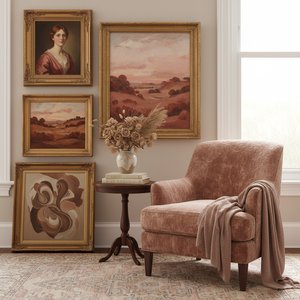
Top 10 Picturi Celebre în Nuanțe de Brun Roz: Artă, Istorie și Decor Elegant | ArtsDot.ro
Descoperă top 10 picturi celebre în nuanțe calde de brun roz! Explorează istoria, tehnicile și emoțiile din operele clasice. Reproduceri artă de calitate muzeală pentru decor interior elegant pe ArtsDot.ro. Descoperă toate capodoperele online!