


 Trimite
 Distribuie
 Detalii
 Ghidul

 Descarcă
 Produse similare
 Diaporama
 Statistici
Rhythmic Form


 Citește mai mult
Lucrarea de artă afișată pe această pagină este protejată de legile privind drepturile de autor, ceea ce înseamnă că nu putem crea sau vinde în mod legal o reproducere identică. Această protecție este garantată prin acorduri internaționale, precum Convenția de la Berna și de legile naționale, inclusiv cele prevăzute de Legea dreptului de autor din S.U.A. – Titlul 17. Toate drepturile rezervate. Orice reproducere neautorizată este interzisă.
Această metodă respectă pe deplin reglementările privind drepturile de autor, deoarece nu implică copierea sau duplicarea operei protejate. În schimb, este o reinterpretare creativă – o pictură nouă, influențată de original, dar care nu este identică cu acesta.
Giclée / Imprimare artistică
Printuri giclée sau pe canvas de calitate muzeală, cu proces de producție rapid și opțiuni flexibile de finisare. ( Comandă pictură realizată manual Treci la imagine digitală)




































Alegeți dintre dimensiunile noastre prestabilite, care respectă proporțiile originale ale operei de artă.

Introduceți lățimea și înălțimea de care aveți nevoie, pentru a se potrivi ramei sau peretelui dumneavoastră. O printare poate fi doar tăiată, niciodată extinsă dincolo de dimensiunea imaginii originale, astfel încât o dimensiune cu o formă diferită va pierde o parte din imagine. Vă trimitem o simulare digitală pentru aprobare înainte de a imprima orice. Imaginea afișată pe această pagină nu prezintă tăierea reală — doar simularea arată acest lucru.
Livrare în întreaga lume () în 2 săptămâni, în loc de cele 4/5 săptămâni standard. (24 Octombrie)

Livrare expres gratuită la nivel mondial

Pânză de in premium

Asigurare completă pentru transport

Garanție de rambursare a taxelor vamale

Garanția fidelității culorilor

Politica de retur în 100 de zile (doar pentru defecte)

Garanție de rambursare 100%

Reducere pentru comenzi multiple
 Opțiunea cu sticlă este disponibilă doar pentru dimensiuni de sub 110 cm

Rhythmic Form
Giclée / Imprimare artistică
Dimensiune reproducere
-


Preț total
lei 288
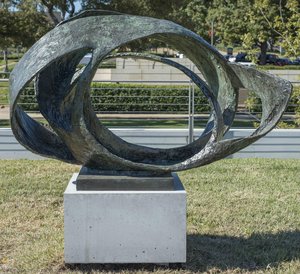
Rhythmic Form: A Dialogue Between Space and Spirit
Barbara Hepworth’s “Rhythmic Form,” created in 1949, stands as a testament to the profound influence of Surrealist ideas on British sculpture during World War II. More than just an aesthetically pleasing object, it embodies Hepworth's unwavering belief that sculpture could translate thought into tangible form—a conviction deeply rooted in her engagement with artists like Arp and Brancusi who championed direct carving and explored the relationship between art and nature. The piece itself is a striking example of Hepworth’s signature style: monumental forms sculpted from wood, meticulously shaped to evoke movement and resonance. Its central hole isn't merely an incision; it’s a deliberate gesture that seeks to unify opposing forces—a visual metaphor for Hepworth’s exploration of duality and balance within the creative process.- Material & Technique: Crafted from Rosewood, “Rhythmic Form” utilizes a technique honed during Hepworth's formative years in Paris – a method characterized by careful consideration of material properties and an intuitive understanding of how form interacts with space. The sculptor’s hand meticulously removes wood shavings to reveal the underlying structure, resulting in a surface that is both smooth and subtly textured.
- Historical Context: Hepworth's work emerged from a period marked by significant artistic experimentation and intellectual ferment. The Unit One group—which included Nicholson, Gabo, and Nash—challenged conventional sculptural approaches, prioritizing abstraction and responding to the anxieties of wartime Britain with an embrace of geometric forms and organic shapes.
- Symbolism & Inspiration: Hepworth drew inspiration from Neolithic Menhirs – monolithic stones erected as memorials to ancient rituals – recognizing their ability to convey timelessness and spiritual significance. She likened her sculptures to these stones, emphasizing the desire for them to “furnish a means of egress for the soul,” reflecting her belief in sculpture’s capacity to transcend mere visual representation.
- Hepworth's Philosophy: Hepworth famously described sculpture as "the plastic projection of thought," highlighting its role in capturing intangible ideas and emotions. She insisted that the work should “put no pressure on anything,” signifying a rejection of didacticism and an affirmation of art’s autonomy—a stance that aligns with her broader philosophical commitment to embracing spontaneity and responding authentically to the material at hand.
- Legacy & Influence: Hepworth's pioneering approach to sculpture continues to inspire artists today, particularly those interested in exploring spatial relationships and investigating the interplay between form and gesture. Her enduring impact is evident in the work of subsequent sculptors who adopted similar techniques and pursued similar conceptual concerns—a legacy cemented by her inclusion in Tate’s collection and celebrated as a cornerstone of British Modernism.
Întrebări și răspunsuri
Cât de multă lumină par să reflecte culorile din "Rhythmic Form"?
Culorile din "Rhythmic Form" prezintă o luminanță Luminous.
În ce an a fost creată "Rhythmic Form" de Barbara Hepworth?
Crearea operei "Rhythmic Form" de Barbara Hepworth datează din 1949.
Ce dimensiune ar trebui să aleg pentru printarea "Rhythmic Form" pentru camera mea?
Într-o Living Room, pentru "Rhythmic Form", recomandăm o dimensiune de tipar de Large.
Opere similare



Biografie artist
primii ani de viață și educație
dame barbara hepwork, o artistă și sculptorță engleză de renume, s-a născut pe 10 ianuarie 1903, în wakefield, yorkshire. studiile sale au început la leeds school of art din 1920, moment în care, ulterior, a câștigat o bursă județeană pentru a studia la royal college of art (rca) din londra, perioadă care s-a întins din 1921 până la primirea diplomei în anul 1924.cariera artistică
- opera lui dame barbara hepworth exemplifică modernismul, în special sculptura modernă, fiind una dintre puținele artiste care au reușit să atingă o notorietate internațională.
- în 1933, ea a cofondat mișcarea artistică unit one împreună cu ben nicholson, paul nash și alții, căutând să unească suprarealismul și abstractizarea în arta britanică.
- primele lucrări ale lui hepworth au fost caracterizate prin abstractizare și prin implicarea sa în mișcarea artistică pariziană, abstraction-création.
lucrări și expoziții remarcabile
- oval form (trezion), o sculptură din bronz, face parte din colecția kimbell art museum din fort worth, statele unite. (vizualizați pe ArtsDot)
- two forms, o sculptură, este expusă la the hepworth wakefield în wakefield, regatul unit. (vizualizați pe AllPaintings_Store)
- totem, o sculptură din marmură, face parte, de asemenea, din colecția de la the hepworth wakefield. (vizualizați pe ArtsDot)
moștenire și colecții de muzee
opera lui barbara hepworth este recunoscută pe scară largă, sculpturile și picturile sale făcând parte din diverse colecții de muzee din întreaga lume. the hepworth wakefield, botezat după artistă, găzduiește numeroase capodopere ale unor artiști renumiți, inclusiv propriile lucrări ale lui hepworth. (descoperiți mai multe despre the hepworth wakefield pe ArtsDot)concluzie
munca pionieră a damei barbara hepworth în sculptura britanică modernă a lăsat o amprentă indelibilă asupra lumii arte. moștenirea sa continuă să îi inspire atât pe artiști, cât și pe iubitorii de artă, lucrările sale rămânând o mărturie a spiritului ei inovator și a geniului său artistic. mai multe despre barbara hepworth pe wikipedia
Barbara Hepworth
1903 - 1975 , Regatul Unit
Informații rapide
- Artistic Movement Or Style: Modernism
- Artists Or Movements Influenced By This Artist: ['Unit One']
- Artists Who Influenced This Artist: ['Henry Moore']
- Date Of Birth: 10 ianuarie 1903
- Full Name: Jocelyn Barbara Hepworth
- Nationality: Anglieză
- Notable Artworks:
- Oval Form
- Two Forms
- Totem
- Place Of Birth: Wakefield, Anglia
Articole conexe

Wassily Kandinsky: Cele Mai Iconice 25 De Opere – Artă Abstractă pentru Decor Rafinat
Descoperă cele mai emblematice 25 de opere ale lui Wassily Kandinsky, pionierul artei abstracte! Explorează culorile vibrante, compozițiile unice și istoria fascinantă din spatele fiecărei picturi. Reproduceri de calitate muzeală pe ArtsDot.com – inspiră-ți decorul cu artă modernă!

The Enduring Form: Exploring Themes & Techniques in Sculpture Across Historical Periods
Explore the rich history of sculpture from ancient masterpieces to contemporary innovations. Discover key techniques, influential artists & investment potential for discerning art collectors.

Cele mai importante 10 capodopere ale abstracției geometrice | Artă & Decor de lux pe ArtsDot.com
Descoperă cele mai importante 10 capodopere ale abstracției geometrice! Explorează istoria, artiștii (Mondrian, Kandinsky) și culorile vibrante care au definit arta modernă. Reproduceri de tablouri de lux pe ArtsDot.com pentru un decor interior rafinat. Explorează colecția online!

Top 10 Capodopere din Bronz care au Revoluționat Arta – Inspirație pentru Decor
Descoperă Top 10 sculpturi din bronz care au schimbat istoria artei! Explorează operele lui Rodin, Michelangelo și alți maeștri, tehnicile lor unice și inspirația pentru decorul casei tale. Replici de calitate muzeală pe ArtsDot.com.

Barbara Hepworth: A Sculptural Dialogue with Form, Space & the Human Condition
Explore the profound world of Barbara Hepworth's sculpture. Discover her artistic evolution, iconic forms, and lasting influence on modern art. A guide for collectors & enthusiasts.


