
 Oil On Canvas
- WallArt
- Fauvist Style
 1909
1909- Modern
 22.0 x 16.0 cm

The picture follows your choices: , .
Descriere obiect de colecție
Experience August Macke’s vibrant ‘Elisabeth at the Table,’ a captivating Fauvist portrait brimming with bold colors and expressive brushstrokes from 1909 – perfect for art lovers seeking a unique piece to cherish.
 Vezi mai mult
Biografie artist
Descoperă picturile expresioniste vibrante ale lui August Macke (1887-1914). Influențat de Fauvism & Orfism, operele sale surprind viața modernă cu culori îndrăznețe și draftsmanship. Un figură cheie în Der Blaue Reiter.
Reproducere pictată manual în ulei
Pictură în ulei pe pânză, pictată manual de artiștii noștri la dimensiunea și ramele dorite de dumneavoastră, pe comandă. ( Comută pe versiunea Print Comută pe Imagine Digitală)
More about this painting
 Previzualizare
 Trimite prin felicitare
 Distribuie
 Detalii despre lucrare
 Ghid
Ghid

 Descarcă imaginea
 Produse similare
 Radiografie
 Galerie foto
 Q&A
Q&A Statistici
Order your painting in four simple steps
Take your time. You can change any answer; the price in your order card follows each choice.
1 Step one of four
Which size would you like?
These sizes keep the proportions of the original painting. The drawing shows your choice on a wall, above a two-metre sofa.
Or give your own measurements
Alegeți dintre dimensiunile noastre prestabilite, care respectă proporțiile originale ale operei de artă.

Introduceți lățimea și înălțimea necesare pentru a se potrivi ramei sau peretelui dumneavoastră. Această lucrare este pictată manual, așa că, pentru o dimensiune cu o formă diferită, artistul poate picta puțin mai mult în jurul imaginii sau poate tăia puțin din margini — dumneavoastră decideți. Vă vom trimite o simulare digitală pentru aprobare înainte de a începe pictarea. Imaginea afișată pe această pagină nu reprezintă rezultatul real — doar simularea este reprezentativă.
2 Step two of four
How should it be prepared: rolled, stretched or framed?
The prices below are for the size you chose in step one.
Choose the edges of the stretched canvas
Choose your frame

White lei1

Blurside lei1

Extended lei1

P118B lei10

P118H lei10

P118W lei10

P438Z lei10

P508JH lei12

P508YH lei12

P805H lei10

P805Z lei10

P919BZ lei10

P919G lei10

P919XJ lei10

P959ZH lei10

P968JZ lei12

W106C lei8

W218G lei10

W218JH lei8

W218Y lei10

W307PJ lei10

W316G lei10

W316PJ lei8

W316Y lei10

W398PJ lei8

W4111J lei10

W500HY lei15

W500JH lei15

W692G lei12

W849H lei8

W940BG lei15

W953PJ lei8

H24-GOLD lei30

H24-SILVER lei30

H36-GOLD lei45

H36-SILVER lei45
Înramat
Moulding: . Overall size with the frame: .
3 Step three of four
Would you like anything changed in the painting?
Most people answer no. Because each painting is made by hand, our artist can also adapt it for you.
After order, ArtsDot.com team will email client for instructions and provide a mockup preview
4 Step four of four
A few finishing options
All of them are optional. The answers already selected cost nothing extra.
Who paints it?
Livrare în întreaga lume () în 3-4 săptămâni, în loc de cele 5 săptămâni standard. (30 Octombrie). Fără compromisuri în ceea ce privește calitatea.
A nameplate, as in a museum?
Detalii plăcuță din bronz gravat
This elegant plaque features the artist's name and the title of the artwork, finely engraved for a timeless presentation.
It is made from bronze with a refined, elegant finish. The text is precisely laser-engraved for a sharp and permanent result. Measuring 9x2 cm, the plaque is compact yet easy to read. It's built to be durable and scratch-resistant, offering a professional, museum-quality look. Mounting is simple thanks to the included adhesive backing.
Detalii plăcuță din acril transparent
The plaque includes essential engraved details such as the artist's name, the title of the artwork, the date it was created, the type of media used-like oil on canvas or watercolor-a brief description of the piece, and a QR code that links to the complete artwork information.
It is crafted from clear acrylic, offering a sleek, modern appearance. The text is UV-engraved in black to ensure strong visual contrast. With a size of 10x15 cm, it ensures optimal readability. It comes equipped with two metal hooks for secure wall mounting. The plaque is designed to be weather-resistant, making it suitable for various environments, and it includes interactive features that work seamlessly with smartphone scanning.
Detalii placă din acril negru
This elegant plaque includes engraved information such as the artist's name, the title of the artwork, the date it was created, the type of media used (like oil on canvas or watercolor), a short description of the artwork, and a QR code for quick access to more information.
The plaque itself is made from refined black acrylic with a premium finish. The text is laser-engraved in white for high contrast and readability. Its size is 10x15 cm, designed to be easy to read. It comes with two metal hooks for professional mounting. The design is sleek and fits any interior style. It is also weather-resistant and durable, with built-in digital integration for mobile compatibility.
A protective varnish?
When do you need it?
✓ Check and order
Your painting, as you ordered it

Elisabeth at the Table
Tehnică de reproducere
Dimensiune reproducere
-

Selecție de artiști de elită
Mai multe detalii, rafinament și timp suplimentar de execuție
-

Ramă pentru reproducere artistică
-
-
Pentru opere de artă sau reproduceri care depășesc 105 cm (aproximativ 41 de inch) pe oricare dintre laturi, cadrul va fi livrat demontat, sub formă de kit. Această metodă asigură o livrare sigură și previne deteriorarea în timpul transportului.
Este necesară asamblarea profesională – acest produs nu este de tip DIY (de făcut singur).
Kitul trebuie asamblat, iar pânza întinsă, de către un legător de cadre experimentat, utilizând adeziv pentru lemn (neinclus în colet), o cheie pentru întinderea pânzei și cleme pentru a menține barele la unghi drept în timp ce adezivul se usucă. Asamblarea incorectă sau tensiunea neuniformă a pânzei pot deteriora permanent opera de artă și nu sunt acoperite de garanția noastră.
 Pentru opere de artă sau reproduceri care depășesc 105 cm (aproximativ 41 de inch) pe oricare dintre laturi, cadrul va fi livrat demontat, sub formă de kit. Această metodă asigură o livrare sigură și previne deteriorarea în timpul transportului.
Toate barele din lemn masiv sunt incluse, tăiate cu precizie la dimensiunea necesară.
Asamblat cu șuruburile incluse, plus adeziv pentru lemn pentru îmbinările de colț, care nu este furnizat și trebuie achiziționat de către tâmplarul dumneavoastră.
Sunt necesare unelte profesionale care nu sunt incluse: o șipte de întindere a pânzei (tensionator) și cleme pentru a menține barele la unghi drept în timp ce adezivul se usucă.
Important:
Îmbinările de colț necesită adeziv pentru lemn, barele trebuie fixate cu clești de strângere până când adezivul este complet uscat, iar întinderea pânzei pe cadrul asamblat necesită un clește pentru întins pânza. Niciunul dintre aceste elemente nu este inclus în kit. Vă rugăm să consultați un încadrator profesionist cu experiență înainte de a comanda această dimensiune.

Etichetă de prezentare
-
-

Lac de protecție
Lac lucios (intensifică nuanțele și oferă protecție împotriva luminii și a umidității)
-

Personalizează opera mea de artă
Exemple de elemente ce pot fi personalizate: Înlocuirea feței cu fotografia clientului; Adăugarea unui animal de companie (de exemplu, înlocuirea unei pisici cu un câine); Includerea unui mesaj ascuns în fundal; Modificarea peisajului sau a elementelor din fundal.
-

Livrare rapidă
Livrare la nivel mondial () în 3-4 săptămâni, în loc de cele 5 săptămâni standard. (30 Octombrie). Fără compromisuri când vine vorba de calitate.
-
Livrare rapidă
Livrare la nivel mondial () în 5 săptămâni. (6 Noiembrie).
Inclus
Preț total calculat
lei 1234
Opțiunea cu sticlă este disponibilă doar pentru dimensiuni de sub 110 cm
Included with every order
- Livrare expres gratuită la nivel mondial
- Pânză de in de înaltă calitate
- Asigurare completă pentru transport
- Garanție de rambursare a taxelor vamale
- Garanția fidelității culorilor
- Politica de retur în 100 de zile (doar pentru defecte de fabricație)
- Garanție de rambursare 100%
- Ofertă pentru comenzi multiple


A Moment of Quietude: August Macke's "Elisabeth at the Table"
August Macke’s “Elisabeth at the Table,” painted in 1909, is more than just a depiction of two women sharing a moment; it’s a vibrant distillation of Fauvist principles and a poignant glimpse into the burgeoning artistic spirit of early 20th-century Germany. Measuring a modest 22 x 16 cm, this oil on canvas radiates an immediate warmth, drawing the viewer into a scene of intimate companionship rendered with a boldness rarely seen before its time. Macke, a key figure within the influential Der Blaue Reiter group, masterfully employs color and brushstroke to evoke not just what he saw, but how he *felt* about it – a characteristic hallmark of Expressionism.
Fauvist Color and Energetic Form
The painting’s power lies fundamentally in its embrace of Fauvism. Macke abandons traditional representational accuracy for an unrestrained use of color, employing hues that are often jarringly bright and deliberately non-naturalistic. The reds, blues, and yellows aren't meant to mimic reality; instead, they pulsate with emotional intensity, contributing to the painting’s dynamic energy. Notice how the brushstrokes themselves – loose, gestural, and applied with a palpable urgency – further amplify this effect. This technique wasn't simply about aesthetics; it was a deliberate attempt to convey subjective experience, a core tenet of the movement.
A Portrait of Modern Life
The subject matter itself—two women seated at a table laden with books, handbags, and chairs – speaks volumes about the changing social landscape of the period. This isn’t a formal portrait intended to elevate status; it's an observation of everyday life, imbued with a sense of quiet contemplation. The objects themselves are rendered with a remarkable degree of detail, suggesting a comfortable domesticity, yet they are presented within Macke’s intensely colored framework, elevating them to something almost symbolic. The woman on the left, seemingly engrossed in a book, and the other, perhaps engaged in conversation or simply enjoying the moment, create an atmosphere of relaxed intimacy.
Historical Context and Artistic Influence
"Elisabeth at the Table" was created during a period of immense artistic upheaval. Macke’s work reflects the broader trends of his time – the rejection of academic conventions in favor of subjective expression, and the exploration of new visual languages. His association with Der Blaue Reiter (The Blue Rider) further contextualizes the painting, placing it within a circle of artists who were pushing the boundaries of artistic convention. Macke’s influence extends beyond Fauvism; his emphasis on emotional intensity and dynamic brushwork foreshadowed many later developments in modern art.
Collecting this Masterpiece – A Reproduction Opportunity
ArtsDot offers a meticulously crafted hand-painted reproduction of August Macke’s “Elisabeth at the Table,” allowing you to bring this captivating artwork into your home or office. Each reproduction is created using archival materials and techniques, ensuring its longevity and fidelity to the original. This isn't merely a print; it's an investment in art history, a tangible connection to one of the most significant figures of the early 20th-century art scene. Consider this piece as more than just decoration – it’s a window into a world of vibrant color, emotional intensity, and profound artistic vision.
Întrebări și răspunsuri
Din ce epocă datează "Elisabeth at the Table"?
"Elisabeth at the Table" datează din perioada Modern.
Ce nivel de contrast prezintă "Elisabeth at the Table" de August Macke?
Nivelul de contrast al operei "Elisabeth at the Table" de August Macke este Gentle.
Cum echilibrează "Elisabeth at the Table" lumina și întunericul?
"Elisabeth at the Table" are deep_shadow în întregime, iar luminozitatea sa este Dark.
Opere similare


August Macke
1887 - 1914, Germania
Biografie artist
A Life Cut Short: The Vibrant World of August Macke
August Robert Ludwig Macke, a name now inextricably linked to the brief but intensely vibrant flowering of German Expressionism, lived a life tragically curtailed by the horrors of the First World War. Born in 1887 in Meschede, a small town nestled within the Westphalian countryside, his artistic journey was one of rapid evolution and profound exploration – a relentless pursuit of capturing not just what he *saw*, but how he *felt* about it. Macke’s early years were marked by a restless spirit and an insatiable curiosity, shaping him into the artist he would become. His upbringing in Bonn, followed by moves to Cologne and then back to Bonn, provided fertile ground for his artistic development, exposing him to diverse influences and fostering a deep connection with the natural world. Though formally trained at the Düsseldorf Art Academy from 1904-1906 under Adolf Maennchen, it was through independent study, travel, and a passionate engagement with contemporary art that Macke truly discovered his unique voice. These formative years were characterized by an absorption of Impressionist and Post-Impressionist techniques – not as mere imitation, but as a foundation upon which he would build his own distinctive style. He supplemented his income with stage design work, honing his compositional skills and developing a keen eye for color and form, skills that would prove invaluable in his later paintings.Influences and Artistic Development
Macke’s artistic trajectory was profoundly shaped by encounters with the most innovative and influential artists of the early 20th century. A pivotal moment arrived in Paris in 1912, where he met Robert Delaunay, a leading proponent of Orphism – a branch of Cubism that focused on pure abstraction and the ecstatic harmony of color. This encounter proved transformative, introducing Macke to the concept of simultaneous contrast – the idea that colors can evoke emotions independently of their visual relationships – and profoundly influencing his work towards a more dynamic and non-representational approach. He began experimenting with broken planes of color, simplified forms, and an increasingly expressive use of line, seeking to convey not just what he saw, but how he *felt* about it. Simultaneously, his close friendship with Franz Marc, a fellow artist and member of the influential group Der Blaue Reiter (The Blue Rider), drew him into the orbit of Wassily Kandinsky and other avant-garde thinkers. While Macke’s style remained distinct from Kandinsky's more purely abstract explorations – he retained a strong connection to the natural world – he embraced the group’s spirit of artistic freedom, spiritual inquiry, and their belief in art as a means of expressing profound emotions. The influence of Matisse also played a crucial role; Macke was deeply moved by the Fauves’ bold use of color and their rejection of traditional academic conventions. He began to incorporate brighter, more saturated hues into his paintings, creating works that were both visually arresting and emotionally charged.The Blue Rider and Beyond: A Unique Expressionist Vision
As an integral member of Der Blaue Reiter, Macke contributed significantly to the group’s exhibitions and publications, helping to disseminate its radical ideas about art and spirituality. However, he wasn't simply a follower; he forged his own unique path within the movement. Unlike some of his colleagues who leaned towards darker, more angst-ridden themes – often reflecting the anxieties of the time – Macke consistently sought to portray beauty and harmony in the world around him. His paintings, such as Bathing Girls with Town in the Background, exemplify this approach – vibrant colors, simplified forms, and a sense of idyllic tranquility characterize his work. He masterfully blended elements of Fauvism, Cubism, and Futurism into a distinctly personal style, creating compositions that are both visually striking and emotionally resonant. Woman in a Green Jacket, painted in 1913, is another prime example – a portrait radiating warmth and vitality through its bold color palette and confident brushwork. His later works, like Türkisches Café, demonstrate his luminist approach, capturing the play of light and shadow with remarkable sensitivity. The influence of Tunisia, where Macke travelled in 1914, is also evident in these paintings – the warm colors, exotic motifs, and sense of timelessness reflecting the profound impact of that experience on his artistic vision.Major Achievements and Artistic Style
Macke’s artistic style evolved rapidly throughout his short career, reflecting his constant experimentation and his desire to capture the essence of modern life. Initially influenced by Impressionism and Post-Impressionism, he gradually developed a more expressive and abstract approach, incorporating elements of Cubism, Fauvism, and Orphism. His paintings are characterized by their bold colors, simplified forms, dynamic compositions, and a strong sense of emotion. He was particularly adept at capturing the fleeting moments of everyday life – children playing in the streets, women bathing in the countryside, couples strolling through town squares – imbuing these scenes with a sense of joy, vitality, and optimism. His use of color was often unconventional, employing bright, saturated hues to evoke specific emotions and create visual impact. He also made extensive use of line, creating strong outlines that defined forms and added dynamism to his compositions. Notable works include Bathing Girls with Town in the Background (1913), a vibrant depiction of women enjoying a summer afternoon; Landscape with Cows (1912), a serene portrayal of rural life; and Türkisches Café (1914), a luminous scene capturing the atmosphere of a Turkish coffeehouse.A Tragic End and Lasting Legacy
The outbreak of World War I brought a sudden and devastating end to Macke’s promising career. Driven by patriotic fervor, he volunteered for military service in 1914 and was tragically killed in action on September 26th, near Champagne, France, at the young age of 27. His final painting, Farewell, poignantly captures the somber mood that descended upon Europe as war engulfed the continent. Despite his untimely death, Macke’s legacy endures. He is now recognized as one of the most important pioneers of German Expressionism and a significant figure in the history of modern art. His paintings continue to captivate viewers with their vibrant colors, dynamic compositions, and optimistic vision – a testament to his extraordinary talent and his brief but brilliant career. His works are held in prominent collections worldwide, offering visitors a chance to experience the power of his art firsthand. Exploring Macke’s world through museums like the Staatsgalerie Moderner Kunst in Munich and the Kunstmuseum Bonn provides invaluable insights into the life and work of this remarkable artist.


Articole similare

Giclée Prints: Archival Quality & Aesthetic Nuances for the Discerning Collector
Explore the world of giclée prints with ArtsDot. Learn about archival quality, aesthetic nuances & investment potential. Expert guidance for discerning art collectors seeking museum-quality reproductions and lasting value.

Echoes of Time: Exploring the Enduring Appeal & Historical Context of Vintage Art Prints
Explore the captivating world of vintage art prints! Discover their history, collecting tips & enduring appeal. Expert insights on chromolithography and building a legacy collection with ArtsDot.
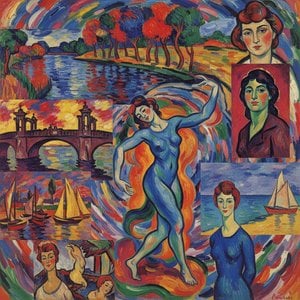
Top 10 Capodopere Fauviste: Explozie de Culoare și Expresivitate în Artă | ArtsDot.ro
Descoperă Top 10 capodopere fauviste – Matisse, Derain și alți maeștri ai culorii! Explorează istoria, tehnicile și expresivitatea picturilor fauve. Reproduceri de artă de calitate muzeală pe ArtsDot.com. Inspiră-te pentru decorul tău!