

 Previzualizare
 Trimite prin felicitare
 Distribuie
 Detalii despre lucrare
 Ghid
Ghid

 Descarcă imaginea
 Produse similare
 Radiografie
 Galerie foto
 Q&A
Q&A Statistici
The Baptism

- 122.0 x 150.0 cm


 Vezi mai mult
Lucrarea de artă afișată pe această pagină este protejată de legile privind drepturile de autor, ceea ce înseamnă că nu putem crea sau vinde în mod legal o reproducere identică. Această protecție este garantată prin acorduri internaționale, precum Convenția de la Berna și de legile naționale, inclusiv cele prevăzute de Legea dreptului de autor din S.U.A. – Titlul 17. Toate drepturile rezervate. Orice reproducere neautorizată este interzisă.
Această metodă respectă pe deplin reglementările privind drepturile de autor, deoarece nu implică copierea sau duplicarea operei protejate. În schimb, este o reinterpretare creativă – o pictură nouă, influențată de original, dar care nu este identică cu acesta.
Giclée / Imprimare artistică
Printuri giclée sau pe canvas de calitate muzeală, cu proces de producție rapid și opțiuni flexibile de finisare. ( Comandă pictură realizată manual Comută pe Imagine Digitală)




P118B lei10

P118H lei10

P118W lei10

P438Z lei10

P508JH lei12

P508YH lei12

P805H lei10

P805Z lei10

P919BZ lei10

P919G lei10

P919XJ lei10

P959ZH lei10

P968JZ lei12

W106C lei8

W218G lei10

W218JH lei8

W218Y lei10

W307PJ lei10

W316G lei10

W316PJ lei8

W316Y lei10

W398PJ lei8

W4111J lei10

W500HY lei15

W500JH lei15

W692G lei12

W849H lei8

W940BG lei15

W953PJ lei8




Alegeți dintre dimensiunile noastre prestabilite, care respectă proporțiile originale ale operei de artă.

Introduceți lățimea și înălțimea necesare pentru a se potrivi ramei sau peretelui dumneavoastră. O printare poate fi doar tăiată, niciodată extinsă dincolo de dimensiunea imaginii originale, astfel încât o dimensiune cu o formă diferită va pierde o parte din imagine. Vă trimitem o simulare digitală pentru aprobare înainte de a imprima orice. Imaginea afișată pe această pagină nu prezintă tăierea reală — doar simularea arată acest lucru.
Livrare în întreaga lume () în 2 săptămâni, în loc de cele 4/5 săptămâni standard. (2 Noiembrie)

Livrare expres gratuită la nivel mondial

Pânză de in de înaltă calitate

Asigurare completă pentru transport

Garanție de rambursare a taxelor vamale

Garanția fidelității culorilor

Politica de retur în 100 de zile (doar pentru defecte de fabricație)

Garanție de rambursare 100%

Ofertă pentru comenzi multiple
 Opțiunea cu sticlă este disponibilă doar pentru dimensiuni de sub 110 cm

The Baptism
Giclée / Imprimare artistică
Dimensiune reproducere
-


Preț total calculat
lei 295
A Moment Frozen in Time
In The Baptism, Antonio Donghi achieves something truly extraordinary: he captures a fragment of middle-class life and suspends it in a state of eternal, quietude. The painting presents a family scene featuring three central figures, where a man in a suit and tie and a woman cradling a baby are set within a space that feels simultaneously real and profoundly abstract. There is a haunting quality to the composition; the individuals appear almost as immobile wax statues on a podium, their expressions neutral and strangely detached from the joyous occasion they are celebrating. This sense of emotional distance creates a tension between the sacred nature of the ritual and the stoic, almost frozen presence of the participants, as if they are waiting for a ritual photograph that will never quite capture their true essence.
< p>The atmosphere is charged with an unreal lack of familiarity, driven by an adamant painting style and a fixed, absorbed light that illuminates the scene with surgical precision. Donghi’s mastery lies in his ability to use light not just to reveal form, but to create a sense of mystery. The figures are set in a minimal environment that strips away the distractions of the modern world, leaving only the essential elements of the event. This deliberate reduction of detail allows the viewer to focus on the subtle interplay of texture and shadow, making the painting feel less like a mere depiction of an event and more like a dreamlike meditation on existence itself.The Artistry of Neoclassical Precision
Technically, The Baptism is a triumph of the Neoclassical movement, showcasing Donghi’s refined ability to marry meticulous detail with a powerful, structured composition. His attention to the clothing of the subjects—a skill perhaps inherited from his father, a fabric dealer—serves a deeper purpose than mere ornamentation; it functions as a way to socially characterize the roles of those portrayed. Every fold in the fabric and every sharp line in the attire contributes to the painting's sense of social order and permanence. The spatial clarity is remarkable, with each element occupying its place with absolute certainty, reminiscent of the architectural stability found in the works of Renaissance masters like Piero della Francesca.
For the discerning collector or interior designer, this work offers a unique aesthetic value. It possesses a Magical Realism that avoids the chaotic energy of much modern art, offering instead a sense of profound, meditative calm. The painting’s ability to evoke both the mundane and the monumental makes it a captivating centerpiece for any sophisticated space. Whether one is drawn to its smooth, polished surfaces or its enigmatic, quiet dignity, The Baptism stands as a testament to the power of stillness. It invites the observer to pause, to look closely, and to find beauty in the silent resonance of a single, captured moment.
Întrebări și răspunsuri
Din ce epocă datează "The Baptism"?
"The Baptism" datează din perioada Modern.
Cum echilibrează "The Baptism" lumina și întunericul?
"The Baptism" de Antonio Donghi este înregistrat cu o shadow, având o luminanță de Dark.
Ce nivel de contrast prezintă "The Baptism" de Antonio Donghi?
Nivelul de contrast al operei "The Baptism" de Antonio Donghi este Balanced.
Opere similare


Biografie artist
Antonio Donghi: The Quiet Master of Neoclassicism
Antonio Donghi (March 16, 1897 – July 16, 1963) was an Italian painter who achieved renown for his meticulous depictions of everyday life and landscapes rendered in a distinctly neoclassical style. Born in Rome, he embarked on a formative artistic journey at the Instituto di Belle Arti before serving during World War I, experiences that profoundly shaped his worldview and artistic sensibilities. Donghi’s distinctive approach—characterized by serene compositions, precise spatial representation, and an understated elegance—established him as one of Italy's foremost figures within the neoclassical movement that flourished in the 1920s.Early Life and Artistic Training
Donghi’s formal education began at the Instituto di Belle Arti in Rome where he honed his skills in drawing and painting under influential instructors. This foundational training instilled a disciplined technique and an appreciation for classical ideals—traits that would permeate throughout his oeuvre. He demonstrated exceptional talent from a young age, displaying a remarkable aptitude for capturing light and form with unwavering accuracy. Following the exigencies of military service during World War I, Donghi continued his artistic pursuits in Florence and Venice, immersing himself in the vibrant intellectual atmosphere of these cities and absorbing inspiration from masters like Piero della Francesca and Henri Rousseau. These formative years cultivated a sensitivity to form and color that would become hallmarks of his later work—a profound understanding of how subtle tonal variations could convey emotion and depth.The Neoclassical Movement and Artistic Style
Donghi’s artistic career gained momentum during the neoclassical movement, which sought to revive the grandeur and clarity of antiquity while retaining a modern sensibility. Critics noted striking similarities between Donghi's paintings and those of Seurat, praising his ability to capture subtle nuances of emotion and atmosphere—a characteristic that distinguished him from many of his contemporaries. He achieved remarkable spatial depth and tonal gradation through meticulous brushwork, mirroring the techniques employed by luminists like Seurat. Donghi’s subjects often revolved around scenes of rural life – laundresses, circus performers, musicians – depicted with a quiet dignity and understated realism. Notably, Donghi's still lifes—particularly those featuring vases of flowers—were imbued with the serene symmetry of naive art, reflecting his fascination with simplicity and natural beauty. This stylistic choice underscored his belief that profound emotion could be conveyed through restrained visual language.Notable Works
Donghi’s artistic output encompassed a diverse range of subjects, including landscapes, portraits, and genre scenes. Among his most celebrated paintings are “The Baptism,” a monumental depiction of religious devotion imbued with luminous color palettes and masterful compositional balance; "Woman in a Cafe," capturing the intimacy of urban life with remarkable detail and psychological insight; and numerous floral compositions that exemplify his mastery of tonal harmony and spatial illusion. These works stand as testament to Donghi’s unwavering commitment to artistic excellence—a dedication that ensured he remained active throughout his career, consistently exhibiting his work and engaging with fellow artists.Recognition and Awards
Donghi’s artistic talent garnered considerable acclaim during his lifetime. He secured First Prize at an International Exhibit held at Carnegie Institute in Pittsburgh in 1927, cementing his reputation as a significant contributor to the Italian art scene. This recognition propelled him into the spotlight of European avant-garde circles and solidified his position within the burgeoning magic realism trend championed by Franz Roh—a movement that sought to reconcile classical ideals with expressive color and tonal modulation. Donghi’s unwavering dedication to artistic excellence ensured he remained active until his death in Rome in 1963, leaving behind a legacy of enduring beauty and intellectual rigor.Legacy
Donghi's paintings reside primarily in Italian collections, notably the Museo di Roma, where they serve as enduring reminders of a masterful artist who captured the essence of both tradition and modernity. His influence extended beyond his immediate contemporaries, inspiring subsequent generations of painters to explore similar stylistic approaches—characterized by meticulous observation, serene compositions, and understated elegance. Donghi’s legacy resides in his ability to convey profound emotion through restrained visual language—a testament to the power of quiet contemplation and unwavering artistic conviction. Explore Antonio Donghi's page at ArtsDot to learn more about his life and work.
Antonio Donghi
1897 - 1963 , Italia
Detalii rapide
- Artistic Movement Or Style: Neoclassicism
- Artists Or Movements Influenced By This Artist: ['Naive Art']
- Artists Who Influenced This Artist:
- Henri Rousseau
- Georges Seurat
- Date Of Birth: March 16, 1897
- Full Name: Antonio Donghi
- Nationality: Italian
- Notable Artworks:
- The Baptism
- Woman in a Cafe
- Place Of Birth: Rome, Italy
Articole similare

The Enduring Legacy of Family Portraiture: A Historical & Artistic Exploration
Explore the rich history of family portraiture with ArtsDot. Discover artistic styles, symbolism & collecting insights. Commission a custom oil painting or appraise your existing artwork today!

Raphael: Cele Mai Remarcabile 25 de Capodopere – Artă Clasică pentru Decorul Casei Tale
Descoperă cele mai frumoase 25 de picturi ale lui Raphael, maestru al Renașterii italiene! Explorează Școala din Atena, Madonnele și alte capodopere clasice. Găsește inspirație pentru decorul casei tale cu artă renascentistă de calitate muzeală pe ArtsDot.com.
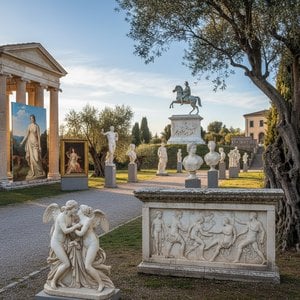
Top 10 Capodopere Neoclasice: Artă, Istorie și Inspirație pentru Decor
Descoperă top 10 capodopere neoclasice de la David, Ingres și Canova! Explorează istoria artei, tehnicile artistice și inspirația din spatele acestor picturi și sculpturi celebre. Găsește reproduceri de artă de calitate muzeală pe ArtsDot.com.

Claude Monet: Cele Mai Iconice Lucrări – O Călătorie Prin Frumusețea Impresionismului | ArtsDot.ro
Descoperă cele mai frumoase lucrări Claude Monet – o călătorie prin impresionism, nufăr și peisaje iconice. Află povestea fiecărui tablou și adu atmosfera artistică în casa ta cu reproduceri de calitate superioară pe ArtsDot.com!

Evoluția Portretelor Familiale: Arta Personalizată ca Cronica Vieții de Familie de-a Lungul Generațiilor
Descoperă evoluția portretelor familiale și rolul lor în conservarea moștenirii! Comandă un portret personalizat realizat de artiști talentați. Expertiză, calitate și o legătură emoțională durabilă cu trecutul tău.