


 Vezi în context
 Trimite
 Distribuie
 Detalii
 Ghid
Ghid

 Descarcă
 Produse similare
 Radiografie
 Diaporama
 Statistici
Lidded Goblet


 Citește mai mult
Reproducere pictată manual în ulei
Pictură în ulei pe pânză, realizată manual de artiștii noștri la dimensiunea și ramele dorite de dumneavoastră, pe comandă. ( Comută pe versiunea Print Treci la imagine digitală)




P118B $10

P118H $10

P118W $10

P438Z $10

P508JH $12

P508YH $12

P805H $10

P805Z $10

P919BZ $10

P919G $10

P919XJ $10

P959ZH $10

P968JZ $12

W106C $8

W218G $10

W218JH $8

W218Y $10

W307PJ $10

W316G $10

W316PJ $8

W316Y $10

W398PJ $8

W4111J $10

W500HY $15

W500JH $15

W692G $12

W849H $8

W940BG $15

W953PJ $8




Alegeți dintre dimensiunile noastre prestabilite, care respectă proporțiile originale ale operei de artă.

Puteți introduce propriile dimensiuni pentru a se potrivi unui anumit cadru sau spațiu. Dacă dimensiunea selectată nu corespunde proporțiilor imaginii originale, vom decupa opera de artă sau vom extinde pictura cu elemente suplimentare pictate manual. O simulare digitală vă va fi trimisă pentru aprobare înainte de începerea producției.
Vă rugăm să rețineți că previzualizarea de pe ecran nu reflectă decuparea sau extinderea reală. Doar macheta va arăta cu exactitate compoziția finală.
Deși sunt disponibile dimensiuni personalizate, vă recomandăm să selectați o dimensiune din lista predefinită pentru a păstra proporțiile originale.
După plasarea comenzii, echipa ArtsDot.com va contacta clientul prin e-mail pentru instrucțiuni și îi va furniza o previzualizare a machetei
Livrare în întreaga lume () în 3-4 săptămâni, în loc de cele 5 săptămâni standard. (22 Septembrie). Fără compromisuri în ceea ce privește calitatea.

Livrare expres gratuită la nivel mondial

Pânză de in premium

Asigurare completă pentru transport

Garanție de rambursare a taxelor vamale

Garanția fidelității culorilor

Politica de retur în 100 de zile (doar pentru defecte)

Garanție de rambursare 100%

Reducere pentru comenzi multiple
 Opțiunea cu sticlă este disponibilă doar pentru dimensiuni de sub 110 cm

Lidded Goblet
Tip de reproducere
Dimensiune reproducere
-


Preț total
$ 263
Opere similare


Biografie artist
The Silent Maestro of Crystal and Fresco
In the storied annals of the Italian Mannerist period, few names evoke as much quiet reverence as Annibale Fontana. A master whose presence in the historical record is as delicate as the materials he manipulated, Fontana emerged from Milan around 1540 to leave an indelible mark on the realms of sculpture, medal-making, and crystal-work. His life, though relatively brief, was a testament to the profound impact that meticulous craftsmanship and an obsession with light can have on the visual language of the Renaissance. Unlike the grandiloquent masters who sought fame through sprawling theatrical displays, Fontana cultivated a specialized excellence, focusing on the intimate interplay between substance and illumination.
Fontana’s artistic journey began in the vibrant workshops of Milan, where he studied under the sculptor Giovanni Battista Brustellini. This early training was foundational, instilling in him a rigorous commitment to anatomical precision and the classical ideals that defined the era. Under Brustellini’s tutelage, Fontana learned to perceive the potential for narrative within solid forms, a skill that would later allow him to breathe life into bronze and stone alike. His formative years were characterized by this pursuit of technical perfection, preparing him for a career that would bridge the gap between the tactile reality of sculpture and the ethereal beauty of light-refracting gems.
A Mastery of Light and Material
The true breakthrough of Fontana’s career arrived with his extraordinary ability to manipulate crystalline structures. His most celebrated achievement, a breathtaking crystal case commissioned by Albert V, Duke of Bavaria, remains a pinnacle of sixteenth-century craftsmanship. Completed between approximately 1560 and 1570, this work serves as a masterclass in illusionism. By working with translucent materials, Fontana was able to capture and bend light, creating a sense of depth and movement that seemed to defy the physical limitations of the medium. This piece did more than merely showcase his skill; it transformed a precious object into an instrument of artistic expression, proving that even the most rigid materials could be made to dance with luminosity.
This fascination with light extended beyond crystal into his work with bronze and medals. His ability to render complex mythological scenes—such as The Abduction of Dejanira or the struggle of Hercules and Cerberus—within the small, controlled space of a medal or a bronze plaque demonstrates a remarkable command over composition. In these works, Fontana utilized the subtle textures of metal to convey psychological nuance and muscular tension, ensuring that even in miniature, his subjects possessed a monumental presence.
Legacy and the Sculptural Spirit
As his career progressed, Fontana’s influence traveled far beyond the borders of Lombardy. His time in Palermo, serving as a sculptor for Francesco Farnese II, the Viceroy of Naples, allowed him to expand his repertoire into portraiture. Here, he captured the likenesses of the era's most prominent figures with a sensitivity that balanced formal dignity with human emotion. Upon returning to Lombardy, his work continued to shape the sacred spaces of his homeland, notably through his contributions to the church of Santa Maria presso San Celso. His execution of statues for the church’s façade, including the prophetic figures of Isaiah and Jeremiah, showcased a sculptor capable of integrating fine detail into the grand architectural landscape.
- Artistic Versatility: A rare ability to move seamlessly between the delicate precision of crystal-working and the robust demands of bronze sculpture.
- Technical Innovation: Pioneered the use of light-refracting materials to create illusionistic depth in decorative arts.
- Historical Impact: Contributed significantly to the Mannerist movement through his focus on anatomical accuracy and psychological portraiture.
Though he passed away in 1587, leaving behind a body of work that is remarkably sparse yet intensely potent, Annibale Fontana remains a vital figure for understanding the breadth of the late Renaissance. He was an artist who understood that true greatness often resides in the details—in the way a shadow falls across a bronze muscle or how a beam of light pierces through a faceted gem. His legacy is one of quiet brilliance, reminding us that the most enduring art is often that which masters the ephemeral elements of our world.

annibale fontana
1540 - 1587 , Italy
Informații rapide
- Artistic Movement Or Style: Mannerist
- Artists Or Movements Influenced By This Artist: ['Michelangelo Buonarroti']
- Artists Who Influenced This Artist:
- Giambattista Baldinelli
- Francesco Francia
- Date Of Birth: Milan, Italy (1540)
- Date Of Death: 1587
- Full Name: Annibale Fontana
- Nationality: Italian
- Notable Artworks:
- Hercules and Nessus
- Lidded Goblet
- Place Of Birth: Milan
Articole conexe

The Enduring Legacy of Fresco: Technique, History & Artistic Expression
Explore the rich history & enduring artistry of fresco painting. Discover techniques from Giotto to Michelangelo, conservation efforts, & modern applications. Learn how ArtsDot brings this timeless art form to your home.

Arta care prinde viață: Puterea emoțională a unei fresce interioare personalizate
Descoperă puterea emoțională a unei fresce interioare personalizate! Experți în arta frescei oferim design unic, execuție impecabilă și consultanță gratuită. Transformă-ți spațiul!

The Enduring Legacy of Fresco Painting: Techniques, History & Contemporary Relevance
Explore the rich history & enduring artistry of fresco painting – from Giotto to Michelangelo! Discover techniques, conservation efforts, & modern applications. Learn how ArtsDot brings this timeless art form to your home.

The Enduring Legacy of Fresco: Technique, History & Artistic Expression Across Cultures
Explore the rich history & enduring legacy of fresco painting! Discover ancient techniques, Giotto's masterpieces, and modern applications. Expert insights for art lovers & professionals.
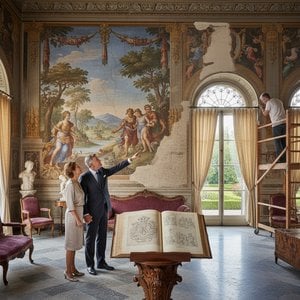
Moștenirea Frescei: Pictând Istoria Familiei pe Pereți
Transformă istoria familiei tale într-o frescă unică! Artiști profesioniști, tehnici moderne și consultanță gratuită. Creează o moștenire vizuală de neuitat cu .