


 Vezi în context
 Trimite
 Distribuie
 Detalii
 Ghid
Ghid

 Descarcă
 Produse similare
 Radiografie
 Diaporama
 Statistici
untitled (8267)

 Citește mai mult
Giclée / Imprimare artistică
Printuri giclée sau pe canvas de calitate muzeală, cu proces de producție rapid și opțiuni flexibile de finisare. ( Comandă pictură realizată manual Treci la imagine digitală)




P118B $10

P118H $10

P118W $10

P438Z $10

P508JH $12

P508YH $12

P805H $10

P805Z $10

P919BZ $10

P919G $10

P919XJ $10

P959ZH $10

P968JZ $12

W106C $8

W218G $10

W218JH $8

W218Y $10

W307PJ $10

W316G $10

W316PJ $8

W316Y $10

W398PJ $8

W4111J $10

W500HY $15

W500JH $15

W692G $12

W849H $8

W940BG $15

W953PJ $8




Alegeți dintre dimensiunile noastre prestabilite, care respectă proporțiile originale ale operei de artă.

Puteți introduce propriile dimensiuni pentru a se potrivi unui anumit cadru sau spațiu. Dacă dimensiunea selectată nu corespunde proporțiilor imaginii originale, vom decupa lucrarea de artă sau vom extinde imaginea cu margini oglindite sau cu o culoare uniformă. Un mockup digital va fi trimis pentru aprobarea dumneavoastră înainte de începerea producției.
Vă rugăm să rețineți că previzualizarea de pe ecran nu reflectă decuparea sau extinderea reală. Doar mockup-ul va arăta cu exactitate compoziția finală.
Deși dimensiunile personalizate sunt disponibile, vă recomandăm să selectați o dimensiune din lista predefinită pentru a păstra proporțiile originale.
Livrare în întreaga lume () în 2 săptămâni, în loc de cele 4/5 săptămâni standard. (22 Septembrie)

Livrare expres gratuită la nivel mondial

Pânză de in premium

Asigurare completă pentru transport

Garanție de rambursare a taxelor vamale

Garanția fidelității culorilor

Politica de retur în 100 de zile (doar pentru defecte)

Garanție de rambursare 100%

Reducere pentru comenzi multiple
 Opțiunea cu sticlă este disponibilă doar pentru dimensiuni de sub 110 cm

untitled (8267)
Giclée / Imprimare artistică
Dimensiune reproducere
-


Preț total
$ 62
A Study in Introspection: Decoding Modigliani’s Portrait
This captivating portrait by Amedeo Clemente Modigliani is a quintessential example of his distinctive style – a compelling fusion of Expressionism and refined elegance that profoundly impacted early 20th-century portraiture. The painting immediately establishes a connection with the viewer through the direct, unwavering gaze of its subject: a bearded man whose eyes convey both intensity and quiet contemplation. It’s a look that is simultaneously challenging and vulnerable, inviting us to delve deeper into the sitter's inner world.Artistic Style & Technical Mastery
Modigliani’s artistic development was shaped by diverse influences – from African sculpture and the structural innovations of Paul Cézanne to the elongated forms found in Italian Mannerism and early Sienese painting. This synthesis is strikingly evident in the portrait's defining characteristic: the sitter’s dramatically elongated face and neck. While often categorized as an Expressionist, Modigliani diverges from the movement’s more overtly emotional or chaotic tendencies. Instead, he achieves expressive power through a masterful simplification of form and a remarkable sensitivity to line. The brushwork is remarkably smooth and controlled, creating a polished surface that subtly belies the psychological depth beneath. The stark contrast between the man's complexion and the vibrant red background serves not merely as decoration but as a powerful device to emphasize his presence and amplify the painting’s dramatic impact. This deliberate use of color heightens the emotional resonance of the work.Historical Context & A Life in Paris
Born in Livorno, Italy, in 1884, Modigliani arrived in Paris in 1906 and quickly became immersed in the city’s vibrant avant-garde art scene. He forged close relationships with artists like Pablo Picasso and Constantin Brâncuși, absorbing their influences while steadfastly pursuing his own unique artistic vision. Tragically, Modigliani's life was marked by hardship – poverty, recurring illness (he suffered from respiratory problems), and a constant struggle for recognition. Despite these challenges, he produced an astonishing body of work in his short career—approximately 100 paintings and 80 sculptures before his untimely death in 1920 at the age of 35. This portrait likely dates from his most productive period (roughly 1914-1919), a time when he was creating an extraordinary series of portraits that captured the spirit of bohemian Paris.Symbolism & Emotional Resonance
Modigliani rarely employed overt symbolism in his portraits, instead focusing on capturing the *essence* of the individual. The intensity of the sitter’s gaze and the simplicity of the composition suggest a profound exploration of character. The red background is open to interpretation – representing passion, vitality, or perhaps an underlying sense of tension. The overall effect is one of deep psychological insight. This isn't simply a representation; it’s an investigation into human nature and emotion. The painting evokes feelings of quiet contemplation, melancholy, and a subtle longing for connection—a testament to the universal human experience of being seen, and seeing others, with honesty and vulnerability.For Collectors & Interior Design
A high-quality reproduction of this Modigliani portrait would be a stunning addition to any art collection or interior space. Its sophisticated color palette and elegant composition complement both modern and traditional settings. The painting’s inherent drama and emotional depth will undoubtedly serve as a focal point, sparking conversation and adding a touch of timeless artistic flair. It's a piece that rewards repeated viewing, offering new discoveries with each encounter – a true reflection of Modigliani’s enduring legacy. Consider pairing this portrait with neutral tones and natural textures to allow its intensity to shine.Opere similare


Biografie artist
A Life Etched in Longing: The World of Amedeo Modigliani
Amedeo Clemente Modigliani, a name synonymous with haunting beauty and melancholic grace, remains one of the most beloved and tragically romantic figures of early 20th-century art. Born in Livorno, Italy, in 1884 into a family steeped in Sephardic Jewish heritage, his life was marked by both profound artistic vision and persistent hardship. Frequent illness shadowed his youth – pleurisy and typhoid fever became unwelcome companions – perhaps instilling within him a sensitivity to fragility that would permeate his work.
Though born into relative comfort, the family’s financial fortunes waned, adding another layer of complexity to the young Modigliani's formative years. It was a childhood punctuated by intellectual stimulation, thanks to his mother and grandfather who introduced him to the works of Nietzsche, Baudelaire, and Lautréamont, laying the groundwork for an artistic sensibility that would reject conventional norms.
The pull of Paris proved irresistible, and in 1906, Modigliani embarked on a journey that would define his career. The city was then a crucible of artistic innovation, teeming with revolutionary ideas and challenging conventions. He immersed himself in the vibrant art scene, encountering giants like Pablo Picasso and Constantin Brâncuși, figures who profoundly shaped his aesthetic trajectory. Initially drawn to the burgeoning Cubist movement, Modigliani quickly found its rigid geometry too constricting for his expressive needs. His artistic spirit yearned for something more lyrical, more deeply rooted in human emotion.
He began a period of intense experimentation, absorbing influences from African sculpture – particularly its elongated forms and simplified features – and the archaic grace of Italian Renaissance art. This fascination with African art would become a cornerstone of his distinctive style, informing his sculptural endeavors and shaping his artistic vision.
The Sculpted Soul: Style and Innovation
Modigliani’s signature style emerged as a unique synthesis of these diverse inspirations. His portraits, arguably his most celebrated works, are instantly recognizable for their elongated faces and necks, almond-shaped eyes devoid of pupils, and an overall sense of serene melancholy. These were not merely likenesses; they were explorations of the inner life, capturing a profound psychological depth in each subject. He stripped away extraneous detail, focusing on essential forms to convey emotion with remarkable economy.
His nudes, often controversial during his lifetime, possess a similar quality – a quiet dignity and vulnerability that transcends mere physical representation. The figures are not overtly sensual but rather imbued with a sense of timeless beauty and existential longing. Modigliani’s masterful manipulation of line—a technique he honed through meticulous observation and relentless practice—became synonymous with his artistic idiom.
Notable Works
- Nude Bust (35 x 26 cm): A quintessential example of Modigliani’s elongated forms and expressive style, showcasing his mastery of the human figure.
- Reclining Nude with Loose Hair: Demonstrates his ability to capture the essence of femininity with a delicate balance of sensuality and vulnerability.
- Seated Female Nude (92 x 60 cm): A powerful depiction of the female form, characterized by its simplified shapes and serene composure.
- Portrait of Jeanne Hebuterne: Numerous portraits capturing his lover and muse, revealing a poignant emotional depth and intimate connection.
A Life Marked by Shadows
Modigliani’s personal life was as turbulent as his artistic journey. He struggled with poverty and addiction throughout much of his career, often relying on the generosity of friends and patrons. His relationship with Jeanne Hébuterne, a young artist herself, became the central emotional anchor in his life. They shared a deep love and mutual artistic understanding, but their happiness was tragically short-lived.
The pressures of poverty, Modigliani’s declining health, and Jeanne's pregnancy created an unbearable strain. In 1920, devastated by the birth of their daughter and overwhelmed by despair, Jeanne took her own life. Just days later, Modigliani succumbed to tubercular meningitis at the age of only 35.
Legacy of a Lost Generation
Despite facing little recognition during his lifetime, Amedeo Modigliani’s work experienced a dramatic surge in popularity after his death. His paintings and sculptures began to command increasingly high prices, and his distinctive style exerted a profound influence on subsequent generations of artists. He became an icon of the bohemian spirit, embodying the struggles and triumphs of a lost generation grappling with modernity and existential questions.
Today, Modigliani’s works are held in prestigious museums around the world, including the Osaka City Museum of Modern Art, the Musée d'Art Moderne de la Ville de Paris, and numerous private collections. His portraits continue to captivate viewers with their haunting beauty and emotional resonance, serving as a poignant reminder of a life lived on the edge – a life etched in longing, passion, and an unwavering commitment to artistic truth.

Modigliani
1884 - 1920 , Italia
Informații rapide
- Artistic Movement Or Style: Expresionism
- Artists Or Movements Influenced By This Artist: ['Modernism']
- Artists Who Influenced This Artist:
- Brâncuși
- Picasso
- Date Of Birth: 12 iulie 1884
- Date Of Death: 24 ianuarie 1920
- Full Name: Amedeo Clemente Modigliani
- Nationality: Italian
- Notable Artworks:
- Nud Bust
- Reclining Nude
- Seated Female Nude
- Place Of Birth: Livorno, Italia
Articole conexe

Cele mai importante 10 capodopere ale abstracției geometrice | Artă & Decor de lux pe ArtsDot.com
Descoperă cele mai importante 10 capodopere ale abstracției geometrice! Explorează istoria, artiștii (Mondrian, Kandinsky) și culorile vibrante care au definit arta modernă. Reproduceri de tablouri de lux pe ArtsDot.com pentru un decor interior rafinat. Explorează colecția online!

Wassily Kandinsky: Cele Mai Iconice 25 De Opere – Artă Abstractă pentru Decor Rafinat
Descoperă cele mai emblematice 25 de opere ale lui Wassily Kandinsky, pionierul artei abstracte! Explorează culorile vibrante, compozițiile unice și istoria fascinantă din spatele fiecărei picturi. Reproduceri de calitate muzeală pe ArtsDot.com – inspiră-ți decorul cu artă modernă!

Top 10 Capodopere ale Expresionismului Abstract: Artă, Artiști și Decorațiuni de Lux | ArtsDot.ro
Descoperă Top 10 capodopere ale Expresionismului Abstract! Explorează poveștile lui Pollock, Rothko și De Kooning. Reproduceri de artă de lux & inspirație decor pe ArtsDot.ro. Găsește pictura perfectă pentru spațiul tău!
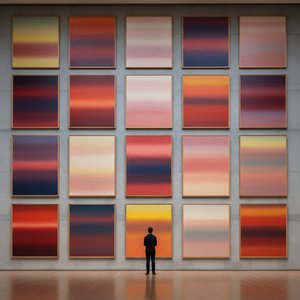
Mark Rothko: Cele Mai Iconice 25 De Capodopere – Artă Abstractă pentru Decor Rafinat
Descoperă cele mai iconice 25 de picturi abstracte ale lui Mark Rothko! Explorează istoria, culorile și emoțiile din spatele fiecărei capodopere. Reproduceri artă de calitate muzeală & inspirație decor pe ArtsDot.com.

Modigliani: Cele Mai Iconice 25 De Opere – Artă, Frumusețe și Decorațiuni de Lux
Descoperă cele mai frumoase 25 de opere Modigliani! Explorează portrete expresive, sculpturi unice și nuduri iconice. Află povestea fiecărei picturi și adaugă eleganță locuinței tale cu replici de artă de lux pe ArtsDot.com.


