
 Oil On Canvas
- WallArt
- Orientalism
 1868
1868 41.0 x 31.0 cm
 Muzeul Hermitaj

The picture follows your choices: , .
Descriere obiect de colecție
Admire 'Before a Mosque' by Alexandre Decamps (1868), a stunning Orientalist painting of North Africa. Explore its realistic details, muted palette & architectural beauty – a captivating 19th-century artwork.
 Vezi mai mult
Biografie artist
Decamps, Alexandre-Gabriel—French, 1803-1860. 114. Street Scene in Naples. On canvas 19j4 in. x. IS in. 115. Study of Pigs. On canvas lOJi in. x 13^4 in ...Missing: daget biography)
Reproducere pictată manual în ulei
Pictură în ulei pe pânză, pictată manual de artiștii noștri la dimensiunea și ramele dorite de dumneavoastră, pe comandă. ( Comută pe versiunea Print Comută pe Imagine Digitală)
More about this painting
 Previzualizare
 Trimite prin felicitare
 Distribuie
 Detalii despre lucrare
 Ghid
Ghid

 Descarcă imaginea
 Produse similare
 Radiografie
 Galerie foto
 Q&A
Q&A Statistici
Order your painting in four simple steps
Take your time. You can change any answer; the price in your order card follows each choice.
1 Step one of four
Which size would you like?
These sizes keep the proportions of the original painting. The drawing shows your choice on a wall, above a two-metre sofa.
Or give your own measurements
Alegeți dintre dimensiunile noastre prestabilite, care respectă proporțiile originale ale operei de artă.

Introduceți lățimea și înălțimea necesare pentru a se potrivi ramei sau peretelui dumneavoastră. Această lucrare este pictată manual, așa că, pentru o dimensiune cu o formă diferită, artistul poate picta puțin mai mult în jurul imaginii sau poate tăia puțin din margini — dumneavoastră decideți. Vă vom trimite o simulare digitală pentru aprobare înainte de a începe pictarea. Imaginea afișată pe această pagină nu reprezintă rezultatul real — doar simularea este reprezentativă.
2 Step two of four
How should it be prepared: rolled, stretched or framed?
The prices below are for the size you chose in step one.
Choose the edges of the stretched canvas
Choose your frame

White lei1

Blurside lei1

Extended lei1

P118B lei10

P118H lei10

P118W lei10

P438Z lei10

P508JH lei12

P508YH lei12

P805H lei10

P805Z lei10

P919BZ lei10

P919G lei10

P919XJ lei10

P959ZH lei10

P968JZ lei12

W106C lei8

W218G lei10

W218JH lei8

W218Y lei10

W307PJ lei10

W316G lei10

W316PJ lei8

W316Y lei10

W398PJ lei8

W4111J lei10

W500HY lei15

W500JH lei15

W692G lei12

W849H lei8

W940BG lei15

W953PJ lei8

H24-GOLD lei30

H24-SILVER lei30

H36-GOLD lei45

H36-SILVER lei45
Înramat
Moulding: . Overall size with the frame: .
3 Step three of four
Would you like anything changed in the painting?
Most people answer no. Because each painting is made by hand, our artist can also adapt it for you.
After order, ArtsDot.com team will email client for instructions and provide a mockup preview
4 Step four of four
A few finishing options
All of them are optional. The answers already selected cost nothing extra.
Who paints it?
Livrare în întreaga lume () în 3-4 săptămâni, în loc de cele 5 săptămâni standard. (31 Octombrie). Fără compromisuri în ceea ce privește calitatea.
A nameplate, as in a museum?
Detalii plăcuță din bronz gravat
This elegant plaque features the artist's name and the title of the artwork, finely engraved for a timeless presentation.
It is made from bronze with a refined, elegant finish. The text is precisely laser-engraved for a sharp and permanent result. Measuring 9x2 cm, the plaque is compact yet easy to read. It's built to be durable and scratch-resistant, offering a professional, museum-quality look. Mounting is simple thanks to the included adhesive backing.
Detalii plăcuță din acril transparent
The plaque includes essential engraved details such as the artist's name, the title of the artwork, the date it was created, the type of media used-like oil on canvas or watercolor-a brief description of the piece, and a QR code that links to the complete artwork information.
It is crafted from clear acrylic, offering a sleek, modern appearance. The text is UV-engraved in black to ensure strong visual contrast. With a size of 10x15 cm, it ensures optimal readability. It comes equipped with two metal hooks for secure wall mounting. The plaque is designed to be weather-resistant, making it suitable for various environments, and it includes interactive features that work seamlessly with smartphone scanning.
Detalii placă din acril negru
This elegant plaque includes engraved information such as the artist's name, the title of the artwork, the date it was created, the type of media used (like oil on canvas or watercolor), a short description of the artwork, and a QR code for quick access to more information.
The plaque itself is made from refined black acrylic with a premium finish. The text is laser-engraved in white for high contrast and readability. Its size is 10x15 cm, designed to be easy to read. It comes with two metal hooks for professional mounting. The design is sleek and fits any interior style. It is also weather-resistant and durable, with built-in digital integration for mobile compatibility.
A protective varnish?
When do you need it?
✓ Check and order
Your painting, as you ordered it

Before a Mosque
Tehnică de reproducere
Dimensiune reproducere
-

Selecție de artiști de elită
Mai multe detalii, rafinament și timp suplimentar de execuție
-

Ramă pentru reproducere artistică
-
-
Pentru opere de artă sau reproduceri care depășesc 105 cm (aproximativ 41 de inch) pe oricare dintre laturi, cadrul va fi livrat demontat, sub formă de kit. Această metodă asigură o livrare sigură și previne deteriorarea în timpul transportului.
Este necesară asamblarea profesională – acest produs nu este de tip DIY (de făcut singur).
Kitul trebuie asamblat, iar pânza întinsă, de către un legător de cadre experimentat, utilizând adeziv pentru lemn (neinclus în colet), o cheie pentru întinderea pânzei și cleme pentru a menține barele la unghi drept în timp ce adezivul se usucă. Asamblarea incorectă sau tensiunea neuniformă a pânzei pot deteriora permanent opera de artă și nu sunt acoperite de garanția noastră.
 Pentru opere de artă sau reproduceri care depășesc 105 cm (aproximativ 41 de inch) pe oricare dintre laturi, cadrul va fi livrat demontat, sub formă de kit. Această metodă asigură o livrare sigură și previne deteriorarea în timpul transportului.
Toate barele din lemn masiv sunt incluse, tăiate cu precizie la dimensiunea necesară.
Asamblat cu șuruburile incluse, plus adeziv pentru lemn pentru îmbinările de colț, care nu este furnizat și trebuie achiziționat de către tâmplarul dumneavoastră.
Sunt necesare unelte profesionale care nu sunt incluse: o șipte de întindere a pânzei (tensionator) și cleme pentru a menține barele la unghi drept în timp ce adezivul se usucă.
Important:
Îmbinările de colț necesită adeziv pentru lemn, barele trebuie fixate cu clești de strângere până când adezivul este complet uscat, iar întinderea pânzei pe cadrul asamblat necesită un clește pentru întins pânza. Niciunul dintre aceste elemente nu este inclus în kit. Vă rugăm să consultați un încadrator profesionist cu experiență înainte de a comanda această dimensiune.

Etichetă de prezentare
-
-

Lac de protecție
Lac lucios (intensifică nuanțele și oferă protecție împotriva luminii și a umidității)
-

Personalizează opera mea de artă
Exemple de elemente ce pot fi personalizate: Înlocuirea feței cu fotografia clientului; Adăugarea unui animal de companie (de exemplu, înlocuirea unei pisici cu un câine); Includerea unui mesaj ascuns în fundal; Modificarea peisajului sau a elementelor din fundal.
-

Livrare rapidă
Livrare la nivel mondial () în 3-4 săptămâni, în loc de cele 5 săptămâni standard. (31 Octombrie). Fără compromisuri când vine vorba de calitate.
-
Livrare rapidă
Livrare la nivel mondial () în 5 săptămâni. (7 Noiembrie).
Inclus
Preț total calculat
lei 2056
Opțiunea cu sticlă este disponibilă doar pentru dimensiuni de sub 110 cm
Included with every order
- Livrare expres gratuită la nivel mondial
- Pânză de in de înaltă calitate
- Asigurare completă pentru transport
- Garanție de rambursare a taxelor vamale
- Garanția fidelității culorilor
- Politica de retur în 100 de zile (doar pentru defecte de fabricație)
- Garanție de rambursare 100%
- Ofertă pentru comenzi multiple


A Glimpse into the Soul of North Africa: Decamps’ “Before a Mosque”
Alexandre Gabriel Decamps' "Before a Mosque" (1868) isn’t merely a depiction of a North African cityscape; it’s a meticulously crafted window into a vanished world, a poignant meditation on faith, community, and the enduring beauty of the Orient. Painted during the height of Orientalist art—a movement that sought to capture the exotic allure of the Middle East and North Africa through European eyes—Decamps transcends the often-stereotypical romanticism of his contemporaries, offering instead a remarkably nuanced and subtly melancholic portrayal.
The scene unfolds in what appears to be a bustling town square, dominated by an imposing archway that immediately draws the viewer’s eye. Men, dressed in flowing robes and turbans, populate the foreground and midground, engaged in various activities – perhaps a transaction, a conversation, or simply observing the rhythm of daily life. The architecture is equally compelling: weathered stone buildings with intricately carved details, hinting at centuries of history and a deep connection to the land. Yet, there’s an undeniable stillness about the composition, a sense that time has paused, inviting contemplation rather than immediate action.
The Academic Realism of a Romantic Vision
Decamps was a master of academic realism, a style characterized by painstaking observation and a commitment to accurately representing the world as he saw it. However, his approach wasn’t simply about replicating reality; he imbued his paintings with a strong narrative quality, creating scenes that felt both familiar and utterly foreign. This is evident in the careful attention to detail – the texture of the stone walls, the folds of the men's robes, the dappled light filtering through the palm trees—all rendered with remarkable precision.
Despite his adherence to realism, Decamps’ work possesses a distinctly Romantic sensibility. The scene evokes a sense of mystery and intrigue, fueled by the muted color palette – dominated by earthy browns, ochres, and subtle blues – and the atmospheric lighting. These elements contribute to an overall feeling of quiet contemplation, inviting the viewer to step into the painting and experience the atmosphere firsthand. Decamps’ use of perspective is subtly flattened, a deliberate choice that enhances the sense of depth and creates a slightly dreamlike quality.
Symbolism and Historical Context
The archway itself holds significant symbolic weight. In Islamic architecture, arches often represent gateways to sacred spaces or transitions between different realms. Here, it could be interpreted as a portal into a community centered around faith—a place of worship, gathering, and shared identity. The presence of the men suggests a vibrant social life, highlighting the importance of communal bonds within this North African setting.
Decamps painted “Before a Mosque” during a period of intense European fascination with the Orient. Following Napoleon’s campaigns in Egypt, there was a surge of interest in ancient civilizations and exotic locales. Orientalist art flourished as Europeans sought to understand and represent these distant lands—often through a lens shaped by their own cultural biases. Decamps' work, however, goes beyond mere spectacle; it offers a glimpse into the everyday lives of people who were largely absent from European narratives.
A Timeless Masterpiece: Reproduction and Beyond
Reproduced faithfully in this 41 x 31 cm print, “Before a Mosque” retains its original power to transport the viewer to another time and place. The rich colors, intricate details, and evocative atmosphere make it an ideal addition to any collection or interior space. Whether you’re an art enthusiast, a collector seeking a piece of history, or simply someone who appreciates beautiful imagery, this reproduction offers a tangible connection to the artistic vision of Alexandre Gabriel Decamps—a true pioneer of Orientalist painting.
Întrebări și răspunsuri
La ce vârstă a creat Alexandre Gabriel Decamps opera „Before a Mosque”?
Când „Before a Mosque” a fost creat în 1868, Alexandre Gabriel Decamps – născut în 1803 – avea 65 ani.
Cine este autorul și din ce an este "Before a Mosque"?
Alexandre Gabriel Decamps a creat "Before a Mosque" în 1868.
Ce paletă de culori este utilizată în "Before a Mosque" de Alexandre Gabriel Decamps?
"Before a Mosque" de Alexandre Gabriel Decamps utilizează o paletă de culori Earthy. Această paletă definește caracterul cromatic general al operei.
Opere similare


Alexandre Gabriel Decamps
1803 - 1860, Franța
Biografie artist
Alexandre Gabriel Decamps (1803-1860): A Pioneer of Orientalist Visions
Alexandre Gabriel Decamps, a name resonating with the vibrant hues of exotic landscapes and the dramatic flair of Romanticism, emerged as a pivotal figure in 19th-century French painting. Born in Paris on March 3, 1803, his artistic journey was one of bold innovation, challenging academic conventions and forging a path toward what would become known as Orientalism. While contemporaries like Delacroix and Ingres also held prominent positions within the French art world, Decamps distinguished himself through an intensely personal style—a blend of meticulous observation, dramatic composition, and a captivating narrative quality that drew viewers into worlds both familiar and utterly foreign. His early recognition as a talented artist foreshadowed a career marked by critical acclaim, culminating in the grand or council medal at the Paris Exhibition of 1855, a testament to his exceptional skill and unique vision. Beyond the canvas, Decamps was a man deeply connected to nature, finding solace and inspiration in the countryside surrounding Paris, where he indulged his passion for animals and field sports—a fondness that would subtly permeate much of his artistic output.- Early Life and Artistic Training:
- Travels to the East: Shaping His Vision:
- Style and Technique: Romantic Drama Meets Observation:
- Notable Works: Landscapes, Biblical Scenes and Genre Art:
- Legacy and Influence: The Father of Orientalism
Early Life and Artistic Training
Decamps’s formative years were steeped in Parisian intellectual life. He received a comprehensive education, mastering Latin and Greek—languages crucial for understanding the humanist tradition that underpinned much of European art at the time. This scholarly grounding would prove invaluable as he honed his artistic skills under the tutelage of Jean-Baptiste Camille Bouchardy, a respected teacher known for fostering realism and capturing the essence of human emotion. Decamps’s early works demonstrated an aptitude for portraiture and genre scenes—domestic interiors populated with figures imbued with psychological depth—reflecting the prevailing stylistic trends of the École de Barbizon, where artists sought inspiration in rural landscapes and celebrated the beauty of everyday life.Travels to the East: Shaping His Vision
A pivotal moment in Decamps’s artistic development arrived when he embarked on expeditions to Egypt and Syria during the 1830s. These journeys profoundly impacted his sensibilities, exposing him to cultures vastly different from those of France—a contrast that fueled his desire to depict these lands with unprecedented accuracy and sensitivity. Unlike many artists of his era who relied on idealized representations or fantastical embellishments, Decamps meticulously documented the sights and sounds of the Middle East, capturing the textures of desert sands, the bustling marketplaces of Damascus, and the serene beauty of monastic churches. This commitment to realism wasn’t merely a matter of technical proficiency; it stemmed from a genuine fascination with Eastern traditions and beliefs—a fascination that would permeate his artistic output for decades to come.Style and Technique: Romantic Drama Meets Observation
Decamps's artistic style was characterized by a masterful blend of Romantic drama and meticulous observation. He employed bold brushstrokes, creating textured surfaces that conveyed the palpable atmosphere of his subjects—whether biblical narratives or landscapes bathed in golden sunlight. His compositions were dynamic and theatrical, capturing movement and emotion with dramatic flair—a hallmark of the École de Barbizon’s influence. However, Decamps distinguished himself from his peers by grounding his artistic vision in detailed realism—a technique honed through countless hours spent studying nature and painstakingly recreating its nuances on canvas. This approach resulted in paintings that possessed both grandeur and intimacy, inviting viewers to immerse themselves in worlds rendered with breathtaking precision.Notable Works: Landscapes, Biblical Scenes and Genre Art
Decamps produced a prolific oeuvre encompassing landscapes, biblical scenes, and genre art—each reflecting his distinctive artistic sensibilities. Among his most celebrated works are “Joseph Sold by His Brethren,” depicting a poignant depiction of biblical storytelling with remarkable attention to detail; “The Defeat of the Cimbri,” capturing the chaos and brutality of battle with dynamic energy; and “Incendie d’un village italien,” portraying a dramatic confrontation between figures against a backdrop of fiery hues. Furthermore, Decamps excelled in genre paintings—scenes from everyday life—such as “La Cour de ferme” and “L’École Turque”—where he captured the spirit of his subjects with humor and psychological insight. His depictions of animals—particularly dogs—were equally noteworthy, reflecting his lifelong passion for these creatures and conveying their inherent dignity and beauty.Legacy and Influence: The Father of Orientalism
Alexandre Gabriel Decamps is rightfully considered the founding father of Orientalism in French painting. Prior to him, depictions of the East were often filtered through a lens of fantasy and exoticism—a stylistic convention that perpetuated stereotypes and obscured the complexities of Eastern cultures. Decamps challenged this tradition by presenting an unvarnished glimpse of life in North Africa and the Middle East—one rooted in direct observation and genuine curiosity. His groundbreaking approach inspired artists and writers alike, fostering a wave of Orientalist works that dominated much of 19th-century art. Maxime du Camp famously dubbed him “Christopher Columbus of the Orient,” recognizing his pioneering role in opening up this new artistic territory. Decamps’s legacy continues to endure through his captivating paintings—masterpieces like “The Albanian Dancer” and “A Bedouin and a Camel Resting in a Desert”—which are celebrated for their artistic merit and historical significance, ensuring that his vision inspires generations of artists to come. His works can be found in prestigious institutions such as the Musée du Louvre in Paris.


Articole similare

Henry Ossawa Tanner: Pioneering African American Representation in 19th-Century Art
Explore the life and groundbreaking work of Henry Ossawa Tanner, a pioneering African American artist who achieved international acclaim with his deeply spiritual and realistic paintings. Discover his legacy at ArtsDot.

Beyond Exoticism: Unveiling the Complex Legacy of Orientalist Painting
Explore the fascinating & complex world of Orientalist painting! Discover its history, key artists like Gérôme & Lewis, and Edward Said's influential critique. Uncover nuance beyond stereotypes with ArtsDot.
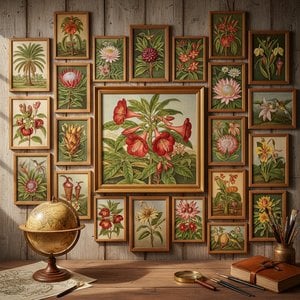
Marianne North: Cele Mai Frumoase 25 de Opere – Artă Botanică Excepțională pentru Decorul Casei Tale
Descoperă cele mai frumoase 25 de picturi ale lui Marianne North, o pionieră a artei botanice victoriene. Explorează acuarelele vibrante și peisajele exotice care au capturat natura într-un stil unic. Reproduceri artă de calitate muzeală disponibile pe ArtsDot.com!