


 Trimite prin felicitare
 Distribuie
 Detalii despre lucrare
 Ghid
Ghid

 Descarcă imaginea
 Produse similare
 Galerie foto
 Statistici
Faith
 Marble
- Sculpture
- Academic Art / Neoclassicism
 Modern
 Biennale Internazionale dell'Antiquariato di Firenze
 Vezi mai mult
Giclée / Imprimare artistică
Printuri giclée sau pe canvas de calitate muzeală, cu proces de producție rapid și opțiuni flexibile de finisare. ( Comandă pictură realizată manual Comută pe Imagine Digitală)




































Alegeți dintre dimensiunile noastre prestabilite, care respectă proporțiile originale ale operei de artă.

Introduceți lățimea și înălțimea necesare pentru a se potrivi ramei sau peretelui dumneavoastră. O printare poate fi doar tăiată, niciodată extinsă dincolo de dimensiunea imaginii originale, astfel încât o dimensiune cu o formă diferită va pierde o parte din imagine. Vă trimitem o simulare digitală pentru aprobare înainte de a imprima orice. Imaginea afișată pe această pagină nu prezintă tăierea reală — doar simularea arată acest lucru.
Livrare în întreaga lume () în 2 săptămâni, în loc de cele 4/5 săptămâni standard. (26 Octombrie)

Livrare expres gratuită la nivel mondial

Pânză de in de înaltă calitate

Asigurare completă pentru transport

Garanție de rambursare a taxelor vamale

Garanția fidelității culorilor

Politica de retur în 100 de zile (doar pentru defecte de fabricație)

Garanție de rambursare 100%

Ofertă pentru comenzi multiple
 Opțiunea cu sticlă este disponibilă doar pentru dimensiuni de sub 110 cm

Faith
Giclée / Imprimare artistică
Dimensiune reproducere
-


Preț total calculat
lei 287
A Vision in Marble: The Ethereal Essence of Faith
In the quiet, shadowed corridors of an art gallery, where light plays delicately against deep charcoal walls, stands a masterpiece that commands a singular, breathless attention. Adolfo Wildt’s Faith is not merely a sculpture; it is a profound encounter with the sublime. Carved from marble with a precision that defies the very nature of stone, this work transcends its physical medium to capture something far more elusive. The piece emerges from the darkness, its surfaces catching the light in a way that suggests an almost supernatural translucency, a hallmark of Wildt’s unparalleled technical mastery.
The sculpture invites the viewer into a space of reverence and quiet contemplation. There is a striking tension held within the marble—a balance between the heavy, cold reality of the stone and the weightless, spiritual aspiration the subject represents. As one gazes upon the form, the interplay of light and shadow creates a sense of movement, as if the very essence of devotion is breathing through the polished surface. For the discerning collector or the interior designer seeking a centerpiece of profound character, Faith offers an unparalleled emotional depth that anchors a room with both sophistication and soul.
Technical Brilliance and the Sculptor's Touch
To understand the impact of Faith, one must appreciate the meticulous lineage of its creator. Wildt, a master who emerged from the vibrant artistic landscape of Milan, brought to this work a unique sensitivity forged during his early years as a goldsmith. This background is evident in the exquisite, fine-grained detail that adorns the sculpture, where every curve and contour has been polished to an opalescent sheen. His ability to manipulate marble to mimic the softness of skin or the delicate texture of light is nothing short of miraculous.
The technique employed here bridges the gap between classical tradition and the burgeoning modernism of his era. While the subject matter evokes the timelessness of historical religious iconography, the execution possesses a sharp, almost experimental edge. The way the light interacts with the sculpted surfaces creates a dramatic chiaroscuro effect, making the sculpture appear to shift and evolve depending on the viewer's perspective. This dynamic quality ensures that the piece remains a living presence within any curated space, offering new visual discoveries with every passing hour.
A Legacy of Devotion and Artistry
The historical context of Wildt’s work adds a layer of prestige to this magnificent sculpture. As an artist who navigated the transition from the Scapigliatura movement toward a more refined, modern aesthetic, Wildt possessed the rare ability to infuse classical forms with contemporary psychological intensity. Faith stands as a testament to this era of profound artistic transformation, embodying a period where the boundaries of sculpture were being pushed toward new heights of expression.
For those looking to integrate a piece of such historical and aesthetic significance into a collection, Faith represents more than just decoration. It is an investment in a legacy of Italian excellence. Whether placed in a private study, a grand salon, or a contemporary gallery setting, the sculpture serves as a focal point for intellectual and emotional engagement. It does not merely occupy space; it defines it, bringing with it an aura of timelessness, strength, and an unshakeable sense of peace.
Întrebări și răspunsuri
Care este nuanța dominantă în "Faith"?
Culoarea dominantă a operei "Faith" de Adolf Wildt este Warm Sunset Tones. Această nuanță constituie tonul de bază al paletei cromatice.
Ce reprezintă "Faith" de Adolf Wildt și ce atmosferă transmite?
"Faith" de Adolf Wildt îmbină classical sculpture, religious symbolism, marble art”, “gallery setting”, “human form”, “art history”, italian art” cu o atmosferă Dramatic.
Ce atmosferă ar aduce într-o încăpere o reproducere a operei "Faith" de Adolf Wildt?
Cu atmosfera sa Dramatic, „Faith” este recomandată pentru o Restaurant.
Opere similare


Biografie artist
A Milanese Bridging Worlds: The Life and Art of Adolfo Wildt
Adolfo Wildt, born in Milan on March 1st, 1868, to a Swiss family who had embraced Lombardy as their new home, emerged as a pivotal figure in Italian sculpture during a period of profound artistic transition. His journey was one marked by early hardship and relentless dedication, beginning not within the hallowed halls of an academy but amidst the practical demands of labor. Leaving school at the tender age of nine, Wildt’s initial forays into the working world saw him apprenticed first as a hairdresser, then as a goldsmith – experiences that instilled in him a meticulous attention to detail and a nascent understanding of form. However, it was his apprenticeship at eleven with Giuseppe Grandi, a prominent sculptor associated with the Scapigliatura movement, that truly ignited his artistic calling. Under Grandi’s tutelage, Wildt began to master the demanding art of sculpting marble, laying the foundation for a career defined by technical brilliance and emotional depth. By eighteen, his talent was already garnering recognition within Milanese artistic circles, foreshadowing the significant contributions he would make to the world of sculpture. He continued his education at the Brera Academy of Fine Arts, solidifying his theoretical knowledge alongside his burgeoning practical skills.Early Life and Apprenticeships: From Hairdressing to Marble
Wildt’s formative years were characterized by a pragmatic upbringing that instilled in him an unwavering commitment to craftsmanship. Unlike many artists of his time who benefited from privileged backgrounds, he began his artistic education outside the traditional academic framework—a deliberate choice that would profoundly shape his approach to sculpture. At nine, he abandoned formal schooling to pursue employment as a hairdresser, gaining valuable experience in observation and precision. Subsequently, he honed his skills as a goldsmith, mastering techniques of metalworking and developing an acute sensitivity to texture and surface finish. These early occupations weren’t merely means of earning a living; they cultivated within him a disciplined mindset and fostered an instinctive understanding of sculptural principles—a legacy that would endure throughout his artistic career. The pivotal moment arrived at eleven when he entered the workshop of Giuseppe Grandi, a sculptor deeply rooted in the Scapigliatura movement – a rebellious artistic faction that challenged prevailing conventions and championed expressive freedom. Grandi recognized Wildt’s innate talent and guided him toward mastering the art of sculpting marble, introducing him to the transformative process of transforming raw stone into evocative forms. This mentorship proved instrumental in shaping Wildt’s artistic vision and establishing his reputation as a sculptor of exceptional skill.The Influence of Grandi and Scapigliatura: A Synthesis of Romanticism & Rebellion
Giuseppe Grandi’s influence extended far beyond mere technical instruction; he instilled in Wildt a philosophical perspective that embraced the spirit of Scapigliatura—a movement born from disillusionment with academic art and fueled by a desire for artistic innovation. Scapigliatura artists rejected idealized beauty and formal restraint, favoring instead raw emotion and unconventional techniques. Grandi encouraged Wildt to explore these ideas, urging him to abandon decorative conventions in favor of sculptural expressions that conveyed profound psychological depth. This ethos resonated deeply with Wildt’s sensibilities, shaping his artistic style and informing his thematic concerns. The Scapigliatura movement’s rejection of established norms mirrored Wildt’s own determination to forge a path distinct from the prevailing artistic trends of his era – a characteristic that would become synonymous with his oeuvre. Grandi championed the exploration of emotion and psychological complexity, advocating for sculpture as a medium capable of conveying profound human experience. This conviction profoundly impacted Wildt’s artistic practice, propelling him toward groundbreaking explorations of form and symbolism.Recognition and Patronage: The Galleria Nazionale d'Arte Moderna and Franz Rose
Wildt’s burgeoning talent swiftly gained recognition within Milanese artistic circles, attracting the attention of influential patrons and propelling his career forward. In 1893, he achieved considerable acclaim with the exhibition of *Portrait of His Wife*, a masterful depiction of domestic intimacy that was immediately purchased by the Galleria Nazionale d’Arte Moderna in Rome – an endorsement of his artistic promise and a signal to the wider art world. This sale underscored Grandi’s belief in Wildt’s potential and validated his commitment to pursuing artistic excellence. However, perhaps the most transformative relationship was forged with Franz Rose, a Prussian collector possessing discerning taste and considerable financial resources. For eighteen years, Rose provided Wildt with unwavering support—both economic security and preferential access to commissions – liberating him from commercial pressures and allowing him to immerse himself entirely in his creative endeavors. This patronage enabled Wildt to undertake extensive travels throughout Europe — Milan, Munich, Zurich, Berlin, and Dresden — showcasing his work before a discerning international audience and establishing his reputation as one of the foremost sculptors of his generation. Rose’s encouragement fostered Wildt's artistic exploration and solidified his position within the European art landscape.Style and Technique: Marble Translucency and Expressionist Depth
Wildt’s sculptural style distinguished itself through a remarkable blend of technical virtuosity and expressive intensity—a hallmark that captivated critics and fellow artists alike. He achieved an unprecedented level of mastery in marble sculpting, transforming the stone into luminous forms imbued with palpable emotion. Sculptors like Adolf von Hildebrand and Auguste Rodin recognized Wildt’s innovative approach to marble, praising his ability to capture an ethereal quality of transparency—a technique that set him apart from his contemporaries. This distinctive style reflected Grandi’s influence and the broader spirit of Scapigliatura — a rejection of academic conventions in favor of sculptural expressions that conveyed profound psychological depth. Wildt meticulously studied the properties of marble, experimenting with techniques to maximize its luminosity and achieve an illusionistic effect that seemed to defy conventional representation. He skillfully manipulated light and shadow, creating sculptures that evoked atmosphere and emotion—a testament to his artistic vision and technical prowess. Furthermore, Wildt’s exploration of themes such as sorrow and grief resonated deeply with the sensibilities of his time — foreshadowing the emergence of Expressionism in sculpture and cementing his legacy as a pioneer of emotionally charged art. His work remains an enduring symbol of artistic innovation and psychological insight—a testament to Wildt’s unwavering dedication to pushing the boundaries of sculptural form and technique.
Adolf Wildt
1868 - 1931 , Italia
Detalii rapide
- Artistic Movement Or Style: Romanticism, Modernism
- Artists Or Movements Influenced By This Artist:
- Lucio Fontana
- Auguste Rodin
- Artists Who Influenced This Artist:
- Giuseppe Grandi
- Federico Villa
- Date Of Birth: March 1, 1868
- Date Of Death: March 12, 1931
- Full Name: Adolfo Wildt
- Nationality: Italian
- Notable Artworks:
- Fulcieri Paulucci de’ Calboli
- Saint Lucia
- St. Francis of Assisi
- Mask of Sorrow
- Place Of Birth: Milan, Italy
Articole similare

Top 10 Capodopere din Bronz care au Revoluționat Arta | ArtsDot.ro
Descoperiți Top 10 capodopere din bronz care au revoluționat arta! Rodin, Michelangelo și alții. Aflați istoria sculpturilor clasice și inspirație pentru decorul casei dvs. Reproduceri de artă de calitate muzeală pe ArtsDot.com
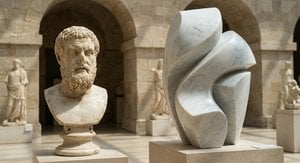
The Enduring Allure of Marble in Art History: From Classical Sculpture to Modern Abstraction
Explore the captivating history of marble sculpture from ancient Greece to modern art. Discover renowned artists like Canova & Michelangelo, carving techniques, and investment insights at ArtsDot.

The Enduring Form: Exploring Themes & Techniques in Sculpture Across Historical Periods
Explore the rich history of sculpture from ancient masterpieces to contemporary innovations. Discover key techniques, influential artists & investment potential for discerning art collectors.

The Enduring Legacy of Marble: A Comprehensive Exploration of Technique, Symbolism & Artistic Expression
Explore the rich history of marble sculpture from antiquity to the Renaissance! Discover key techniques, influential artists & enduring themes in classical art. Expert insights for collectors and enthusiasts at ArtsDot.

Top 10 Capodopere din Bronz care au Revoluționat Arta – Inspirație pentru Decor
Descoperă Top 10 sculpturi din bronz care au schimbat istoria artei! Explorează operele lui Rodin, Michelangelo și alți maeștri, tehnicile lor unice și inspirația pentru decorul casei tale. Replici de calitate muzeală pe ArtsDot.com.