New to Academic Realist? Start here

70 Famous Academic Realist Pintores You Should Know

If you remember one Academic Realist pintor, make it Ravi Varma (1848–1906), the name behind Maharani Chimnabai II e Shakuntala writing a love letter on a lotus leaf. After that come William Salter, Philip de László, Jean-Jacques Henner e Jean-Hippolyte Flandrin. Our 70 picks go from Andrew Geddes (born 1783) to Hugh Goldwin Rivière (born 1882), from 26 countries.

How we picked them. We list the artists our catalogue links to Academic Realist, from the most famous down. Artists born after 1955 that we cannot yet check on Wikidata are left out. The Wikipedia number shows in how many of our 32 languages Wikipedia writes about them.

  1. Maharani Chimnabai II, de Ravi Varma1Ravi Varma
  2. The Waterloo Banquet, de William Salter2William Salter
  3. Andrew W. Mellon, de Philip de László3Philip de László

Quick facts

Academic Realist in a nutshell

  • 70Artistas
  • 1783–1882Anos de nascimento
  • 26Países de origem
  • 1Mulheres
  • 3.921Obras em nosso catálogo
Cidades com mais nascimentos
Lyon (2), Amsterdam (2), Londres (2), Edinburgh (2)
Museus que detêm as principais obras
Museu Hermitage (9), Museu do Prado (8), National Portrait Gallery (7), Rijksmuseum (3)
As mulheres desta lista
Thérèse Schwartze

Meet them one by one

The 70 famous Academic Realist pintores, from most famous down

1of 70

Ravi Varma

Índio From Kilimanjaro Fusion acadêmico/indiano On Wikipedia in 22 of 32 languages

Ravi Varma

From a young age, Ravi Varma displayed an extraordinary aptitude for art, nurtured by his uncle, Raja Raja Varma, who introduced him to the world of drawing and painting, primarily within the established framework of the Tanjore School. Recognizing that original paintings were largely inaccessible to the vast majority of Indians, Raja Ravi Varma took a bold step – establishing the Raja Ravi Varma Fine Arts Lithographic Press in 1894.

Works to know · Their 100 best-known works · Ravi Varma reproductions

2of 70

William Salter

Britânico From Honiton Pintura de retrato

William Salter

No coração do século XIX, enquanto a Grã-Bretanha navegava pelas profundas mudanças da Revolução Industrial e pela expansão de sua influência global, William Salter emergiu como um pintor capaz de capturar a própria alma da grandeza vitoriana. Nascido em 1804 na pacata cidade de Honiton, Devon, a vida inicial de Salter estava enraizada na tradicional paisagem inglesa, mas seu espírito artístico estava destinado a palcos muito maiores.

Works to know · Their 100 best-known works · William Salter reproductions

3of 70

Philip de László

From Peste On Wikipedia in 18 of 32 languages

Philip de László

Philip Alexius de László, nascido Fülöp Laub em 30 de abril de 1869, em Budapeste, Hungria, ascendeu de origens humildes para se tornar um célebre pintor de retratos da realeza e da aristocracia europeia. Conseguiu admissão na Academia Nacional de Belas Artes em Budapeste, estudando sob a tutela de Bertalan Székely e Károly Lotz.

Works to know · Their 100 best-known works · Philip de László reproductions

4of 70

Jean-Jacques Henner

From Bernwiller On Wikipedia in 16 of 32 languages

Jean-Jacques Henner

Nascido em 1829, no tranquilo vilarejo de Bernwiller, na Alsácia, Jean-Jacques Henner emergiu como uma figura central na pintura francesa do século XIX. Sua aptidão para o desenho se manifestou cedo no College of Altkirch, incentivando seus pais a apoiar seus estudos com Gabriel-Christophe Guérin em Estrasburgo, antes de seguir para Paris.

Works to know · Their 100 best-known works · Jean-Jacques Henner reproductions

5of 70

Jean-Hippolyte Flandrin

Francês From Lyon Neoclássico On Wikipedia in 16 of 32 languages

Jean-Hippolyte Flandrin

Jean-Hippolyte Flandrin (1809–1864) permanece como uma figura luminosa no panteão do Neoclassicismo francês, um artista cujo pincel capturou a profunda intersecção entre a devoção espiritual e a graça clássica. A trajetória do talento de Flandrin tomou um rumo decisivo em 1829, quando ele chegou a Paris para ingressar no lendário ateliê de Jean Auguste Dominique Ingres.

Works to know · Their 100 best-known works · Jean-Hippolyte Flandrin reproductions

6of 70

Édouard Detaille

From Paris On Wikipedia in 15 of 32 languages

Édouard Detaille

Gustave Caillebotte, nascido em Paris em 1848 e falecido prematuramente em 1894, permanece uma figura crucial na transição do Realismo para o Impressionismo dentro da arte francesa.

Works to know · Their 100 best-known works · Édouard Detaille reproductions

7of 70

Alfred Stevens

From Bruxelas

Alfred Stevens

Após a morte de seu pai em 1837, Stevens iniciou sua formação formal na Académie Royale des Beaux-Arts, em Bruxelas. Em 1843, mudou-se para Paris para se juntar ao seu irmão Joseph, matriculando-se na prestigiada École des Beaux-Arts. Além disso, Alfred Stevens foi um entusiasta precoce do Japonismo, integrando objetos e estéticas japonesas em suas composições de forma harmoniosa, como se pode observar na sofisticada “A Dama de Rosa” (1866).

Works to know · Their 100 best-known works · Alfred Stevens reproductions

8of 70

Francis Davis Millet

American From Mattapoisett Academic classical painting On Wikipedia in 17 of 32 languages

Francis Davis Millet

Nasceu em Mattapoisett, Massachusetts, em torno de 1846 ou 1848 – informações conflitantes existem, um diário sugerindo a data posterior – Millet percorreu uma jornada desde um jovem baterista na Guerra Civil até um artista celebrado e figura influente nos círculos da arte americana, testemunhando sua talentosa diversidade e dedicação inabalável.

Works to know · Their 100 best-known works · Francis Davis Millet reproductions

9of 70

Charles François Jalabert

French From Nîmes Academic Painting

Charles François Jalabert

Nascido em 1819, em Nîmes, na França, a jornada artística de Jalabert foi caracterizada por sua rápida ascensão à fama entre a alta sociedade parisiense na segunda metade do século XIX. Ninfas ouvindo os cânticos de Orfeu (1853), atualmente no Walters Art Museum, é outra peça notável que exemplifica a habilidade de Jalabert em capturar cenas etéreas. [https://AllPaintingsStore.com/@@/8ydvfb-jean-georges-beraud-an-evening](https://AllPaintingsStore.com/@@/8ydvfb-jean-georges-beraud-an-evening) (embora não seja uma obra de Jalabert, apresenta a coleção do museu).

Works to know · Their 100 best-known works · Charles François Jalabert reproductions

10of 70

Thérèse Schwartze

Dutch From Amsterdam Portraiture On Wikipedia in 14 of 32 languages

Thérèse Schwartze

As the daughter of the painter Johan Georg Schwartze—a man whose own artistic journey spanned from Philadelphia to Düsseldorf—Thérèse was immersed in the language of light and shadow from her earliest years. Seeking to refine her brushwork, she traveled to Munich, where she studied under masters such as Gabriel Max and Franz von Lenbach.

Works to know · Their 100 best-known works · Thérèse Schwartze reproductions

11of 70

Heinrich von Angeli

Austrian From Sopron Neoclassical Romanticism On Wikipedia in 12 of 32 languages

Heinrich von Angeli

Heinrich Anton von Angeli stands as a luminous figure in the grand tapestry of nineteenth-century European art, a painter whose brush captured not just the likenesses of the powerful, but the very essence of an age caught between the fading echoes of Romanticism and the rising clarity of Realism.

Works to know · Their 100 best-known works · Heinrich von Angeli reproductions

12of 70

Federico De Madrazo Y Kuntz

From Roma On Wikipedia in 13 of 32 languages

Federico De Madrazo Y Kuntz

Nascido em Roma, no seio de uma das dinastias artísticas mais ilustres da Espanha, Federico De Madrazo Y Kuntz carregou o peso de uma herança profunda em sua própria linhagem. Como filho do influente pintor neoclássico José de Madrazo y Agudo e de Isabel Kuntz Valentini, sua infância foi imersa na atmosfera da alta cultura europeia.

Works to know · Their 100 best-known works · Federico De Madrazo Y Kuntz reproductions

13of 70

François Flameng

From former 12th arrondissement of Paris On Wikipedia in 11 of 32 languages

François Flameng

Ele frequentou a École Nationale Supérieure des Beaux-arts, onde estudou sob a tutela de Alexandre Cabanel. Foi convidado para a Rússia em 1894 pelo Czar Alexandre III para pintar retratos de membros da Corte Imperial. Em 1900, criou um mural decorativo de Paris para o Le Train Bleu, o restaurante na Gare de Lyon.

Works to know · Their 100 best-known works · François Flameng reproductions

14of 70

Auguste Toulmouche

French From Nantes Academic Realism On Wikipedia in 12 of 32 languages

Auguste Toulmouche

Auguste Toulmouche (1829-1890) stands as a luminous figure in the tapestry of 19th-century French art, a master whose brush captured the very essence of the Belle Époque. At the tender age of nineteen, he made his debut at the prestigious Paris Salon in 1848, an entrance that signaled the arrival of a formidable new voice in French genre painting.

Works to know · Their 100 best-known works · Auguste Toulmouche reproductions

15of 70

George Peter Alexander Healy

Americano From Boston Realismo On Wikipedia in 8 of 32 languages

George Peter Alexander Healy

George Peter Alexander Healy, um nome que ressoa com a elegância e o peso do século XIX americano, foi muito mais do que apenas um pintor de rostos; ele foi um cronista de uma era, um observador atento das complexidades da política, da sociedade e da alma humana.

Works to know · Their 100 best-known works · George Peter Alexander Healy reproductions

16of 70

Vittorio Reggianini

Italiano From Módena Realismo Acadêmico On Wikipedia in 4 of 32 languages

Vittorio Reggianini

Nascido em Modena, Itália, em 1858, Vittorio Reggianini emergiu como uma figura significativa no cenário artístico italiano durante o final do século XIX e início do século XX. A formação formal de Reggianini começou na prestigiada Accademia di Belle Arti em Modena, onde aperfeiçoou suas habilidades sob a tutela de mestres estabelecidos.

Works to know · Their 100 best-known works · Vittorio Reggianini reproductions

17of 70

Alexander Bell Middleton

British Portraiture, Genre scenes

Alexander Bell Middleton

Alexander Bell Middleton (1829-1892) emerges from the bustling, rapidly changing landscape of 19th-century British art as a quietly significant figure. While not commanding the same immediate fame as some of his contemporaries – say, John Everett Millais or Dante Gabriel Rossetti – Middleton’s meticulous approach to portraiture and genre scenes reveals a profound understanding of human psychology and a remarkable ability to capture fleeting moments of emotion and social commentary.

Works to know · Their 100 best-known works · Alexander Bell Middleton reproductions

18of 70

John Phillip

Escocês From Aberdeen Pintura de Gênero Vitoriana; Influência Pré-Rafaelita On Wikipedia in 7 of 32 languages

John Phillip

Nascido na paisagem rústica de Aberdeen, Escócia, em 1817, John Phillip acabaria por transcender as suas origens humildes para se tornar uma das vozes mais evocativas da era vitoriana. Os seus primeiros anos foram marcados por um talento emergente que atraiu o olhar de patronos influentes, mais notavelmente Lord Panmure, cuja generosidade proporcionou a ponte essencial para que Phillip chegasse à Royal Academy of Arts de Londres em 1836.

Works to know · Their 100 best-known works · John Phillip reproductions

19of 70

James Sant

Britânico From Londres Romantismo Vitoriano On Wikipedia in 8 of 32 languages

James Sant

James Sant (1820–1916) ergue-se como uma figura monumental no retrato vitoriano, celebrado por sua habilidade inigualável de capturar a essência da infância e imbuir suas telas com um profundo significado simbólico. Nascido em Croydon, Surrey, Inglaterra, em 23 de abril de 1820, a jornada artística de Sant teve início sob a tutela de luminares como John Varley e Augustus Wall Callcott.

Works to know · Their 100 best-known works · James Sant reproductions

20of 70

Władysław Czachórski

Polish From Lublin Academic Art Style On Wikipedia in 10 of 32 languages

Władysław Czachórski

Born in 1850 in Lublin, during a period when Poland resided under Russian dominion, Czachórski’s journey was one of profound movement and academic rigor. From his foundational training at the School of Fine Arts in Warsaw to the disciplined halls of the Dresden Academy, each step refined his ability to translate reality into something far more poetic.

Works to know · Their 100 best-known works · Władysław Czachórski reproductions

21of 70

Jan Van Beers

From Lier On Wikipedia in 10 of 32 languages

Jan Van Beers

Nascido em Liers, na Bélgica, em 1852, Jan Van Beers cresceu em um ambiente profundamente imerso na cultura, sendo filho do renomado poeta Jan van Beers, o Velho. Sua trajetória artística começou a ser traçada com solidez técnica quando ingressou na prestigiada Academia Real de Belas Artes em Antuérpia, onde refinou o olhar e a mão que, mais tarde, o tornariam uma figura central no cenário artístico europeu.

Works to know · Their 100 best-known works · Jan Van Beers reproductions

22of 70

Théobald Chartran

French From Besançon Academic painting On Wikipedia in 10 of 32 languages

Théobald Chartran

Théobald Chartran (1849–1907) remains a captivating figure in the tapestry of late 19th-century French art, an artist whose legacy is woven from the delicate threads of academic precision and the sharp wit of social caricature.

Works to know · Their 100 best-known works · Théobald Chartran reproductions

23of 70

Emile Eisman Semenovsky

French Orientalism

Emile Eisman Semenovsky

Émile Eisman-Semenowsky remains a captivating figure in the late nineteenth-century Parisian art scene, an artist whose work serves as a bridge between the rigorous discipline of academic realism and the fleeting, luminous qualities of Impressionism. Born in Poland around 1857, his early life is shrouded in much of the mystery that often surrounds artists of great talent but sparse documentation.

Works to know · Their 100 best-known works · Emile Eisman Semenovsky reproductions

24of 70

Louis Beroud

Francês From Lyon Realismo Acadêmico On Wikipedia in 10 of 32 languages

Louis Beroud

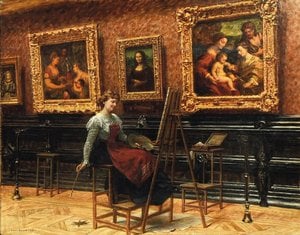
Louis Beroud (1852-1930) destaca-se como uma figura proeminente na arte francesa do final do século XIX e início do século XX, celebrado por suas representações meticulosas de interiores e marcos parisienses — particularmente o Museu do Louvre e a Ópera Garnier.

Works to know · Their 100 best-known works · Louis Beroud reproductions

25of 70

Arthur Stockdale Cope

Britânico From Londres Retratismo, Realismo Acadêmico On Wikipedia in 5 of 32 languages

Arthur Stockdale Cope

Arthur Stockdale Cope (1857-1940) destaca-se como uma figura significativa, embora muitas vezes subestimada, na retratística britânica do século XIX e início do século XX. Sua carreira estendeu-se por quase sete décadas, abrangendo uma produção prolífica de pinturas, o magistério e a associação com círculos artísticos proeminentes, estabelecendo-o, em última análise, como um Associate Royal Academician (ARA), Royal Academician (RA) e Comendador da Ordem Real Vitoriana.

Works to know · Their 100 best-known works · Arthur Stockdale Cope reproductions

26of 70

Sir Francis Grant

Escocês From Perth and Kinross Neoclássico, Romantismo On Wikipedia in 8 of 32 languages

Sir Francis Grant

This initial focus on sporting subjects wasn’t merely a stylistic choice; it represented a broader engagement with the natural world and an appreciation for the traditions of rural England. However, Grant's artistic journey wouldn’t be confined to landscapes alone.

Works to know · Their 100 best-known works · Sir Francis Grant reproductions

27of 70

Nicolaas Pieneman

Dutch From Amersfoort History painting, Portraiture On Wikipedia in 9 of 32 languages

Nicolaas Pieneman

Nicolaas Pieneman, born in Amersfoort on January 1st, 1809, entered a world already steeped in artistic tradition.

Works to know · Their 100 best-known works · Nicolaas Pieneman reproductions

28of 70

Henryk Rodakowski

From Lviv On Wikipedia in 9 of 32 languages

Henryk Rodakowski

Rodakowski came from a distinguished family of lawyers, initially following the family tradition by studying law at the University of Vienna between 1841 and 1845. He pursued formal artistic training under Joseph Danhauser and Franz Eybl in Vienna, laying the foundation for his future career.

Works to know · Their 100 best-known works · Henryk Rodakowski reproductions

29of 70

Thomas Benjamin Kennington

Britânico From Grimsby Realismo de gênero e arte vitoriana On Wikipedia in 6 of 32 languages

Thomas Benjamin Kennington

Thomas Benjamin Kennington (1856-1916) ergue-se como uma figura significativa na história da arte britânica, particularmente no domínio da pintura de gênero e do realismo social. Nascido em Grimsby, Lincolnshire, ele embarcou em uma jornada artística marcada por um treinamento rigoroso em instituições prestigiadas, como a Liverpool School of Art e o Royal College of Art, cultivando conexões com contemporâneos influentes, como Ford Madox Brown e William Holman Hunt.

Works to know · Their 100 best-known works · Thomas Benjamin Kennington reproductions

30of 70

George De Forest Brush

Americano From Shelbyville Hudson River School & Realismo On Wikipedia in 7 of 32 languages

George De Forest Brush

George De Forest Brush (1855–1941) foi um artista que possuía a rara habilidade de unir dois mundos aparentemente díspares: a elegância clássica e disciplinada do Renascimento Italiano e a vitalidade espiritual e bruta da vida nativa americana. Nascido em Shelbyville, Tennessee, mas criado entre as correntes intelectuais e artísticas de New e Connecticut, a infância de Brush foi imersa em uma profunda apreciação pela beleza e pela tradição.

Works to know · Their 100 best-known works · George De Forest Brush reproductions

31of 70

Józef Simmler

Polish From Varsóvia French costume painting On Wikipedia in 8 of 32 languages

Józef Simmler

józef simmler, um renomado pintor polonês, nasceu em 14 de março de 1823, em Varsóvia, Polônia. Sua criação afluente, fruto de sua próspera família protestante alemã, proporcionou-lhe a oportunidade de perseguir seus interesses artísticos em cidades tão prestigiadas como Dresden, Munique e Paris.

Works to know · Their 100 best-known works · Józef Simmler reproductions

32of 70

Sergey Zaryanko

Russo-Belarusiano From Mogilev Realismo On Wikipedia in 5 of 32 languages

Sergey Zaryanko

Born in Mogilev, Belarus (1818), his origins were deeply rooted in the societal constraints of the time – he was born into serfdom on the estate of the Lubomirski family. The emancipation of his father marked a turning point, allowing the family to relocate to Saint Petersburg and enter service with Alexander Golitsyn, a figure who would later ascend to the role of government minister.

Works to know · Their 100 best-known works · Sergey Zaryanko reproductions

33of 70

Hugh Goldwin Rivière

From Bromley

Hugh Goldwin Rivière

Hugh Goldwin Rivière (1869–1956) foi um retratista britânico cujo estilo distintivo fundia o realismo com uma qualidade etérea, refletindo a influência duradoura do Pré-Rafaelismo. Sua entrada na Royal Society of Portrait Painters consolidou sua reputação como um dos principais artistas da Grã-Bretanha, demonstrando tanto excelência artística quanto prestígio social.

Works to know · Their 100 best-known works

34of 70

Gustave Léonard de Jonghe

Belgian From Kortrijk Realism; Belle Époque On Wikipedia in 5 of 32 languages

Gustave Léonard de Jonghe

Gustave Léonard de Jonghe (1829-1893) stands as a prominent figure in Belgian art history, celebrated for his masterful depictions of aristocratic society and intimate genre scenes that encapsulate the spirit of the Belle Époque. Early training at the Académie Royale des Beaux-Arts in Brussels, alongside luminaries like François - Joseph Navez and Louis Gallait, cemented his foundational artistic education and fostered connections with influential mentors who shaped his artistic vision.

Works to know · Their 100 best-known works · Gustave Léonard de Jonghe reproductions

35of 70

Daniel Macnee

Escocês From Fintry Romantismo On Wikipedia in 4 of 32 languages

Daniel Macnee

Daniel Macnee (1806 – 1882) ergue-se como uma figura fundamental na história da arte escocesa, reconhecido primordialmente pelas suas representações evocativas das Highlands e pela sua contribuição crucial na fundação da Royal Scottish Academy. A sua formação intelectual, consolidada através de uma educação de excelência no Eton College e, posteriormente, no Christ's Hospital, foi acompanhada por uma distinta carreira naval.

Works to know · Their 100 best-known works · Daniel Macnee reproductions

36of 70

Alekseĭ Kharlamov

Rússia From Saratov Realismo On Wikipedia in 6 of 32 languages

Alekseĭ Kharlamov

Nascido nas humildes circunstâncias de uma família de servos na aldeia de Dyachevka, próximo às margens do Rio Volga, Alexei Alexeievich Harlamoff acabaria por ascender aos patamares mais elevados do mundo da arte internacional. Após seus pais conquistarem a liberdade em 1850, o jovem Alexei iniciou uma ascensão rigorosa através da Academia Imperial de Artes em São Petersburgo.

Works to know · Their 100 best-known works · Alekseĭ Kharlamov reproductions

38of 70

Wladyslaw Bakalowicz

Polonês-Francês From Chrzanów Pintura de gênero, Retratismo On Wikipedia in 7 of 32 languages

Wladyslaw Bakalowicz

Nascido em Chrzanów, na Polônia, em 1833, Ladislaus Bakalowicz (também conhecido como Władysław Bakałowicz) emergiu como uma figura de grande relevância na arte europeia do século XIX. Ele iniciou seus estudos na Escola de Belas Artes de Varsóvia, dominando as técnicas do retrato e desenvolvendo uma apreciação por temas históricos.

Works to know · Their 100 best-known works · Wladyslaw Bakalowicz reproductions

39of 70

Emilio Sala

Spanish From Alcoy Portraiture, Genre On Wikipedia in 6 of 32 languages

Emilio Sala

Born in Alcoy, Spain, in 1850, Emilio Sala y Frances emerged as a significant figure in late 19th-century Spanish art. His life was inextricably linked to the vibrant artistic scene of Valencia and Madrid, where he honed his skills under the tutelage of his cousin, Plácido Francés y Pascual, and later benefited from studies at the prestigious Real Academia de Bellas Artes de San Carlos in Valencia.

Works to know · Their 100 best-known works · Emilio Sala reproductions

40of 70

Henry Inman

Americano From Utica Escola do Rio Hudson On Wikipedia in 5 of 32 languages

Henry Inman

Nascido em 1801, em Utica, Nova York, filho de pais imigrantes ingleses, Inman foi um produto tanto da tradição do velho mundo quanto da ambição do novo mundo.

Works to know · Their 100 best-known works · Henry Inman reproductions

41of 70

John Pettie

British, Scottish From Edinburgh Victorian Art On Wikipedia in 6 of 32 languages

John Pettie

Born in the historic heart of Edinburgh in 1839, John Pettie emerged as one of the most captivating figures of the Victorian era. The formal shaping of Pettie’s genius took place at the prestigious Trustees Academy in Edinburgh under the guidance of Robert Scott Lauder. In 1862, seeking broader horizons, Pettie moved to London, where he became a central figure within a vibrant community of expatriate Scottish painters.

Works to know · Their 100 best-known works · John Pettie reproductions

42of 70

John Partridge

British From Glasgow Romanticism On Wikipedia in 3 of 32 languages

John Partridge

Born in Glasgow in 1789, Partridge emerged from a family steeped in intellectual and creative pursuits, carrying with him a lineage that would see his brother rise to prominence in the medical sciences and his nephew find fame in the theatrical arts.

Works to know · Their 100 best-known works · John Partridge reproductions

43of 70

Andrew Geddes

Escocês From Edimburgo Pintor de retratos e gravador On Wikipedia in 2 of 32 languages

Andrew Geddes

Nascido em Edimburgo, no Reino Unido, Andrew Geddes seguiu um caminho que foi inicialmente desviado de sua verdadeira paixão pelo dever familiar. Filho de um Auditor-Adjunto de Impostos, Geddes recebeu uma educação clássica na Royal High School e, posteriormente, na Universidade de Edimburgo. Em 1806, apresentou St John in the Wilderness na Somerset House, marcando sua primeira contribuição para as exposições da Royal Academy.

Works to know · Their 100 best-known works · Andrew Geddes reproductions

44of 70

William Page

From Albany On Wikipedia in 5 of 32 languages

William Page

Nascido em Albany, Estados Unidos, William Page foi um versátil pintor e retratista americano. Sua formação inicial teve início no escritório de Frederick de Peyster, seguida por estudos no estúdio de James Herring. Após um breve período dedicando-se à teologia no Andover Theological Seminar e no Amherst College, ele retornou ao universo das artes.

Works to know · Their 100 best-known works · William Page reproductions

45of 70

Heywood Hardy

Britânico From Chichester Romanticismo On Wikipedia in 4 of 32 languages

Heywood Hardy

Heywood Hardy (1842 – 1933) was born on November 25, 1842, in Chichester, Sussex, England—the youngest of ten children born to James Hardy Senior, a respected landscape artist, and Elizabeth.

Works to know · Their 100 best-known works · Heywood Hardy reproductions

46of 70

Stephen Pearce

Britânico From Charing Cross Retrato Victoriano On Wikipedia in 2 of 32 languages

Stephen Pearce

Formal training commenced at Sass’s Academy in Charlotte Street, a respected institution for aspiring artists, followed by rigorous study at the prestigious Royal Academy Schools beginning in 1840.

Works to know · Their 100 best-known works · Stephen Pearce reproductions

47of 70

Joaquín Espalter y Rull

Spanish From Sitges Portrait & Historical scenes On Wikipedia in 4 of 32 languages

Joaquín Espalter y Rull

Joaquim Espalter i Rull, born in the picturesque coastal town of Sitges, Spain, in 1809, emerged as a significant figure within the landscape of 19th-century Spanish painting. Born into a merchant family temporarily residing in Sitges due to the turbulence of the Peninsular War, Espalter's early years were marked by a sense of displacement that perhaps fostered within him an observant eye for detail and a sensitivity to human character.

Works to know · Their 100 best-known works · Joaquín Espalter y Rull reproductions

48of 70

Sir John Longstaff

Australian From Vitória Impressionism On Wikipedia in 4 of 32 languages

Sir John Longstaff

Sir John Campbell Longstaff foi um pintor australiano, artista de guerra e cinco vezes vencedor do prestigiado Archibald Prize de retratismo. Nascido em 10 de março de 1861, em Clunes, Victoria, Longstaff teve sua formação inicial em um internato em Miners Rest e na escola estadual de Clunes.

Works to know · Their 100 best-known works · Sir John Longstaff reproductions

49of 70

Jacob Spoel

Dutch From Rotterdam On Wikipedia in 3 of 32 languages

Jacob Spoel

Jacob Spoel was a Dutch artist born in the Netherlands in 1820. His life and work are documented within the history of famous artists from this period. He lived during the nineteenth century, passing away in 1868.

Works to know · Their 100 best-known works · Jacob Spoel reproductions

51of 70

Jan Portielje

Dutch/Belgian From Amsterdam Academic On Wikipedia in 3 of 32 languages

Jan Portielje

In the heart of the nineteenth century, a period defined by both rigid social structures and a burgeoning fascination with the exotic, the works of Jan Frederik Pieter Portielje emerged as a testament to refined beauty. Born in Amsterdam in 1829 to a family of booksellers, Portielje’s early life was steeped in the intellectual richness of Dutch culture.

Works to know · Their 100 best-known works · Jan Portielje reproductions

52of 70

Georg Koberwein

Austrian From Vienna Neoclassical On Wikipedia in 1 of 32 languages

Georg Koberwein

George Koberwein (1820–1876) stands as a prominent figure in 19th-century Austrian art, celebrated primarily for his meticulously crafted portraits of European royalty and nobility. Born in Vienna, Austria, Koberwein’s artistic journey began amidst the burgeoning Romantic movement, though he swiftly embraced Neoclassical principles, establishing himself as a steadfast champion of classical ideals within his era.

Works to know · Their 100 best-known works · Georg Koberwein reproductions

53of 70

Georg von Bothmann

Russian From Lübeck Portraiture On Wikipedia in 3 of 32 languages

Georg von Bothmann

Yegor Ivanovich Botman, a name often rendered as Georg von Bothmann, emerged from the vibrant artistic milieu of 19th-century Saint Petersburg, Russia.

Works to know · Their 100 best-known works · Georg von Bothmann reproductions

55of 70

George Frederick Harris

American From Birmingham California Modernism On Wikipedia in 1 of 32 languages

George Frederick Harris

Born in Birmingham, West Midlands, in 1856, Harris’s early years were rooted in the industrial heart of England, yet his spirit was destined for a much broader stage.

Works to know · Their 100 best-known works · George Frederick Harris reproductions

56of 70

Francisco Díaz Carreño

Spanish Academic Realism On Wikipedia in 2 of 32 languages

Francisco Díaz Carreño

To look at the work of Francisco Díaz Carreño is to confront the rigid discipline of nineteenth-century academicism. His training at the Real Academia de Bellas Artes de San Fernando provided the foundation for this clinical accuracy. Under the guidance of Federico de Madrazo, Carreño learned to navigate the complexities of formal portraiture.

Works to know · Their 100 best-known works · Francisco Díaz Carreño reproductions

58of 70

Robert Schwede

Baltic German From Mõisaküla On Wikipedia in 2 of 32 languages

Robert Schwede

Robert Schwede lived his life within the shifting landscapes of the Baltic region and the Russian Empire. Born in Mõisaküla on 6 December 1806, he was a man of German-Baltic roots who found his professional home in Saint Petersburg. His path was shaped by the rigorous halls of the Imperial Academy of Fine Arts, where he studied the formal traditions of the era.

Works to know · Their 100 best-known works · Robert Schwede reproductions

59of 70

John Bagnold Burgess

English From Chelsea Academic realism On Wikipedia in 1 of 32 languages

John Bagnold Burgess

The story of John Bagnold Burgess is one deeply rooted in the rich, artistic soil of nineteenth-century London. He emerged from a distinguished lineage of painters, most notably as the son of Henry William Burgess, a landscape artist who served the court of King William IV.

Works to know · Their 100 best-known works · John Bagnold Burgess reproductions

60of 70

George Henry Story

English From New Haven Pre-Raphaelites On Wikipedia in 1 of 32 languages

George Henry Story

Born in London on January 7, 1834, Storey was destined for a life steeped in culture and refinement. Though his early years were touched by the aesthetic fervor of the Pre-Raphaelite movement, Storey eventually moved toward a more restrained and psychologically nuanced approach, influenced significantly by the works of Charles Robert Leslie.

Works to know · Their 100 best-known works · George Henry Story reproductions

61of 70

Alexander Fedorovich Pershakov

Russian From Moscow On Wikipedia in 1 of 32 languages

Alexander Fedorovich Pershakov

Alexander Fedorovich Pershakov operated within the rigorous demands of Russian portraiture during the late nineteenth and early twentieth centuries. The historical weight of Pershakov’s oeuvre is anchored by his depictions of significant military and administrative figures. Notable examples of his technical execution include: Portrait of Admiral E.

Works to know · Their 100 best-known works · Alexander Fedorovich Pershakov reproductions

62of 70

Ivan Tyurin

Russian From Ardatovsky Uyezd On Wikipedia in 1 of 32 languages

Ivan Tyurin

Ivan Tyurin was a Russian painter who lived during the nineteenth and early twentieth centuries.

Works to know · Their 100 best-known works · Ivan Tyurin reproductions

63of 70

Joaquín María Herrer y Rodríguez

Spanish Academic Realism On Wikipedia in 1 of 32 languages

Joaquín María Herrer y Rodríguez

Joaquín María Herrer y Rodríguez lived through a transformative era in Spain, a period that demanded a precise eye for the shifting textures of domestic and public existence. Born in 1840, his life spanned the decades of the nineteenth century, a time when the rigid structures of the past began to yield to a more nuanced observation of reality.

Works to know · Their 100 best-known works · Joaquín María Herrer y Rodríguez reproductions

64of 70

William Eyre Walker

Britânico From Manchester Pintura de retrato, Realismo acadêmico

William Eyre Walker

Nascido no charme costeiro de Saint Helier, Jersey, Walter William Ouless emergiu de uma linhagem profundamente enraizada nas artes visuais. Como filho do artista marítimo Philip John Ouless, seus primeiros anos foram imersos na atmosfera de um estúdio de trabalho, uma base que eventualmente o impulsionaria em direção ao coração do establishment artístico britânico.

Works to know · Their 100 best-known works · William Eyre Walker reproductions

65of 70

Juan García Martínez

Spanish Academic Realism On Wikipedia in 1 of 32 languages

Juan García Martínez

Born in Calatayud, Juan García Martínez entered the Spanish art scene during a period of profound transition. His training began at the Escuela de Bellas Artes de San Fernando in Madrid, where he refined his technical foundations under the guidance of Antonio Maffei and Federico de Madrazo.

Works to know · Their 100 best-known works · Juan García Martínez reproductions

66of 70

Sydney Hodges

British From Worthing Academic Realism

Sydney Hodges

Born amidst the rugged, evocative landscapes of Truro, Cornwall, in 1828, Joseph Sydney Willis Hodges was a child of an era where landscape and legend were inextricably linked. The burgeoning Cornish art scene, revitalized by the dramatic rediscovery of Tintagel Castle and its deep associations with Arthurian myth, provided a backdrop of mythic grandeur that would forever color his artistic sensibilities.

Works to know · Their 100 best-known works · Sydney Hodges reproductions

67of 70

Antoine Piot

French From Dijon Classical Painting

Antoine Piot

In the vibrant, shifting landscape of nineteenth-century French art, few painters captured the quiet essence of grace as tenderly as Étienne Adolphe Piot. Born in 1831 in the historic city of Digoin, within the Bourgogne region, Piot emerged during an era defined by profound aesthetic transitions.

Works to know · Their 100 best-known works · Antoine Piot reproductions

69of 70

George Hall Neale

British Portrait painting

George Hall Neale

George Hall Neale (1863-1940) stands as a quietly distinguished figure in British portraiture, particularly renowned for his evocative depictions of prominent individuals within the thriving social and economic landscape of Merseyside.

Works to know · Their 100 best-known works · George Hall Neale reproductions

70of 70

Robert Hope

Scottish From Edinburgh Romanticism

Robert Hope

Robert Hope Moncrieff, born February 26, 1846, in Liverpool, England, was a Scottish artist whose prolific output cemented his place as one of Scotland’s most celebrated landscape painters. Despite this early loss, Robert’s life flourished, marked by marriage to Margaret Sutherland-Todd in 1873 and the birth of several children.

Works to know · Their 100 best-known works · Robert Hope reproductions

Pictures worth knowing

Famous Academic Realist works to recognise

  1. Maharani Chimnabai II, de Ravi Varma

    Maharani Chimnabai II

    Ravi Varma

    1889 · The Raja Ravi Varma Heritage Foundation, Bangalore

  2. The Waterloo Banquet, de William Salter

    The Waterloo Banquet

    William Salter

    1836

  3. Andrew W. Mellon, de Philip de László

    Andrew W. Mellon

    Philip de László

    1932

  4. Chaste susanna, de Jean-Jacques Henner

    Chaste susanna

    Jean-Jacques Henner

  5. Young man sitting by the sea, de Jean-Hippolyte Flandrin

    Young man sitting by the sea

    Jean-Hippolyte Flandrin

  6. A Mounted Officer, de Édouard Detaille

    A Mounted Officer

    Édouard Detaille

    1877 · Art Institute of Chicago

  7. Eva Gonzales at the Piano, de Alfred Stevens

    Eva Gonzales at the Piano

    Alfred Stevens

    1879

  8. Lacing Up, de Francis Davis Millet

    Lacing Up

    Francis Davis Millet

When it happened

Academic Realist, step by step

  1. 1831
  2. 1844
  3. 1855
  4. 1859
  5. 1861
  6. 1870
  7. 1873
  8. 1876
  9. 1878
  10. 1882
  11. 1887
  12. 1890
  13. 1906
  14. 1931

Fun figures

The numbers behind the list

País de origem
Reino Unido13
United Kingdom7
França6
Estados Unidos5
Netherlands4
France3
Bélgica2
Itália2
Década de nascimento
1780s2
1800s8
1810s9
1820s15
1830s6
1840s11
1850s13
1860s5
1880s1
Museus que detêm suas obras principais
Museu Hermitage9
Museu do Prado8
National Portrait Gallery7
Rijksmuseum3
Royal Collection3
Museu Nacional de Varsóvia3
Amsterdam Museum2
Scottish National Gallery2

Just the names

List of 70 famous Academic Realist pintores to know

  1. 1Ravi VarmaRavi VarmaÍndio · 1848–1906
  2. 2William SalterWilliam SalterBritânico · 1804–1875
  3. 3Philip de LászlóPhilip de László1869–1937
  4. 4Jean-Jacques HennerJean-Jacques Henner1829–1905
  5. 5Jean-Hippolyte FlandrinJean-Hippolyte FlandrinFrancês · 1809–1864
  6. 6Édouard DetailleÉdouard Detaille1848–1912
  7. 7Alfred StevensAlfred Stevens1823–1906
  8. 8Francis Davis MilletFrancis Davis MilletAmerican · 1848–1912
  9. 9Charles François JalabertCharles François JalabertFrench · 1819–1901
  10. 10Thérèse SchwartzeThérèse SchwartzeDutch · 1851–1918
  11. 11Heinrich von AngeliHeinrich von AngeliAustrian · 1840–1925
  12. 12Federico De Madrazo Y KuntzFederico De Madrazo Y Kuntz1815–1894
  13. 13François FlamengFrançois Flameng1856–1923
  14. 14Auguste ToulmoucheAuguste ToulmoucheFrench · 1829–1890
  15. 15George Peter Alexander HealyGeorge Peter Alexander HealyAmericano · 1813–1894
  16. 16Vittorio ReggianiniVittorio ReggianiniItaliano · 1858–1938
  17. 17Alexander Bell MiddletonAlexander Bell MiddletonBritish · 1829–1892
  18. 18John PhillipJohn PhillipEscocês · 1817–1867
  19. 19James SantJames SantBritânico · 1820–1916
  20. 20Władysław CzachórskiWładysław CzachórskiPolish · 1850–1911
  21. 21Jan Van BeersJan Van Beers1852–1927
  22. 22Théobald ChartranThéobald ChartranFrench · 1849–1907
  23. 23Emile Eisman SemenovskyEmile Eisman SemenovskyFrench · 1859–1911
  24. 24Louis BeroudLouis BeroudFrancês · 1852–1930
  25. 25Arthur Stockdale CopeArthur Stockdale CopeBritânico · 1857–1940
  26. 26Sir Francis GrantSir Francis GrantEscocês · 1803–1878
  27. 27Nicolaas PienemanNicolaas PienemanDutch · 1809–1860
  28. 28Henryk RodakowskiHenryk Rodakowski1823–1894
  29. 29Thomas Benjamin KenningtonThomas Benjamin KenningtonBritânico · 1856–1916
  30. 30George De Forest BrushGeorge De Forest BrushAmericano · 1855–1941
  31. 31Józef SimmlerJózef SimmlerPolish · 1823–1868
  32. 32Sergey ZaryankoSergey ZaryankoRusso-Belarusiano · 1818–1870
  33. 33Hugh Goldwin RivièreHugh Goldwin Rivière1882–1958
  34. 34Gustave Léonard de JongheGustave Léonard de JongheBelgian · 1829–1893
  35. 35Daniel MacneeDaniel MacneeEscocês · 1806–1882
  36. 36Alekseĭ KharlamovAlekseĭ KharlamovRússia · 1840–1925
  37. 37Gottfried LindauerGottfried LindauerCzech · 1839–1926
  38. 38Wladyslaw BakalowiczWladyslaw BakalowiczPolonês-Francês · 1831–1904
  39. 39Emilio SalaEmilio SalaSpanish · 1850–1910
  40. 40Henry InmanHenry InmanAmericano · 1801–1846
  41. 41John PettieJohn PettieBritish, Scottish · 1839–1893
  42. 42John PartridgeJohn PartridgeBritish · 1789–1872
  43. 43Andrew GeddesAndrew GeddesEscocês · 1783–1844
  44. 44William PageWilliam Page1811–1885
  45. 45Heywood HardyHeywood HardyBritânico · 1842–1933
  46. 46Stephen PearceStephen PearceBritânico · 1819–1904
  47. 47Joaquín Espalter y RullJoaquín Espalter y RullSpanish · 1809–1880
  48. 48Sir John LongstaffSir John LongstaffAustralian · 1861–1941
  49. 49Jacob SpoelJacob SpoelDutch · 1820–1868
  50. 50Pimen OrlovPimen Orlov1812–1865
  51. 51Jan PortieljeJan PortieljeDutch/Belgian · 1829–1908
  52. 52Georg KoberweinGeorg KoberweinAustrian · 1820–1876
  53. 53Georg von BothmannGeorg von BothmannRussian · 1810–1891
  54. 54José Martí y MonsóJosé Martí y MonsóSpanish · 1840–1912
  55. 55George Frederick HarrisGeorge Frederick HarrisAmerican · 1856–1924
  56. 56Francisco Díaz CarreñoFrancisco Díaz CarreñoSpanish · 1836–1903
  57. 57Gabriel Maureta AracilGabriel Maureta AracilSpanish · 1832–1912
  58. 58Robert SchwedeRobert SchwedeBaltic German · 1806–1870
  59. 59John Bagnold BurgessJohn Bagnold BurgessEnglish · 1829–1897
  60. 60George Henry StoryGeorge Henry StoryEnglish · 1835–1923
  61. 61Alexander Fedorovich PershakovAlexander Fedorovich PershakovRussian · 1843–1905
  62. 62Ivan TyurinIvan TyurinRussian · 1824–1904
  63. 63Joaquín María Herrer y RodríguezJoaquín María Herrer y RodríguezSpanish · 1840–1917
  64. 64William Eyre WalkerWilliam Eyre WalkerBritânico · 1847–1930
  65. 65Juan García MartínezJuan García MartínezSpanish · 1828–1895
  66. 66Sydney HodgesSydney HodgesBritish · 1829–1900
  67. 67Antoine PiotAntoine PiotFrench · 1850–1910
  68. 68George Sheridan KnowlesGeorge Sheridan KnowlesBritish · 1863–1931
  69. 69George Hall NealeGeorge Hall NealeBritish · 1863–1940
  70. 70Robert HopeRobert HopeScottish · 1869–1936

Good questions

What people ask about Academic Realist

  • Who is the most famous Academic Realist pintor?

    Ravi Varma (#1) is first in this ranking, followed by William Salter (#2) and Philip de László (#3).

  • Who are the 5 most famous Academic Realist pintores?

  • Who are the great Academic Realist pintores of United Kingdom?

    The highest-ranked pintores born in United Kingdom are John Pettie (#41), John Partridge (#42), George Frederick Harris (#55), John Bagnold Burgess (#59) e Sydney Hodges (#66).

  • Where are the great works of Academic Realist art today?

    The museums holding the most key works of this list are Museu Hermitage (9), Museu do Prado (8) e National Portrait Gallery (7).

  • Which city produced the most Academic Realist pintores?

    Lyon: 2 of the pintores in this list were born there.

  • What techniques did Academic Realist pintores use?

    “His mastery of oil painting – a relatively new medium in India at the time – allowed him to achieve an astonishing level of detail and luminosity, further enhancing the emotional impact of his work.” — from our biography of Ravi Varma (#1).

  • Who are the great Academic Realist pintores of Reino Unido?

    The highest-ranked pintores born in Reino Unido are William Salter (#2), John Phillip (#18), James Sant (#19), Arthur Stockdale Cope (#25) e Sir Francis Grant (#26).

  • Which women Academic Realist pintores are the most famous?

    1 women are in this ranking: Thérèse Schwartze (#10).

  • Which country produced the most Academic Realist pintores?

    Reino Unido: 13 of the 70 pintores in this list were born there, then United Kingdom (7) e França (6).

  • When were most Academic Realist pintores born?

    Most pintores in this list were born in the 1820s (15 of 70), between 1783 and 1882 overall.

  • Who was the first Academic Realist pintor?

    The earliest-born pintor in this list is Andrew Geddes (#43), born in 1783.

  • Can I order a painting by a famous Academic Realist pintor?

    Our catalogue holds 3,921 works by these pintores. Each one can be ordered as a hand-painted oil reproduction or a print.

Read more

More stories on ArtsDot.com

Other styles

Famous artists of other styles

Other eras

Famous artists of other eras

Keep exploring

Where to go next