Early Life and Career
Maurice de Vlaminck, born April 4th, 1876, in the heart of Paris, France, possessed an artistic spirit nurtured from a young age by parents deeply rooted in musical traditions – his father, a violinist hailing from Flanders, instilled a love for melody and harmony, while his mother, originating from Lorraine, cultivated a passion for piano performance. This formative influence profoundly shaped Vlaminck’s creative sensibilities, fostering an instinctive connection to artistic expression that would define his entire career. He embarked on his artistic journey relatively late in life, around the age of twenty, prioritizing self-discovery over formal training and establishing himself as a master of spontaneous technique.The Fauvist Movement and Artistic Style
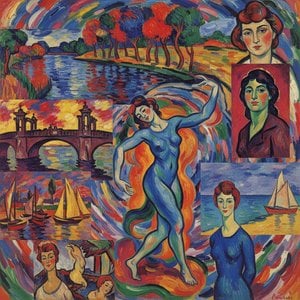
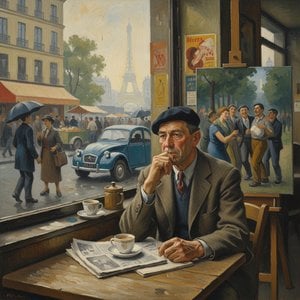
Vlaminck stands as one of the cornerstones of the Fauvist movement (1904-1908), a revolutionary artistic endeavor that irrevocably altered the landscape of early 20th-century art. Alongside luminaries like André Derain and Henri Matisse, he spearheaded this audacious group—a collective determined to dismantle established conventions and liberate color from its subservience to realism. The Fauvist aesthetic championed by Vlaminck is characterized by a breathtaking boldness in chromatic choices; artists deliberately rejected naturalistic hues, opting instead for vibrant shades that served as conduits for emotion rather than mirroring visual perception. Furthermore, his canvases pulsated with energetic brushwork—thick, visible strokes conveying dynamism and immediacy—and objects and landscapes were distilled to their essential forms, prioritizing expressive power above meticulous detail. Early masterpieces such as “Sur le zinc” (At the Bar) and “L’homme à la pipe” eloquently embody this distinctive stylistic signature.Influences and Artistic Development
Vlaminck's artistic vision drew inspiration from Impressionism, recognizing its pioneering exploration of fleeting moments and the transformative effects of light—a technique he skillfully incorporated into his compositions. However, his creative trajectory was decisively shaped by Vincent van Gogh, whose profound admiration for Vlaminck’s work is palpable. Following a visit to a Van Gogh exhibition, Vlaminck famously proclaimed his fervent appreciation for the artist's expressive fervor and stylistic innovation—a sentiment mirrored in Vlaminck’s own brushstrokes and emotional depth. From 1908 onwards, Cézanne’s influence subtly steered Vlaminck towards more subdued palettes, favoring monochromatic tones that reflected a contemplative aesthetic.Major Achievements and Historical Significance
Vlaminck's participation in the Salon d’automne exhibitions—particularly in 1905—served as a catalyst for establishing Fauvism as a pivotal movement within modern art history. His canvases became emblems of artistic rebellion, challenging academic dogma and championing an uncompromising commitment to subjective experience. Today, Vlaminck’s paintings are revered for their raw energy, visceral emotion, and groundbreaking exploration of color—a legacy that continues to inspire artists and captivate audiences worldwide. He bridged the gap between Impressionism and Expressionism, ushering in a new era of artistic experimentation and paving the way for subsequent generations of innovators.Legacy and Available Works
Maurice de Vlaminck’s oeuvre resides within prestigious museums across continents—a testament to his enduring artistic merit. Notable works such as “Bougival” and “The Bridge at Chatou” remain highly sought after by collectors eager to immerse themselves in the vibrant tapestry of Fauvist art. ArtsDot proudly presents a curated selection of Vlaminck’s masterpieces, offering visitors an unparalleled opportunity to experience firsthand the brilliance of his visionary style—a celebration of spontaneity, passion, and artistic genius.Perguntas e Respostas
Onde posso ver todas as obras de Maurice de Vlaminck?
Todas as obras de Maurice de Vlaminck no este site podem ser visualizadas na página de Todas as Obras de Arte do artista.
Posso navegar pelas obras de Maurice de Vlaminck por técnica?
A página Todos os Meios agrupa as obras de Maurice de Vlaminck por técnica.
Que sentimentos as obras de Maurice de Vlaminck expressam?
A Sala de Humor de Maurice de Vlaminck é uma página que organiza as obras do artista por humor.
Onde as obras de Maurice de Vlaminck estão organizadas por cor?
As obras de Maurice de Vlaminck podem ser exploradas por cor na página Índice Espectral do artista.
Em qual período histórico Maurice de Vlaminck trabalhou?
Maurice de Vlaminck trabalhou no período Era Moderna. O período situa a atividade do artista na história.
What other names is Maurice de Vlaminck known by?
Maurice de Vlaminck appears under the alternate names Maurício Denis de Vlaminck.
Como a arte de Maurice de Vlaminck evoluiu ao longo do tempo?
Um relato cronológico da obra de Maurice de Vlaminck está disponível na página Crônica do artista, onde as obras de arte passam em ordem de criação, capítulo por capítulo.
Quantas obras de Maurice de Vlaminck estão disponíveis para visualização?
Você pode explorar 208 obras de arte obras de Maurice de Vlaminck na página Todas as Obras de Arte.