The Quiet Observer of the Human Form
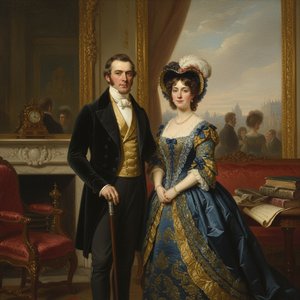
Ignaz Weisser lived through a period of significant transition, leaving behind a body of work that captures the steady, unadorned reality of mid-nineteenth-century life. A German painter, his hand was most frequently applied to the canvas in the service of the portrait. He did not seek to distort the subject or impose a grand narrative upon them; instead, his oil paintings offer a direct encounter with the individuals of his era. His practice was rooted in the observation of character, a skill that allowed him to translate the presence of his sitters into lasting visual records.
The weight of his contribution is felt most clearly in the collections of the Augustinermuseum in Freiburg im Breisgau. Within those halls, his works remain as quiet witnesses to the people who once walked the streets of the region. His technique relied on the traditional medium of oil on canvas, a choice that provided the necessary depth to render the subtle nuances of skin, fabric, and expression. There is a certain economy in his approach, a focus on the essential features that define a person's likeness without the distraction of unnecessary artifice.
A Record of Faces and Names
Weisser’s oeuvre focused on the domestic and the personal. His portraits were tied to the specific identities of those who sat for him, preserving names and faces from the mid-1800s. These oil paintings, many of which are held in the Augustinermuseum in Freiburg, provide a window into the social fabric of his time. His work includes:
- Männerporträt, an 1860 study of masculine character.
- Bildnis Creszenz Hugel, geb. Schäfer, a portrait of a woman.
- Portrait of Elise Hugel, a depiction of a woman from the period.
- Bildnis Joseph Hugel aus Bonndorf, a portrait of a man from the local community.
He maintained a steady focus on portraiture, moving between the depiction of men and women. He rendered the specificities of a person—the set of a jaw or the tilt of a head—with a quiet precision. Rather than following the shifting trends of the era, Weisser sought the reality of his subjects, capturing the dignity of the individual through a direct and measured approach.
Perguntas e Respostas
De onde é Ignaz Weisser?
Ignaz Weisser nasceu em Germany.
Quais cores Ignaz Weisser utilizou com mais frequência?
O perfil de cores da obra de Ignaz Weisser pode ser visualizado na página DNA da Paleta do artista.
Quantas obras de Ignaz Weisser estão disponíveis para explorar?
Você pode explorar 3 obras de arte obras de Ignaz Weisser na página Todas as obras.
Existe uma linha do tempo das obras de Ignaz Weisser?
A página de Linha do tempo das obras do artista apresenta as obras de Ignaz Weisser ordenadas por data, ano a ano.